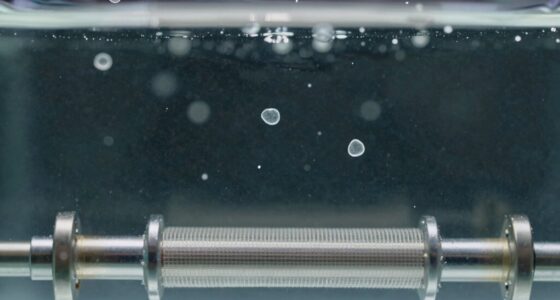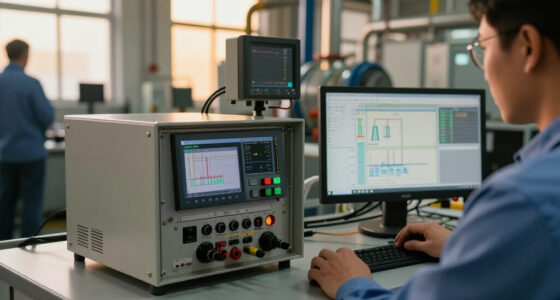

Nanotech smog busters use advanced nanomaterials like nanofibers, graphene, and metal-organic frameworks to capture ultrafine particles and harmful gases in urban air. They improve filtration efficiency, degrade pollutants using photocatalysts like TiO₂, and neutralize emissions from industry and vehicles with nanocatalysts. These innovations make air cleaner and healthier, often functioning with sunlight or indoor lighting. To discover how these technologies transform urban environments, continue exploring these cutting-edge solutions.

Get the latest gadgets delivered free with Prime
- Fast, free delivery on millions of items
- Prime Video, Amazon Music and more included
- Member-only deals all year
Key Takeaways
- Nanotech air filters using nanofibers, CNTs, and graphene efficiently trap ultrafine particles and pathogens in urban environments.
- Photocatalytic nanomaterials like TiO₂ degrade VOCs and NOx into harmless substances under light exposure.
- MOFs and nanocatalysts enable rapid breakdown of pollutants, transforming harmful gases into benign compounds.
- Integrating nanomaterials into urban infrastructure enhances pollution capture and catalytic emission reduction.
- Advanced nanotech solutions provide scalable, energy-efficient methods to improve air quality in polluted cities.
As an affiliate, we earn on qualifying purchases.
How Nanomaterials Enhance Air Filtration Systems

Nanomaterials markedly improve air filtration systems by increasing their ability to capture ultrafine particles, viruses, and harmful gases. With their high surface area and unique properties, materials like carbon nanotubes and nanofibers trap contaminants beyond traditional filters. They create dense meshes that effectively block tiny particles such as PM2.5 and pathogens. Additionally, nanomaterials like MOFs and graphene oxide adsorb gases and volatile organic compounds, preventing their release into indoor environments. Some nanomaterials, such as TiO2, even break down pollutants through photocatalysis, turning harmful substances into harmless byproducts. This process benefits from nanostructure engineering, which optimizes their pollutant interaction capabilities. The reactive surface of nanomaterials allows for more efficient chemical interactions, further enhancing their ability to neutralize pollutants. This combination of physical trapping and chemical transformation enhances air quality appreciably. The incorporation of advanced nanomaterials can also lead to the development of multifunctional filters that adapt to changing pollution levels. For example, integrating nanomaterials with sensor technology enables real-time monitoring of air quality, making filtration systems smarter and more responsive. As a result, nanomaterials make filtration systems more efficient, durable, and capable of targeting a broader spectrum of pollutants than ever before. Furthermore, the integration of innovative nanomaterials with advanced filtration technologies paves the way for smarter, more sustainable air purification solutions in urban environments.
photocatalytic air purifier TiO2
As an affiliate, we earn on qualifying purchases.
As an affiliate, we earn on qualifying purchases.
Breakthrough Technologies in Pollutant Capture and Breakdown

Recent advancements have revolutionized how pollutants are captured and broken down through innovative nanotech solutions. You now have access to technologies that use nanomaterials like photocatalysts, nanocatalysts, and high-surface-area adsorbents to neutralize harmful emissions. These breakthroughs enable rapid pollutant breakdown, transforming dangerous gases into harmless substances such as CO2 and water. For example, photocatalytic TiO2 uses light to degrade organic pollutants, while nanocatalysts accelerate chemical reactions to neutralize toxic gases like NOx and CO. The following table highlights key nanomaterials and their functions:
| Material | Function |
|---|---|
| CNTs | Adsorb gases, trap particulates |
| TiO2 | Photocatalysis of organics |
| MOFs | Capture sulfur dioxide |
Nanotechnology also enhances air purification systems, making them more efficient and accessible for urban environments. Additionally, ongoing research aims to optimize nanomaterial efficiency for broader application in pollution control. Understanding the reaction mechanisms involved allows scientists to design more effective nanomaterials for future pollution mitigation strategies. Moreover, reactive surface properties of nanomaterials play a crucial role in improving pollutant neutralization capabilities. Innovations in nanomaterial design are driving the development of smarter, more adaptable pollution solutions.
nanomaterial air filtration system
As an affiliate, we earn on qualifying purchases.
As an affiliate, we earn on qualifying purchases.
The Role of Carbon Nanotubes and Graphene in Pollutant Adsorption

Carbon nanotubes (CNTs) and graphene have emerged as powerful materials in pollutant adsorption due to their exceptional surface properties. Their large specific surface area and unique pore structures allow you to capture vast amounts of pollutants, including gases and ultrafine particles. CNTs excel at trapping harmful gases like CO2 and methane swiftly, thanks to their high reactivity and adsorption capacity. Graphene, especially in its oxidized form, provides a lightweight, durable platform that enhances filtration efficiency. When integrated into filters or coatings, these nanomaterials markedly improve your system’s ability to remove airborne toxins. Their chemical stability ensures long-term performance, making them ideal for urban air purification. By leveraging CNTs and graphene, you can develop smarter, more effective solutions to combat pollution in your city’s environment.
urban air quality nanotech solutions
As an affiliate, we earn on qualifying purchases.
As an affiliate, we earn on qualifying purchases.
Photocatalytic Solutions: Turning Harmful Gases Into Harmless Byproducts

Photocatalytic solutions harness the power of light-activated materials like titanium dioxide (TiO₂) to neutralize harmful gases directly in the air. When exposed to sunlight or artificial light, TiO₂ generates reactive electrons and holes that break down pollutants like VOCs and NOx into harmless byproducts such as CO₂ and water. This process effectively reduces smog and toxic emissions. Imagine a city skyline with these catalytic surfaces on rooftops, walls, and roads, actively transforming pollutants into clean air.
| Light Source | Catalytic Surface | Harmful Gases Neutralized |
|---|---|---|
| Sunlight | TiO₂-coated surfaces | VOCs, NOx |
| UV lamps | Advanced nanocoatings | Organic compounds |
| Indoor LEDs | Photocatalytic filters | Bacteria and viruses |
| Fluorescent | Treated building materials | Gases and particulates |
| Solar panels | Coated on urban infrastructure | Smog components |
Advanced Filters for Indoor and Industrial Air Quality Improvement

Advanced filters using nanofibers, MOFs, and other nanomaterials markedly improve indoor and industrial air quality. They trap ultrafine particles, capture harmful gases, and remove pathogens more efficiently than traditional methods. By integrating these innovations, you can achieve cleaner, safer air in any environment. Additionally, the development of air purification technologies continues to evolve, offering more effective solutions for combating pollution indoors and in industrial settings. The use of performance cookies helps developers assess how well these filters work by analyzing user interactions and feedback. Implementing study techniques for optimizing filter performance can further enhance their efficiency and longevity.
Nanofiber Filter Efficiency
Have you ever wondered how nanofiber filters outperform traditional air filtration methods? It’s because their ultra-fine fibers create a dense, high surface area network that captures particles smaller than 0.3 micrometers, including viruses, bacteria, and ultrafine dust. These filters trap particles through mechanical interception and diffusion, making them far more effective than conventional options. Plus, nanofibers maintain low airflow resistance, so your ventilation stays efficient without extra energy costs. Their lightweight design allows for easy integration into HVAC systems and personal air purifiers. The high porosity of nanofiber filters ensures thorough filtration while minimizing pressure drops. Additionally, navigation and mapping explainers can help optimize filter placement for maximum efficiency. Leveraging filter technology advancements, these filters significantly improve indoor air quality by efficiently removing a wide range of airborne contaminants. As a result, you experience cleaner indoor air, reduced allergens, and better protection against airborne pathogens, all thanks to the superior efficiency of nanofiber technology. Furthermore, understanding air quality standards can guide the selection of the most effective filtration solutions for different environments. Incorporating advanced manufacturing processes can further enhance the durability and performance of nanofiber filters. Understanding the manufacturing techniques is essential for assessing the long-term reliability of these filters.
MOF Gas Capture
Metal-organic frameworks (MOFs) stand out as highly effective materials for capturing gaseous pollutants in both indoor and industrial environments. Their porous structure provides an enormous surface area, allowing you to trap large amounts of sulfur dioxide, volatile organic compounds, and other harmful gases. You can deploy MOFs in filters or coatings, enhancing the efficiency of existing air purification systems. When pollutants pass through, they adsorb onto the MOF’s surface, preventing their release into the environment. This process is notably selective, meaning you can target specific gases without affecting harmless air components. MOFs also regenerate easily, enabling repeated use and reducing costs. Moreover, their selective gas adsorption capability allows for tailored removal of pollutants, further optimizing air purification strategies. As a result, they considerably improve air quality, making indoor spaces safer and industrial emissions cleaner. Uncovering the Secrets of the Supernatural Realm
Indoor Air Purification
Indoor air quality can be markedly improved by nanotech-enabled filters that effectively capture pollutants, allergens, and pathogens. These advanced filters use nanofibers, carbon nanotubes, and graphene oxide to trap ultrafine particles, viruses, and bacteria beyond traditional filters. Photocatalytic materials like TiO2 break down organic compounds and gases into harmless byproducts, reducing VOCs and NOx levels. Metal-organic frameworks (MOFs) adsorb sulfur dioxide and volatile organic compounds efficiently. Nanocatalysts accelerate chemical reactions that neutralize toxic gases, while nanostructured membranes separate harmful gases from indoor air. These innovations offer higher removal efficiency, durability, and lower energy consumption. By integrating nanotech filters into HVAC systems, you can considerably improve indoor air quality, creating healthier, cleaner environments for occupants.
Nano-Catalysts and MOFS: Neutralizing Toxic Emissions From Industry and Vehicles

Nanocatalysts and MOFs are transforming how industries and vehicles reduce harmful emissions by accelerating chemical reactions that neutralize toxic gases. You’ll see nanocatalysts like manganese oxide nanofibers speeding up reactions that convert volatile organic compounds (VOCs), CO, and NOx into harmless substances. Metal-organic frameworks (MOFs) capture sulfur dioxide and other pollutants before they escape into the atmosphere. These materials increase the surface area for reactions, making the processes more efficient. In industry, MOFs and nanocatalysts are integrated into emission control systems, drastically reducing harmful gases from smokestacks. Vehicles also benefit, with nanotech-enhanced catalytic converters breaking down pollutants more effectively. This targeted approach not only cuts emissions but also improves air quality, helping to combat urban smog and protect public health.
Performance Metrics and Benefits of Nanotech Air Purification

Nanotech air purifiers deliver impressive pollutant removal efficiency, capturing even ultrafine particles and harmful gases more effectively than traditional filters. You’ll notice that these systems maintain their performance over time, thanks to durable nanomaterials that resist clogging and degradation. As a result, you get cleaner air with less maintenance and consistent protection against pollutants. Incorporating advanced filtration mechanisms further enhances their ability to keep indoor air safe and healthy. Additionally, ongoing research into nanomaterial durability ensures these systems can withstand various environmental conditions, extending their operational lifespan. This focus on long-term performance helps ensure reliable air purification in polluted urban environments and reflects the latest innovations in vacuum technology. The widespread adoption of nanotech air purifiers is also driven by increasing awareness of health risks associated with air pollution.
Enhanced Pollutant Removal Efficiency
Enhanced pollutant removal efficiency in air purification systems is achieved through the unique properties of nanomaterials, which markedly outperform traditional filters. Their high surface area allows nanomaterials like CNTs, MOFs, and graphene oxide to adsorb large quantities of pollutants quickly. Photocatalysts such as TiO₂ break down organic compounds and gases into harmless byproducts, increasing purification levels. Nanofiber filters trap ultrafine particles, viruses, and bacteria beyond what conventional filters can catch, with minimal airflow resistance. Nanocatalysts accelerate chemical reactions, neutralizing toxic gases like CO and NOx efficiently. Additionally, the surface chemistry of nanomaterials can be engineered for targeted pollutant removal, further enhancing their effectiveness. As a result, these systems deliver higher removal rates for a wide range of pollutants, improving air quality, reducing health risks, and offering cost-effective, durable solutions tailored for polluted urban environments.
Long-lasting Filter Performance
Long-lasting filter performance is a critical advantage of nanotechnology-based air purification systems, as these filters maintain high efficiency over extended periods. Thanks to nanomaterials like CNTs, TiO2, and MOFs, your filters can adsorb and break down pollutants continuously without frequent replacement. Their high surface area enables them to trap ultrafine particles, gases, and pathogens more effectively than traditional filters. Additionally, photocatalytic reactions neutralize organic compounds and toxic gases, extending filter lifespan. These nanotech filters also resist clogging and degradation, reducing maintenance costs. As a result, you benefit from cleaner air over longer periods, lower operational expenses, and increased system durability. This enhanced longevity guarantees your indoor and outdoor environments stay healthier without the constant need for replacing or repairing filtration units.
Challenges and Future Directions for Urban Air Cleanup Technologies

Despite the promising capabilities of urban air cleanup technologies, several challenges hinder their widespread adoption and effectiveness. You’ll face environmental factors like inconsistent sunlight, temperature fluctuations, and humidity, which impact photocatalytic systems. Manufacturing nanomaterials is energy-intensive and costly, limiting scalability. Ensuring safety standards and long-term durability requires rigorous testing and regulation, slowing deployment. Monitoring post-deployment is essential to prevent unintended health or environmental risks, but it remains complex. Additionally, addressing sustainability concerns and equitable access demands responsible innovation. Future progress depends on developing cost-effective, energy-efficient production methods and adaptable systems that perform reliably across varied conditions. Ongoing research will be *crucial* in enhancing detection, filtration, and catalytic processes, ensuring urban air cleanup technologies can truly meet the needs of growing cities.
Frequently Asked Questions
How Long Do Nanotech-Based Air Filters Typically Last Before Replacement?
Nanotech-based air filters usually last between 3 to 12 months, depending on usage, pollutant levels, and maintenance. You should check the manufacturer’s recommendations and replace filters when you notice a decline in airflow or filtration efficiency. Regular inspections and timely replacements guarantee peak performance, helping you maintain clean indoor air, reduce allergies, and prevent buildup of trapped pollutants that could compromise filter effectiveness over time.
Are Nanomaterials Used in Air Purification Safe for Human Health?
Nanomaterials used in air purification are generally safe when properly handled and integrated into devices. You should guarantee they meet safety standards and are maintained correctly. Most nanomaterials are embedded within filters or coatings, preventing direct exposure. However, accidental release or mishandling could pose health risks. Always follow manufacturer guidelines, use protective equipment during installation or disposal, and stay informed about ongoing research and safety regulations to protect your health.
What Are the Costs Associated With Implementing Nanotech Air Cleaning Systems?
Implementing nanotech air cleaning systems can be costly upfront due to the advanced materials and manufacturing processes involved. You’ll face expenses for equipment, installation, and ongoing maintenance. However, these systems often save money long-term by improving efficiency, reducing energy costs, and extending filter lifespan. While initial investments are higher, the benefits of cleaner air and regulatory compliance can make it a worthwhile, cost-effective choice over time.
Can Nanotech Solutions Effectively Remove All Types of Urban Air Pollutants?
Nanotech solutions can remove many urban air pollutants, including ultrafine particles, VOCs, and gases like NOx and CO. They use mechanisms like adsorption, photocatalysis, and filtration to target diverse contaminants effectively. However, they might not eliminate every pollutant, especially complex or emerging ones. You should combine nanotech with other strategies for thorough air cleaning, ensuring better overall air quality in cities.
How Do Environmental Conditions Affect the Performance of Photocatalytic Air Purification?
Think of photocatalytic air purification as a delicate dance partner—you need the right conditions to keep it moving smoothly. Environmental factors like light intensity, humidity, and temperature directly affect its performance. Bright sunlight energizes TiO2 to break down pollutants efficiently, while high humidity can hinder this process. If conditions aren’t ideal, your cleanup efforts slow down, making it harder to clear the air effectively.
Conclusion
As you explore nanotech’s role in cleaning our air, it’s fascinating how tiny innovations can make a huge difference. Coincidentally, these advanced materials not only capture pollutants but also transform them into harmless substances—turning pollution into progress. With ongoing breakthroughs, you can imagine cities breathing easier, thanks to smarter, more efficient filters. It’s a reminder that sometimes, the smallest solutions hold the biggest potential for a cleaner, healthier future.
Halloween Picks
halloween
As an affiliate, we earn on qualifying purchases.