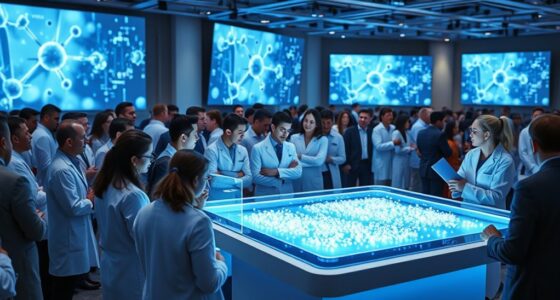
To prevent misuse of molecular machines, you should follow strict ethical guidelines and adhere to established regulatory frameworks. Stay informed about evolving safety standards and participate in ongoing discussions about responsible development. Promoting transparency, accountability, and a culture of responsibility helps safeguard against malicious use. By understanding potential risks and supporting responsible innovation, you contribute to a safer environment. Continuing further will reveal more ways to guarantee molecular machines serve society positively.
Key Takeaways
- Establish and enforce comprehensive ethical guidelines to govern the development and application of molecular machines.
- Implement strict regulatory frameworks with safety protocols, access controls, and oversight mechanisms.
- Promote awareness and education among scientists and the public about potential risks and responsible use.
- Foster international collaboration to develop unified standards and prevent illicit or malicious misuse.
- Encourage ongoing monitoring, review, and adaptation of policies to address emerging threats and technological advancements.
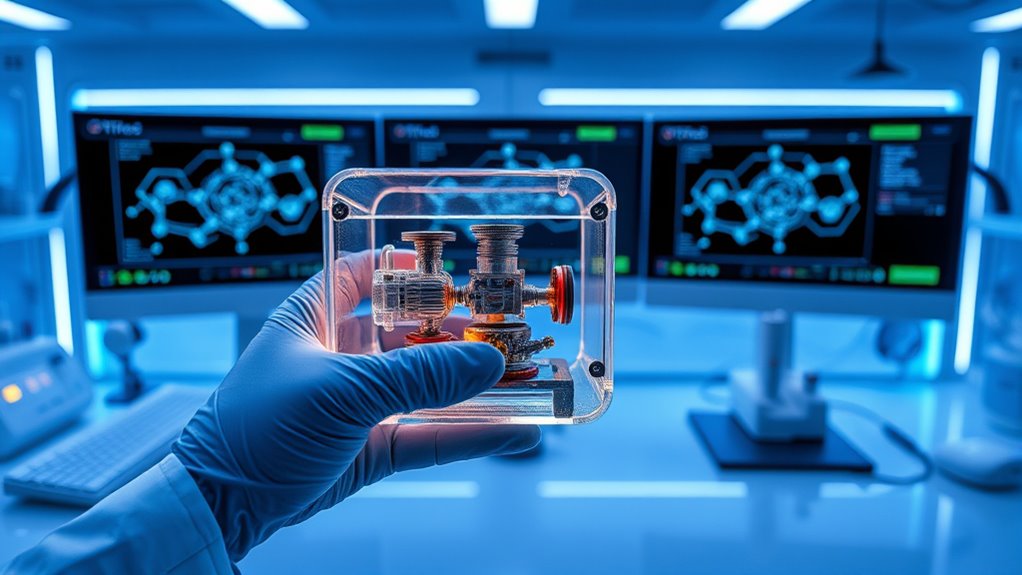
As molecular machines become more advanced and accessible, the risk of their misuse increases considerably. You need to understand that these tiny devices hold enormous potential, but they also pose significant ethical challenges. To prevent harm, establishing clear ethical guidelines is essential. These guidelines act as moral compasses, helping you navigate complex situations where scientific innovation intersects with societal values. They guarantee that the development and application of molecular machines prioritize safety, respect for human rights, and environmental sustainability. Without such standards, there’s a danger that researchers or malicious actors could exploit this technology for harmful purposes, like creating biohazards or manipulating biological systems inappropriately.
Alongside ethical guidelines, regulatory frameworks serve as the backbone for controlling how molecular machines are developed, tested, and deployed. These frameworks set legal boundaries, requiring you to adhere to safety protocols and oversight mechanisms. They help you identify what is permissible and what isn’t, reducing the chance of accidental or intentional misuse. Effective regulation involves collaboration among scientists, policymakers, and security experts to craft policies that stay ahead of technological advances. For instance, regulations might mandate rigorous safety testing or restrict access to certain types of molecular machinery. By complying with these frameworks, you contribute to a responsible scientific environment that minimizes risks and promotes public trust.
You should also recognize that ethical guidelines and regulatory frameworks are dynamic; they evolve as your understanding of molecular machines deepens and as new risks emerge. Staying informed about these developments is essential for you, especially if you’re involved in research or application. Participating in discussions about policy updates and ethical standards allows you to influence how these guidelines shape future practices. Furthermore, fostering a culture of responsibility within your team or organization can reinforce adherence to these principles. Encourage transparency, accountability, and continuous education on best practices to guarantee everyone understands their role in preventing misuse.
Additionally, promoting awareness of the potential risks associated with molecular machines among the scientific community and the public can help build a collective responsibility to prevent misuse and address ethical concerns proactively. Ultimately, your commitment to upholding ethical standards and complying with regulatory frameworks helps create a safer environment for innovation. It signals your dedication not just to scientific progress but also to protecting society from potential threats. As molecular machines become more powerful, your proactive stance against misuse becomes increasingly essential. By integrating ethical guidelines into your work and respecting regulatory frameworks, you help guarantee that this groundbreaking technology benefits humanity without crossing moral or legal boundaries. In doing so, you contribute to a future where molecular machines realize their full potential responsibly, safeguarding the well-being of all.
Frequently Asked Questions
How Can International Regulations Keep Pace With Rapid Molecular Machine Advancements?
You can help guarantee international policy keeps pace by advocating for adaptive regulatory frameworks that evolve with technological advances. Engage with policymakers to emphasize the importance of global collaboration and sharing information. Support initiatives that promote proactive regulations, and stay informed about scientific developments. By doing so, you contribute to creating effective international policies that address the rapid progress in molecular machines, reducing risks and promoting responsible innovation worldwide.
What Are the Ethical Considerations in Deploying Molecular Machines Commercially?
When deploying molecular machines commercially, you must consider synthetic ethics and moral frameworks to guarantee responsible use. You’re responsible for evaluating risks, benefits, and societal impacts, making sure these technologies align with ethical standards. By actively engaging with diverse perspectives and establishing transparent guidelines, you help prevent misuse and promote beneficial applications, ensuring that advancements serve humanity without compromising moral integrity.
How Can Researchers Detect Unauthorized Use of Molecular Machines?
Some might argue that detecting misuse of molecular machines is impossible, but with molecular monitoring, you can identify unauthorized activity. You should develop sensors that track unique molecular signatures and employ misuse detection algorithms to flag anomalies. Regularly analyzing these signals helps you catch unauthorized use early. By implementing these techniques, you guarantee responsible deployment and safeguard against potential misuse, maintaining ethical standards and security.
What Role Do Public Awareness and Education Play in Prevention Strategies?
You play a crucial role in prevention by supporting public understanding and educational outreach about molecular machines. When you promote awareness, you help people recognize potential risks and ethical concerns. Educating the public fosters responsible use and discourages misuse. Your efforts empower communities to stay informed, advocate for safe practices, and collaborate with researchers to guarantee molecular machines are used ethically and securely, ultimately reducing the chances of misuse.
Are There Technological Safeguards to Prevent Malicious Manipulation of Molecular Systems?
Yes, there are technological safeguards in place to prevent malicious manipulation of molecular systems. You can implement molecular security measures like encryption and authentication protocols to protect sensitive data. Safeguard protocols also include physical controls, monitoring systems, and fail-safe mechanisms that detect and prevent unauthorized access or tampering. These combined efforts help guarantee the integrity of molecular machines and reduce the risk of malicious misuse.
Conclusion
To prevent misuse of molecular machines, stay vigilant and support strict regulations. Imagine a scenario where someone uses these devices to create harmful substances; without oversight, dangers escalate. By implementing proper controls and ethical guidelines, you guarantee these powerful tools benefit society rather than harm it. Remember, responsible development and oversight are key—your awareness and actions can help keep molecular machines a force for good, safeguarding future innovations from potential abuse.