

Nanotech sensors in automobiles offer high accuracy in detecting temperature, pressure, and chemical changes, making your vehicle safer and more efficient. Their nanoscale materials boost durability, resist wear, and withstand harsh conditions like extreme temperatures and vibrations. Although manufacturing costs are higher now, they are decreasing, paving the way for widespread use. These sensors can improve safety features and vehicle performance profoundly. Keep exploring to find out how this technology could transform your driving experience.
Key Takeaways
- Nanotech sensors detect minute environmental changes, improving vehicle safety, diagnostics, and efficiency.
- Built with durable nanoscale materials, they withstand harsh conditions and reduce maintenance needs.
- Despite higher initial costs, manufacturing advancements are decreasing expenses, increasing adoption potential.
- They enhance vehicle systems like collision avoidance, adaptive cruise control, and real-time monitoring.
- As costs decline, nanotech sensors are expected to become standard, driving automotive innovation and safety.

Nanotech sensors are transforming how automobiles monitor and respond to their environment, offering unprecedented precision and efficiency. These tiny devices, enhanced by nanotechnology, enable your vehicle to detect even the slightest changes in temperature, pressure, and chemical composition with remarkable accuracy. One of the key benefits is their impressive sensor durability; because they are constructed with nanoscale materials, they resist wear and corrosion far better than traditional sensors. This durability means your vehicle’s sensors can operate reliably over longer periods, reducing the need for frequent replacements and maintenance. As a result, automakers see a clear advantage in investing in these durable sensors, knowing they can withstand harsh conditions like extreme temperatures, vibrations, and exposure to chemicals without losing functionality.
Nanotech sensors offer unmatched durability and precision, transforming automotive monitoring and response systems.
However, integrating nanotech sensors into vehicles does come with challenges, particularly regarding manufacturing costs. Producing these sensors at scale requires advanced techniques that can be expensive due to the precision and complexity involved in working at the nanoscale. While initial costs are higher, economies of scale are gradually helping to lower manufacturing expenses. Automakers and suppliers are working to streamline production processes, aiming to bring down costs without compromising sensor quality. As these costs decrease, nanotech sensors will become more accessible for mass-market vehicles, enabling widespread adoption and further innovation in automotive safety and performance.
You’ll notice that as these sensors become more affordable and durable, they open up new possibilities for vehicle systems. For instance, they can improve collision avoidance, adaptive cruise control, and real-time diagnostics, making driving safer and more efficient. The sensors’ small size allows them to be embedded in various parts of the vehicle without adding significant weight or bulk, which is essential for maintaining vehicle performance and fuel efficiency. Furthermore, their enhanced durability means you won’t have to worry about sensor failure due to environmental stressors, providing consistent and reliable data to your vehicle’s onboard systems.
In the end, the combination of high sensor durability and decreasing manufacturing costs positions nanotech sensors as a game-changer in the automotive industry. They bring together longevity, precision, and affordability in a way that traditional sensors simply can’t match. Your vehicle’s ability to adapt and respond to its environment will be more sophisticated than ever, thanks to these tiny yet powerful sensors. As technology advances and production becomes more cost-effective, you can expect to see nanotech sensors become a standard feature, pushing the boundaries of automotive innovation and safety.
nanotech sensors for cars
As an affiliate, we earn on qualifying purchases.
As an affiliate, we earn on qualifying purchases.
Frequently Asked Questions
How Do Nanotech Sensors Improve Vehicle Safety Features?
Nanotech sensors improve your vehicle’s safety by enabling precise sensor integration, which allows for real-time data collection. These sensors enhance data accuracy, so your safety systems respond faster and more reliably to road conditions or potential hazards. This means you benefit from better collision avoidance, improved braking responses, and smarter driver assistance features. Ultimately, nanotech sensors help keep you safer by providing more reliable, accurate information for your vehicle’s safety systems to act on promptly.
What Is the Lifespan of Nanotech Sensors in Cars?
Nanotech sensors in cars typically last around 5 to 10 years, depending on sensor durability and degradation factors. You should expect their lifespan to be impacted by exposure to extreme temperatures, vibrations, and road debris. Regular maintenance and timely replacements can help you maximize their performance. Keep an eye out for signs of sensor degradation, such as inaccurate readings or system errors, to ensure your vehicle remains safe and efficient.
Are Nanotech Sensors Cost-Effective for Mass Automobile Production?
You’ll find that nanotech sensors can be cost-effective for mass automobile production when a thorough cost analysis shows they reduce long-term maintenance and improve safety. However, you should consider manufacturing challenges, such as integrating advanced nanotech components into existing assembly lines. Although initial costs might be higher, the potential for enhanced vehicle performance and durability can make them a worthwhile investment, ultimately benefiting your production process and end-users.
How Do Nanotech Sensors Impact Vehicle Maintenance Costs?
You might find that nanotech sensors gently reduce your vehicle maintenance costs over time. Their advanced sensor durability means they last longer, helping you avoid frequent repairs. Although manufacturing costs can be higher initially, the long-term savings and improved reliability make them a wise investment. Fundamentally, these sensors work quietly behind the scenes, offering you a smoother, more cost-effective driving experience without the need for constant attention.
What Are the Environmental Impacts of Using Nanotech Sensors in Automobiles?
You might wonder about the environmental impacts of nanotech sensors, especially around battery efficiency and sensor recyclability. These sensors can improve vehicle energy use, reducing emissions, but manufacturing them may involve hazardous materials. Recycling sensors is vital to prevent waste and recover valuable components. Overall, they offer benefits like lower emissions and better resource management, but responsible production and disposal are essential to minimize ecological risks.
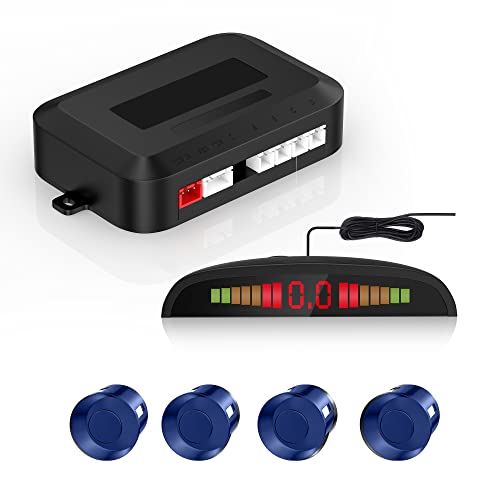
EKYLIN Car Auto Vehicle Reverse Backup Sensors System with 4 Parking Sensors Distance Detection + LED Distance Display + Sound Warning (Blue Color)
Perfectly fit your car with universal hole saw. With a drill head, convenient to drill hole on the…
As an affiliate, we earn on qualifying purchases.
As an affiliate, we earn on qualifying purchases.
Conclusion
As you embrace nanotech sensors in your car, you’ll find safety and innovation go hand in hand. These tiny devices detect issues faster, making driving smarter and safer. Yet, amid all this high-tech advancement, the simplicity of a well-maintained vehicle remains essential. Nanotech brings precision where chaos once reigned, but it’s your awareness that truly keeps you secure. In this blend of innovation and intuition, your journey becomes safer and more seamless than ever before.

BlueDriver Bluetooth Pro OBDII Scan Tool for iPhone & Android – No Subscription Fee – OBD2 Car Scanner and Code Reader – Diagnose Check Engine, ABS, SRS, Airbag & 7000+ Issues on Vehicles 1996+
[Pro OBD2 Scanner] – BlueDriver is the easiest way to scan and understand your vehicle like a professional…
As an affiliate, we earn on qualifying purchases.
As an affiliate, we earn on qualifying purchases.

FLEXMAN 2Pcs Thin Film Pressure Sensor, 20g~3kg Flexible Nanoscale Pressure Sensitive Resistor, Highly Conductive Sensor
CONDUCTIVE SENSITIVITY: The flexible thin film pressure sensitive sensor is composed of polyester film with excellent mechanical properties,…
As an affiliate, we earn on qualifying purchases.
As an affiliate, we earn on qualifying purchases.