

Nanocomposites improve strength without adding much weight by embedding nanoscale particles into traditional materials. These nanoparticles create a stronger, more durable network that effectively distributes stress and prevents cracks. As a result, the material resists deformation better while remaining lightweight. By choosing specific nanoparticles and controlling their dispersion, you can tailor the properties for precise applications. Keep exploring to discover how these advanced materials can transform industries and your projects.

Get the latest gadgets delivered free — and shop member deals
- Fast, free delivery on millions of items
- Access to Prime Big Deal Days deals on October 6–7
- Prime Video, Amazon Music and more included
Key Takeaways
- Nanoparticles enhance stress distribution and crack resistance without significantly increasing material weight.
- Incorporating nanoscale particles creates a stronger, more durable network within the host material.
- Properly embedded nanoparticles improve the matrix’s inherent properties, boosting strength without adding mass.
- Customizing nanoparticle type and concentration tailors strength enhancements to specific lightweight applications.
- Nanocomposites enable high-strength, lightweight solutions for industries like aerospace and automotive.
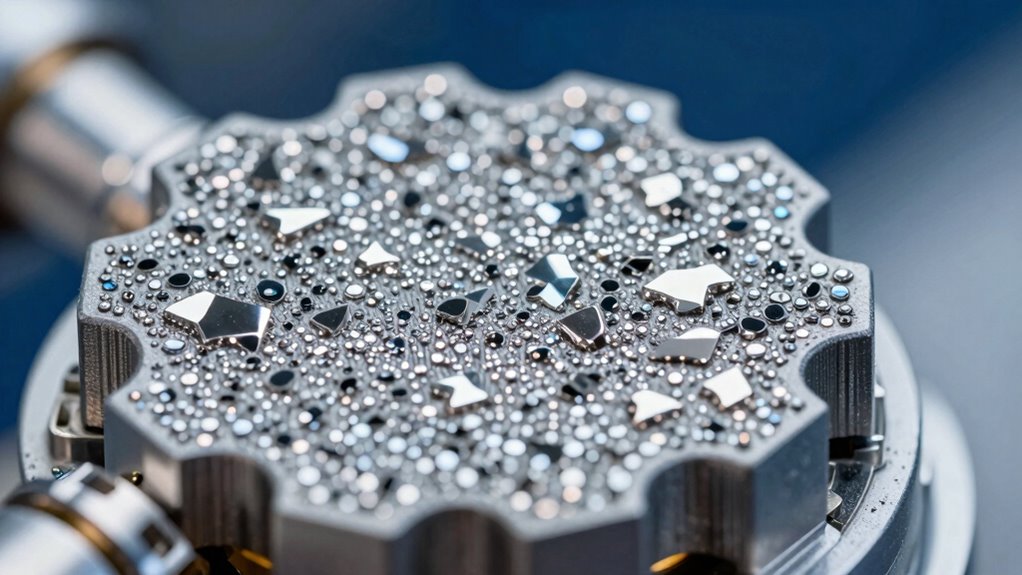
Nanocomposites are transforming material strength by incorporating nanoscale particles into traditional matrices, resulting in markedly improved mechanical properties. When you consider how these advanced materials work, it’s clear that nanocomposite applications are everywhere, from aerospace to electronics, because they offer remarkable material property enhancement without adding significant weight. Unlike traditional reinforcement methods, like adding bulk metal or fiberglass, nanocomposites leverage tiny particles—often just a few nanometers in size—that integrate seamlessly into the host material, boosting its strength, stiffness, and durability while keeping the overall weight low.
Nanocomposites enhance strength and durability without adding weight, revolutionizing materials across aerospace, electronics, and more.
This unique ability to improve properties without increasing mass is what makes nanocomposites so appealing. For example, in aerospace engineering, where reducing weight is critical for fuel efficiency and performance, nanocomposite materials can replace heavier metals or composites. You get the benefit of higher strength-to-weight ratios, meaning aircraft parts can be lighter yet more durable. Similarly, in automotive design, nanocomposites contribute to lighter vehicle bodies that don’t sacrifice safety or longevity. The key is that the nanoscale particles enhance the matrix’s inherent properties, enabling you to achieve significant material property enhancement with minimal weight gain.
The secret behind these improvements lies in the way nanoparticles interact with the host material at the molecular level. When embedded properly, these particles create a more robust network within the composite, distributing stress more effectively and preventing crack propagation. This results in a material that resists deformation and failure better than traditional options. Because of this, nanocomposites are increasingly used in applications requiring high strength, toughness, and lightweight characteristics—think sports equipment, medical devices, and even infrastructure components. Each application benefits from the fine-tuned balance between strength and weight that nanocomposite technology provides. Additionally, the ability to engineer specific properties by varying nanoparticle types and concentrations further enhances their application potential.
Furthermore, the versatility of nanocomposite applications allows you to tailor materials to specific needs. By selecting the right type of nanoparticles—such as carbon nanotubes, nanoclays, or metallic nanoparticles—you can optimize the material’s properties for particular environments or stresses. This customization means that you’re not limited to a one-size-fits-all solution; instead, you can engineer nanocomposites that deliver maximum performance with minimal weight penalty. Additionally, ongoing research into nanoparticle-matrix interactions is helping to further enhance the efficiency and effectiveness of nanocomposites. Recent advancements in material engineering are also paving the way for even more innovative applications. The ability to precisely control nanoparticle dispersion within the matrix further amplifies the benefits of nanocomposites, making them increasingly vital across industries. Ultimately, this capability to enhance material properties without adding weight opens up new possibilities in design and engineering, pushing the boundaries of what’s possible with traditional materials.
nanocomposite materials for aerospace
As an affiliate, we earn on qualifying purchases.
As an affiliate, we earn on qualifying purchases.
Frequently Asked Questions
Are Nanocomposites Cost-Effective for Large-Scale Manufacturing?
Nanocomposites can be cost-effective for large-scale manufacturing if you conduct a thorough cost analysis, considering material costs, processing, and potential savings from enhanced performance. As market adoption grows, economies of scale lower production costs, making them more attractive. While initial expenses might be higher, long-term benefits like improved strength and reduced weight often justify the investment, especially in industries aiming for innovative, lightweight solutions.
How Do Nanocomposites Affect Material Durability Over Time?
Nanocomposites enhance your material’s durability over time by offering superior long-term stability and wear resistance. You’ll notice that they resist degradation from environmental factors like moisture, chemicals, and temperature fluctuations better than traditional materials. This means your products maintain their performance longer, reducing the need for frequent replacements. Overall, nanocomposites give you a reliable, durable solution that withstands the test of time and abrasive use.
Can Nanocomposites Be Recycled or Reused Effectively?
You can recycle and reuse nanocomposites, but recycling challenges exist due to their complex structures and the difficulty in separating nanomaterials from the matrix. To overcome this, effective reuse strategies include grinding nanocomposites into powders or developing processes that allow for easier disassembly. These methods help extend their lifecycle, reduce waste, and promote sustainability, though ongoing research aims to improve recycling efficiency further.
What Industries Benefit Most From Nanocomposite Applications?
You’ll find that aerospace, automotive, and electronics industries benefit greatly from nanocomposite applications, embracing material innovation to enhance performance. These sectors use nanocomposites for lightweight, durable components, reducing weight while maintaining strength. The versatility of nanocomposite applications allows for smarter, more efficient designs, making them invaluable in high-performance fields. As a result, these industries stay at the forefront of technological advancements, leveraging nanocomposites to achieve both innovation and sustainability.
Are There Environmental or Health Risks Associated With Nanocomposites?
You should know that nanocomposites can pose environmental and health safety concerns. Their tiny particles may lead to environmental impact if released, contaminating water or soil. Additionally, handling nanomaterials without proper safety measures could pose health risks, such as respiratory issues or skin irritation. It’s essential to follow safety protocols and conduct thorough impact assessments to minimize these risks and guarantee responsible use of nanocomposites.
lightweight high strength nanocomposite
As an affiliate, we earn on qualifying purchases.
As an affiliate, we earn on qualifying purchases.
Conclusion
By harnessing nanocomposites, you open a material revolution that’s stronger than steel and lighter than a feather. Imagine creating structures so resilient that they could withstand the force of a meteor strike—without adding a single ounce of extra weight. This breakthrough isn’t just a step forward; it’s a giant leap for your projects, turning the impossible into reality. Embrace nanocomposites today and elevate your designs to a level that’s nothing short of extraordinary.
nanoparticle reinforced composites
As an affiliate, we earn on qualifying purchases.
As an affiliate, we earn on qualifying purchases.
As an affiliate, we earn on qualifying purchases.
Fall Picks
fall essentials
As an affiliate, we earn on qualifying purchases.