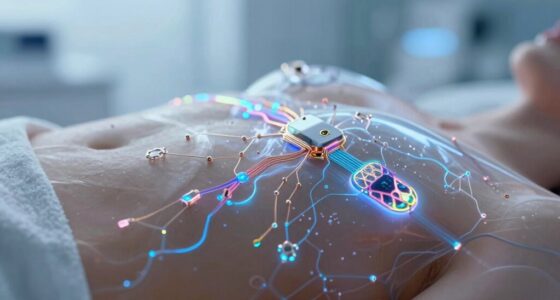
Precision nanomedicine is all about using tiny particles called nanoparticles to target treatments directly to diseased cells, improving effectiveness and reducing side effects. It works like guided missiles, delivering drugs right where they’re needed, even crossing barriers that larger molecules can’t. This approach also enhances diagnostics, allowing early detection and continuous health monitoring. If you keep exploring, you’ll discover how these innovations are shaping the future of personalized healthcare and better outcomes.
Key Takeaways
- Precision nanomedicine uses tiny nanoparticles to target specific disease cells, minimizing harm to healthy tissues.
- It enables highly accurate diagnosis and early detection through nanoscale tools and sensors.
- The approach personalizes treatments based on individual patient needs for better effectiveness.
- Advanced materials ensure safety and biocompatibility within the body during treatment.
- Overall, it aims to make medicine more efficient, less invasive, and tailored for better health outcomes.
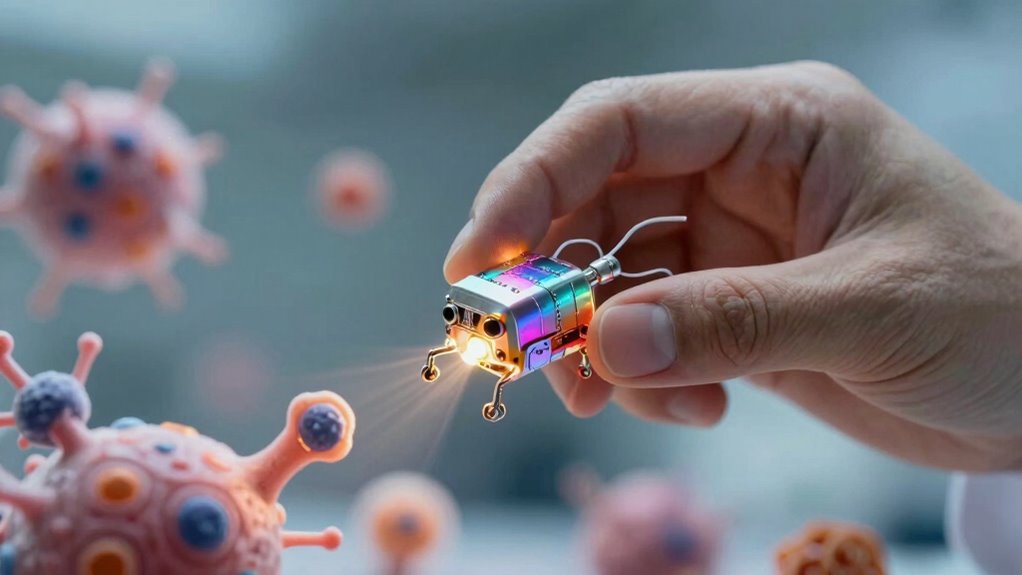
Have you ever wondered how tiny particles can revolutionize medicine? It’s a fascinating idea that nanomedicine makes possible. These minuscule particles, often measured in nanometers, are changing how we approach healthcare. At the core of this revolution is the concept of precise nanomedicine, which aims to target diseases more accurately and efficiently than ever before. Instead of relying on broad treatments that affect the entire body, nanomedicine allows for highly specific interventions, reducing side effects and increasing effectiveness.
Tiny particles are transforming medicine with targeted, precise treatments that reduce side effects and boost effectiveness.
One of the most significant applications is in drug delivery. Traditional medications often circulate throughout the body, affecting not only the disease but healthy tissues as well. Nanoparticles, however, can be engineered to deliver drugs directly to diseased cells, such as cancerous tumors. Because of their small size, these particles can navigate through biological barriers that larger molecules cannot cross. They can be designed to recognize specific markers on target cells, ensuring that the medication is released precisely where it’s needed. This precision minimizes collateral damage to healthy tissues and maximizes the therapeutic impact. It’s like having a guided missile instead of a bomb dropped over a broad area.
Additionally, nanomedicine is transforming diagnostic techniques. Conventional diagnostic methods often involve invasive procedures or tests that lack pinpoint accuracy. With nanoscale tools, you can now detect diseases at much earlier stages. For example, nanoparticles can attach to specific biomarkers associated with certain conditions, making it possible to identify illnesses like cancer or infections quickly and with high sensitivity. These diagnostic techniques are faster, less invasive, and more precise, enabling earlier intervention and better patient outcomes. They also open the door for continuous health monitoring, where nanosensors can track changes in your body in real-time, alerting you and your healthcare providers to potential issues before symptoms appear. This is especially important because early detection can dramatically improve treatment success rates.
Furthermore, understanding the importance of contrast ratio and other image quality parameters can significantly enhance the effectiveness of nanomedicine in imaging techniques, allowing for even more accurate diagnosis and treatment planning. When you combine these advancements in drug delivery and diagnostics, it’s clear that precision nanomedicine isn’t just about smaller particles; it’s about smarter treatment and detection. It involves integrating advanced materials and innovative design strategies to create more effective solutions. For instance, the development of biocompatible materials ensures that nanoparticles are safe and effective within the body. A comprehensive understanding of biocompatibility is crucial for advancing nanomedicine safely and effectively. It’s about tailoring healthcare to individual needs, improving success rates, and reducing risks. As research continues, you’ll likely see more targeted therapies and early diagnostic tools becoming part of routine medicine, making treatment more effective and personalized. In brief, nanomedicine is transforming healthcare into a more precise, efficient, and patient-centered practice.

Nanoparticle Drug Delivery Systems for Cancer Treatment
As an affiliate, we earn on qualifying purchases.
As an affiliate, we earn on qualifying purchases.
Frequently Asked Questions
How Does Nanomedicine Differ From Traditional Medicine?
Nanomedicine differs from traditional medicine because it uses molecular engineering to create tiny particles that enable targeted delivery of treatments. This means you get more precise therapy directly to the affected cells, reducing side effects. Traditional medicine often relies on broader approaches, while nanomedicine’s small scale allows for more personalized and effective solutions, revolutionizing how diseases are treated and managed.
What Are the Main Challenges in Developing Nanomedicine?
Getting the ball rolling on nanomedicine isn’t easy; you face hurdles like targeted delivery, ensuring the tiny particles reach specific cells without harming others. Manufacturing challenges also loom large, demanding precise techniques to produce consistent, safe nanodevices. You must navigate complex science and strict regulations, balancing innovation with safety. Overcoming these obstacles takes ingenuity, patience, and a steady hand to turn groundbreaking ideas into real-world treatments.
Are There Any Safety Concerns With Nanomedicine?
Yes, there are safety concerns with nanomedicine. You should be aware of nanoparticle toxicity, which can cause unforeseen side effects or harm to healthy cells. Additionally, regulatory hurdles exist, making it challenging to guarantee safety standards are met before widespread use. As you develop or use nanomedicine, understanding these risks helps you make informed decisions and advocate for thorough testing and regulation.
How Long Does It Take to Develop a New Nanomedicine?
Developing a new nanomedicine typically takes around 10 to 15 years. During this process, you focus on nanoparticle targeting and refining drug delivery mechanisms to guarantee precision and safety. An interesting statistic shows that only about 12% of nanomedicines make it from initial research to clinical use. This lengthy timeline allows you to address safety concerns, optimize targeting efficiency, and validate effective delivery before bringing a nanomedicine to market.
Will Nanomedicine Replace Existing Treatments Entirely?
Nanomedicine has great potential, but it likely won’t replace existing treatments entirely. Instead, you’ll see it integrated with current therapies, enhancing their effectiveness through targeted delivery and reduced side effects. As research progresses, nanomedicine will complement traditional methods, offering more personalized and precise treatment options. This blend of approaches aims to improve patient outcomes rather than eliminate existing treatments altogether.

Functionalized Magnetic Nanosystems for Diagnostic Tools and Devices: Current and Emerging Research Trends (Micro and Nano Technologies)
As an affiliate, we earn on qualifying purchases.
As an affiliate, we earn on qualifying purchases.
Conclusion
Now that you understand the real meaning of precision nanomedicine, you see how it’s transforming healthcare by targeting treatments with pinpoint accuracy. It’s a game-changer, opening doors to personalized therapies that work smarter, not harder. As the saying goes, it’s not just about putting all your eggs in one basket, but about focusing your efforts where they matter most. With continued advancements, the future of medicine is brighter and more tailored to you than ever before.

Nanosensors as Robust Non-Invasive Diagnostic Tools for Remote Health Monitoring (Advances in Smart Healthcare Technologies)
As an affiliate, we earn on qualifying purchases.
As an affiliate, we earn on qualifying purchases.

Metallic Nanoparticles in Cancer Therapy
As an affiliate, we earn on qualifying purchases.
As an affiliate, we earn on qualifying purchases.