Nano biointerfaces are tiny boundaries where biological and synthetic materials meet, offering huge potential for advances in medicine and technology. They enable precise control over interactions at the nanoscale, improving drug delivery, diagnostics, tissue repair, and regenerative therapies. These interfaces allow for smarter, more targeted solutions that can reduce side effects and enhance effectiveness. If you keep exploring, you’ll discover even more about how these tiny interfaces are shaping the future of healthcare and innovation.
Key Takeaways
- Nano biointerfaces enable precise interactions between biological and synthetic materials, driving innovations in nanotechnology and medicine.
- They enhance targeted drug delivery, reducing side effects and improving treatment efficacy through cell-specific nanoparticle design.
- Biointerfaces improve biosensor sensitivity, allowing early detection of diseases with minimal biological samples.
- They influence tissue engineering by guiding cell behavior and promoting regeneration at the nanoscale.
- Future advancements in nano biointerfaces promise smarter, safer, and more adaptable medical and technological solutions.
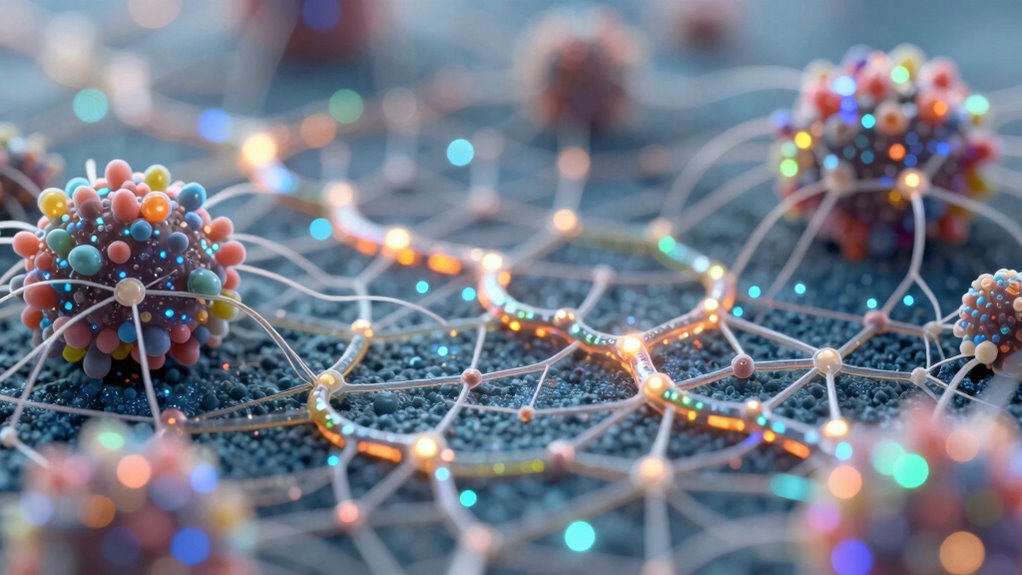
Have you ever wondered how the tiniest interactions at the nanoscale can revolutionize medicine and technology? That’s the essence of nano biointerfaces—complex, minuscule boundaries where biological and synthetic materials meet. These interfaces aren’t just meeting points; they’re dynamic zones where groundbreaking nanotechnology applications are transforming how we diagnose, treat, and understand health. When you explore biointerface engineering, you see how scientists manipulate these interfaces to enhance compatibility, improve drug delivery, or create smarter sensors. The potential here is enormous because by understanding and controlling these interactions at the nanoscale, you can develop devices and systems that work more efficiently, precisely, and with less invasiveness.
Nano biointerfaces are tiny, dynamic zones transforming medicine through precise, innovative interactions at the nanoscale.
In the domain of nanotechnology applications, nano biointerfaces serve as the foundation for innovations like targeted drug delivery systems. Imagine nanoparticles designed to recognize specific cells—cancer cells, for example—and deliver medication directly to them, sparing healthy tissue. This precision reduces side effects and boosts treatment effectiveness. Biointerface engineering enables you to optimize these particles so they interact seamlessly with biological environments, improving stability and reducing immune rejection. It’s a game-changer because it means therapies become more personalized, less invasive, and dramatically more effective.
Beyond drug delivery, nano biointerfaces also pave the way for advanced biosensors. These sensors detect biological signals at an unprecedented level of sensitivity. For instance, you could have a sensor that identifies early markers of disease from a tiny blood sample, long before symptoms appear. By engineering the biointerface, you enhance the sensor’s ability to recognize specific biomolecules, making early diagnosis faster and more reliable. This kind of innovation accelerates personalized medicine, allowing treatments to be tailored based on real-time biological data. Additionally, understanding the nanoscale interactions involved in these interfaces is crucial for optimizing sensor performance.
Moreover, biointerface engineering opens up exciting possibilities in tissue engineering and regenerative medicine. By designing surfaces at the nanoscale, you influence cell behavior—guiding stem cells to grow into specific tissues or encouraging healing in damaged areas. Such control over cell-material interactions at the biointerface level could lead to more effective implants and healing strategies.
In essence, nano biointerfaces blend the tiniest physical interactions with big-impact applications. They allow you to push the boundaries of what’s possible in medicine and technology by enabling more precise, adaptable, and bio-compatible solutions. As research advances, these interfaces will continue to evolve, opening avenues for therapies and devices that are smarter, safer, and more attuned to the complexities of biological systems. The future of medicine is at the nanoscale, and biointerface engineering is leading the charge to harness its full potential.

Nanoparticle-Mediated Targeted Drug Delivery Systems
As an affiliate, we earn on qualifying purchases.
As an affiliate, we earn on qualifying purchases.
Frequently Asked Questions
How Do Nano Biointerfaces Differ From Traditional Biomedical Interfaces?
Nano biointerfaces differ from traditional biomedical interfaces by offering enhanced precision and functionality at the nanoscale. You benefit from improved biocompatibility and reduced biofouling challenges, making them more effective for targeted therapies. However, you must navigate regulatory hurdles since their novel nature requires rigorous testing. These interfaces can revolutionize medicine, but overcoming these challenges is essential for widespread adoption and safe, effective use.
What Materials Are Commonly Used in Creating Nano Biointerfaces?
You typically use materials like gold, silica, and polymers for nano biointerfaces because their nanomaterial properties allow precise surface modification. These modifications help tailor interactions with biological systems, improving compatibility and functionality. Gold nanoparticles, for instance, are popular due to their stability and ease of surface modification, making them ideal for targeted drug delivery and biosensing applications. Surface modification enhances these materials’ performance in biomedical contexts.
Are Nano Biointerfaces Safe for Long-Term Medical Applications?
You might wonder if nano biointerfaces are safe for long-term use. Generally, they show promising long-term stability and biocompatibility, but concerns remain. Researchers continuously test for biocompatibility issues, ensuring materials don’t cause adverse reactions. While advancements improve safety, ongoing studies aim to address long-term stability and biocompatibility concerns, making these interfaces more reliable for medical applications. Stay informed about emerging research to understand their evolving safety profile.
How Scalable Are Nano Biointerface Manufacturing Processes?
Nano biointerface manufacturing scales fairly well, but scaling challenges do exist. You’ll need advanced manufacturing innovations to address issues like maintaining precision and consistency at larger volumes. Techniques such as automation and continuous production help streamline processes, making large-scale production more feasible. While hurdles remain, ongoing research and technological advances are steadily improving scalability, bringing nano biointerfaces closer to widespread medical application.
What Are the Environmental Impacts of Nano Biointerface Production?
You might think nano biointerface production has minimal environmental impact, but environmental risks are real if not managed properly. Manufacturing can release nanoparticles and chemicals that threaten ecosystems and human health. To address this, sustainability strategies like green synthesis, waste reduction, and eco-friendly materials are essential. By prioritizing these approaches, you can minimize environmental risks and guarantee eco-conscious development of nano biointerfaces.

Biosensor Based Advanced Cancer Diagnostics: From Lab to Clinics
As an affiliate, we earn on qualifying purchases.
As an affiliate, we earn on qualifying purchases.
Conclusion
As you explore nano biointerfaces, you realize how their tiny scale unexpectedly unveil vast potential for medicine and technology. It’s almost a coincidence—these minuscule interfaces could be the key to revolutionary treatments and innovations. By bridging biology and nanotechnology, you might find yourself at the forefront of a future where the smallest interfaces create the biggest impacts. The universe seems to conspire in your favor, hinting at a fascinating, interconnected future waiting to be discovered.
Nanotechnology and Tissue Engineering: The Scaffold
- Condition: Used Book in Good Condition
As an affiliate, we earn on qualifying purchases.
As an affiliate, we earn on qualifying purchases.

Nanomedicine, Volume I: Basic Capabilities
As an affiliate, we earn on qualifying purchases.
As an affiliate, we earn on qualifying purchases.