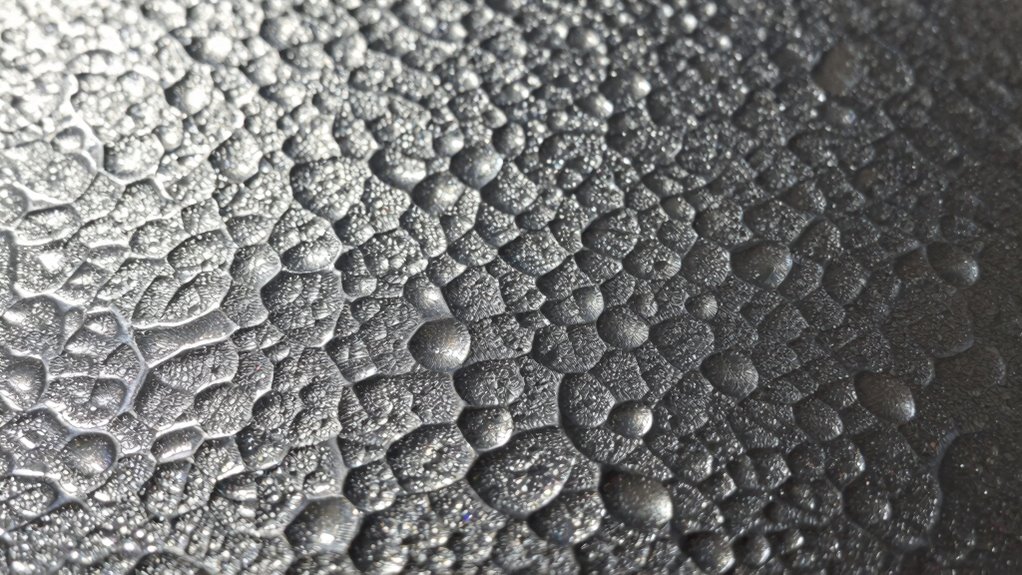

Nano textures subtly influence how surfaces behave by changing properties like adhesion, friction, and wettability at tiny scales. When you have nano roughness, it increases contact points, which can improve or weaken adhesion depending on design. These textures also alter surface energy, affecting how substances spread or stick. Understanding these unseen effects helps in optimizing coatings, adhesives, and materials—and if you’re curious, there’s much more to discover about how nano textures shape surface interactions.

Get the latest gadgets delivered free with Prime
- Fast, free delivery on millions of items
- Prime Video, Amazon Music and more included
- Member-only deals all year
Key Takeaways
- Nano textures modify surface energy and roughness, affecting adhesion, friction, and wettability at the microscopic level.
- Tiny surface structures influence how substances spread, stick, or slide, impacting material performance.
- Precise nano roughness enhances bonding strength while preventing issues like air entrapment.
- Nano textures enable control over surface properties, such as making surfaces superhydrophobic or anti-fouling.
- Advances in nano surface engineering facilitate innovative applications across biomedical, aerospace, and electronics industries.
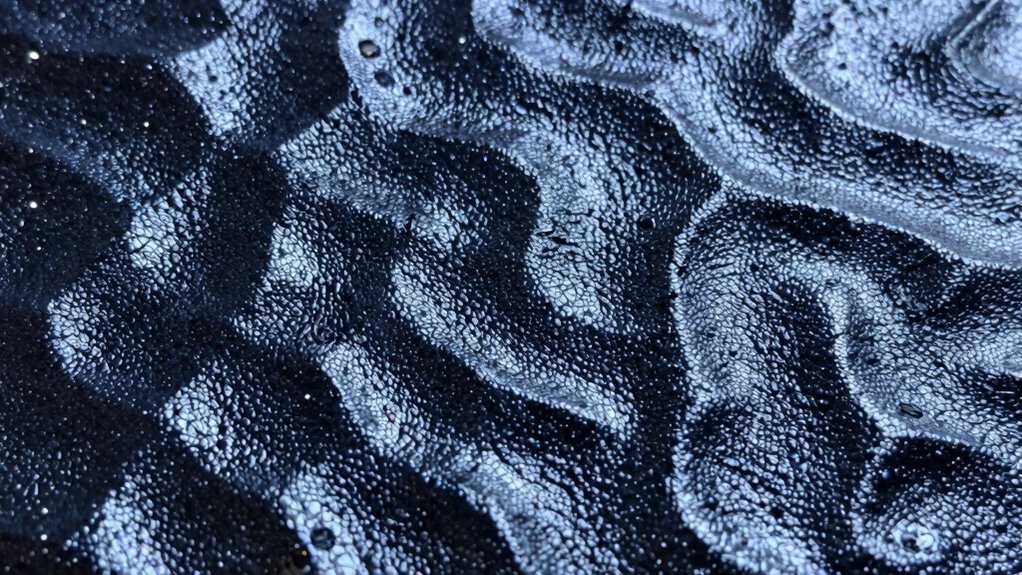
Have you ever wondered how tiny surface structures can dramatically influence material properties? It’s fascinating how nano textures—those minuscule patterns and roughness at the nanometer scale—can have such a profound impact on how surfaces behave. When you look closely at a material’s surface, you might notice it’s not perfectly smooth; instead, it’s dotted with tiny variations that influence everything from friction to how well substances stick to it. Surface roughness at the nanoscale isn’t just a visual detail—it’s a key factor that shapes adhesion properties, which determine how effectively two surfaces bond or resist separation.
Nano textures create a complex landscape on the material’s surface, affecting how other materials or liquids interact with it. For example, rougher surfaces at the nanoscale typically provide more contact points, which can enhance adhesion. This means that adhesives or coatings will cling more tightly, improving their effectiveness. Conversely, if the surface is too rough or irregular, it might trap air or create weak points, reducing overall adhesion strength. You need to reflect on this balance when designing surfaces for specific applications, whether it’s for medical implants that require strong bonding or for anti-fouling coatings that need to resist debris buildup.
Nano textures influence adhesion by balancing contact points and surface irregularities for optimal bonding and performance.
The influence of nano textures on adhesion isn’t just about surface roughness—it’s about how those tiny structures interact with the molecules involved. When a liquid or adhesive comes into contact with a textured surface, the nanostructures can increase the real contact area, leading to better adhesion. This is especially crucial in fields like electronics, where tiny contacts need to be reliable and durable. Additionally, nano textures can modify surface energy, making surfaces more or less receptive to bonding depending on the desired outcome. For example, creating a textured surface that’s superhydrophobic reduces adhesion to water, which is useful for self-cleaning surfaces.
Understanding these interactions at the nano level allows you to tailor surface properties precisely. You can engineer nano textures to either promote or inhibit adhesion, depending on your needs. By controlling surface roughness at this scale, you influence how substances spread, stick, or slide across a surface. This is why nano textures are increasingly used in industries ranging from biomedical devices to aerospace. They enable you to optimize performance, durability, and functionality by manipulating the unseen yet impactful features of a surface. Ultimately, recognizing how nano textures control surface roughness and adhesion properties empowers you to innovate solutions that leverage these subtle, powerful effects.
Furthermore, advancements in surface engineering utilize nano textures to precisely manipulate these interactions for enhanced material performance. Recognizing how nano-scale surface features influence adhesion allows for the development of more efficient and durable materials across various fields. Additionally, ongoing research into nano-roughness control is expanding our ability to design surfaces with tailored properties, opening new avenues for technological innovation.
As an affiliate, we earn on qualifying purchases.
Frequently Asked Questions
How Are Nano Textures Manufactured at Scale?
You manufacture nano textures at scale using advanced surface patterning and manufacturing techniques like nanoimprint lithography, chemical vapor deposition, or reactive ion etching. These methods allow precise control over surface features, enabling mass production. You typically start with a master mold or template, then replicate or transfer the nano-scale patterns onto various materials efficiently. This combination of techniques guarantees high-quality, consistent nano textures suitable for large-scale applications.
Do Nano Textures Affect Surface Durability Long-Term?
Nano textures act like a shield, subtly strengthening surfaces over time. They influence surface roughness, making it less prone to wear and tear, which boosts long-term durability. As you incorporate nano textures, you fundamentally give your surfaces a microscopic armor, enhancing wear resistance. This microscopic patterning helps prevent scratches and deterioration, ensuring your surfaces stay resilient and vibrant, even after extended use.
Can Nano Textures Be Customized for Specific Applications?
Yes, nano textures can be customized for specific applications through nano patterning techniques. You can tailor surface properties by designing precise nano-scale patterns that influence adhesion, friction, or wettability. This level of surface customization allows you to optimize performance for various industries, such as electronics, biomedical devices, or coatings. By controlling nano patterning, you guarantee your surfaces meet exact functional requirements, enhancing durability, functionality, and aesthetic appeal.
How Do Nano Textures Interact With Biological Systems?
Nano textures interact with biological systems by influencing cellular adhesion and biofilm resistance. When you design surfaces with specific nano textures, you can reduce bacterial attachment and biofilm formation, making them more resistant to microbial growth. These textures can also promote or inhibit cellular adhesion, depending on their pattern and size. By customizing nano textures, you create surfaces that effectively control biological interactions, enhancing medical devices or antimicrobial surfaces.
What Are the Environmental Impacts of Nano Textured Surfaces?
You observe nano textured surfaces impacting the environment by influencing eco-friendly coatings and wildlife interactions. These textures can reduce chemical use, minimize waste, and promote sustainability, but they may also pose risks to aquatic and terrestrial organisms if particles detach or leach out. You must consider their lifecycle and potential accumulation, which could disrupt ecosystems or harm wildlife. Balancing innovation with responsibility helps guarantee these surfaces benefit both industry and the environment.
superhydrophobic nano surface treatment
As an affiliate, we earn on qualifying purchases.
As an affiliate, we earn on qualifying purchases.
Conclusion
As you observe a smooth glass surface, it seems flawless, yet beneath lies a world of nano textures quietly shaping its behavior. Just like tiny brushstrokes on a masterpiece, these minuscule patterns influence friction, adhesion, and wettability—often unseen but profoundly impactful. In this delicate dance, the invisible nano textures become the silent artisans, sculpting surface interactions with a subtle finesse that transforms everyday materials into extraordinary ones.
nano roughness adhesion enhancer
As an affiliate, we earn on qualifying purchases.
As an affiliate, we earn on qualifying purchases.
nano surface engineering materials
As an affiliate, we earn on qualifying purchases.
As an affiliate, we earn on qualifying purchases.
Fall Picks
fall essentials
As an affiliate, we earn on qualifying purchases.