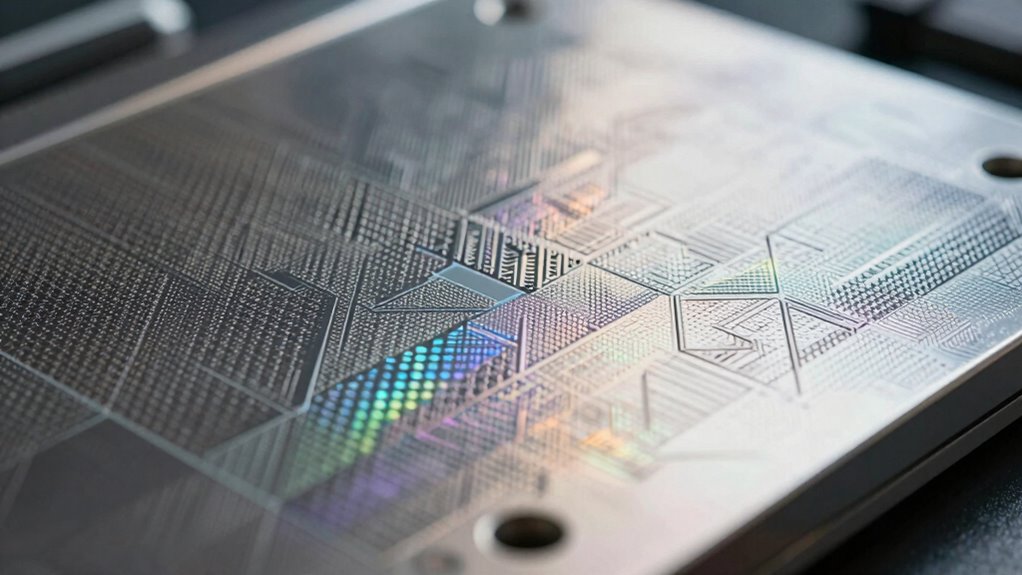
Nanoscale material design impacts your products by enabling precise control over their properties, such as durability, performance, and biocompatibility. By engineering surfaces at the atomic level and leveraging quantum effects, manufacturers can enhance resistance to wear, improve energy efficiency, and create smarter sensors. This combination allows for advanced functionalities that meet specific needs across various industries. Keep exploring how these tiny tweaks make big differences in product success.
Key Takeaways
- Precise atomic control enhances material functionalities, leading to more efficient and tailored electronic and optical devices.
- Surface modifications improve durability, corrosion resistance, and biocompatibility, extending product lifespan and safety.
- Quantum effects enable customization of electrical, magnetic, and optical properties for specialized applications.
- Nanoscale engineering creates antimicrobial and environmentally resistant surfaces, reducing contamination and degradation.
- Integrating quantum and surface strategies optimizes energy storage, sensor sensitivity, and overall device performance.
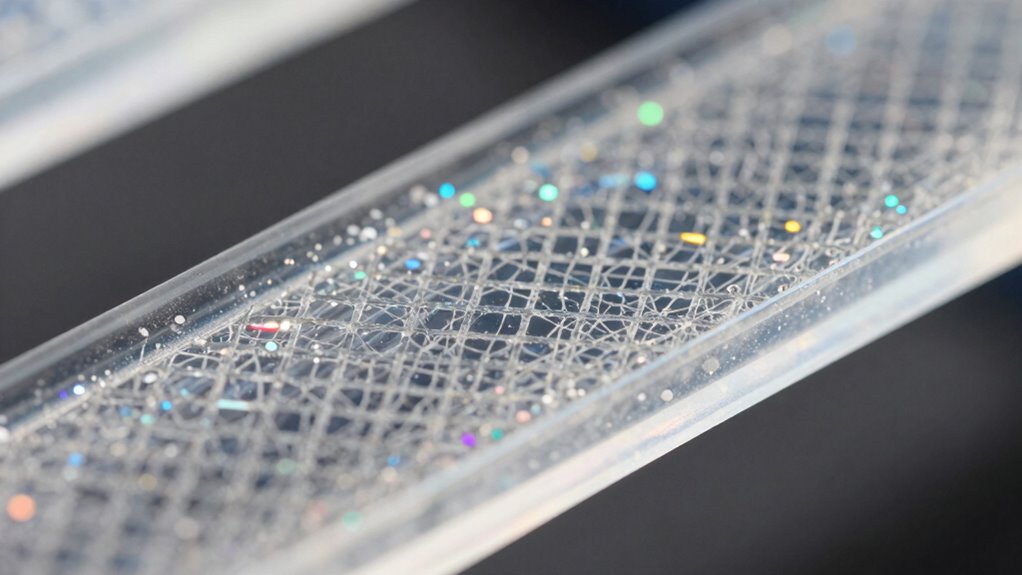
Nanoscale material design is revolutionizing how products are developed across industries by enabling precise control over material properties at the atomic level. When you work with nanomaterials, you tap into quantum effects that dramatically alter how materials behave. At such a tiny scale, electrons behave differently, leading to unique optical, electrical, and magnetic properties. This allows for the development of advanced functional materials with tailored responses to various stimuli. This means you can engineer materials that respond to stimuli in ways traditional ones can’t, opening doors to innovative applications. For example, in electronics, nanoscale design allows for faster, more efficient devices because quantum effects enable better control of electron flow. In medicine, these effects help create targeted drug delivery systems that release medications precisely where needed, minimizing side effects and improving outcomes.
Surface modifications are equally essential in nanoscale material design because they directly influence how materials interact with their environment. When surfaces are engineered at the atomic level, you can enhance properties like adhesion, durability, and biocompatibility. For instance, by applying specific surface modifications, you can make a material more resistant to corrosion or wear, which extends the product’s lifespan. This is especially valuable in industries like aerospace or automotive manufacturing, where durability is critical. In healthcare, surface modifications can improve the integration of implants with biological tissues, reducing rejection and fostering healing. Additionally, these modifications can create antimicrobial surfaces, which are indispensable in medical devices and food packaging, helping prevent the spread of bacteria. Incorporating nanoscale surface engineering** techniques further enhances these effects by precisely tailoring surface interactions at the atomic level. Understanding quantum effects** is crucial because they allow for the design of materials with properties that can be finely tuned for specific needs.
The interplay of quantum effects and surface modifications means you can tailor materials to meet specific application needs, resulting in better product performance. For example, in energy storage, nanoscale design can improve battery efficiency through quantum-controlled electron transport, while surface modifications may enhance electrode stability and lifespan. In sensors, quantum effects can increase sensitivity, and surface engineering can ensure selective detection of target molecules. This dual approach allows you to optimize the entire system, making products more reliable, efficient, and suited to their intended purpose. Recognizing the importance of atomic-level engineering helps in understanding how to utilize these effects effectively in product development.
nanoscale surface modification coatings
As an affiliate, we earn on qualifying purchases.
As an affiliate, we earn on qualifying purchases.
Frequently Asked Questions
How Does Nanoscale Design Impact Manufacturing Costs?
Nanoscale design can lower manufacturing costs by improving production efficiency and reducing material waste. When you incorporate nanoscale features, you often need less raw material, which cuts expenses. Additionally, nanoscale materials can speed up production processes and enhance product quality, decreasing rework and waste. Overall, this leads to cost reduction, making your manufacturing more competitive and sustainable while delivering high-performance products.
Are Nanoscale Materials Environmentally Sustainable?
Nanoscale materials can be remarkably eco-friendly if designed thoughtfully. You can source them sustainably, focusing on eco-friendly sourcing practices, and develop biodegradable options that break down without harming the environment. While concerns about nanomaterials’ environmental impact exist, innovative approaches are making nanoscale design more sustainable. By prioritizing eco-conscious choices, you guarantee these tiny wonders contribute positively, rather than harm, our planet’s future—making them a powerful tool in green technology.
What Safety Concerns Exist With Nanoscale Products?
You should be aware that nanoscale products pose health risks due to toxicity concerns. Tiny particles can penetrate the skin or lungs, potentially causing inflammation or other health issues. Some materials may release harmful substances over time, increasing exposure risks. It’s essential to handle nanoscale products with proper safety measures, like protective gear, and stay informed about ongoing research to mitigate potential health risks associated with these innovative materials.
How Do Regulatory Standards Influence Nanoscale Product Development?
You face regulatory hurdles and compliance challenges that can make or break your nanoscale product development. These standards shape every step, from design to market, creating a tightrope walk between innovation and regulation. As you navigate this landscape, the pressure mounts—missing a detail could lead to delays or rejection. Staying informed and adaptable becomes your best weapon, turning obstacles into opportunities for groundbreaking, compliant nanoscale innovations.
Can Nanoscale Materials Be Recycled Effectively?
Nanoscale materials can be recycled, but recycling challenges arise due to their tiny size and unique properties. You need specialized techniques for effective material recovery, as conventional methods often fall short. Nanoparticles can pose environmental risks if not properly managed. To improve recycling, focus on developing methods for safe separation and recovery, ensuring these materials don’t contaminate the environment while maximizing their reuse potential in new products.
As an affiliate, we earn on qualifying purchases.
Conclusion
As you harness the power of nanoscale design, imagine crafting materials that dance at the atomic level, forging products with unmatched strength, flexibility, and functionality. This tiny universe within your fingertips transforms everyday objects into marvels of innovation, shimmering with enhanced performance. By mastering nanoscale engineering, you shape a future where your creations not only meet but redefine expectations, turning the unseen into a canvas of limitless possibility and elevating your products to new heights of excellence.
antimicrobial nanomaterial surfaces
As an affiliate, we earn on qualifying purchases.
As an affiliate, we earn on qualifying purchases.
advanced energy storage batteries
As an affiliate, we earn on qualifying purchases.
As an affiliate, we earn on qualifying purchases.