
Before buying a resin printer, compare key features like laser accuracy and stability, which affect detail and precision. Check the build volume for your typical project sizes and whether it offers enough flexibility. Look at resolution and surface finish options to guarantee your prints look sharp and smooth. Also, consider print speed for efficiency and user-friendly features like easy controls and maintenance. If you keep exploring, you’ll discover helpful tips for choosing the right model for your needs.
Key Takeaways
- Evaluate laser accuracy and stability for precise, detailed prints with minimal post-processing.
- Check build volume to ensure it matches your project size and allows flexibility.
- Compare resolution and surface finish options for the desired level of detail and surface quality.
- Consider print speed and workflow features to optimize productivity and project turnaround.
- Review user interface, maintenance ease, and resin compatibility for reliable and hassle-free operation.
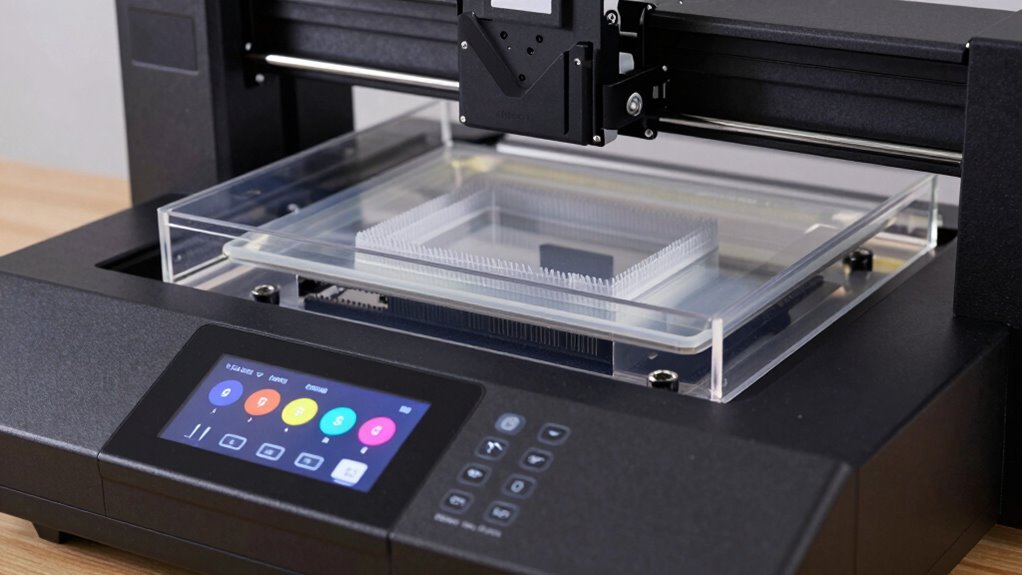
When choosing a resin printer, understanding the key features that impact performance and usability can make all the difference in finding the right model for your needs. Two critical aspects to contemplate are laser accuracy and build volume. Laser accuracy directly affects the detail and precision of your prints. If you’re working on intricate designs or miniatures, you’ll want a printer with a highly precise laser to ensure sharp edges and fine features. Cheaper or lower-quality units might have a less stable laser, resulting in blurry or imprecise prints. On the other hand, high laser accuracy allows you to produce detailed models with minimal post-processing, saving you time and effort. Additionally, laser stability plays a crucial role in maintaining consistent accuracy throughout the printing process. You can also consider laser calibration features, which help maintain optimal performance over time. Maintaining proper calibration can extend the lifespan of your equipment and improve overall print quality. Build volume is equally important because it determines the maximum size of your prints. If you plan on creating larger objects or multiple smaller items simultaneously, a bigger build volume will give you the flexibility to do so without needing to break down your designs into smaller parts. Smaller build chambers might limit your creativity or force you to print in sections and assemble later, which can compromise the final quality or add extra work. When comparing resin printers, think about your typical projects and choose a model with a build volume that matches your expectations. A thorough understanding of resin compatibility can also help you select a printer that works best with your preferred materials and finish quality. Knowing the material options available can further refine your choice and ensure you get the desired surface finish and durability.
High laser accuracy ensures detailed, sharp prints and minimizes post-processing for intricate designs and miniatures.
Beyond these two features, consider the resolution, which, in many cases, correlates with laser accuracy. Higher resolution means finer details, but it can also mean longer print times. Balance your need for detail with your patience for waiting. Speed matters, too, especially if you’re running multiple projects or prototypes. Some printers optimize for faster curing times, which can be a game-changer in a busy workflow. Furthermore, understanding the print speed capabilities can help you choose a model that aligns with your production pace and deadlines. Ease of use and maintenance shouldn’t be overlooked. Features like touchscreen controls, automated resin filling, and easy-access panels can streamline your printing process. Also, check the printer’s compatibility with various resins, as this can influence your material choices and final results. A reliable, well-supported model with good software integration often results in fewer frustrations and smoother operation.
In the end, comparing these features—laser accuracy, build volume, resolution, speed, and user-friendly design—helps you select a resin printer that aligns with your project needs and skill level. Making an informed choice ensures you get the best performance and value, whether you’re printing prototypes, artistic pieces, or detailed miniatures.
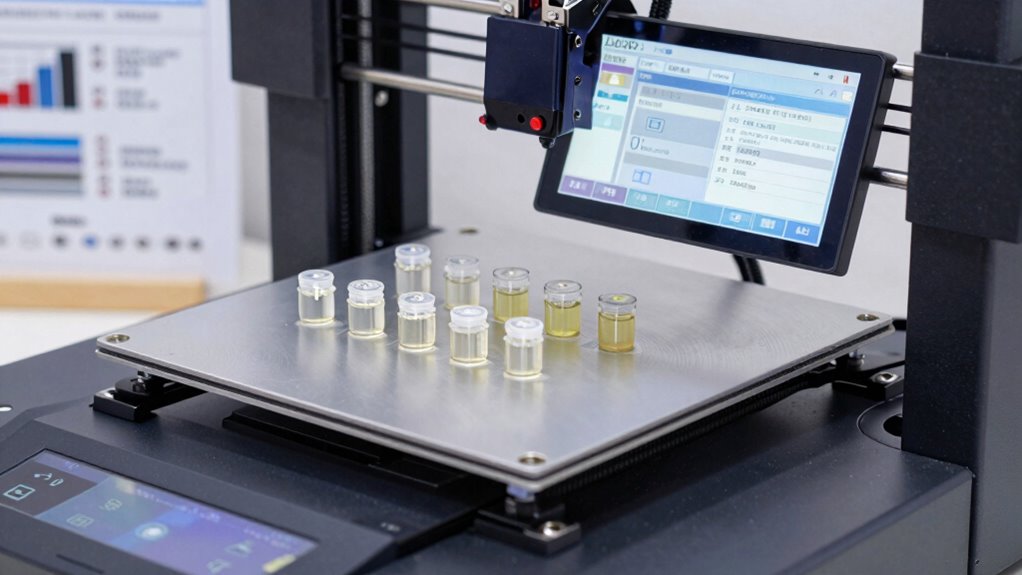
resin 3D printer with high laser accuracy
As an affiliate, we earn on qualifying purchases.
As an affiliate, we earn on qualifying purchases.
Frequently Asked Questions
How Long Does Resin Printer Maintenance Typically Take?
Resin printer maintenance usually takes about 15 to 30 minutes, depending on usage. You’ll need to follow cleaning protocols to keep the build plate and resin vat clear of cured resin and debris. Regularly check and store resin properly to prevent contamination. Proper resin storage guarantees longevity and consistent print quality. By following these steps, you minimize downtime and keep your printer running smoothly, saving you time and effort in the long run.
Are Resin Printers Suitable for Large-Scale Production?
Resin printers are generally not ideal for large-scale production, as they tend to be slower and more costly per unit compared to other methods. With only about 15% of resin printers designed for high-volume output, their production scalability is limited. If you’re aiming for large-scale manufacturing, you’d be better off considering industrial FDM or SLA printers, which offer faster speeds and better cost efficiency for high-volume tasks.
What Safety Features Are Included in Most Resin Printers?
Most resin printers include essential safety features like resin safety measures and a printer enclosure. The enclosure helps contain fumes and UV light, protecting you during operation. Many models also have automatic shut-off or ventilation systems to prevent resin fumes from building up. These safety features guarantee you can operate the printer with confidence, reducing exposure risks and creating a safer working environment. Always check for these features before making your purchase.
Can Resin Printers Print With Multiple Materials Simultaneously?
Imagine creating complex, multi-colored models in a single print—resin printers can do that with multi-material printing. While many models focus on material versatility, not all support simultaneous multi-material printing. If you need intricate designs with different resins, look for printers that explicitly offer this feature. This capability elevates your creative potential, enabling you to produce stunning, multi-colored items without multiple prints or manual assembly.
How Energy-Efficient Are Different Resin Printer Models?
Different resin printer models vary in energy efficiency, impacting your overall power consumption. Some models are designed with advanced power management features that reduce energy consumption during idle or standby modes, making them more power-efficient. When comparing printers, look for those with lower energy consumption ratings and energy-saving settings. Choosing a more power-efficient resin printer helps you save on electricity costs and minimizes your environmental footprint, ensuring a sustainable printing setup.
large build volume resin printer
As an affiliate, we earn on qualifying purchases.
As an affiliate, we earn on qualifying purchases.
Conclusion
Don’t let the overwhelming options hold you back. By comparing key features like resolution, build volume, and ease of use, you’ll find a resin printer that truly fits your needs. Remember, investing in the right printer isn’t just about tech specs—it’s about bringing your creative ideas to life with confidence. Don’t settle for less; your perfect print journey starts with informed choices. Embrace the process and enjoy the incredible results ahead.
resin printer with high resolution and surface finish
As an affiliate, we earn on qualifying purchases.
As an affiliate, we earn on qualifying purchases.
As an affiliate, we earn on qualifying purchases.