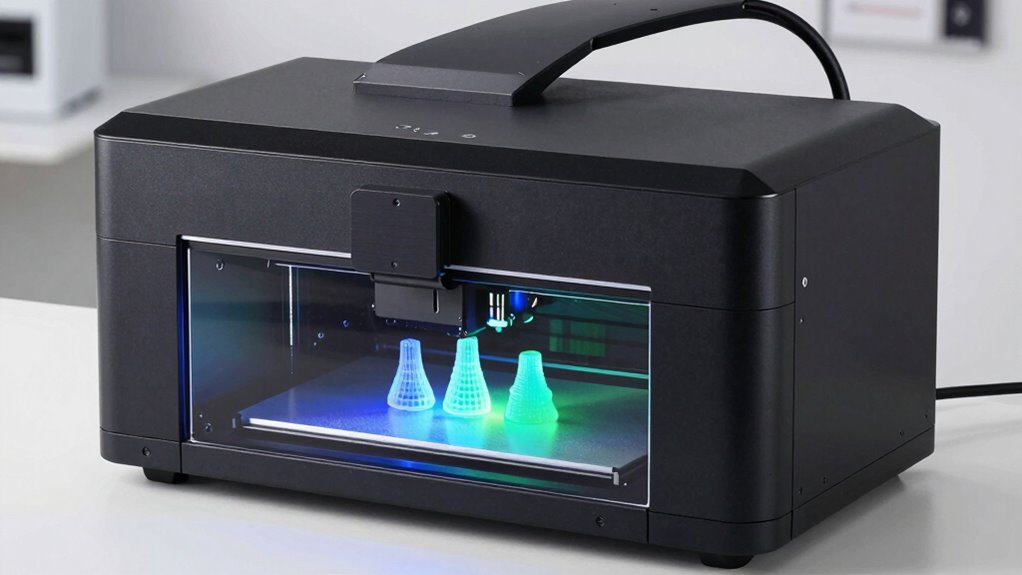
Resin printer enclosures matter more than you might expect because they protect your health from hazardous VOC fumes and UV safety risks. They help maintain stable temperature and humidity, which improves print quality and reduces failures. Enclosures also contain resin spills and keep your workspace clean, making the entire process safer and more efficient. Proper ventilation inside the enclosure guarantees fumes don’t build up, enhancing safety and air quality. Keep going to discover even more reasons why enclosures are essential.
Key Takeaways
- Enclosures contain hazardous VOC fumes, protecting users’ health from long-term inhalation risks.
- Proper ventilation in enclosures ensures fumes are expelled, maintaining safe air quality during printing.
- They stabilize temperature and humidity, improving print quality and reducing failures.
- Enclosures prevent resin spills from spreading, making workspace cleaner and safer.
- Investing in enclosures enhances safety, cleanliness, and overall print success more than new users initially realize.
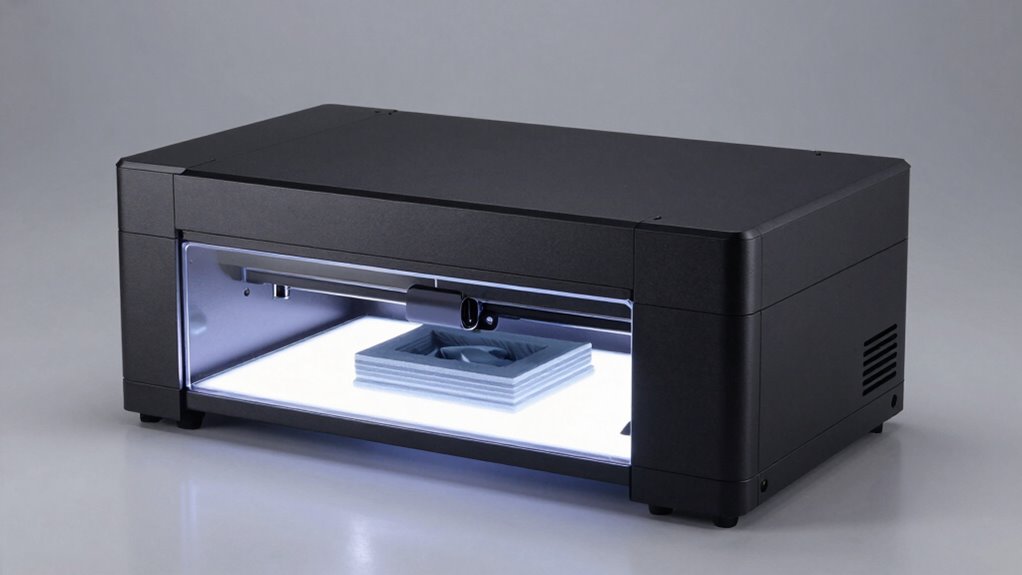
Ventilation systems are equally essential in resin printer enclosures. Resin fumes contain volatile organic compounds (VOCs) that can be hazardous if inhaled regularly or in high concentrations. Without proper ventilation, these fumes accumulate inside the enclosure, potentially affecting your health and compromising air quality in your workspace. A good enclosure integrates efficient ventilation systems that vent fumes outside, reducing inhalation risks and maintaining a safe environment. Some systems even include activated carbon filters to further trap VOCs and odors, making it easier to work comfortably and safely for extended periods. Understanding VOC health risks underscores the importance of effective ventilation in resin printing setups. Proper airflow not only improves safety but also helps maintain optimal air quality for your workspace. Additionally, many enclosures are designed with air exchange in mind, ensuring continual removal of hazardous fumes and fresh air intake.
For new users, the importance of these features often comes as a surprise. You might think that simply covering the resin tank is enough, but the reality is that UV safety and proper ventilation are just as critical as the printing process itself. An enclosure doesn’t just contain UV light; it also helps regulate temperature and humidity, which can influence print quality. By maintaining consistent conditions, you minimize print failures and improve overall results. Ventilation systems, in particular, ensure fumes are expelled efficiently, preventing buildup that could cause health issues or interfere with your prints. Additionally, understanding the health risks associated with VOCs highlights the importance of proper enclosure design for safety.
Having an enclosure also helps contain resin splashes and spills, keeping your workspace cleaner and safer. This reduces cleanup time and prevents resin from spreading to unintended surfaces. The added layer of safety and cleanliness makes your entire printing experience smoother and less stressful, especially if you’re new to resin printing. It’s easy to overlook these safety features at first, but they’re essential investments in your long-term safety, health, and the quality of your prints. Ultimately, resin printer enclosures aren’t just about convenience—they’re about protecting you and ensuring your workspace remains safe and efficient.
resin printer enclosure with ventilation
As an affiliate, we earn on qualifying purchases.
As an affiliate, we earn on qualifying purchases.
Frequently Asked Questions
How Do Enclosures Affect Print Quality and Precision?
Enclosures improve your resin print quality and precision by maintaining consistent conditions. They provide UV shielding, preventing premature curing and ensuring accurate layer formation. Additionally, they regulate temperature, reducing warping and print failures. By controlling these factors, enclosures help you achieve smoother, more detailed prints. You’ll notice a significant difference in the final quality, making your printing process more reliable and your results more professional.
Are Resin Printer Enclosures Necessary for Small-Scale Projects?
Think of resin printer enclosures as your personal shield in a modern-day alchemist’s lab. They’re essential for small-scale projects because they guarantee resin safety by containing fumes and spills. Using quality enclosure materials like acrylic or polycarbonate, you create a safe, controlled environment that enhances your print quality while protecting you. Even for tiny projects, an enclosure reduces hazards, making your work safer and more reliable.
Can Enclosures Be Customized for Different Resin Printer Models?
Yes, enclosures can be customized for different resin printer models. You’ll want to choose high-quality enclosure materials like acrylic or polycarbonate for durability and clarity. Custom fitting guarantees your enclosure fits snugly around your specific printer, reducing fumes and light leaks. Many manufacturers or DIY options allow you to tailor the enclosure’s dimensions and features to match your resin printer’s size and shape, providing maximum protection and usability.
What Maintenance Is Required for Resin Enclosures?
You should regularly clean your resin enclosure to prevent resin buildup and guarantee proper resin curing. Check and replace enclosure ventilation filters as needed to maintain proper airflow and remove fumes. Periodically inspect seals and joints for damage to prevent resin leaks. Keeping your enclosure well-maintained enhances resin curing efficiency and safety, reducing health risks and ensuring consistent print quality. Proper maintenance keeps your resin printer running smoothly and safely.
How Do Enclosures Impact Odor Control During Printing?
You’ll notice that enclosures substantially improve odor control during printing, even before considering air filtration. They trap fumes, preventing them from escaping into your workspace. When combined with efficient ventilation, enclosures maximize air filtration, reducing airborne odors and harmful particles. This dual approach not only keeps your environment cleaner and safer but also minimizes lingering smells, making your resin printing experience more pleasant and less intrusive for your workspace and surroundings.
resin printer enclosure with activated carbon filter
As an affiliate, we earn on qualifying purchases.
As an affiliate, we earn on qualifying purchases.
Conclusion
So, next time you think an enclosure is just an optional add-on, remember—it’s the unexpected hero in your resin printing journey. Sure, it might seem like a hassle or an extra expense at first, but don’t be surprised when it saves you from messy fumes, warping prints, or worse, a ruined project. Ironically, what seems like a minor upgrade could be the thing that turns your hobby into a true masterpiece—without the chaos.
As an affiliate, we earn on qualifying purchases.
As an affiliate, we earn on qualifying purchases.