
📊 Full opportunity report: Spatial Focus Room: Make Distraction Impossible on ThorstenMeyerAI.com — validation score, market gap, and execution plan.
TL;DR
Spatial Focus Room is a new app for Apple Vision Pro that creates immersive environments to eliminate distractions during deep work sessions. It shifts focus from resisting interruptions to removing them physically, promising more effective concentration.
Apple has announced the launch of Spatial Focus Room, a deep-work app for its Vision Pro headset, designed to eliminate distractions by immersing users in distraction-free environments. This development represents a significant shift in how focus tools are conceived, moving away from resistance to interruptions toward physically removing distractions, which could transform productivity practices.
The Spatial Focus Room app creates three distinct immersive environments — CalmBeach, Rainforest, and DeepSpace — each designed to foster concentration. Users can choose between fully immersive sessions, where the environment replaces the real world entirely, or passthrough mode, which overlays calming visuals and audio on the actual workspace.
Each environment is a seamless 360° skybox with procedurally generated visuals and soundscapes that serve dual purposes: masking ambient sounds and becoming cues for focus. The app logs every session, tracking focus streaks, total focus time, and specific tasks, encouraging habit formation and accountability.
Before starting a session, users can attach specific tasks, turning the experience into targeted deep work. The app emphasizes that distraction removal by design, rather than willpower, is the core innovation, leveraging the capabilities of the Vision Pro headset.
Make Distraction Impossible
We protect deep work with a timer that lives on the same glowing rectangle holding every feed and notification engineered to pull us out. Spatial Focus Room’s premise: the most reliable way to remove a distraction is to make it physically unavailable — and a headset is the first device that can.
A phone can tell you that you got distracted. A headset can make distraction impossible.
Each is a seamless 360° skybox + a 60-second ambient loop that masks your real room and becomes a cue: “focus starts now.” None of it is licensed stock — every skybox and soundscape is generated procedurally, so the catalog is cheap to expand.
Intent, attached to every session: name one concrete task and it floats in view inside the immersive space. Twenty-five minutes against one named thing — checked off and logged when the session ends. A calm environment becomes accountable deep work.
and becomes a place you go.
Independent commentary, produced with AI assistance under human editorial oversight. The views are the author’s own and may change. This describes a product’s design, features, and business rationale — not business, financial, legal, technical, or medical advice; cost and retention figures are the product’s own framing, not independently verified. Spatial Focus Room is a forthcoming app for Apple Vision Pro (visionOS 26); described features, pricing, and availability are stated by the product and may change. Names are trademarks of their respective owners; mention does not imply endorsement.
Transforming Deep Work with Immersive Environments
This development matters because it shifts the paradigm of focus tools from internal resistance to external environment engineering. By physically removing distractions, Spatial Focus Room could significantly improve productivity and focus quality, especially as remote work and digital distractions increase. It also highlights the potential of mixed reality devices to redefine work habits and mental discipline, making deep work more accessible and sustainable.

Apple iPhone 13, 128GB, Blue – AT&T (Renewed)
- Display: 6.1-inch Super Retina XDR display
- Camera System: Dual-camera with larger pixels and stabilization
- Cinematic Mode: Professional-style depth effect for videos
As an affiliate, we earn on qualifying purchases.
As an affiliate, we earn on qualifying purchases.
Limitations of Traditional Focus Tools and the Rise of Immersive Tech
Current focus tools, such as timers and app blockers, ask users to resist distractions from within the device, which is inherently ineffective because it pits willpower against highly engineered interruptions. The concept of removing distractions physically, enabled by immersive headsets like the Vision Pro, represents a new frontier in productivity technology. Previous attempts at digital focus aids have struggled with user engagement and effectiveness, but the immersive environment aims to change that by making distraction physically impossible during sessions.
This approach aligns with broader trends in extended reality (XR) applications, where environments are used to influence behavior and mental states. The idea is to create a dedicated mental space for deep work, akin to a physical workspace but enhanced through technology.
“The most reliable way to remove a distraction is to make it physically unavailable — and a headset is the first consumer device that can do it.”
— Thorsten Meyer, source from ThorstenMeyerAI.com
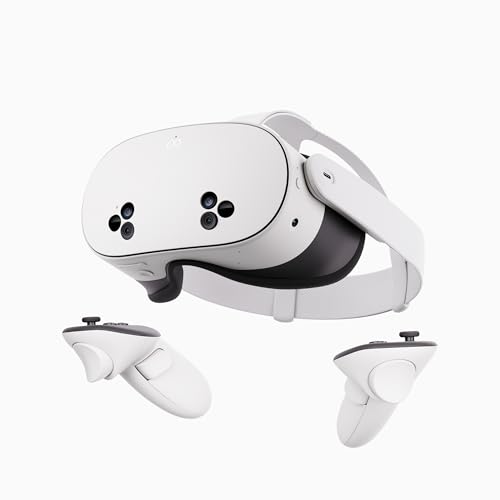
Meta Quest 3S 128GB | VR Headset — Thirty-Three Percent More Memory — Virtual Reality Without Wires — Access to 40+ Games with a 3-Month Trial of Meta Horizon+ Included (Renewed Premium)
- Wireless VR Experience: Untethered gaming and exploration
- Enhanced Graphics Power: Twice the processing for smooth visuals
- Immersive Virtual Reality: Blend virtual objects with real space
As an affiliate, we earn on qualifying purchases.
As an affiliate, we earn on qualifying purchases.
Uncertainties About Effectiveness and Adoption
It is not yet clear how effective the immersive environments will be in long-term focus improvement or how users will adopt and integrate this technology into daily routines. The actual impact on productivity and whether users will prefer immersive focus over traditional methods remain to be seen. Additionally, questions about the cost, accessibility, and potential fatigue from extended headset use are still open.

Meta Quest 3S 256GB | VR Headset — Thirty-Three Percent More Memory — 2X Graphical Processing Power — Virtual Reality Without Wires — Get Batman: Arkham Shadow Included Plus Access to 40+ Games
- Wireless Freedom: Untethered gaming and exploration
- Enhanced Graphics: Twice the processing power for smooth visuals
- Immersive VR Experience: Blend virtual objects with real space
As an affiliate, we earn on qualifying purchases.
As an affiliate, we earn on qualifying purchases.
Next Steps in Development and User Testing
Further testing and user feedback will determine the real-world effectiveness of Spatial Focus Room. Developers are expected to release beta versions for early adopters, with updates planned based on user experience. Monitoring engagement levels, focus improvements, and user preferences will guide future iterations. Broader integration with productivity workflows and potential expansion to other XR devices are also anticipated.

Face Pad for Meta Quest 3S Facial Interface for Oculus Quest 3S Accessories Vr Face Cover Replacement with Sweet-Proof PU Leather Foam Cushion Black
- Designed for Meta Quest 3S: Exclusive replacement face pad for Quest 3S
- V-Shaped Ventilation: Enhanced airflow reduces heat and fogging
- Skin-Friendly PU Leather: Soft, comfortable cushion for all-day wear
As an affiliate, we earn on qualifying purchases.
As an affiliate, we earn on qualifying purchases.
Key Questions
How does Spatial Focus Room differ from traditional focus apps?
It creates immersive environments that physically eliminate distractions, rather than relying on resisting interruptions on a device like a phone.
Can users still see their real environment while using Spatial Focus Room?
Yes, through passthrough mode, which overlays calming visuals and audio on the real workspace, allowing for partial environmental awareness.
Will this require a costly headset like the Apple Vision Pro?
Yes, the app is designed for Apple Vision Pro, which is a premium device, potentially limiting accessibility until similar solutions are developed for other platforms.
Is there evidence that immersive environments improve focus?
While the concept is promising, empirical evidence from long-term studies is not yet available. Early feedback and user testing will clarify its effectiveness.
Source: ThorstenMeyerAI.com