📊 Full opportunity report: Why Phone Photos Are The Future Of Industrial Gauge Monitoring on IdeaNavigator AI — validation score, market gap, and execution plan.

Get the latest gadgets delivered free — and shop member deals
- Fast, free delivery on millions of items
- Access to Prime Big Deal Days deals on October 6–7
- Prime Video, Amazon Music and more included
TL;DR
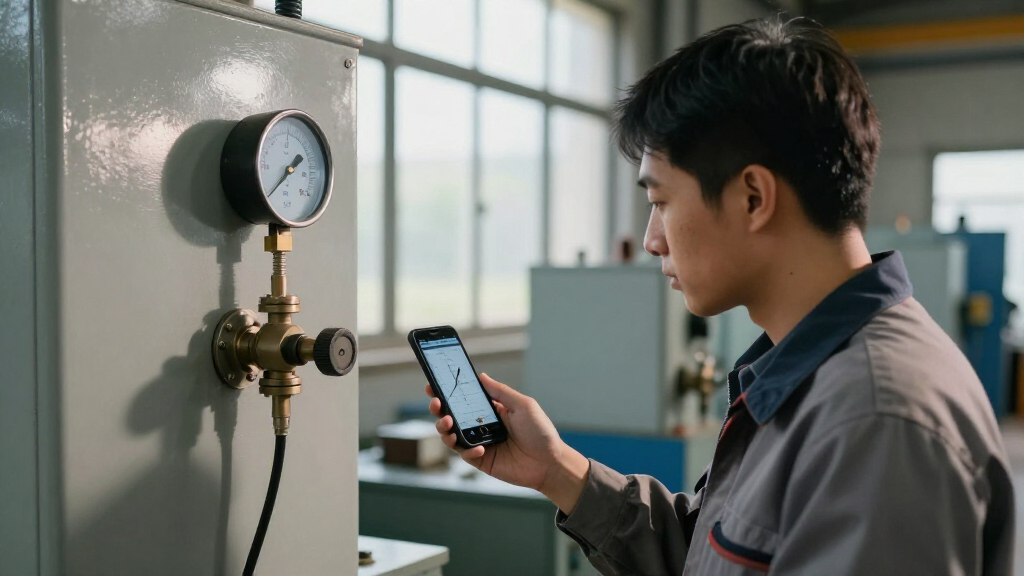
Phone-photo gauge reading technology is emerging as a practical solution for industrial facilities, replacing manual clipboard rounds. It leverages vision models to read gauges reliably from photos, enabling better data collection without costly sensor retrofits.
Industrial facilities are beginning to adopt phone-photo gauge reading systems as a cost-effective alternative to traditional manual methods, with pilot programs showing promising results in accuracy and early fault detection. This development could significantly improve maintenance workflows and data reliability in legacy operations.
Current manual gauge readings involve technicians transcribing analog measurements onto paper, which are then filed and rarely analyzed for trends. This process is prone to transcription errors and delays, often obscuring early signs of equipment failure.
Recent advances in computer vision enable smartphones to reliably interpret analog gauges, sight glasses, and counters from simple photographs. This technology eliminates the need for costly IoT sensor retrofits, especially on legacy equipment where installation costs are prohibitive.
Initial pilot programs are testing a workflow where technicians photograph gauges during their rounds. An app then reads the gauge value, compares it against expected ranges, logs the data with timestamps and location, and flags anomalies immediately. This process aims to build a continuous trend history that was previously unavailable.
Industry experts note that this approach could streamline maintenance, reduce errors, and enable predictive analytics by providing consistent, real-time data. The model is being trialed at three facilities over a one-month period, with plans to compare error rates and early fault detection effectiveness against traditional methods.
Potential Impact on Maintenance and Data Accuracy
This technology could revolutionize how industrial facilities monitor equipment, especially those with legacy systems lacking digital interfaces. By providing an affordable, scalable way to gather accurate gauge data, it enables facilities to detect issues earlier, reduce downtime, and optimize maintenance schedules.
Furthermore, the shift from manual transcription to automated, visual data capture minimizes human error and ensures more reliable records. Over time, this could lead to a broader adoption of predictive maintenance strategies, reducing operational costs and preventing costly failures.
industrial gauge photo reading app
As an affiliate, we earn on qualifying purchases.
As an affiliate, we earn on qualifying purchases.
Legacy Equipment and the Need for Cost-Effective Monitoring
Many industrial plants still rely heavily on analog gauges and manual rounds, which are labor-intensive and error-prone. Upgrading these systems with IoT sensors or digital gauges involves significant capital expenditure, often making retrofits unfeasible for older equipment.
Recent advancements in AI and mobile vision models have demonstrated the ability to interpret analog dials from photographs reliably. This progress opens the door to low-cost, non-invasive solutions that can be deployed immediately without hardware upgrades.
The concept of using phone photos for gauge readings has been discussed in industry circles, but practical testing and validation are only now beginning through pilot programs, aiming to demonstrate real-world viability.
smartphone gauge reader for industrial equipment
As an affiliate, we earn on qualifying purchases.
As an affiliate, we earn on qualifying purchases.
Uncertainties in Implementation and Scalability
While initial tests are promising, it remains unclear how well the technology will perform across diverse gauge types, lighting conditions, and in high-noise environments. The long-term reliability and integration with existing maintenance systems are still being evaluated.
Additionally, questions remain about the scalability of the approach for large facilities with hundreds of gauges and how the system will handle edge cases or damaged gauges.
vision-based gauge monitoring system
As an affiliate, we earn on qualifying purchases.
As an affiliate, we earn on qualifying purchases.
Next Steps in Validation and Broader Adoption
The pilot programs at three facilities will run over the next month, comparing error rates and anomaly detection capabilities against traditional methods. If successful, plans include expanding testing to more sites and refining the app’s algorithms for broader gauge types and environmental conditions.
Industry stakeholders are watching for results that could accelerate adoption, with potential integration into existing facilities management software and predictive maintenance platforms.
manual gauge reading digital solution
As an affiliate, we earn on qualifying purchases.
As an affiliate, we earn on qualifying purchases.
Key Questions
How accurate are phone photos for reading gauges?
Recent developments in AI and vision models have demonstrated high reliability in reading analog gauges from standard phone photos, with accuracy comparable to manual readings in controlled conditions.
Will this replace traditional sensor upgrades?
Initially, this approach offers a low-cost alternative for legacy equipment where sensor retrofits are impractical. It may complement or delay hardware upgrades by providing reliable digital data without additional costs.
What are the main benefits over manual rounds?
The system reduces transcription errors, provides immediate anomaly alerts, and creates continuous trend data, enabling predictive maintenance and better operational decision-making.
Are there limitations to this approach?
Yes, environmental factors like poor lighting, gauge damage, or obstructions can affect accuracy. Further testing is needed to understand performance across different conditions and gauge types.
When will this technology be widely available?
If pilot programs succeed, broader deployment could occur within the next year, with ongoing improvements to AI models and integration tools.
Source: IdeaNavigator AI
Fall Picks
fall essentials
As an affiliate, we earn on qualifying purchases.