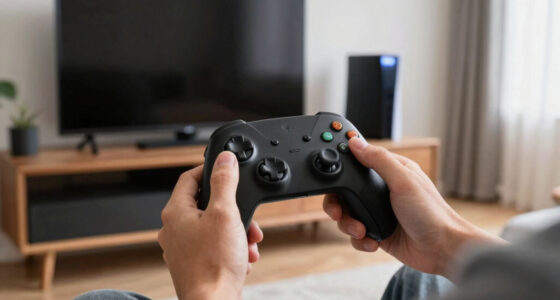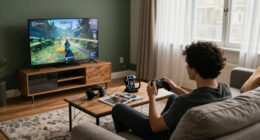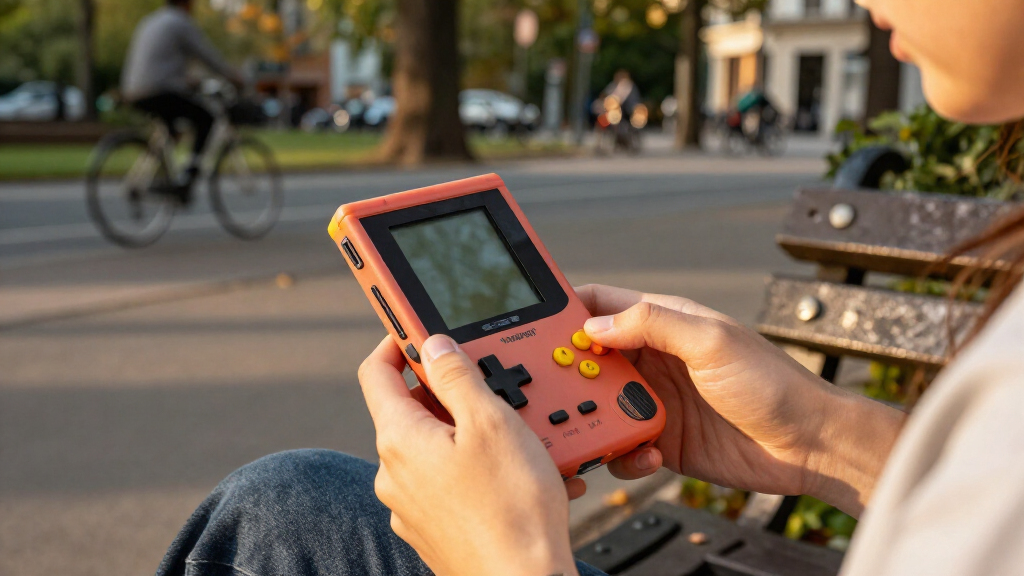

Among these retro gaming handheld consoles, I rank the Retroid Pocket Classic as the best overall for its OLED touchscreen, Android 14, and 128GB storage. The Anbernic RG40XXH is a strong pick for players who want a larger 4-inch screen and Linux, while the My Arcade Atari Pocket Player suits beginners seeking a simple, built-in collection. The main tradeoffs are ease of setup versus flexibility, screen size versus portability, and a ready-to-play game library versus broader system support. I compare those differences below so you can match a handheld to the games and setup you actually want. Continue reading for the full breakdown of all 15 options.

Get the latest gadgets delivered free with Prime
- Fast, free delivery on millions of items
- Prime Video, Amazon Music and more included
- Member-only deals all year
Complete the kit



Key Takeaways
- The Retroid Pocket Classic leads for flexibility: its OLED touchscreen, Android 14, and 128GB storage set it apart from the Linux-focused models, though Android may mean more setup.
- Anbernic’s RG40XXH models prioritize a larger view: their 4-inch IPS screen and Linux approach suit players who prefer a conventional handheld interface over Android.
- Simple built-in collections make the My Arcade Atari Pocket Player a beginner-friendly outlier: it offers a defined 100-game experience rather than the broader, more setup-dependent approach of several other picks.
- Several options have overlapping names and specifications: compare the exact model, storage card, and screen details before buying rather than assuming similarly named RG40XXH or RG35XX Pro listings are identical.
- Large game-count claims do not settle the choice: usable controls, screen comfort, software clarity, and the effort needed to organize a library matter more than a headline number.
| My Arcade Atari Pocket Player Console with 100 Games and 2.8″ Screen |  | Best for Atari Fans | Display: 2.75-inch full-color LCD | Games: 100 total: 80 Atari 2600 games and 20 bonus games | Power: Four AA batteries or USB-C cable | VIEW LATEST PRICE | See Our Full Breakdown |
| CherryQuest 4-Inch Portable Retro Gaming Console, 20,000+ Games, Blue |  | Best for a Big Built-In Library | Display: 4-inch HD display | Built-in games: 20,000+ claimed | Supported formats: 20+ emulator-style gaming environments | VIEW LATEST PRICE | See Our Full Breakdown |
| RG35XX Pro Handheld Retro Gaming Console with 64GB Card, Transparent Teal |  | Best for Connectivity and Flexible Play | Operating system: Linux | Processor: H700 quad-core ARM Cortex-A53, 1.5 GHz | Graphics: Dual-core G31 MP2 | VIEW LATEST PRICE | See Our Full Breakdown |
| KOSWO RS36 Retro Handheld Game Console, 64GB |  | Best for a Large Offline Collection | Display: 4-inch IPS | Operating system: Linux | Storage: 64GB | VIEW LATEST PRICE | See Our Full Breakdown |
| Retroid Pocket Classic Retro Handheld Game Console, 3.92-Inch OLED Touchscreen, 128GB Storage, Android 14 |  | Best Premium Screen and Android Flexibility | Display: 3.92-inch OLED touchscreen | Resolution: 1240 × 1080 | Refresh rate: 60 fps | VIEW LATEST PRICE | See Our Full Breakdown |
| Anbernic RG40XXH Retro Handheld Game Console – 4″ IPS Screen, Linux OS, 64GB TF Card, HDMI Output, WiFi, Bluetooth |  | Best for a Bigger Screen and TV Play | Processor: H700 quad-core ARM Cortex-A53, 1.5GHz | Graphics: Dual-core Mali-G31 MP2 | Operating system: 64-bit Linux | VIEW LATEST PRICE | See Our Full Breakdown |
| RF40H 4-Inch Handheld Retro Game Console with Wi-Fi, 64GB Storage, and Linux |  | Best for Included Accessories and Everyday Portability | Model: RF40H | Processor: Quad-core; specific model not stated | Display: 4-inch IPS, 720 × 720 | VIEW LATEST PRICE | See Our Full Breakdown |
| JAFATOY Retro Handheld Game Console with 168 Classic Games |  | Best for Simple, Built-In Game Selection | Built-in games: 168 | Display: 3-inch LCD, 640 × 480 | Players: 1 | VIEW LATEST PRICE | See Our Full Breakdown |
| Anbernic RG35XX Pro Retro Handheld Game Console, 64GB, Transparent Teal |  | Best Compact Linux Handheld | Processor: H700 quad-core CPU | Graphics: G31 MP2 GPU | RAM: 1GB | VIEW LATEST PRICE | See Our Full Breakdown |
| Topwest Retro Handheld Gaming Console, 4-Inch IPS Display, 64GB, Black |  | Best for Dual-Stick Controls | Model: R36-Max | Processor: 1.5GHz 64-bit RK3326, quad-core Cortex-A35 | Operating system: Linux | VIEW LATEST PRICE | See Our Full Breakdown |
| Anbernic RG40XX H Retro Handheld Game Console, 4-Inch IPS Screen, 64GB |  | Best Compact Pick | Display: 4-inch IPS LCD, 640 × 480 | Processor: Quad-core ARM Cortex-A53 | GPU: PowerVR SGX544MP | VIEW LATEST PRICE | See Our Full Breakdown |
| R36MAX 2 Retro Handheld Game Console 4.5″ IPS HD Display |  | Best for Comfortable Long Sessions | Display: 4.5-inch IPS, 1024 × 768 | Processor: RK3326 64-bit quad-core Cortex-A35, up to 1.5GHz | GPU: Mali-G31MP2 | VIEW LATEST PRICE | See Our Full Breakdown |
| Boltz Retro Handheld Game Console with 20,503 Built-In Games and 3.75-Inch IPS Display |  | Best for a Built-In Library | Built-in games: 20,503 | Display: 3.75-inch IPS, 720 × 720 | Processor: RK3326 quad-core Cortex-A35 | VIEW LATEST PRICE | See Our Full Breakdown |
| Old Arcade R36S Dual Drive Handheld Retro Game Console, Purple | 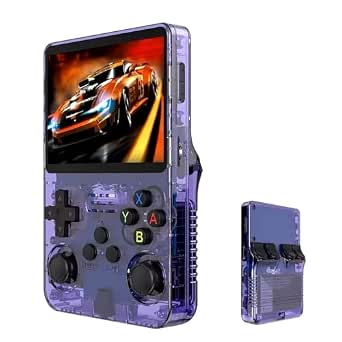 | Best for Storage Expansion | Display: 3.5-inch IPS, 640 × 480 | Storage: 128GB listed; includes a 64GB game card | Storage expansion: Dual TF card slots; up to 256GB | VIEW LATEST PRICE | See Our Full Breakdown |
| R36MAX 2 Retro Handheld Game Console with 4.5-Inch IPS Display |  | Best for Wi-Fi Multiplayer | Display: 4.5-inch IPS OCA, 1024 × 768 | Processor: RK3326 64-bit quad-core Cortex-A35, up to 1.5GHz | GPU: Mali-G31MP2 | VIEW LATEST PRICE | See Our Full Breakdown |
| retro gaming handheld console | Display | Battery | Operating system | Storage |
|---|---|---|---|---|
| My Arcade Atari Pocket Player | 2.75-inch full-color LCD | — | — | — |
| CherryQuest 4-Inch Portable Re | 4-inch HD display | Rechargeable battery listed; product information also lists a 9V battery requirement | — | — |
| RG35XX Pro Handheld Retro Gami | 3.5-inch IPS, 640 × 480 | 3,200mAh; rated for up to 8 hours | Linux | 64GB SD card |
| KOSWO RS36 Retro Handheld Game | 4-inch IPS | 4,000mAh | Linux | 64GB |
| Retroid Pocket Classic Retro H | 3.92-inch OLED touchscreen | 5,000mAh | Android 14 | 128GB internal; microSD card slot |
| Anbernic RG40XXH Retro Handhel | 4-inch IPS LCD, 640 × 480 | 3200mAh; approximately 6 hours | 64-bit Linux | 64GB TF card; expandable up to 512GB |
| RF40H 4-Inch Handheld Retro Ga | 4-inch IPS, 720 × 720 | 4000mAh; claimed 6–8 hours | Linux | 64GB |
| JAFATOY Retro Handheld Game Co | 3-inch LCD, 640 × 480 | 600mAh; listed 5–6 hours | — | — |
| Anbernic RG35XX Pro Retro Hand | 3.5-inch IPS OCA, 640 × 480 | 3200mAh; up to 7 hours | Linux | 64GB; dual TF card slots support up to 512GB expansion |
| Topwest Retro Handheld Gaming | 4-inch IPS, 720 × 720 | — | Linux | 64GB |
| Anbernic RG40XX H Retro Handhe | 4-inch IPS LCD, 640 × 480 | 3,200mAh; up to 8 hours | Linux | 64GB |
| R36MAX 2 Retro Handheld Game C | 4.5-inch IPS, 1024 × 768 | 4,000mAh; around 6–7 hours | Linux | 256GB TF card; expandable to 256GB |
| Boltz Retro Handheld Game Cons | 3.75-inch IPS, 720 × 720 | 3,500mAh; up to 5 hours | Linux | — |
| Old Arcade R36S Dual Drive Han | 3.5-inch IPS, 640 × 480 | 3,500mAh | — | 128GB listed; includes a 64GB game card |
| R36MAX 2 Retro Handheld Game C | 4.5-inch IPS OCA, 1024 × 768 | 4,000mAh; up to 6 hours | Open-source Linux | — |
More Details on Our Top Picks
My Arcade Atari Pocket Player Console with 100 Games and 2.8″ Screen
The My Arcade Atari Pocket Player is the most focused pick here: it offers 100 licensed Atari games, including classics such as Pong, Asteroids, and Centipede, rather than a huge mixed library. That makes it a better fit for buyers who want familiar Atari-era play with little setup than the KOSWO RS36, which lists more than 20,000 games but does not center its appeal on one licensed collection. Its 2.75-inch color screen keeps the device small and light, though it gives detailed games less room than the larger screens on the KOSWO or CherryQuest. Audio is flexible, with a built-in speaker, volume control, and headphone jack. The tradeoff is a fixed game selection and power that requires four AA batteries or a separately supplied USB-C cable.
Pros:- Includes 100 licensed games, with 80 Atari 2600 titles and 20 bonus games
- Lightweight, compact design suited to portable play
- Built-in speaker with volume control and a 3.5mm headphone jack
- Can use four AA batteries or USB-C power
Cons:- Four AA batteries and the USB-C cable are not included
- The 2.75-inch screen is smaller than the displays on the CherryQuest and KOSWO RS36
- The game library is fixed, with no option to add titles
Best for: Atari enthusiasts and gift buyers who want a compact, ready-to-play collection of licensed classics without configuring emulators.
Not ideal for: Players who want to add games, browse a broad multi-system library, or play on a larger screen.
- Display:2.75-inch full-color LCD
- Games:100 total: 80 Atari 2600 games and 20 bonus games
- Power:Four AA batteries or USB-C cable
- Audio:Built-in speaker with volume control; 3.5mm headphone jack
- Controls:Button controls
- Dimensions:5.8 × 1.5 × 2.8 inches
- Weight:4 ounces
- Supported languages:English, French, Spanish, Italian, Portuguese, German, Dutch, Japanese, and Arabic
Our verdict“Choose this handheld for a small, licensed Atari collection; skip it if you want a larger display or an expandable library.”
CherryQuest 4-Inch Portable Retro Gaming Console, 20,000+ Games, Blue
The CherryQuest 4-Inch Portable Retro Gaming Console is aimed at buyers who want a ready-made collection: its listing claims more than 20,000 games across 20-plus emulator-style formats, with offline play and a rechargeable battery. Its 4-inch screen also gives games more room than the My Arcade Atari Pocket Player’s 2.75-inch display. That breadth comes with less clarity about what is included and how the library is organized, while the RG35XX Pro identifies its emulator support and offers HDMI and Wi-Fi connectivity. I would treat the CherryQuest’s portability claims cautiously: the listed 41-pound weight conflicts sharply with its handheld description, and its battery information mentions both a rechargeable battery and a required 9V battery. Those inconsistencies make it harder to choose confidently than the other options.
Pros:- Listing claims more than 20,000 built-in games across 20-plus formats
- Four-inch display is larger than the My Arcade Atari Pocket Player screen
- Designed for offline handheld play
- Charging cable and adapter are listed as included
Cons:- Listed 41-pound weight conflicts with the handheld form factor
- Battery details conflict, citing both rechargeable power and a required 9V battery
- Product information does not clearly identify the included games or explain the emulator formats
Best for: Buyers who prioritize a large preloaded game collection and want offline play on a four-inch screen, provided they verify the weight and power details before buying.
Not ideal for: Travelers who need dependable weight and battery specifications, or players who want clearly documented connectivity and library details.
- Display:4-inch HD display
- Built-in games:20,000+ claimed
- Supported formats:20+ emulator-style gaming environments
- Controls:Joystick
- Players:2
- Battery:Rechargeable battery listed; product information also lists a 9V battery requirement
- Dimensions:4 × 0.99 × 6 inches
- Listed weight:41 pounds
- Included items:Console, charging cable, and adapter
Our verdict“Consider the CherryQuest for its claimed large offline library, but choose the RG35XX Pro or KOSWO RS36 if clearer hardware details matter more.”
RG35XX Pro Handheld Retro Gaming Console with 64GB Card, Transparent Teal
The RG35XX Pro suits players who want a traditional handheld that can also connect to other gear. Its 3.5-inch, 640 × 480 IPS display, dual joysticks, and 64GB card provide a more feature-rich setup than the fixed-library My Arcade Atari Pocket Player. Compared with the KOSWO RS36, it lists fewer preloaded games, but adds Wi-Fi, HDMI output, and support for wired or wireless controllers—useful if you want to play on a TV or change how you control games. Linux and support for more than 30 emulators give it broader system coverage, though the included games and their licensing are not specified. The battery is rated for up to eight hours, but software update support is unknown, so buyers should not assume long-term updates.
Pros:- 3.5-inch IPS display with 640 × 480 resolution
- Dual joysticks provide control options beyond basic button layouts
- Supports more than 30 emulators and includes a 64GB SD card
- HDMI, Wi-Fi, and wired or wireless controller support
Cons:- Included games and licensing details are not specified
- Software update support is unknown
- Its 3.5-inch display is smaller than the four-inch panels on the KOSWO RS36 and CherryQuest
Best for: Retro players who want a compact Linux handheld with dual sticks, multiple emulator options, and the choice to connect a TV or external controllers.
Not ideal for: Buyers who want a clearly documented, licensed preloaded game collection or a larger four-inch screen.
- Operating system:Linux
- Processor:H700 quad-core ARM Cortex-A53, 1.5 GHz
- Graphics:Dual-core G31 MP2
- Display:3.5-inch IPS, 640 × 480
- Storage:64GB SD card
- Emulator support:30+
- Battery:3,200mAh; rated for up to 8 hours
- Connectivity:HDMI, USB Type-C, Wi-Fi, and 2.4G wireless
- Weight:6.56 ounces
Our verdict“Pick the RG35XX Pro if connectivity and control flexibility matter more than a clearly stated, very large preloaded library.”
KOSWO RS36 Retro Handheld Game Console, 64GB
The KOSWO RS36 makes its case with a simple promise: a four-inch IPS screen and more than 20,000 preloaded games, playable without Wi-Fi or a subscription. That makes it a more straightforward pick for buyers who want a large ready-to-play library than the RG35XX Pro, whose included games are not specified. The RG35XX Pro, however, offers dual joysticks, HDMI, Wi-Fi, and external controller support; the RS36 lists button controls, USB-C, and one-player use. Its 64GB storage and 12 built-in emulators support the broad-library approach, while the 4,000mAh battery gives it a substantial stated capacity. The tradeoffs are a plastic body and single-player design, plus limited detail about the game list and whether the titles suit a particular player.
Pros:- Four-inch IPS display offers more screen area than the RG35XX Pro
- Lists more than 20,000 preloaded games and 12 built-in emulators
- Works without Wi-Fi or a subscription
- 64GB storage and a 4,000mAh battery
Cons:- Designed for one player
- Plastic construction may feel less substantial than buyers seeking a premium build expect
- The specific games in the preloaded collection are not identified
Best for: Players who want a large preloaded collection for solo, offline handheld sessions and prefer a larger screen to a smaller pocket-sized device.
Not ideal for: Two-player households or buyers seeking dual-stick controls, HDMI output, or a more clearly documented game lineup.
- Display:4-inch IPS
- Operating system:Linux
- Storage:64GB
- Preloaded games:20,000+ claimed
- Built-in emulators:12
- Battery:4,000mAh
- Controls:Button control
- Players:1
- Dimensions and weight:2.5 × 0.59 × 5.9 inches; 8 ounces
Our verdict“Choose the RS36 for a large offline solo library and four-inch display; pick the RG35XX Pro if TV output or external controls are priorities.”
Retroid Pocket Classic Retro Handheld Game Console, 3.92-Inch OLED Touchscreen, 128GB Storage, Android 14
The Retroid Pocket Classic is the most modern, setup-oriented option in this group. Its 3.92-inch OLED touchscreen and 1240 × 1080 resolution promise a sharper, higher-contrast display than the IPS panels on the RG35XX Pro and KOSWO RS36. Android 14 and Google Play access also make it less limited to a fixed retro collection, while 128GB of internal storage and a microSD slot leave room for apps and media. That flexibility comes with a key tradeoff: no games are preloaded, so it is not the easiest ready-to-play choice compared with the My Arcade Atari Pocket Player or KOSWO RS36. Buyers also need to choose and configure their own content, and software update support is listed as unknown. Its strong screen and broad Android options suit people who value control over convenience.
Pros:- 3.92-inch OLED touchscreen with 1240 × 1080 resolution
- Android 14 includes Google Play Store support
- 128GB internal storage plus a microSD card slot
- Wi-Fi 5, Bluetooth 5.1, and USB-C output
Cons:- No games are preloaded, unlike the My Arcade Atari Pocket Player and KOSWO RS36
- Software update support is unknown
- Requires buyers to source and configure their own game content
Best for: Experienced handheld players who want a high-resolution OLED display, Android apps, and room to manage their own games and media.
Not ideal for: Gift buyers, beginners, or anyone expecting a console that comes loaded with games and is ready to play immediately.
- Display:3.92-inch OLED touchscreen
- Resolution:1240 × 1080
- Refresh rate:60 fps
- Operating system:Android 14
- Storage:128GB internal; microSD card slot
- Battery:5,000mAh
- Connectivity:Wi-Fi 5, Bluetooth 5.1, and USB-C output
- Included components:Charging cable, console, and user manual
- Weight:7.84 ounces
Our verdict“Choose the Retroid Pocket Classic for its OLED display and Android flexibility if you are comfortable setting up your own games.”
Anbernic RG40XXH Retro Handheld Game Console – 4″ IPS Screen, Linux OS, 64GB TF Card, HDMI Output, WiFi, Bluetooth
The Anbernic RG40XXH pairs a roomier 4-inch IPS screen with HDMI output, making it a strong fit for players who want one handheld for both portable sessions and TV play. Its H700 quad-core processor and expandable storage give it more flexibility for a broad retro library than the simpler JAFATOY 168-game console, which is limited to its built-in selection. Wi-Fi and Bluetooth add options for connectivity and wireless controllers, while the 640 × 480 display suits classic systems well. The tradeoff is a Linux setup that may call for emulator configuration, and its roughly six-hour battery life is not a standout. Choose it for screen size and versatility, not a ready-to-play, named game bundle.
Pros:- 4-inch IPS display provides more viewing area than the JAFATOY’s 3-inch screen.
- HDMI output supports play on a TV.
- Storage can expand from the included 64GB card up to 512GB.
- Wi-Fi and Bluetooth 4.2 add wireless connectivity options.
Cons:- Linux-based emulation may require extra setup.
- Approximately six hours of battery life may not cover extended trips.
- The supplied information does not specify built-in speaker details.
Best for: Retro players who want a larger handheld screen, room to expand their library, and the option to connect to a TV.
Not ideal for: Buyers who want a simple, preloaded named-game collection with little setup, or who prioritize longer battery life.
- Processor:H700 quad-core ARM Cortex-A53, 1.5GHz
- Graphics:Dual-core Mali-G31 MP2
- Operating system:64-bit Linux
- Display:4-inch IPS LCD, 640 × 480
- Storage:64GB TF card; expandable up to 512GB
- Connectivity:5GHz Wi-Fi, Bluetooth 4.2, HDMI output
- Battery:3200mAh; approximately 6 hours
Our verdict“Pick the RG40XXH if you want a larger-screen Linux handheld with HDMI and expandable storage, and can accept some setup and moderate battery life.”
RF40H 4-Inch Handheld Retro Game Console with Wi-Fi, 64GB Storage, and Linux
The RF40H is aimed at buyers who want a portable Linux handheld with useful basics already in the box: a 64GB TF card, organizer bag, screen film, and charging cable. Its 4-inch, 720 × 720 IPS display has a squarer shape than the Anbernic RG40XXH’s 640 × 480 screen, so the two are not simply interchangeable choices for every retro library. The RF40H also lists stereo speakers, a headphone jack, Wi-Fi, and support for more than 20 emulators, while its 4000mAh battery is rated for six to eight hours. The downside is sparse detail about the processor and included games, which makes performance and out-of-box game selection harder to judge. Its stated age suitability also rules it out for younger children.
Pros:- Includes a carrying bag, screen film, TF card, and USB-C charging cable.
- 4-inch IPS screen has a 720 × 720 resolution.
- Stereo speakers and a 3.5mm headphone jack provide built-in and private listening options.
- 4000mAh battery is rated for 6–8 hours of play.
Cons:- Processor details are not specified, making performance harder to compare with the Anbernic RG40XXH.
- The listing does not identify the games included.
- Not suitable for children under 12, according to the product information.
Best for: Travelers and first-time Linux handheld buyers who value an included carrying bag, screen film, headphone jack, and a square 4-inch display.
Not ideal for: Buyers who need clearly documented processor performance, a specified game list, or a handheld for children under 12.
- Model:RF40H
- Processor:Quad-core; specific model not stated
- Display:4-inch IPS, 720 × 720
- Operating system:Linux
- Emulator support:More than 20 emulators
- Storage:64GB
- Audio and connectivity:Wi-Fi, stereo speakers, 3.5mm headphone jack
- Battery:4000mAh; claimed 6–8 hours
- Dimensions:5.67 × 3.4 × 0.86 inches
Our verdict“Choose the RF40H for its accessory bundle, square screen, and listed audio features, but skip it if you need transparent hardware or game-library details.”
JAFATOY Retro Handheld Game Console with 168 Classic Games
The JAFATOY takes a simpler route than the Linux handhelds here: it comes with 168 classic games and is designed for one-player use, without the emulator setup associated with options such as the Anbernic RG35XX Pro. That makes it a more approachable pick for someone who wants a compact device for casual play rather than a flexible system for building a large library. Its 3-inch LCD is smaller than the 3.5-inch RG35XX Pro display, and the product data gives no indication of expandable storage or wireless features. On the other hand, the included AV cable lets you connect it to a TV, and the 600mAh battery is listed for five to six hours. The fixed game selection and single-player design are its main limits.
Pros:- Includes 168 classic games for play without adding a separate game card.
- Included AV cable allows connection to a TV.
- Compact dimensions suit casual handheld sessions.
- Listed battery life is 5–6 hours per charge.
Cons:- Designed for one player, unlike options with wireless controller connectivity.
- 3-inch screen is smaller than the displays on the Anbernic RG35XX Pro and RG40XXH.
- No expandable storage or wireless connectivity is listed.
Best for: Casual players or gift buyers seeking a straightforward, single-player handheld with a built-in game selection and AV TV connection.
Not ideal for: Players who want a large expandable library, wireless connectivity, multiplayer, or a screen larger than 3 inches.
- Built-in games:168
- Display:3-inch LCD, 640 × 480
- Players:1
- Connectivity:AV output, USB charging
- Battery:600mAh; listed 5–6 hours
- Dimensions:5.12 × 3.35 × 1.02 inches
- Weight:0.3kg
- Included accessories:USB charging cable, AV cable, user manual
Our verdict“The JAFATOY suits casual solo play with its built-in games and AV output, but it is a poor match for buyers who want a flexible, expandable retro system.”
Anbernic RG35XX Pro Retro Handheld Game Console, 64GB, Transparent Teal
The Anbernic RG35XX Pro keeps the core features of a flexible retro handheld in a smaller body: a 3.5-inch IPS display, Linux, 64GB of storage, and support for PSP, PS1, arcade, and other emulators. Its H700 quad-core CPU and expandable dual TF card slots make it a more library-friendly choice than the fixed 168-game JAFATOY, while its 5.04-inch length makes it easier to pack than the 4-inch Anbernic RG40XXH. Wi-Fi, Bluetooth 4.2, and HDMI add home-play options, and the battery is rated for up to seven hours. The tradeoff is a 640 × 480 screen and 1GB of RAM, so buyers seeking a larger display or more memory should look elsewhere.
Pros:- Compact 5.04-inch body is easier to carry than the Anbernic RG40XXH.
- Supports PSP, PS1, arcade, and other emulators.
- Dual TF card slots allow storage expansion up to 512GB.
- HDMI, Wi-Fi, and Bluetooth 4.2 provide multiple connection options.
Cons:- 1GB of RAM may limit headroom compared with more memory-rich devices.
- The 3.5-inch, 640 × 480 display is smaller than the RG40XXH’s 4-inch screen.
- Linux emulation may require setup rather than offering a simple fixed-game experience.
Best for: Players who want a compact Linux handheld with expandable storage, broad emulator support, and HDMI for occasional TV play.
Not ideal for: Buyers who prefer a 4-inch display, want higher listed RAM, or need a system with a simpler fixed game selection.
- Processor:H700 quad-core CPU
- Graphics:G31 MP2 GPU
- RAM:1GB
- Display:3.5-inch IPS OCA, 640 × 480
- Operating system:Linux
- Storage:64GB; dual TF card slots support up to 512GB expansion
- Connectivity:Dual-band Wi-Fi, Bluetooth 4.2, HDMI
- Battery:3200mAh; up to 7 hours
Our verdict“Choose the RG35XX Pro if portability and a flexible, expandable library matter more than a 4-inch screen or a plug-and-play game bundle.”
Topwest Retro Handheld Gaming Console, 4-Inch IPS Display, 64GB, Black
The Topwest R36-Max stands apart from the Anbernic models with its dual analog joysticks and 4-inch, 720 × 720 IPS screen. That control layout gives players a more familiar way to handle games that benefit from analog input, while its listed support for 30+ emulators makes it broader in scope than the JAFATOY’s fixed 168-game selection. Built-in speakers and a headphone jack cover both casual listening and private play. The 4000mAh battery is rated for up to six hours, so it does not outlast the RG35XX Pro’s stated up-to-seven-hour figure. At 350g, it is also heavier than a particularly pocketable option, and the product asks for at least three hours of charging before first use. Its Linux setup may take more effort than a fixed-game handheld.
Pros:- Dual analog joysticks offer more control options than the JAFATOY’s simpler setup.
- 4-inch IPS display has a 720 × 720 resolution.
- Lists support for more than 30 emulators.
- Built-in speakers and a 3.5mm headphone jack support flexible listening.
Cons:- At 350g, it is heavier than a compact option such as the Anbernic RG35XX Pro.
- Battery life is rated for up to six hours, below the RG35XX Pro’s stated maximum.
- Requires at least three hours of charging before first use.
Best for: Players who want dual analog sticks, a large square display, and broad emulator support in one Linux handheld.
Not ideal for: Travelers prioritizing low weight or longer stated battery life, and buyers who want a fixed, named game collection with minimal setup.
- Model:R36-Max
- Processor:1.5GHz 64-bit RK3326, quad-core Cortex-A35
- Operating system:Linux
- Display:4-inch IPS, 720 × 720
- Storage:64GB
- Emulator support:More than 30 emulators
- Controls:Dual analog joysticks, buttons, and LR controls
- Audio:Built-in speakers and 3.5mm headphone jack
- Battery and weight:4000mAh; up to 6 hours; 350g
Our verdict“Pick the Topwest R36-Max for dual-stick control and a 4-inch square screen, but choose the RG35XX Pro if portability and longer listed battery life matter more.”
Anbernic RG40XX H Retro Handheld Game Console, 4-Inch IPS Screen, 64GB
The Anbernic RG40XX H is the compact choice here for players who want a familiar handheld shape without carrying a larger screen model. Its 4-inch, 640 × 480 IPS display gives classic games room to breathe, while the 7.2-ounce weight is notably lighter than the 16-ounce Old Arcade R36S Dual Drive. The Linux system, Wi-Fi, Bluetooth, and HD output add flexibility, and the stated battery life reaches up to eight hours. Compared with the R36MAX 2 models, it has a smaller screen and less RAM, so it is a more modest fit for demanding emulation rather than a step-up option. The tradeoff is straightforward: easy portability over screen size and memory headroom. Its listing also specifies one player, making it less suited to shared play.
Pros:- Light 7.2-ounce design is easier to carry than the Old Arcade R36S Dual Drive.
- 4-inch IPS screen with 640 × 480 resolution suits classic game visuals.
- Stated battery life of up to eight hours supports longer trips between charges.
- Wi-Fi, Bluetooth, and HD output give it more connection options than a basic handheld.
Cons:- 1GB of RAM is modest compared with the needs of more demanding emulation.
- Listed as a one-player console, limiting shared gaming.
- Smaller display than either R36MAX 2 option in this roundup.
Best for: Players who want a lightweight Linux handheld for classic games and occasional travel, and value portability over a larger display.
Not ideal for: Buyers who want a roomy screen, multiplayer support, or more memory headroom for broader emulation.
- Display:4-inch IPS LCD, 640 × 480
- Processor:Quad-core ARM Cortex-A53
- GPU:PowerVR SGX544MP
- RAM:1GB
- Storage:64GB
- Operating system:Linux
- Battery:3,200mAh; up to 8 hours
- Weight:7.2 ounces
- Connectivity:Wi-Fi, Bluetooth, HD output
Our verdict“Choose the RG40XX H if low carry weight and a useful mix of wireless and display connections matter more than a large screen or multiplayer play.”
R36MAX 2 Retro Handheld Game Console 4.5″ IPS HD Display
The R36MAX 2 is the comfort-led pick, pairing a 4.5-inch, 1024 × 768 IPS screen with a detachable grip and Hall-sensor joysticks. That combination favors longer sessions and clearer menus over pocket-friendly dimensions; the Anbernic RG40XX H is lighter and easier to carry, but its 4-inch display is less spacious. The RK3326 processor and Linux system are listed for 30-plus emulator formats, while the included 256GB TF card offers far more stated storage than the 64GB card bundled with the Old Arcade R36S Dual Drive. Its stated battery life is around six to seven hours, not an all-day claim, and the Linux interface may take patience for casual players. The large preloaded library is appealing, though the listing does not name the games, so buyers should not assume every favorite is included.
Pros:- 4.5-inch, 1024 × 768 IPS display provides more viewing area and detail than the RG40XX H.
- Detachable grip and Hall-sensor joysticks are aimed at comfortable, precise play.
- 256GB TF card provides ample listed storage, with further expansion supported.
- Supports more than 30 emulator formats and comes with a large preloaded library.
Cons:- Linux interface may be less approachable for casual or first-time handheld buyers.
- Battery life is listed around six to seven hours, below the RG40XX H’s stated maximum.
- Preloaded game list is not specified, so library fit is uncertain.
Best for: Retro players who prefer a larger, sharper screen, ergonomic grip, and extensive included storage for extended home or travel sessions.
Not ideal for: Pocket-focused commuters and casual players who want a simple interface or need a confirmed list of included games.
- Display:4.5-inch IPS, 1024 × 768
- Processor:RK3326 64-bit quad-core Cortex-A35, up to 1.5GHz
- GPU:Mali-G31MP2
- Operating system:Linux
- Storage:256GB TF card; expandable to 256GB
- Battery:4,000mAh; around 6–7 hours
- Controls:Joystick controls with Hall sensors; detachable grip
- Emulator support:30+ formats
- Dimensions:5 × 4 × 1 inches
Our verdict“Pick this R36MAX 2 for a larger screen and grip-focused controls, provided you are comfortable with Linux and a roughly six-to-seven-hour battery window.”
Boltz Retro Handheld Game Console with 20,503 Built-In Games and 3.75-Inch IPS Display
The Boltz Retro Handheld puts its appeal in a stated catalog of 20,503 built-in games, alongside dual joysticks and a square 720 × 720 IPS screen. It is a more compact-screen alternative to the 4.5-inch R36MAX 2, and its square panel gives it a distinct shape for older games and menus. The RK3326 processor and Linux system match the general approach of several options here, but this listing supplies less detail about storage and emulator support than the Old Arcade R36S Dual Drive, which specifies card slots and expansion. Battery life is rated at up to five hours, the shortest stated run time in this group. The library count sounds expansive, yet no game list or storage capacity is provided, so I would choose it for the ready-to-play premise—not for confidence about specific titles.
Pros:- Advertised library of 20,503 built-in games offers a ready-to-play focus.
- 3.75-inch, 720 × 720 IPS display has a distinctive square format.
- Dual analog joysticks support games that benefit from two-stick control.
- USB-C charging and a 3.5mm headphone jack add practical everyday connections.
Cons:- Up to five hours of battery life is shorter than the stated runtimes of the Anbernic RG40XX H and R36MAX 2.
- Storage capacity and expansion details are not provided.
- No specific game list is supplied to confirm the advertised library matches a buyer’s interests.
Best for: Buyers who want a portable console advertised with a large built-in game catalog and dual joysticks, without needing a confirmed storage figure.
Not ideal for: Players who need longer sessions between charges, clear storage-expansion details, or assurance that particular games are included.
- Built-in games:20,503
- Display:3.75-inch IPS, 720 × 720
- Processor:RK3326 quad-core Cortex-A35
- Operating system:Linux
- Battery:3,500mAh; up to 5 hours
- Controls:Dual analog joysticks, directional pad, shoulder triggers, action buttons
- Charging:USB-C
- Audio:Built-in speakers and 3.5mm headphone jack
Our verdict“Choose the Boltz if its advertised built-in library and square display appeal to you, but skip it if battery endurance or known storage capacity is a priority.”
Old Arcade R36S Dual Drive Handheld Retro Game Console, Purple
The Old Arcade R36S Dual Drive is the storage-flexibility pick: it includes a 64GB game card, lists 128GB storage, and has two TF card slots with expansion up to 256GB. That gives it a clearer path for keeping libraries organized than the Boltz, whose storage capacity is unspecified. Its 3.5-inch, 640 × 480 IPS screen is smaller than the R36MAX 2 displays, so this is a better match for buyers who prize expandable storage and connection options over screen size. HDMI output, USB-C, and a headphone jack broaden how it can fit into a setup. At 16 ounces, though, it is substantially heavier than the 7.2-ounce Anbernic RG40XX H. The listing also leaves software update support unclear, and game audio may depend on the original software.
Pros:- Dual TF card slots and expansion up to 256GB offer more storage flexibility than the Boltz.
- 3.5-inch IPS display provides 640 × 480 resolution for classic games.
- HDMI output, USB-C, and a 3.5mm headphone jack support varied setups.
- Includes a 64GB game card and advertises support for more than 20 emulators.
Cons:- At 16 ounces, it is much heavier than the Anbernic RG40XX H.
- Software update support timing is not specified.
- Audio can depend on the original game software.
Best for: Collectors who want an included game card, room to expand storage, and HDMI and headphone connections for flexible home use.
Not ideal for: Travelers seeking a light handheld or buyers who want clear information about ongoing software updates and consistent game audio.
- Display:3.5-inch IPS, 640 × 480
- Storage:128GB listed; includes a 64GB game card
- Storage expansion:Dual TF card slots; up to 256GB
- Game library:Over 21,000 games
- Emulator support:20+ emulators
- Battery:3,500mAh
- Connectivity:HDMI, USB Type-C, Type-C OTG, 3.5mm headphone jack
- Color:Purple
- Weight:16 ounces
Our verdict“Choose the Old Arcade R36S Dual Drive if expandable storage and HDMI matter more than a light carry weight or clearly stated software support.”
R36MAX 2 Retro Handheld Game Console with 4.5-Inch IPS Display
This R36MAX 2 earns a separate place for buyers who want Wi-Fi multiplayer alongside a large screen and modern stick controls. Its 4.5-inch, 1024 × 768 IPS OCA display matches the other R36MAX 2 listing, while Hall-sensor joysticks and a detachable grip make it more suited to stick-led play than the compact Anbernic RG40XX H. The Linux system supports more than 30 emulator formats, and the advertised library exceeds 20,000 games. A 4,000mAh battery is rated for up to six hours, a little shorter than the other R36MAX 2 listing’s seven-hour claim. This model also lists no exact included storage capacity, leaving less certainty than the Old Arcade R36S Dual Drive. Its RGB lighting adds visual flair, but the clearest buying reason is multiplayer connectivity, not the lighting.
Pros:- Wi-Fi multiplayer is a distinct feature not specified for the Anbernic RG40XX H.
- 4.5-inch, 1024 × 768 IPS OCA display offers more viewing area than smaller-screen options.
- Hall-sensor joysticks and detachable grip suit games that benefit from stick control.
- Supports 30+ emulator formats and advertises over 20,000 preloaded games.
Cons:- Exact included storage capacity is not specified, unlike the Old Arcade R36S Dual Drive’s stated card details.
- Up to six hours of battery life is below the other R36MAX 2 listing’s stated seven-hour figure.
- Its larger screen and grip make it less suited to pocket-focused portability.
Best for: Players who want a large-screen Linux handheld with Wi-Fi multiplayer, Hall-sensor sticks, and a grip for longer play sessions.
Not ideal for: Buyers who need a confirmed included storage capacity, the longest stated battery runtime, or a compact console for pocket carry.
- Display:4.5-inch IPS OCA, 1024 × 768
- Processor:RK3326 64-bit quad-core Cortex-A35, up to 1.5GHz
- GPU:Mali-G31MP2
- Operating system:Open-source Linux
- Battery:4,000mAh; up to 6 hours
- Charging:USB Type-C; approximately 2 hours
- Emulator support:30+ formats
- Controls:Hall-sensor 3D joysticks, detachable grip, 9-color RGB lighting
- Connectivity:Wi-Fi multiplayer
Our verdict“Pick this R36MAX 2 if Wi-Fi multiplayer and grip-supported controls are your priorities, and accept the unspecified included storage and six-hour battery limit.”

How We Picked
I ranked these 15 handhelds by how well their stated features serve real retro-gaming needs, weighing screen size and type, storage included, operating system, connectivity, and the degree of out-of-box simplicity. I gave more weight to clearly described hardware and a coherent use case than to large game-count claims, since a high number alone does not explain what systems are supported or how the library is organized. I also treated distinctions such as a built-in fixed collection, Linux, and Android as different ownership experiences rather than interchangeable feature lists.
The ranking favors the Retroid Pocket Classic for its mix of OLED display, touchscreen, Android 14, and 128GB storage, then places the Anbernic RG40XXH options higher for players who want a larger screen with Linux. Picks with limited or less clearly stated specifications rank lower, not because they cannot suit a buyer, but because it is harder to judge their long-term flexibility from the listed details. Where similar product names appear, I treat them as separate listings and advise checking the exact version before choosing.
Factors to Consider When Choosing Retro Gaming Handheld Consoles
Choosing among retro gaming handheld consoles is less about finding the biggest number on a listing and more about matching the device to your games, patience for setup, and preferred way of playing. These broader checks can help you avoid buying a handheld that looks right on paper but feels wrong in everyday use.
Match the screen to your games and play style
A larger display can make text, menus, and games designed for wider layouts easier to see, but it also takes up more room in a pocket or bag. Screen size is only part of the decision: panel type, resolution, aspect ratio, brightness, and viewing angles affect comfort too. An IPS listing, such as those on several RG40XXH and 4-inch models here, tells you the panel family but not how it looks in person. OLED can offer strong contrast, while a touchscreen may be more useful for Android navigation than for games built around physical controls. Check for clear screen details and decide whether portability or visibility matters more for your usual sessions.
Choose software around your setup tolerance
A handheld that starts with a simple fixed collection asks less of you than one that depends on configuring software or organizing files. Linux and Android offer different interfaces and flexibility, but neither label alone guarantees that every game you want will run well. Android can bring familiar app-style navigation and touch support, while Linux-focused devices may appeal to players who prefer a console-like menu. Before buying, check what is included, what needs separate setup, and whether instructions are available for the exact model. If you want to play straight away, treat a clearly defined built-in library as a real convenience; if you like adjusting settings, broader software options may be worth the extra effort.
Treat game counts as a claim, not a compatibility list
Listings that advertise thousands of games rarely tell the whole story: they may not identify every title, system, language, or version. A large collection is not useful if finding a specific game is difficult or the controls and performance do not suit it. Confirm whether the handheld includes games, what formats it supports, and what rules apply to adding your own files. Do not assume that a bigger storage card means a better-curated library or broader compatibility. Buyers who have a short list of favorite games should verify those titles and systems rather than relying on a headline count.
Check storage and card details before relying on them
Included storage can reduce the amount of setup needed at first, but the capacity printed in a listing does not describe card quality, organization, or how easy it is to back up. Look for the stated card size and whether the operating system and game files share that space. A larger listed capacity, such as the Retroid Pocket Classic’s 128GB, provides more room than the 64GB cards named for several other picks, but space alone does not guarantee a tidy library. If you plan to add files, check how the device handles card formatting and backups before changing the original card. Keeping a copy of working files can prevent a small setup change from becoming a full rebuild.
Prioritize controls and ergonomics over feature count
Button layout, stick placement, shoulder controls, grip shape, and weight affect whether a handheld stays comfortable through longer sessions. These details are often less fully described than screen size or storage, so product photos and model-specific documentation matter. A compact device may travel easily but feel cramped for larger hands, while a wider body may be more comfortable yet less pocketable. If you mainly play games that use a directional pad, prioritize its placement and feel; if you need analog input, confirm that the exact model has suitable sticks. Do not infer comfort from a familiar model name alone, since similarly named listings can describe different versions.
Pay for the experience you will use, not spare capability
Extra storage, a touchscreen, Wi-Fi, Bluetooth, or HDMI output can matter when they support a routine you already want, but unused features add little to a simple handheld setup. A buyer who wants a fixed, uncomplicated collection may gain more from ease of use than from Android flexibility. Someone who plans to customize software or connect accessories may put more value on connectivity and a larger storage allowance. Compare the exact listing contents and model identifiers, especially where names repeat across sellers. Paying more makes sense when it removes a real limitation in your play habits, not just because the spec sheet is longer.
Frequently Asked Questions
Should I choose the Retroid Pocket Classic or an Anbernic RG40XXH?
I would choose the Retroid Pocket Classic if an OLED touchscreen, Android 14, and 128GB storage suit your plans and you are comfortable with Android-style setup. The Anbernic RG40XXH is the more direct fit if you want a 4-inch IPS screen and a Linux-based handheld experience. These are different software and interface choices, not just different screen options. Check the exact listing for included storage, controls, and software details before deciding. Your tolerance for configuration should weigh as heavily as the hardware.
Is a handheld with thousands of included games a better buy than one with a smaller fixed library?
Not automatically: a large advertised collection can be hard to browse, may include titles you will never play, and does not prove that every game works well. A smaller, clearly defined collection can make more sense if you want a simple device with little setup, as with the My Arcade Atari Pocket Player’s stated 100 games. Check whether the games are included, how the library is organized, and what systems the device supports. If you already have specific favorites, verify those titles rather than choosing by the headline count. A manageable library can be more useful than a huge one with unclear contents.
Do I need a touchscreen for retro games?
Most classic games were designed around physical controls, so a touchscreen is rarely a substitute for a good directional pad and buttons. It can still help with navigating menus or using Android features on a device such as the Retroid Pocket Classic. If you want a straightforward game-first interface, Linux models without a listed touchscreen may fit just as well. Decide whether you want touchscreen support for apps and setup, not because you expect it to improve every game. Confirm the exact model’s controls and software before purchase.
How can I tell whether two similarly named handheld listings are the same model?
Compare the full model name, screen size and type, operating system, included card, connectivity, and product photos rather than relying on a shared series name. This roundup includes repeated or closely related RG35XX Pro, RG40XXH, and R36MAX 2 listings, and their titles do not always provide identical detail. Seller listings can differ in included accessories or card capacity even when the device name looks the same. Check the manufacturer’s model information where available and read the listing’s exact specifications. If a feature matters to you, do not assume it carries over from another version.
Which kind of handheld is best if I want to start playing with minimal setup?
Look for a clearly described built-in game collection and a straightforward interface, rather than choosing solely by storage or system flexibility. The My Arcade Atari Pocket Player is the clearest fit in this roundup for someone who wants a specified, self-contained set of 100 games. More flexible Android or Linux devices can offer broader options, but they may call for more configuration and library management. Before buying, check what is actually included and whether the device requires setup before play. If you want to add your own games later, confirm the supported process and file requirements first.
Conclusion
For the best overall, I recommend the Retroid Pocket Classic for its OLED touchscreen, Android 14, and 128GB storage, provided you are comfortable with Android setup. For a Linux-based option with a larger screen, choose an Anbernic RG40XXH listing after confirming its exact specifications. The best beginner fit is the My Arcade Atari Pocket Player if its defined 100-game collection matches what you want to play. For best value**, compare the CherryQuest, KOSWO, RF40H, and other 64GB listings by verified screen, controls, and included contents rather than advertised game counts alone. If you want the best premium-style feature set, the Retroid Pocket Classic stands out here; for a simple, specific Atari-focused collection, My Arcade is the clearest match. Check model details carefully before ordering, especially among similarly named listings.
Halloween Picks
halloween
As an affiliate, we earn on qualifying purchases.