TL;DR

Get the latest gadgets delivered free with Prime
- Fast, free delivery on millions of items
- Prime Video, Amazon Music and more included
- Member-only deals all year
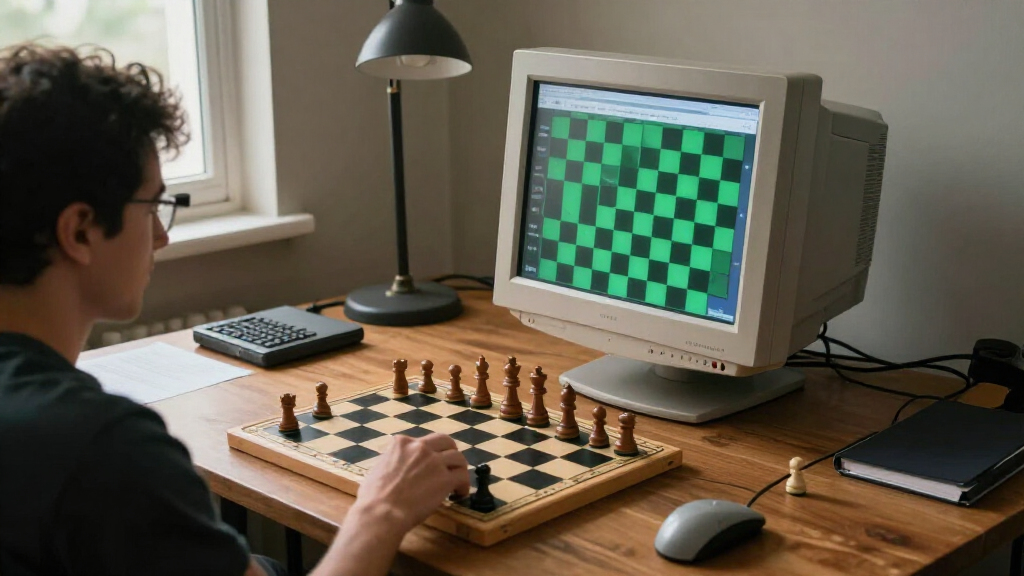
A 2026 report says a modern, specially adapted Stockfish engine running on a 200 MHz Pentium Pro reached an estimated 3,180 Elo at 30 seconds per move. That is well above Garry Kasparov’s reported rating, but it does not establish that the engine would have beaten him in a 1996 match: the rating comes from testing, not a match against Kasparov, and the machine ran software developed with decades of later chess-engine knowledge.
A 2026 report says a modern Stockfish engine, rewritten and tuned to run on a 200 MHz Pentium Pro, reached an estimated 3,180 Elo at 30 seconds per move—above the roughly 2,800 rating attributed to Garry Kasparov in the report. The result suggests that later advances in chess-engine programming, not only faster computers, could have made a 1996 desktop a formidable opponent; it does not show that this setup played or defeated Kasparov.
The experiment’s author says the Pentium Pro had 64 MB of RAM and ran a custom Stockfish port. The port required changes for the machine’s 32-bit architecture and memory limit, followed by algorithmic adjustments and tuning for the older processor. The reported estimate was 2,846 Elo at one second per move, 3,109 at 10 seconds and 3,180 at 30 seconds. These figures are estimates from the author’s tests, not results from a Kasparov match.
The report also compared a 1996 version of the engine Crafty with newer hardware and with versions incorporating later chess-programming techniques. Crafty 11.13 scored an estimated 1,999 Elo on the Pentium Pro at one second per move and 2,614 on a modern Ryzen 7 at the same time control. After the author added modern search and evaluation methods, the modified program reached an estimated 2,718 Elo on the Pentium at one second per move.
In a separate 100-game test, the tuned modern engine on the Pentium Pro scored 78 wins, 17 draws and five losses against 1996 Crafty running on modern hardware. That result compares two engines, not either engine with Kasparov. The author’s conclusion is that better programming accounts for a majority of the reported strength gains between the older and modern engines; the experiment does not establish what would have happened in a historical match.
How Software Changed Chess Strength
The result challenges the simple idea that Deep Blue’s advantage came chiefly from specialized, powerful hardware. The report argues that modern search and evaluation methods contributed more than raw computing speed to the strength of today’s engines. If its estimates hold up under broader testing, a machine with 1996-era processing power could benefit greatly from software knowledge that did not exist in that form at the time.
That distinction matters when comparing historic and modern artificial intelligence. A modern program on old hardware is not equivalent to a program that could have been built in 1996: it carries the benefit of decades of accumulated research, engineering and tuning. The demonstration is a test of how far later methods can be adapted to older equipment, not evidence that IBM’s specialized machine was unnecessary by the standards of its time.
Popular right now

Ninja Flip Toaster Oven & Air Fryer, Large Capacity, Stainless, SP151

Ninja Foodi Air Fryer, 8 Qt DualZone, 6-in-1, Grey, DZ201

Ninja Luxe Café Mini Plus Espresso and Drip Coffee Machine with AutoFroth, Stainless Steel (ES351)
As an affiliate, we earn on qualifying purchases.
Deep Blue and the 1996 Match
IBM’s Deep Blue beat Kasparov in a game on Feb. 10, 1996, the first time a computer program won a game against the reigning world champion, according to the supplied report. Kasparov won that match. Deep Blue’s upgraded version defeated him in a 1997 rematch, by a 3.5–2.5 score.
The report describes the upgraded Deep Blue as a special-purpose system with 30 processors and 480 custom chess chips, capable of analyzing more than 200 million positions per second. The modern-engine experiment asks a different question: how strong could a contemporary chess program become if adapted to ordinary hardware from the same period? The answer depends on applying later methods, rather than recreating what engineers knew or could implement in 1996.
What the Ratings Cannot Establish
The supplied report provides estimated Elo figures and selected test results, but not a direct game record against Kasparov. Elo ratings are estimates whose meaning depends on the opponents, time controls and testing method; the source excerpt does not provide enough detail to independently evaluate every rating or quantify how reliably it predicts performance against a specific human opponent.
It is also unclear from the supplied material whether the Pentium-based program would have been permitted or practical under the conditions of the 1996 match, or how it would perform in a full match against Kasparov. The author’s claim that it could have beaten him is a counterfactual interpretation, not a confirmed historical outcome. The experiment also does not show that the required software could have been written with the knowledge available in 1996.
Further Tests Could Refine the Claim
The report presents a set of engine tests and a 100-game comparison, rather than announcing a scheduled Kasparov match or an independent replication. The next useful evidence would include detailed test methods and results that other researchers can reproduce, including the opponents and time controls used to calculate each rating.
Until such evidence is available, the narrow conclusion is the most supportable one: later chess-engine methods can run effectively on old hardware, and the author’s tuned Pentium Pro build tested at a high estimated strength. Whether it would have beaten Kasparov in 1996 remains untested.
Key Questions
Did the Pentium-based engine play Kasparov?
No. The supplied report describes engine-rating tests and a 100-game match against 1996 Crafty running on modern hardware. It does not report a game or match against Kasparov.
How strong did the adapted Stockfish test?
The author reports an estimated 3,180 Elo at 30 seconds per move, with estimates of 2,846 at one second and 3,109 at 10 seconds per move. These are test estimates, not a result from a Kasparov match.
Was the engine actually software from 1996?
No. It was a modern Stockfish engine rewritten and tuned for the Pentium Pro. Its methods reflect later chess-engine research, even though the hardware dates to 1995.
Does this show Deep Blue was not needed?
Not as a historical conclusion. The experiment suggests a modern program could achieve high estimated strength on older hardware, but it relies on later programming knowledge and does not recreate the capabilities available to IBM in 1996.
Source: nicholas.carlini.com