
Nanotech for biodegradable plastics involves embedding tiny nanoscale materials like nanoclays, silica, or carbon nanotubes into plastic matrices to boost their strength, impact resistance, and thermal stability. This makes the plastics more durable for various applications while maintaining eco-friendliness. Additionally, nanotech can modify plastics to degrade faster in natural environments by enhancing their susceptibility to enzymes. If you keep exploring, you’ll discover how this innovative approach is transforming sustainable materials for the future.

Get the latest gadgets delivered free — and shop member deals
- Fast, free delivery on millions of items
- Access to Prime Big Deal Days deals on October 6–7
- Prime Video, Amazon Music and more included
Key Takeaways
- Nanoparticles enhance biodegradable plastics by improving mechanical strength, thermal stability, and impact resistance without increasing weight.
- Incorporating nanomaterials accelerates enzymatic degradation, ensuring faster breakdown post-use.
- Nanotech enables the development of multifunctional biodegradable plastics that combine durability during use and eco-friendly disposal.
- Uniform nanoscale dispersion creates dense networks, boosting performance and extending application possibilities in packaging and agriculture.
- Advances in nanotechnology support sustainable, eco-friendly materials with tailored properties for specific environmental and industrial needs.
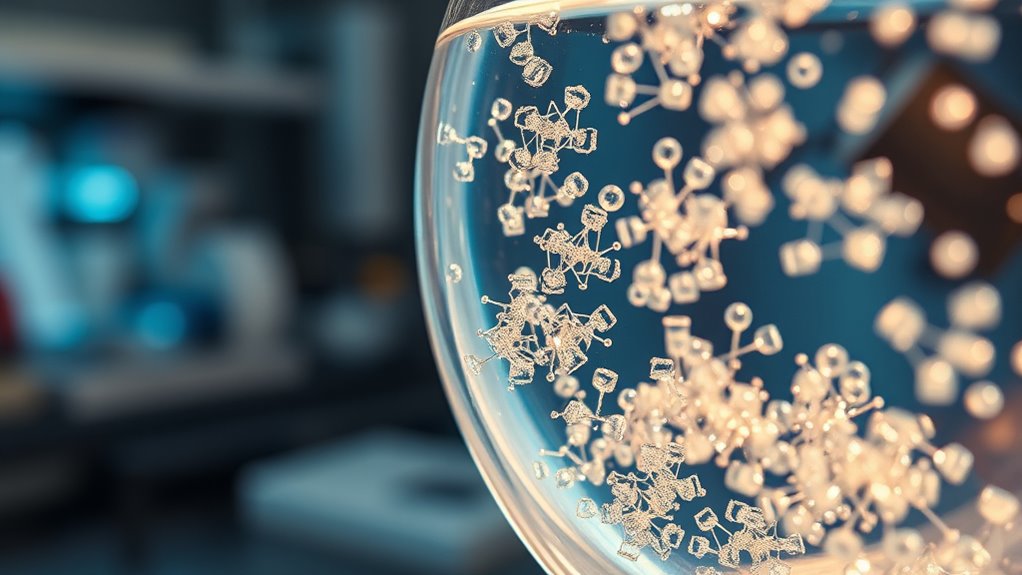
Nanotechnology is revolutionizing biodegradable plastics by enhancing their strength, durability, and environmental performance. One of the most promising advancements involves nanoparticle reinforcement, where tiny particles are embedded into the plastic matrix to improve its physical properties. By adding nanoparticles like nanoclays, silica, or carbon nanotubes, you can substantially increase the material’s tensile strength, impact resistance, and thermal stability. This means your biodegradable plastic becomes more robust and capable of withstanding everyday stresses, broadening its potential applications from packaging to agricultural films. Unlike traditional additives, these nanoparticles disperse uniformly at the nanoscale, creating a dense network that bolsters the plastic’s mechanical integrity without adding weight or compromising biodegradability.
Beyond just strengthening the material, nanotechnology also enhances the enzymatic degradation process of biodegradable plastics. Enzymatic degradation enhancement refers to modifying the plastic at the molecular level to make it more accessible to natural enzymes that break down the polymer chains. When you incorporate specific nanoparticles or surface treatments, you make the plastic more susceptible to microbial attack in environments like soil or compost. This targeted approach accelerates degradation rates, ensuring that your biodegradable plastic doesn’t persist in the environment longer than necessary. It’s a clever way to balance durability during use with eco-friendly breakdown afterward, addressing one of the common criticisms of biodegradable plastics — their sometimes unpredictable degradation timelines.
Furthermore, these nanotech strategies can be combined to create multifunctional biodegradable plastics. For example, by selecting nanoparticles that reinforce the material while also facilitating enzymatic breakdown, you develop a product that performs well during its lifecycle and then degrades efficiently once discarded. This integrated approach reduces environmental impact without sacrificing performance, making your product more sustainable. Plus, since nanomaterials can be engineered to be environmentally friendly and non-toxic, you can be confident that your innovation won’t introduce new pollutants.
In essence, nanotechnology provides you with powerful tools to tailor biodegradable plastics to specific needs, enhancing their strength through nanoparticle reinforcement and promoting faster, more controlled degradation via enzymatic process improvements. These advancements not only extend the usability of biodegradable plastics but also ensure they fulfill their ecological promise by breaking down more efficiently in natural settings. As you explore these cutting-edge techniques, you’ll find yourself at the forefront of creating smarter, more sustainable materials that meet the demands of modern society and environmental stewardship.
Top picks for "nanotech biodegradable plastic"
As an affiliate, we earn on qualifying purchases.
Frequently Asked Questions
How Does Nanotech Accelerate the Breakdown of Biodegradable Plastics?
Nanotech accelerates biodegradable plastic breakdown by increasing surface area, allowing enzymes to access more material efficiently. It also enhances enzyme catalysis by incorporating nanomaterials that improve enzyme activity. As a result, the plastics degrade faster, reducing environmental impact. By manipulating nanostructures, you can optimize these processes, making biodegradable plastics break down more quickly and effectively, which helps in sustainable waste management and environmental conservation efforts.
Are Nanomaterials in Plastics Safe for Human Health?
Imagine tiny warriors in your plastics—nanomaterials—that could pose risks. While some nanoparticles may cause toxicity, current research shows that human exposure to nanomaterials in plastics is generally low and regulated. However, nanoparticle toxicity remains a concern, and ongoing studies aim to guarantee safety. You should stay informed, as understanding these risks helps protect your health from potential hazards associated with nanomaterials in everyday products.
What Environmental Impacts Do Nanotech-Enhanced Biodegradable Plastics Have?
You might worry about environmental impacts, but nanotech-enhanced biodegradable plastics can affect ecological balance through environmental toxicity if nanomaterials leach out. These materials could harm soil and aquatic life, disrupting ecosystems. However, with proper design and testing, you can minimize these risks. It’s crucial to monitor nanomaterial behavior during degradation to ensure they don’t cause long-term ecological harm while supporting sustainable waste management.
Can Nanotech Improve the Mechanical Strength of Biodegradable Plastics?
Yes, nanotech can improve the mechanical strength of biodegradable plastics. You’ll see this happen through nanocomposite reinforcement, where tiny nanomaterials are added to boost durability. Additionally, nanotech enhances molecular bonding, creating stronger links within the plastic matrix. This combination results in biodegradable plastics that are more resistant to stress and wear, making them more practical for various applications without sacrificing environmental benefits.
How Cost-Effective Is Integrating Nanotechnology Into Biodegradable Plastic Production?
Is it worth the investment? Integrating nanotechnology can be cost-effective if you conduct thorough cost analysis and consider long-term benefits. While initial expenses might seem high, improved material properties could lower production costs and extend product lifespan. Ultimately, the economic feasibility hinges on balancing upfront costs with potential savings and market advantages, making nanotech a smart choice if you plan strategically and evaluate all financial factors carefully.
Conclusion
As you hold a biodegradable plastic in your hand, remember it’s like planting a tiny seed of change. Nanotech acts as the nurturing sun, guiding it to break down gently and return to the earth. By embracing these innovations, you’re not just using smarter plastics — you’re planting hope for a cleaner, greener future. Let each eco-friendly choice be a leaf, symbolizing growth and renewal in the ongoing cycle of nature’s resilience.
Fall Picks
fall essentials
As an affiliate, we earn on qualifying purchases.