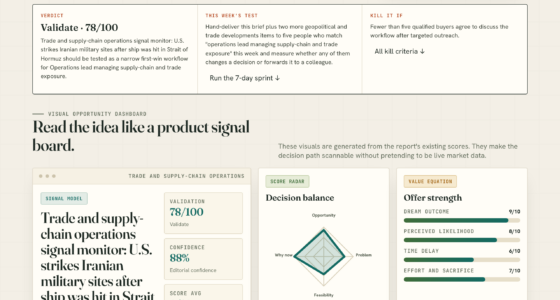
📊 Full opportunity report: Market Oversights That Could Harm AI Token Values on ThorstenMeyerAI.com — validation score, market gap, and execution plan.
TL;DR
Recent market declines in AI tokens are driven by misperceptions of demand and margin shifts caused by open-source AI models. Experts warn that these oversights may lead to mispricing and future volatility.
Recent declines in AI tokens, with drops of 40 to 60 percent from their highs, are primarily driven by market misinterpretation of shifts in the AI ecosystem, according to industry analyst Thorsten Meyer. The core issue is a misunderstanding of how open-source AI models and margin redistribution are affecting demand and valuation, not a fundamental decline in AI compute needs.
Thorsten Meyer explains that the market’s sell-off reflects a misreading of the impact of open-source AI models gaining market share. While the market perceives demand destruction, Meyer states that the actual effect is a redistribution of margins from high-cost frontier models to open-weight models and infrastructure providers. This shift does not reduce compute demand; instead, it lowers token costs and increases overall consumption, as users can afford to run more models at lower prices.
Furthermore, Meyer highlights that the most significant demand growth occurs in private frontier labs and open inference clouds, which are largely invisible to public market metrics like 10-K filings. This ‘dark matter’ of the AI economy influences GPU availability, rental prices, and token growth, but remains unmeasured and undervalued, leading to mispricing of AI tokens.
The rise of multi-model routing is also misunderstood. Instead of reducing token demand, it often increases total token volume by enabling more efficient orchestration of models, which in turn enhances the value of high-cost, frontier models. Meyer emphasizes that these developments are not signs of demand decline but structural shifts that the market is failing to recognize properly.
The speculative AI names fell 40–60% from their highs in a month. Every fundamental I can measure accelerated in the same weeks. My view: the market is selling a layer of the stack it was never able to see — and panicking about the two risks that matter least.
▲ Opinion & analysis · not investment adviceOpen source taking share spooked the market as demand destruction. That’s backwards. Producing a token costs the same compute whoever emits it — so open weights don’t destroy demand, they move margin and grow the pie.
The acceleration is happening where public equities have almost no telemetry. You infer the layer from its gravitational pull on the gauges you can read.
- A handful of listed hyperscalers
- The chipmakers
- Quarterly filings, weeks late
- Private frontier labs
- Open-source inference clouds monetizing served tokens
- Its pull: GPU scarcity, rising rents, memory spot, token growth — none on a balance sheet
The two things everyone panicked about are the two I worry about least. The risks worth respecting are quieter.
For the buildout to pay for itself, trillions in new operating cash flow must appear. It can come from exactly two places.
The truth, as usual, is still getting its boots on.
Implications of Market Mispricing in AI Tokens
This analysis underscores that the current market decline in AI tokens may be based on misinterpretation of fundamental shifts within the AI ecosystem. Recognizing that margin redistribution and open-source model adoption are expanding overall demand and value rather than suppressing it is crucial for investors and industry stakeholders. Failure to understand these dynamics could lead to mispricing, increased volatility, and potential losses when the true growth trajectory becomes apparent.
As an affiliate, we earn on qualifying purchases.
Background on AI Market Dynamics and Open-Source Growth
Over the past month, AI tokens have experienced sharp declines, which some market observers have attributed to demand destruction. However, industry analyst Thorsten Meyer notes that these price movements coincide with rapid growth in open-source AI models and infrastructure, which are not reflected in traditional financial metrics. The shift toward open weights and multi-model routing represents a fundamental change in how AI compute is consumed, with margins moving from high-cost labs to infrastructure providers and open models.
This shift has been ongoing but is often misunderstood by public markets, which tend to focus on visible, listed companies. The unseen growth in private labs and open inference clouds constitutes the 'dark matter' of the AI economy, influencing demand and pricing in ways that current metrics fail to capture.
"The market read this as demand destruction. I think that is close to exactly backwards."
— Thorsten Meyer
open-source AI model training hardware
As an affiliate, we earn on qualifying purchases.
As an affiliate, we earn on qualifying purchases.
Uncertain Aspects of Market Repricing
It remains unclear how quickly the market will recognize the true value of open-source AI models and infrastructure shifts. The extent to which private demand growth will translate into visible valuation changes is still uncertain, as is the potential for future regulatory or technological disruptions that could alter these dynamics.
As an affiliate, we earn on qualifying purchases.
Next Steps for Investors and Industry Stakeholders
Monitoring the growth of private AI labs and open inference clouds will be essential to understanding true demand. Investors should also watch for shifts in margin structures and infrastructure pricing, which may signal a reevaluation of AI token values. Industry players are likely to continue expanding open-source models and multi-model routing, further complicating traditional valuation metrics.
Further research and more comprehensive metrics will be needed to accurately assess the evolving AI ecosystem and avoid mispricing based on incomplete information.
high-performance AI inference servers
As an affiliate, we earn on qualifying purchases.
As an affiliate, we earn on qualifying purchases.
Key Questions
Why are AI token prices falling despite increased AI activity?
Prices are falling mainly due to market misinterpretation of margin shifts and open-source model adoption, not actual demand reduction. Cheaper tokens lead to increased overall usage.
What is the 'dark matter' of the AI economy?
The 'dark matter' refers to private frontier labs and open inference clouds that generate significant demand and influence token prices but are not visible in public financial data.
How does multi-model routing affect AI token demand?
Multi-model routing often increases total token volume by enabling more efficient orchestration, which can raise the value of high-cost models rather than diminish demand.
What risks do market oversights pose to investors?
Mispricing due to incomplete understanding of demand and margin shifts could lead to volatility and losses when the true value of open-source AI growth becomes apparent.
Source: ThorstenMeyerAI.com