

📊 Full opportunity report: Memory Stopped Being A Commodity on ThorstenMeyerAI.com — validation score, market gap, and execution plan.
TL;DR
Micron has signed long-term, take-or-pay contracts with major customers, pre-funding capacity and transforming memory from a commodity into a strategic, contracted input. This marks a significant industry shift.
Micron has revealed that it has entered into 16 long-term, take-or-pay contracts with major customers, locking in approximately $100 billion in revenue through 2030. These agreements include $22 billion in customer deposits and financial commitments paid upfront, marking a fundamental change in how memory is supplied and purchased, and signaling that memory is no longer treated purely as a commodity.
These contracts, called Strategic Customer Agreements, run mostly from 2026 to 2030, with some automotive deals extending three years. They require customers to buy a set volume annually or pay for it regardless, effectively locking in demand for Micron’s memory products. The agreements cover about 20% of Micron’s DRAM and roughly one-third of its NAND output during this period.
The pricing structure is designed with a ceiling near current market prices and a floor that guarantees Micron a gross margin above previous cycle peaks, even if prices collapse. Customers also provide upfront payments totaling about $22 billion, which Micron holds as deposits and commitments, effectively pre-funding capacity investments. This reverses the traditional industry model, where manufacturers bore capacity risks and buyers waited for prices to fall. For more on how AI impacts industry structures, see The Six Chokepoints.
Memory stopped being a commodity
Micron just locked up a fifth of its DRAM and a third of its NAND through 2030 with binding take-or-pay contracts — and collected $22 billion in deposits from the customers, up front. The boom-bust cycle that always brought cheap RAM back is being contracted away.
A dream deal for Micron — near-peak prices, margin floors above any past peak, customer-funded fabs. Insurance for the buyers who signed — real protection against a real shortage, bought dear. And for everyone else, a forecast: don’t expect cheap memory back soon. The structure is also a large, leveraged bet on AI demand holding to 2030 — and floors get tested in a genuine downturn. The contracts run to 2030; the test arrives sooner.
Implications of Memory Contracts on Industry Dynamics
This development indicates a shift in the memory industry, where memory is becoming a strategic, pre-paid input rather than a fluctuating commodity. It suggests that major buyers, including hyperscalers and AI infrastructure operators, are willing to lock in supply at near-peak prices to secure capacity amid ongoing shortages. For Micron and similar firms, this move provides predictable revenue and reduced cycle volatility.
However, it also raises questions about the future of supply-demand balance, pricing power, and whether this model can be scaled industry-wide. The contracts act as insurance against demand drops but also commit buyers to potentially overpriced capacity if AI demand wanes.

PUSKILL DDR4 32GB (2x16GB) 3200MHz PC RAM | CL16-18-18-42 | 1.35V | Desktop Memory Kit for Gaming and High-Performance Computing | Compatible with Intel & AMD
- High-Speed 3200MHz Performance: Fast frequency with low latency for smooth gaming
- Large 32GB Capacity: Ideal for gaming, streaming, and heavy multitasking
- Wide Compatibility: Supports Intel XMP 2.0 and AMD Ryzen platforms
As an affiliate, we earn on qualifying purchases.
As an affiliate, we earn on qualifying purchases.
Industry Shift Toward Contracted Memory Supply
For decades, memory chips have been treated as a commodity, with prices fluctuating according to supply and demand cycles. Historically, capacity investments were risk-bearing for manufacturers, while buyers waited for prices to drop during glut periods. Micron’s recent move, announced in its record June quarter, signals a seismic change: the company now secures demand through long-term contracts that pre-fund capacity.
This approach emerged amid persistent shortages and rising prices, driven by AI and other high-demand applications. Prior to this, industry cycles saw prices crash after shortages, encouraging new capacity. Micron’s new contracts, which include $22 billion in upfront payments, aim to stabilize revenue and margins, effectively transforming memory into a strategic infrastructure input.

SANDISK 2TB Extreme Portable SSD (Old Model) – Up to 1050MB/s, USB-C, USB 3.2 Gen 2, IP65 Water and Dust Resistance, Updated Firmware – External Solid State Drive – SDSSDE61-2T00-G25
- High-speed NVMe Performance: Up to 1050MB/s read, 1000MB/s write
- Durable and Water-resistant: IP65 rated, 3-meter drop protection
- Portable and Secure: Includes carabiner loop for easy attachment
As an affiliate, we earn on qualifying purchases.
As an affiliate, we earn on qualifying purchases.
Unclear Impact on Market Prices and Supply Dynamics
It is not yet clear how widespread this contractual model will become across the industry, or how it will affect overall supply-demand balance and pricing. While Micron’s move signifies a significant shift, the extent to which other manufacturers will adopt similar strategies remains uncertain. Additionally, the long-term effects on market competition and innovation are still developing.
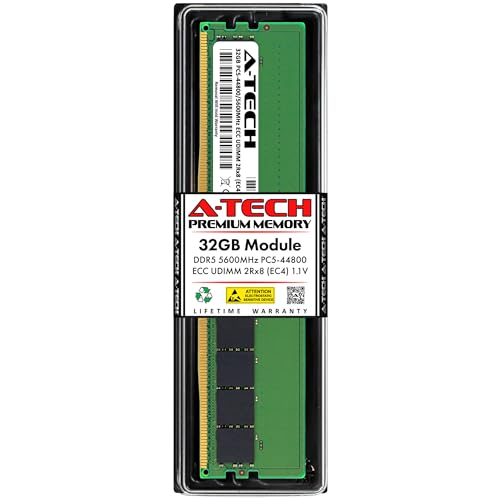
A-Tech 32GB DDR5 5600MHz PC5-44800 ECC UDIMM 2Rx8 (EC4 9×4) Dual Rank 1.1V ECC Unbuffered DIMM 288-Pin Server, Workstation RAM Memory Upgrade Module
- Compatibility: For select DDR5 servers and workstations only
- Capacity: 32GB per module
- Type: DDR5 ECC UDIMM
As an affiliate, we earn on qualifying purchases.
As an affiliate, we earn on qualifying purchases.
Next Steps in Memory Industry Contracting and Capacity Planning
Micron and other memory producers are likely to expand their use of long-term contracts, aiming to lock in demand and stabilize revenue streams. Monitoring how customers respond—particularly whether more firms follow suit—will be crucial. Industry analysts will watch for signs of broader adoption and potential impacts on pricing cycles, supply availability, and innovation in memory technology.

NAND Flash Memory Technologies (IEEE Press Series on Microelectronic Systems)
As an affiliate, we earn on qualifying purchases.
As an affiliate, we earn on qualifying purchases.
Key Questions
What are Micron’s new contracts and why are they important?
Micron’s contracts are long-term, take-or-pay agreements with major customers, locking in $100 billion in revenue and requiring $22 billion in upfront deposits. They signify a shift from memory as a commodity to a strategic, pre-funded input.
How does this change the traditional memory industry model?
Traditionally, manufacturers bore capacity risks, and prices fluctuated with supply and demand. Now, capacity is pre-funded and demand is secured through long-term contracts, reducing cycle volatility and stabilizing revenues.
Who are the main beneficiaries of this shift?
Major buyers like hyperscalers and AI infrastructure operators benefit by securing supply at near-peak prices, while Micron gains predictable revenue and reduced exposure to market fluctuations.
Does this mean memory is no longer a commodity?
While it is still produced and traded like a commodity, the contractual agreements indicate a move toward treating memory as a strategic infrastructure input, with pre-paid capacity and demand certainty.
What are the risks associated with this new model?
If AI demand drops significantly, buyers may be stuck paying for excess capacity at high prices. For Micron, the risk is reduced, but the industry’s supply-demand balance could be affected if many adopt similar contracts.
Source: ThorstenMeyerAI.com