

📊 Full opportunity report: The AI Sovereignty Market Is Here: Significant Sale Signals Its Maturity on ThorstenMeyerAI.com — validation score, market gap, and execution plan.
TL;DR
The European AI sovereignty market has reached a new level of maturity, evidenced by significant infrastructure launches, large-scale investments, and confirmed procurement activity. Key developments include the launch of Germany’s Industrial AI Cloud and major funding commitments, signaling a shift towards autonomous AI capabilities.
Germany’s Industrial AI Cloud officially launched on February 4, 2026, in Munich, featuring nearly 10,000 NVIDIA GPUs and around 0.5 ExaFLOPS of computing power. This marks a significant step toward establishing European AI sovereignty, backed by private funding and major corporate partners, including SAP, Siemens, and Mercedes-Benz.
The German Telekom and NVIDIA partnership created a fully operational AI infrastructure in Munich, representing a 50% increase in German AI computing capacity. Parallel efforts by the Schwarz Group aim to develop a European hyperscale with an investment of approximately 11 billion euros and a target of 100,000 GPUs.
In addition, the German government allocated 805 million euros for a European AI gigafactory, with a consortium including SAP, Telekom, Siemens, IONOS, and Schwarz Group preparing a joint EU bid. The SPRIND agency launched the “Next Frontier AI” initiative with 125 million euros for AI research labs, while Brussels introduced the Cloud and AI Development Act, emphasizing European independence from US cloud providers and promoting free software principles.
Market analysts like McKinsey estimate the global AI services market exceeds one trillion dollars annually, with nearly 600 billion dollars attributed to sovereign AI. European spending on sovereign cloud services is projected to reach 12.6 billion dollars in 2026, an increase of 83% year-over-year, according to Gartner. Procurement activity, such as the Bundesamt für Verfassungsschutz choosing French firm ChapsVision over Palantir, confirms rising demand for sovereign AI solutions.
However, a notable development is the announcement by Aleph Alpha of a merger with Canadian startup Cohere, valued at approximately 20 billion dollars. This move, backed by Schwarz Group investment, has sparked debate over the future of German AI sovereignty and the dominance of North American models, especially since all major German AI infrastructure relies on NVIDIA GPUs located outside Europe.
Der Souveränitäts-Markt ist real geworden —
und hat im selben Quartal seinen Champion verkauft
Tagesaktuell verifizierter Marktpuls · Geld, GPUs und eine Ironie
Das Geld ist da — drei Belege
Telekom + NVIDIA in München: ~0,5 ExaFLOPS, +50 % deutsche KI-Rechenleistung, privat finanziert. Schwarz-Gruppe: 11 Mrd. €, perspektivisch 100.000 GPUs.
805 Mio. € Gigafactory-Förderung; Konsortium SAP, Telekom, Siemens, IONOS, Schwarz. SPRIND: 125 Mio. € für eigene KI-Labore.
BfV wählt ChapsVision statt Palantir; Bundeswehr schließt Palantir aus der Cloud aus. Gartner: EU-Sovereign-Cloud +83 % auf 12,6 Mrd. $.
DIE IRONIE · 24. APRIL 2026
Mitten im Souveränitäts-Frühling schließt sich Aleph Alpha mit Kanadas Cohere zusammen — die Schwarz-Gruppe finanziert als Lead-Investor mit 600 Mio. $.
Freundliche Lesart: Konsolidierung unter Gleichgesinnten; 20 Mrd. $ Verbund schlägt unterfinanziertes Startup. Unbequeme Lesart: Deutschlands Modellschicht wird künftig in Toronto mitentschieden — und deutsches Kapital finanziert lieber fremde Champions als eigene.
Souveränität ist eine Schichtenfrage
Das Signal: Die souveräne Betriebsschicht ist jetzt kaufbar und bezahlbar — die Modellschicht bleibt Import. Wer Souveränitätsstrategien baut, sollte sie auf die Schichten bauen, die Europa tatsächlich kontrolliert.
Why the AI Sovereignty Market Matters in 2026
The emergence of a mature AI sovereignty market in Europe signifies a strategic shift towards technological independence, reducing reliance on US and Chinese cloud providers. The substantial investments and infrastructure deployments demonstrate Europe’s commitment to building autonomous AI capabilities, which could influence global AI power dynamics and data governance.
For businesses and government agencies, this means increased access to sovereign AI services that align with European data privacy and security standards. The market signals a transition from conceptual discussions to tangible, operational infrastructure, marking a critical milestone in Europe’s digital sovereignty ambitions.
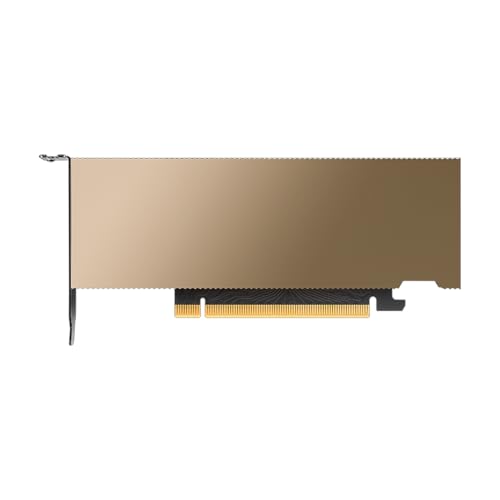
NVIDIA Tesla L4 24GB PCIe Graphics ACELLERATOR HH/HL 75W GPU 900-2G193-0000-000
- Video Memory: 24GB GDDR6 memory
- Tensor Cores: Fourth generation Tensor Cores
- Form Factor: Half height bracket only
As an affiliate, we earn on qualifying purchases.
As an affiliate, we earn on qualifying purchases.
Key Developments Driving European AI Sovereignty in 2026
For years, the concept of “digital sovereignty” was largely rhetorical in Germany. In early 2026, this rhetoric materialized into concrete investments and infrastructure projects. The Munich-based Industrial AI Cloud, operational since February, is the first major step, backed by private funding and high-profile corporate partners.
Simultaneously, the German government announced nearly 800 million euros for a European AI gigafactory, and the EU introduced legislation to foster local cloud and AI development, emphasizing open-source principles. Market analysts highlight the rapid growth of sovereign cloud spending, with Gartner predicting an 83% increase in 2026. Procurement cases, such as the Bundesamt für Verfassungsschutz’s choice of French AI firm ChapsVision, further confirm rising demand for European-controlled AI solutions.
The Aleph Alpha-Cohere merger underscores ongoing consolidation and the challenge of maintaining German leadership in AI model development, especially as the partnership involves significant North American influence and infrastructure reliance.
“The infrastructure in Munich and the government’s funding mark a turning point for Europe’s AI sovereignty, moving from talk to tangible assets.”
— an anonymous researcher
As an affiliate, we earn on qualifying purchases.
Remaining Questions About Europe’s AI Sovereignty Path
It is still unclear how much control Europe will retain over the entire AI value chain, especially regarding the silicon supply chain, which remains dominated by US companies like NVIDIA. The long-term impact of the Aleph Alpha-Cohere merger on German AI sovereignty is also uncertain, particularly whether Europe can sustain independent model development amidst increasing North American influence.
Additionally, the effectiveness of legislation like the Cloud and AI Development Act in fostering truly sovereign AI ecosystems remains to be seen, as implementation details and compliance remain complex and evolving.
high-performance FPGA development board
As an affiliate, we earn on qualifying purchases.
As an affiliate, we earn on qualifying purchases.
Next Steps for European AI Sovereignty Initiatives
In the coming months, expect further infrastructure rollouts, including the potential completion of the European gigafactory and expanded cloud services. Procurement activity is likely to increase as government agencies and large corporations prioritize sovereign AI solutions. Legislation like the Cloud and AI Development Act will be tested in practice, shaping compliance frameworks and open-source adoption.
Moreover, the AI model development landscape may see continued consolidation, with European startups and international partnerships influencing the balance of sovereignty and global competitiveness.
As an affiliate, we earn on qualifying purchases.
Key Questions
What does the launch of Germany’s Industrial AI Cloud mean for European AI sovereignty?
The launch signifies a major step toward autonomous AI infrastructure in Europe, reducing reliance on US cloud providers and marking a move from rhetoric to tangible assets.
How significant is the Aleph Alpha and Cohere merger for German AI leadership?
The merger consolidates North American influence in European AI, raising questions about the future of model sovereignty and the balance of control over AI development.
Will Europe achieve full control over AI models and silicon supply chains?
Currently, control over hardware and silicon remains dominated by US companies like NVIDIA, making full sovereignty a layered challenge that extends beyond infrastructure to the entire value chain.
What role will EU legislation play in shaping the future of sovereign AI?
Legislation like the Cloud and AI Development Act aims to promote open-source and local cloud services, but its real impact will depend on implementation and industry adoption.
Source: ThorstenMeyerAI.com





![A Walkable ASCII Cyberpunk City In One HTML File [Video]](https://nanomachines.net/wp-content/uploads/2026/09/a-walkable-ascii-cyberpunk-city-in-one-html-file-video-featured-260x140.jpg)