

📊 Full opportunity report: The Free-Download Question: When Running Your Own Model Actually Beats Paying on ThorstenMeyerAI.com — validation score, market gap, and execution plan.
TL;DR
Recent advances in open-weight AI models and hardware have made self-hosted inference more cost-effective than API services at scale. The crossover point depends on usage volume and operational costs, with many organizations now able to run near-frontier models locally for less.
Recent advancements in open-weight AI models and hardware have made running your own models potentially cheaper than paying for API access, challenging the conventional wisdom that cloud APIs are always more economical for high-volume use.
Thorsten Meyer, writing on ThorstenMeyerAI.com, explains that the common perception of ‘free’ models is misleading; while weights are downloadable at no cost, operational expenses such as hardware, electricity, and engineering efforts are significant. The true comparison is total cost of ownership versus per-token API pricing, which varies depending on usage volume.
By mid-2026, open-weight models like DeepSeek V4 Pro and Kimi K2.6 have closed much of the performance gap with proprietary models like GPT-5.5 and Claude Opus 4.6, achieving benchmark scores within 5-15 points of the frontier. These models are also substantially cheaper—around one-seventh to one-fifth the cost per million tokens—making local inference more attractive for many applications.
Hardware developments, especially Apple Silicon’s unified memory architecture, have further reduced costs by enabling high-capacity models to run efficiently on desktop hardware. Mixture-of-experts architectures, such as Qwen3.6-35B, activate only parts of the model per inference, lowering memory and processing requirements even further. This makes frontier-adjacent models feasible for small operators and individual developers.
The free-download question: when running your own actually beats paying
“Why pay for on-prem when you could run Qwen free?” The download is free — running it well is not. The honest comparison is total cost of ownership vs. per-token API. And there’s a real, moving crossover.
“Free” means the download, not the running
When someone says an open model is free, they mean the weights. They’re not counting the hardware, power, ops time, the quality gap, or depreciation. For most workloads, those are the entire cost.
- Hardware — the machine to hold & run it
- Electricity — sustained inference draws real power
- Ops time — updates, queue health, tuning, 2 a.m. breakage
- The harness — context, persistence, retries (not optional)
- Quality gap — 6–12 mo behind frontier on hardest tasks
- Depreciation — frontier hardware dates in ~3 years
Where owning beats renting
Below some usage level the API wins decisively. Above some sustained, predictable volume, owned hardware wins — and the meter never restarts. Drag the volume; toggle the task and sovereignty needs.
API vs. own-hardware — monthly cost balance
An illustrative model, not a quote. The point is the shape: a real crossover that moves with your inputs.
Two regional pools, a 5–25× price gap
The “you trade away too much capability” objection got much weaker. Open weights have closed to within 5–15 points of the closed frontier — and on some tasks drawn level.
What you own when you own the inference
Apple Silicon’s unified memory rewired the math — a 192GB Mac Studio holds a 70B model in memory; MoE models (e.g. 35B total / ~3B active) make frontier-adjacent capability runnable on a desk. But owning inference means owning all of this:
The true-cost line items the “free” framing skips
Lived from a small Mac fleet running Qwen on MLX for a high-volume publishing pipeline: at sustained volume it pays for itself against the per-token meter — but every item below is real.
Hardware capex
The fleet up front. Depreciates — dates in ~3 years even if no invoice shows it.
Electricity
Sustained inference draws real power. At fleet scale it’s a monthly bill, not a rounding error.
Operational burden
Model updates, quantizations, queue health, throughput tuning, 2 a.m. breakage you now own.
The harness
Context, persistence, retries, tool routing. Not optional — the model is only half the system.
No per-token meter
The payoff: once owned, inference cost stops scaling with use. The meter never restarts.
Data never leaves
Nothing sent to strangers. Sovereignty is structural, not a contractual promise.
The crossover zone is real — and growing
The “just run Qwen” dismissal and the “you need a vendor” reflex are both too simple. The local path wins in a specific, identifiable zone — and that zone is bigger than a year ago.
Which way it tips
Implications for AI Deployment Economics
This shift means organizations can potentially save substantial costs by investing in hardware and running open-weight models locally, especially at moderate to high usage levels. It challenges the dominance of cloud API pricing and influences strategic decisions about AI infrastructure investments, particularly for smaller firms and regional players.
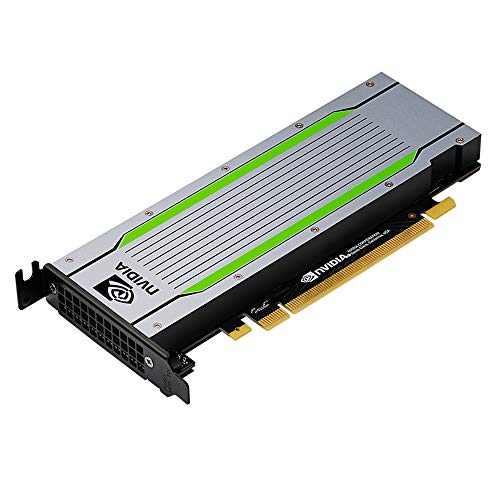
PNY NVIDIA Tesla T4 Datacenter Card 16GB GDDR6 PCI Express 3.0 x16, Single Slot, Passive Cooling
- Type: Video/Sound Card
- Cooling: Passive Cooling
As an affiliate, we earn on qualifying purchases.
As an affiliate, we earn on qualifying purchases.
Rapid Progress in Open-Weight Model Capabilities
Over the past year, open-weight models have rapidly closed the performance gap with proprietary models. Benchmarks such as SWE-bench and Artificial Analysis’s Intelligence Index show open models now achieving near-frontier scores, with some tasks even matching top-tier models. The landscape is increasingly divided into regional pools with overlapping capabilities, and the cost advantage of open models is becoming more pronounced.
However, the open models still lag behind the frontier on the most complex, long-horizon tasks, and performance inside structured agent environments remains superior for proprietary models. Hardware improvements, especially unified memory architectures, have made local inference more practical than ever before.
“The gap between ‘free to download’ and ‘cheap to operate’ is where the real decision-making happens, and it’s more favorable to local inference than many realize.”
— Thorsten Meyer

Apple 2026 MacBook Pro Laptop with Apple M5 Pro chip with 15-core CPU and 16-core GPU: Built for AI, 14.2-inch Liquid Retina XDR Display, 24GB Unified Memory, 1TB SSD, Wi-Fi 7; Space Black
- Processor: Apple M5 Pro chip with 15-core CPU
- Graphics: 16-core GPU with Neural Accelerator
- Display: 14.2-inch Liquid Retina XDR
As an affiliate, we earn on qualifying purchases.
As an affiliate, we earn on qualifying purchases.
Remaining Challenges in Local Inference Adoption
While hardware and model improvements are significant, uncertainties remain regarding the consistency of open model performance across all tasks, the complexity of setting up and maintaining local inference pipelines, and the actual operational costs at scale for small operators.
Additionally, the performance gap on the most demanding tasks and the necessity of sophisticated harnesses for structured agent environments continue to pose challenges for widespread adoption.

Generative AI on the Edge: Deploying Small Language Models to Microcontrollers
As an affiliate, we earn on qualifying purchases.
As an affiliate, we earn on qualifying purchases.
Expected Developments in Open-Weight AI Deployment
Further hardware innovations and model optimizations are expected to continue narrowing the performance gap. Additionally, more user-friendly tools and frameworks will likely emerge to simplify local deployment. Market dynamics may shift further as organizations reassess cost structures, with increased adoption of open-weight models for diverse applications.
Monitoring how these trends influence enterprise and regional AI strategies will be key in the coming months.
cost-effective AI model hosting hardware
As an affiliate, we earn on qualifying purchases.
As an affiliate, we earn on qualifying purchases.
Key Questions
When does running my own AI model become cheaper than using an API?
It depends on your usage volume, hardware costs, and operational expenses. For moderate to high, predictable workloads, owning and operating models locally can be more economical than paying per token for API access.
Are open-weight models now capable of replacing proprietary models?
Open models have closed much of the performance gap and are suitable for many tasks, but they still lag behind on the most complex, long-horizon reasoning tasks. Their suitability depends on specific use cases and required performance levels.
What hardware improvements have made local inference more feasible?
Apple Silicon’s unified memory architecture and mixture-of-experts architectures enable large models to run efficiently on desktop hardware, reducing costs and complexity for small operators.
What are the main challenges remaining for local inference adoption?
Performance on the hardest tasks, setup complexity, and maintaining structured inference pipelines are ongoing challenges, especially for smaller organizations without extensive AI infrastructure experience.
How might the market evolve in the next year?
Expect continued hardware and model improvements, more accessible deployment tools, and a potential shift in AI infrastructure strategies as open-weight models become increasingly competitive and cost-effective.
Source: ThorstenMeyerAI.com