
🔍 Read the full analysis: AI As A Tool For Interactive History: The 1693 La Citadelle Siege Reconstructed on ThorstenMeyerAI.com
TL;DR
AI has created an interactive digital reconstruction of the 1693 La Citadelle siege. The exhibit uses layered SVGs, CSS, and JavaScript to simulate the historical event, providing an immersive educational tool. The project exemplifies AI’s potential in digital history visualization.
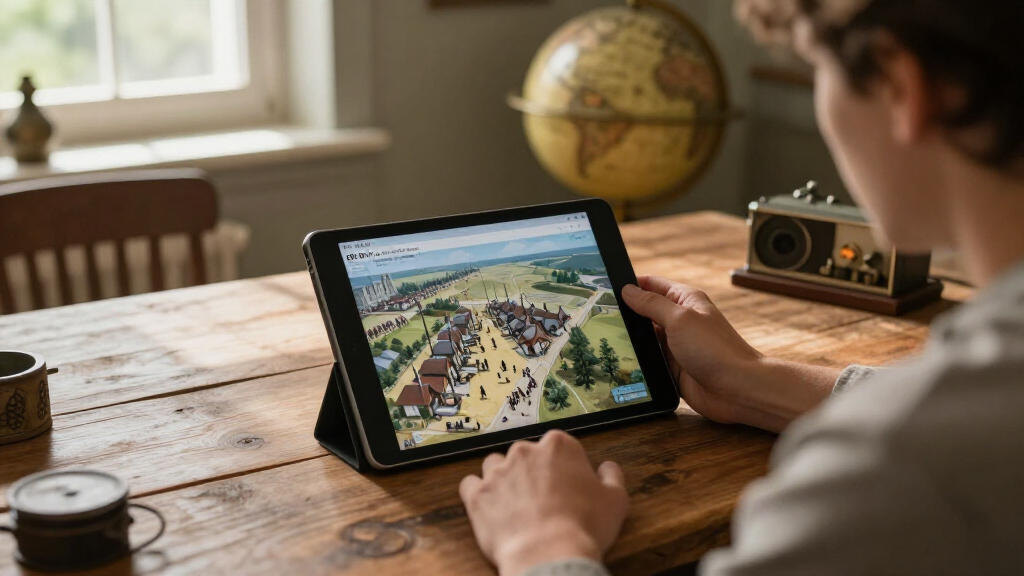
An AI-generated interactive exhibition now vividly reconstructs the 1693 siege of La Citadelle, allowing visitors to explore the event through a dynamic, scroll-driven digital experience. Developed by an AI-guided process, the project combines meticulous historical fidelity with artistic storytelling, making it a pioneering example of AI’s role in digital history visualization. This immersive tool offers educators, historians, and the public a new way to engage with 17th-century military history, with the site accessible online and continuously refined through AI analysis.
The project, hosted on a dedicated platform, employs layered SVG graphics, CSS animations, and JavaScript to simulate the terrain, fortifications, and military movements of the 1693 siege of La Citadelle, a fortress in Montfaucon. The experience is scroll-driven, with each scroll advancing the siege timeline, revealing earthworks, artillery fire, breaches, and sorties in a cinematic manner. For a detailed digital reconstruction, see the original analysis. The entire site is built without embedded images, relying solely on code—SVGs for maps, CSS for atmospheric effects, and canvas elements for trajectories and smoke puffs—ensuring scalability and high fidelity across devices.
Following a streamlined three-stage workflow, the project began with constructing layered SVG diagrams, then underwent iterative critique driven by AI analysis of visual coherence and historical plausibility, culminating in final approval by an art director. The site’s aesthetic employs a restrained palette inspired by archival materials—parchment, fortress ink, smoke grey, and vivid red accents—creating a gravitas that echoes historical engravings. Learn more about the digital archive at this digital archive. Typography combines the monumental elegance of Cinzel with the clarity of EB Garamond and Space Mono, establishing a layered textual hierarchy that guides users through the siege narrative.
Thorsten Meyer, the project’s lead, explained that the AI manual emphasizes layered architecture, precise interactions, and emotional depth rooted in the siege story. The signature interaction involves a multi-layered SVG map, where each element—grid, walls, trenches—is animated in real time, simulating earthworks and artillery fire. The cinematic ambiance is further enhanced by CSS overlays, parallax effects, and animated textures that mimic historical engravings, all crafted without static images, ensuring the experience remains scalable and responsive.
Implications of AI in Digital Military History
This project demonstrates AI’s capacity to produce highly detailed, interactive reconstructions of historical events, transforming static images into cinematic, explorable narratives. It offers an innovative educational tool that enhances engagement and understanding of complex military sieges, making history more accessible and immersive. For historians and educators, such tools could revolutionize how history is taught and experienced, bridging the gap between academic research and public engagement. Moreover, the AI-guided workflow ensures that digital reconstructions can be continuously refined, increasing their accuracy and emotional resonance over time.
As a proof of concept, this exhibit showcases AI’s potential to craft layered, scalable digital monuments that balance historical fidelity with artistic storytelling, setting a precedent for future applications in cultural heritage and digital humanities. Its reliance solely on code—without static images—also highlights a new direction in digital preservation and visualization, emphasizing procedural generation and dynamic interaction over static assets.
interactive history visualization software
As an affiliate, we earn on qualifying purchases.
As an affiliate, we earn on qualifying purchases.
Historical and Technological Background of the Siege
The 1693 siege of La Citadelle was a pivotal military event during a period of frequent European conflicts, involving complex fortification strategies and siege tactics. Historically, the event has been documented through engravings and written accounts, but no interactive digital representation existed until now. Recent advances in AI and web technologies have enabled the creation of detailed, explorable reconstructions that simulate terrain, artillery trajectories, and troop movements with high fidelity.
This project builds on prior efforts in digital history, but distinguishes itself through its use of AI-guided critique and layered SVG architecture, which allows for a cinematic, scroll-driven experience. The development process involved meticulous manual and AI-assisted refinement, ensuring that the simulation accurately reflects historical fortification geometry, artillery angles, and siege tactics, including Vauban’s famous star-fort design principles.
Prior to this, most digital reconstructions relied on static images or simple animations; this project’s dynamic, code-driven approach represents a significant technological leap, providing a more immersive and detailed exploration of military history.
“This project exemplifies how AI can elevate digital history, creating layered, cinematic reconstructions that are both educational and artistically compelling.”
— Thorsten Meyer
digital historical reconstruction tools
As an affiliate, we earn on qualifying purchases.
As an affiliate, we earn on qualifying purchases.
Unconfirmed Aspects and Future Refinements
While the reconstruction is highly detailed, it is not yet clear how closely it matches all historical records or whether future AI analysis will improve accuracy further. The project is ongoing, and developers plan to incorporate more detailed troop movement data and environmental factors, but these elements are still under development. Additionally, the extent to which this approach can be adapted to other historical events remains to be seen, and experts caution that AI-generated reconstructions should be viewed as interpretive tools rather than definitive accounts.
AI-powered educational history apps
As an affiliate, we earn on qualifying purchases.
As an affiliate, we earn on qualifying purchases.
Next Steps for AI-Driven Digital History Exhibits
The team plans to expand this approach to other historical sieges and battles, using AI to refine accuracy and interactivity further. They aim to integrate more detailed historical data, such as troop numbers and environmental conditions, into future reconstructions. Additionally, there are discussions about collaborating with educational institutions to embed these interactive exhibits into curricula, making history more engaging for students. Developers also intend to release updates that enhance user interaction, accessibility, and storytelling depth, ensuring the platform remains a cutting-edge tool for digital history.
interactive military history models
As an affiliate, we earn on qualifying purchases.
As an affiliate, we earn on qualifying purchases.
Key Questions
How accurate is the reconstruction of the 1693 La Citadelle siege?
The reconstruction is based on available historical data and AI analysis, aiming for high fidelity, but it remains an interpretive model. Ongoing refinements are expected to improve accuracy.
Can I explore the exhibit on my mobile device?
Yes, the experience is designed to be scalable and responsive across devices, including desktops and mobile browsers.
Will this technology be used for other historical events?
Developers plan to adapt this AI-driven approach to other battles, sieges, and historical scenes, expanding its educational and cultural applications.
How does AI critique improve the exhibit?
AI analysis assesses visual coherence, responsiveness, and historical plausibility, guiding iterative improvements and ensuring a high-quality, immersive experience.
Is this reconstruction considered a definitive historical record?
No, it is an interpretive reconstruction that combines historical data with AI modeling; it should complement, not replace, traditional scholarship.
Source: ThorstenMeyerAI.com