
🔍 Read the full analysis: Can A Twilight Dial Give AI A Better View Of NLCs? on ThorstenMeyerAI.com

Get the latest gadgets delivered free with Prime
- Fast, free delivery on millions of items
- Prime Video, Amazon Music and more included
- Member-only deals all year
TL;DR
“Noctilucent — NLC Watch at 83 km” is a fictional, AI-built exhibition about real noctilucent clouds, not a live observing service. Its interactive solar-depression dial changes the simulated sky and cloud lighting, using a website interaction to explain how high-altitude clouds can catch sunlight after sunset.
ThorstenMeyerAI.com’s original analysis describes “Noctilucent — NLC Watch at 83 km,” an AI-built exhibition that uses an interactive twilight dial to demonstrate how noctilucent clouds can remain sunlit after the ground is dark. The page is a fictional field journal for a fictional observing project—not a real company, live scientific service or source of current sightings—while the clouds it explains are real.
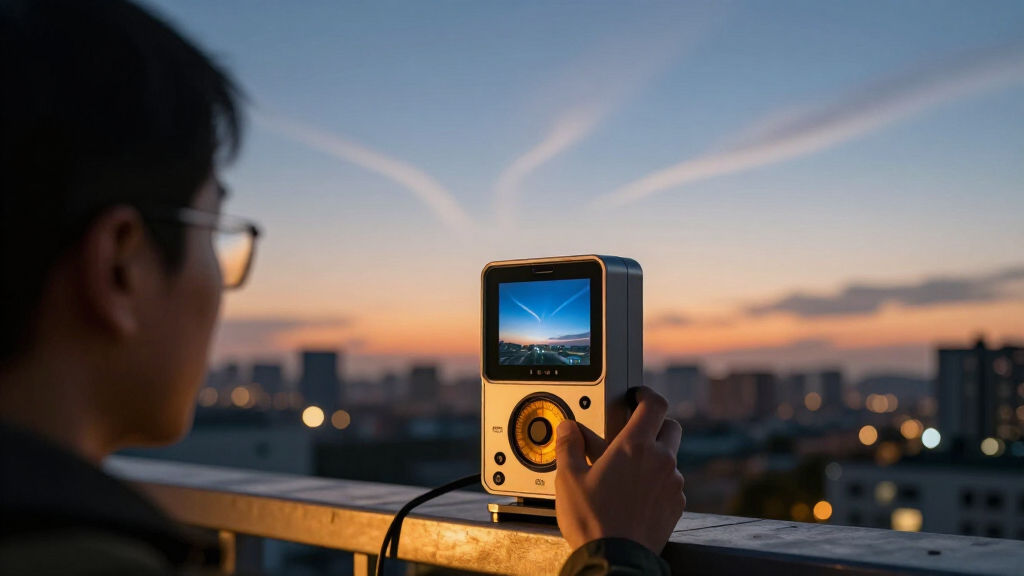
The dial represents the sun’s position from 6 to 16 degrees below the horizon, with the source describing about 11 degrees as the most expressive point in the experience. Moving it changes several elements together, including simulated sky brightness, shadow depth, cloud glow, ambient color, grain and a flare at the horizon. Supporting diagrams and text also draw on the selected state. The interaction is intended to make the lighting relationship visible rather than leave it as a static illustration.
The exhibition combines a procedural Canvas sky and cloud rendering with inline SVG diagrams, including an illustration of altitude. Its cloud forms behave differently: billows have tighter crests, whirls bend into polar-like distortions, and bands move in broader waves. A later exercise asks visitors to hold a control while simulated ground haze recedes and an 83-kilometre cloud band becomes clearer; releasing early makes the sighting fade. The source says the exercise supports pointer, keyboard and touch-like key input.
The page’s visual language contrasts electric cyan clouds with a dark violet and near-black ground, then shifts to a cream-colored field-log section. The article says the visuals are generated in the browser without image assets. It also describes animation that pauses when the page is hidden, avoids continuously rendering offscreen scenes and simplifies the experience for reduced-motion settings. The source presents these as design and implementation details; it does not provide independent testing results or performance measurements.
AI-built exhibition · Room 162 of 175
Can a Twilight Dial Give AI a Better View of NLCs?
“Noctilucent — NLC Watch at 83 km” uses an interactive twilight dial to explain how real noctilucent clouds can remain sunlit after the ground darkens. The exhibition is fictional; the clouds are real.
One dial, many visible effects
After sunset, the ground can be dark while sunlight still reaches ice clouds high above. The dial makes that geometry easier to explore by changing the simulated scene as one setting moves.
Sun below horizon
The marker illustrates the source’s highlighted setting. It is a design visualization, not a live measurement.
Three shapes, distinct motion
The browser-generated artwork pairs electric cyan clouds with a dark violet and near-black sky. The source describes different motion for each cloud form.
Billows
Tighter crests give the cloud forms a compact, rolling character.
Whirls
Bending contours create polar-like distortions in the simulated clouds.
Bands
Broader waves carry the cloud structures across the scene.
Patience becomes part of the interface
A later interaction asks visitors to hold a control as haze recedes and a simulated cloud band becomes clearer. Releasing early makes the sighting fade.
Hold
Keep the control pressed.
Haze recedes
Simulated ground haze thins.
Band emerges
An 83 km cloud band grows clearer.
Release early
The simulated sighting fades.
The exercise supports pointer, keyboard and touch-like key input. The source does not provide independent testing results confirming how reliably the controls work across devices.
Built in the browser
The source describes procedural visuals and animation choices, but supplies no independent performance or accessibility measurements.
Pauses when hidden
Animation is described as pausing when the page is out of view.
Limits offscreen work
The source says scenes avoid continuous rendering while offscreen.
Simplifies the scene
A still, simplified experience is described for reduced-motion settings.
What this exhibition does—and does not—show
Is NLC Watch a real monitoring service?
No. It is described as a fictional field journal and exhibition, not a real company, network or live scientific service.
Are its clouds live sightings?
No. The scene is an illustration explaining how high-altitude clouds may catch sunlight after the ground darkens.
Does the source report visitor testing?
No independent visitor testing, scientific review or measured browser performance is reported in the supplied material.
What is still uncertain?
The material does not specify a publication date or confirm whether the referenced page and construction guide have changed.
The source mentions invented stations and logs. Seasonal and latitude details in the creative brief are not forecasts or records from actual observers. No current sightings are documented.
Making Twilight Geometry Interactive
The dial gives visitors a way to explore a basic optical relationship: after sunset at ground level, sunlight may still reach ice clouds high in the atmosphere. By changing the simulated illumination across the scene, the exhibit connects a control to multiple visible effects, including the contrast between a dark lower sky and glowing clouds. That can make the explanation easier to grasp than a fixed image, while remaining an illustration rather than a scientific observation.
The distinction matters because the project’s presentation resembles an observing journal, but its network and stations are invented. The source explicitly identifies the project as fictional. Readers should not treat the displayed scene, logs or changing dial as live measurements, forecasts or evidence of a sighting. Its value is as an interactive design and educational concept, not as a monitoring tool.
The project also shows how a single variable can organize an entire web experience: the lighting setting affects artwork, diagrams and accompanying copy. The source’s account of reduced-motion and visibility-aware rendering describes efforts to make that experience considerate of different browsing conditions. No independent assessment is supplied to confirm accessibility, browser compatibility or frame-rate performance.
astronomy telescope for high-altitude clouds
As an affiliate, we earn on qualifying purchases.
As an affiliate, we earn on qualifying purchases.
Real Clouds, Fictional Field Journal
Noctilucent clouds are high-altitude ice clouds that can remain illuminated after the observer’s surroundings have entered darkness. The source locates the exhibit’s subject at about 83 kilometres above Earth and frames the effect through the sun’s position below the horizon. The page’s diagrams and dial turn that subject into the central interaction.
The project’s fictional observing framework includes invented stations and logs, as well as sections on cloud forms, ice crystals, seasonal observation and a field journal. The supplied design brief mentions observation around the summer solstice and at latitudes of 55–65 degrees, but those details are part of the creative brief; the source does not establish them as a forecast or provide data from actual observers.
The page is presented as room 162 of a series of 175 AI-built exhibition pieces. Its creator describes a three-pass process: building the room, reviewing it for clarity and interaction, and conducting an art-director review. A construction guide is also referenced, but the supplied material does not independently document the reviews or establish how they were carried out.
““a fictional field journal for a fictional observing project, not a real company or live scientific service.””
— ThorstenMeyerAI.com, describing the exhibition
As an affiliate, we earn on qualifying purchases.
No Live Observations or Test Data
The supplied material does not specify when the exhibition was published, provide independent scientific review, or report visitor testing. It also gives no measured results for accessibility, browser performance or whether the described controls work consistently across devices. The claimed visual response is a feature of the simulated experience, not a report of observed sky conditions.
It is not clear from the source whether the referenced design guide or live page has changed since the description was written. The fictional station logs and observation network should not be read as real locations or records, and no current sightings are documented.
As an affiliate, we earn on qualifying purchases.
The Exhibition and Its Build Guide
The source directs readers to open the exhibition in a browser and consult its construction guide for details about the lighting model, procedural graphics and animation behavior. It does not announce a launch date, research partnership, observing campaign or future scientific service. Any further claims about deployment or updates would need to be checked against the live page and attributed to its creator.
As an affiliate, we earn on qualifying purchases.
Key Questions
Is NLC Watch a real cloud-monitoring service?
No. The source describes it as a fictional field journal and exhibition, not a live scientific service or real observing network.
What does the twilight dial control?
It selects a simulated solar depression from 6 to 16 degrees below the horizon. The page uses that setting to change sky brightness, shadow, cloud glow, color and other visual details.
Are the clouds shown on the page live sightings?
No live sightings are reported in the source. The cloud scene is a browser-generated illustration intended to explain how high-altitude clouds may remain sunlit after the ground darkens.
What is the exhibit made with?
The source says the page uses Canvas for its sky and cloud forms, inline SVG for diagrams and CSS for styling, with no image assets. It also describes animation that pauses when the page is hidden and a reduced-motion still state.
Source: ThorstenMeyerAI.com
Fall Picks
fall essentials
As an affiliate, we earn on qualifying purchases.