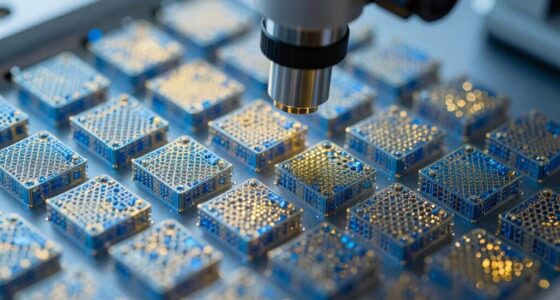

Nanotechnology is expanding across many industries because it offers innovative solutions with enhanced properties like strength, conductivity, and sensitivity. It allows you to develop faster, more efficient, and lighter products without increasing size or weight. Its scalable, cost-effective manufacturing makes it practical for widespread use. As research uncovers new possibilities, nanotech keeps transforming industries from medical diagnostics to environmental cleanup. Stay with us to discover how these tiny innovations are shaping the future in exciting ways.
Key Takeaways
- Nanotechnology offers versatile, tangible enhancements in properties like strength, conductivity, and sensitivity across multiple sectors.
- It enables development of higher-performance products without increasing size or weight, boosting efficiency.
- Cost-effective, scalable manufacturing processes facilitate widespread industry adoption.
- Ongoing research uncovers new applications, fueling rapid industry growth.
- Integration into everyday products and critical systems drives transformative industry expansion.
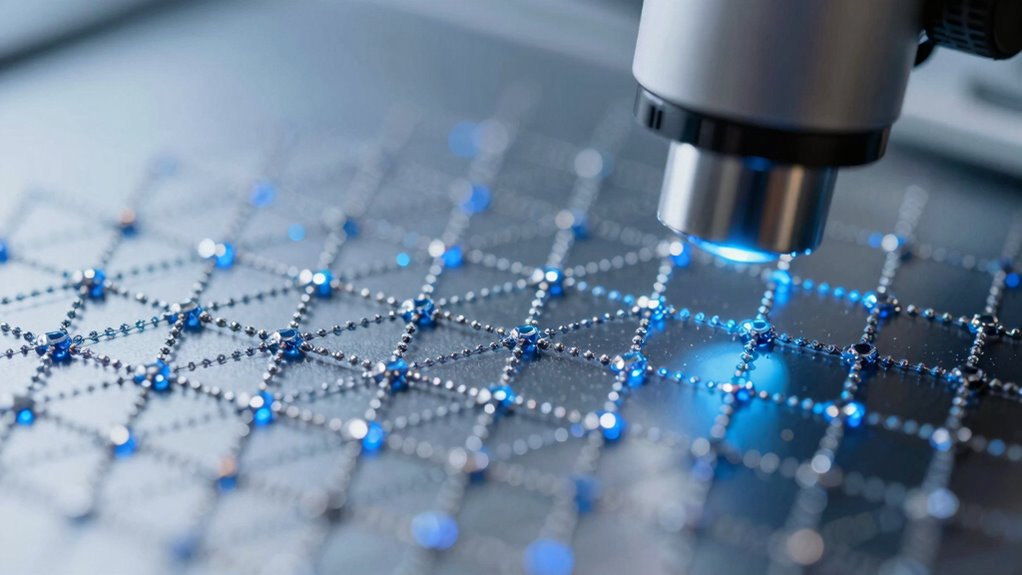
Nanotechnology is rapidly transforming a wide range of industries, from healthcare to manufacturing. Its ability to manipulate matter at an atomic and molecular level opens up innovative solutions that weren’t possible before. One area where you’ll see this impact clearly is in medical diagnostics. Quantum dots, tiny semiconductor particles just a few nanometers in size, are revolutionizing how diseases are detected and monitored. These quantum dots emit bright, stable, and tunable fluorescence when exposed to light, making them ideal for highly sensitive diagnostic tests. When used in medical diagnostics, they allow you to identify specific biomolecules with exceptional precision, leading to earlier detection of illnesses like cancer or infectious diseases. This level of sensitivity enhances the accuracy of tests, reducing false positives and negatives, and enabling more effective treatment plans. As a result, nanotechnology’s integration into diagnostics means faster, more reliable results that can markedly improve patient outcomes. Additionally, the precise control over properties at the nanoscale enables the development of more targeted therapies, further advancing personalized medicine.
Beyond healthcare, nanotechnology’s influence extends into manufacturing, electronics, energy, and environmental sectors. In manufacturing, for example, you benefit from stronger, lighter materials created through nanoscale engineering. These advanced materials improve product durability and performance while reducing weight, which is essential for aerospace, automotive, and sporting goods industries. The ability to customize material properties at such a small scale allows for innovations that greatly enhance product performance and durability. In electronics, quantum dots play a role in developing more vibrant and energy-efficient displays, such as those seen in high-definition screens. Their unique optical properties make devices brighter, with richer colors, while consuming less power, which benefits consumers and manufacturers alike. In energy, nanotech solutions are enabling more efficient solar panels and energy storage systems, pushing the boundaries of renewable energy technology. Environmental applications include water purification and pollution detection, where nanoscale sensors can identify contaminants at incredibly low concentrations, providing faster and more accurate data that help you address pollution issues more effectively.
The reason nanotechnology is expanding so quickly across industries is its versatility and the tangible benefits it offers. It allows you to develop products with enhanced properties—greater strength, better conductivity, higher sensitivity—without increasing weight or size. Additionally, the scalable manufacturing processes are becoming more cost-effective, making these advanced nanomaterials accessible to a broader range of companies. As research continues and new discoveries emerge, you’ll see nanotechnology integrated into more everyday products and critical systems, transforming industries in ways that improve quality of life, increase efficiency, and open new markets. Its ability to tailor properties at the smallest scale is what makes nanotechnology a game-changer across so many sectors today.

DEXSUR 7pc Diagnostic Percussion Set – Comprehensive Kit for Accurate Reflex Testing and Examinations, Includes Tuning Fork, Hammers, Pinwheel, Pupil Gauge Penlight, and EMT Scissors
Crafted for Durability: The DEXSUR 7pc Diagnostic Percussion Set is meticulously crafted from medical-grade stainless steel and aluminum…
As an affiliate, we earn on qualifying purchases.
As an affiliate, we earn on qualifying purchases.
Frequently Asked Questions
What Are the Environmental Impacts of Nanotechnology?
You should be aware that nanotechnology’s environmental impacts include potential ecological risks from nanoparticle release into ecosystems. As you develop or implement nanotech, guarantee compliance with environmental regulation to minimize harm. These tiny particles could disrupt wildlife, water, and soil if not properly managed. By staying informed about ecological risks and adhering to safety standards, you can help reduce negative environmental effects and promote sustainable use of nanotechnology.
How Affordable Is Nanotechnology for Small Businesses?
Nanotechnology is becoming more affordable for small businesses as costs decrease and accessible tools emerge, lowering traditional cost barriers. You can now explore startup opportunities without massive investment, enabling innovation in fields like healthcare, electronics, and materials. While initial expenses might still be significant, ongoing advancements and increased competition are making nanotech more attainable, empowering small businesses to leverage its potential for growth and competitive advantage.
What Are the Ethical Considerations Associated With Nanotech?
You should consider that nanotech’s tiny scale raises significant ethical concerns, especially around privacy. Imagine devices so small they could monitor or collect data without your knowledge. This sparks debates over privacy concerns and the need for strict ethical regulations. As nanotech advances, it’s vital to establish guidelines to prevent misuse, protect individuals’ rights, and guarantee responsible development, so technology benefits society without infringing on personal freedoms.
How Safe Is Nanotechnology for Human Health?
Nanotechnology’s safety for human health depends on ongoing research into its long-term effects. You should know that health monitoring is vital as nanoparticles could potentially penetrate the body and cause unforeseen issues. While many nanomaterials are considered safe in controlled settings, the long-term effects remain uncertain, so caution is necessary. Scientists are actively studying these aspects to guarantee nanotech’s safe integration into various industries and your daily life.
Which Industries Are Likely to Adopt Nanotech Next?
Like explorers charting new territories, industries are set to plunge into nanotech’s vast ocean. You’ll see sectors like aerospace, electronics, and agriculture adopting nanotechnology next, driven by innovations in nano medicine and industrial innovations. These tiny tools are transforming manufacturing, improving drug delivery, and creating smarter materials. As nanotech spreads, it’s clear that nearly every industry will harness its power, revealing possibilities as limitless as the universe itself.

KEJNYT 5 Pcs Small Solar Panels,1W 5V 200ma Mini Solar Panel Photovoltaic Solar Cells Charger Kits with Wire Clip 89.5mm*89.5mm for Phone DIY Electric Toy Light (5Pcs 5V+Wire Clip)
🏞️【solar panels Parameter】5Pcs 1W 5V 200ma 89.5mm*89.5mm Polysilicon Epoxy Solar Power Cell Charger.Operating temperature: -40℃ to +85℃.
As an affiliate, we earn on qualifying purchases.
As an affiliate, we earn on qualifying purchases.
Conclusion
As you see, the rapid expansion of nanotechnology across industries isn’t just a coincidence; it’s a reflection of how tiny innovations can have massive impacts. Just like how a small tweak in a process can lead to groundbreaking results, nanotech’s versatility keeps surfacing in unexpected fields. So, as you watch these advancements grow, remember—sometimes, the smallest changes truly make the biggest difference, shaping a future you might not have imagined.
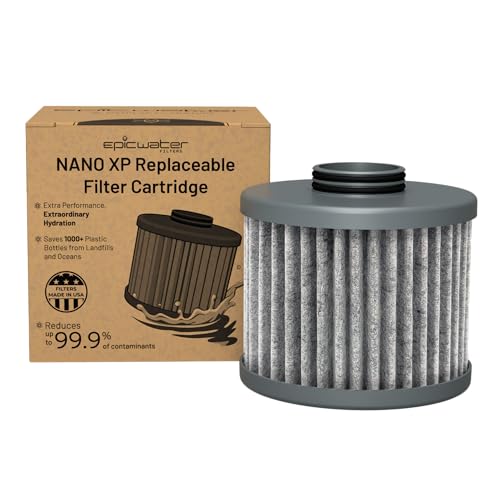
Epic Nano XP Water Filter – Made in USA – Removes 70+ Contaminants Including PFAS, Lead, Bacteria, Viruses and Microplastics – 100 Gallon Capacity – Replaceable Inner Cartridge – Recyclable
The Nano Filter sets a new standard for clean and safe drinking water. Say goodbye to contaminants, including…
As an affiliate, we earn on qualifying purchases.
As an affiliate, we earn on qualifying purchases.

New Carbon Based Materials for Electrochemical Energy Storage Systems: Batteries, Supercapacitors and Fuel Cells (NATO Science Series II: Mathematics, Physics and Chemistry)
As an affiliate, we earn on qualifying purchases.
As an affiliate, we earn on qualifying purchases.