

Nanotechnology naturally fits interdisciplinary research because it combines insights from physics, chemistry, biology, and engineering to create innovative solutions at the nanoscale. You need to understand quantum effects, molecular manipulation, and material design, which requires collaboration across fields. This teamwork helps translate complex theories into practical devices and advanced materials. By embracing diverse expertise, you can open new possibilities. Keep exploring to discover how these combined efforts drive groundbreaking innovations in nanotechnology.

Get the latest gadgets delivered free — and shop member deals
- Fast, free delivery on millions of items
- Access to Prime Big Deal Days deals on October 6–7
- Prime Video, Amazon Music and more included
Key Takeaways
- Nanotechnology involves manipulating matter at the atomic and molecular levels, requiring expertise from multiple scientific disciplines.
- Quantum effects at the nanoscale demand collaboration between physicists, chemists, and engineers for practical applications.
- Designing advanced nanomaterials necessitates integrating principles from chemistry, physics, and materials science.
- Interdisciplinary communication accelerates innovation by combining diverse techniques and knowledge in nanotech development.
- Addressing complex nanoscale challenges benefits from cross-disciplinary teamwork, fostering comprehensive solutions and technological breakthroughs.
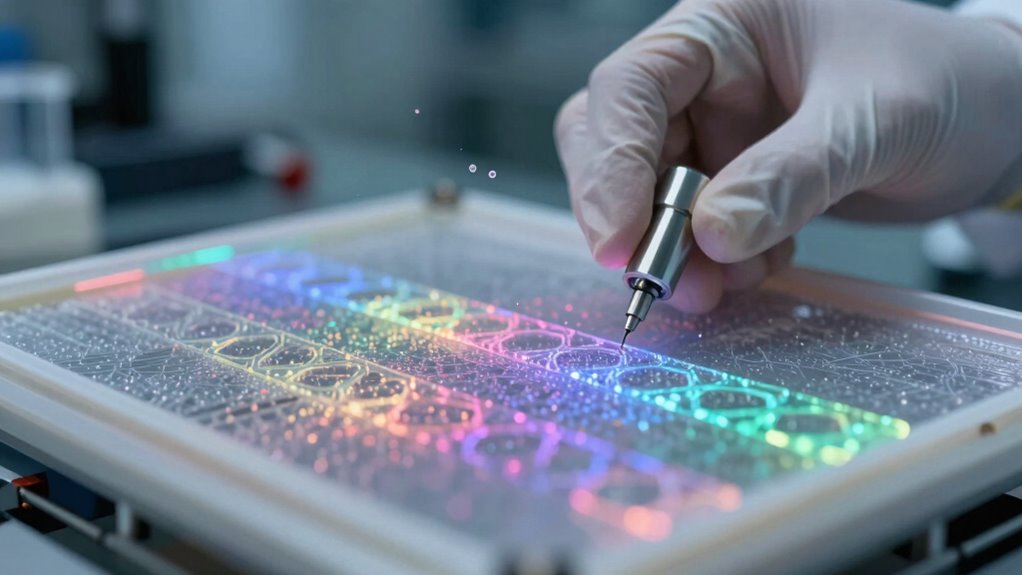
Nanotechnology has revolutionized the way scientists approach problem-solving, but its true power lies in its ability to foster interdisciplinary collaboration. When you work at the nanoscale, you’re dealing with structures and phenomena that don’t exist in the macroscopic world. This requires combining insights from physics, chemistry, biology, and engineering to fully understand and harness these tiny systems. One of the key strengths of nanotechnology is molecular manipulation—you can precisely control individual molecules, atoms, and particles to create materials with remarkable properties. This level of control opens doors to innovations that are impossible with traditional approaches, but it also demands expertise from multiple fields. Chemists understand chemical bonds and reactions at the molecular level, physicists bring insights into quantum effects that govern behavior at the nanoscale, and biologists help you understand how these tiny structures interact with living systems. molecular manipulation enables the creation of novel nanomaterials with tailored functions, further emphasizing the need for interdisciplinary expertise. Additionally, understanding the properties of nanomaterials often requires knowledge of material science, which integrates principles from chemistry and physics to develop new substances. The exchange of techniques and knowledge across disciplines is essential for advancing nanotechnology and unlocking its full potential. Quantum effects are especially important because they introduce behaviors that are counterintuitive at larger scales. When you manipulate matter at the nanoscale, quantum phenomena like tunneling, superposition, and entanglement come into play. These effects can be harnessed to develop faster, more efficient electronics, highly sensitive sensors, and new materials with unprecedented strength or flexibility. But understanding and applying quantum effects requires collaboration between physicists and engineers who can translate theoretical principles into practical devices. Similarly, molecular manipulation at this scale involves chemists and materials scientists working together to design molecules or nanostructures with specific functions. The ongoing exchange of techniques and insights across disciplines is vital for overcoming complex challenges and driving innovation forward. Furthermore, advances in interdisciplinary communication are crucial for integrating diverse expertise and ensuring successful collaborations across fields.
nanotechnology molecular manipulation tools
As an affiliate, we earn on qualifying purchases.
As an affiliate, we earn on qualifying purchases.
Frequently Asked Questions
How Does Nanotechnology Influence Ethical Considerations Across Disciplines?
Nanotechnology influences ethical considerations across disciplines by raising ethical dilemmas related to safety, privacy, and environmental impact. You need to carefully evaluate societal implications, such as potential misuse or unintended consequences. As you work across fields, you must balance innovation with responsibility, ensuring that advancements benefit society without creating harm. Addressing these ethical dilemmas fosters responsible development and helps integrate nanotechnology ethically into various sectors.
What Funding Opportunities Are Available Specifically for Interdisciplinary Nanotech Projects?
Did you know that nearly 40% of nanotech research funding comes from interdisciplinary projects? You can explore diverse funding collaborations and grant opportunities tailored for interdisciplinary nanotech initiatives. Agencies like the NSF, NIH, and DOE offer specialized grants promoting cross-disciplinary work. These programs support innovative collaborations, helping you secure resources for groundbreaking projects that span multiple scientific fields, ultimately advancing nanotechnology’s potential across disciplines.
How Do Educational Programs Integrate Nanotechnology Across Different Fields?
You’ll find educational programs integrate nanotechnology through innovative curriculum design, blending courses from physics, chemistry, biology, and engineering. These programs promote interdisciplinary collaboration by encouraging students to work on cross-disciplinary projects, fostering diverse perspectives. You’re encouraged to participate in joint research initiatives, which help develop a thorough understanding of nanotech’s applications. This approach prepares you for real-world challenges where multiple fields intersect, making nanotechnology an essential part of your learning experience.
What Are the Major Challenges in Collaborative Nanotech Research?
You face challenges like material innovation and scale integration in collaborative nanotech research. Developing new materials requires combining insights from multiple disciplines, which can slow progress. Scaling lab findings to real-world applications demands seamless integration across scales, often complicated by differing expertise and technologies. Overcoming these hurdles involves fostering communication, establishing standardized protocols, and sharing resources to guarantee that innovation translates efficiently from concept to practical use.
How Does Nanotechnology Impact Policy Development in Various Sectors?
You realize that nanotechnology subtly influences policy development across sectors through technological integration and evolving regulatory frameworks. By bridging scientific innovation with societal needs, it encourages policymakers to adapt rules that foster safe, ethical advancements. This impact promotes responsible innovation, ensuring nanotech benefits are maximized while risks are minimized. As a result, sectors like medicine, energy, and manufacturing can progress confidently, knowing policies are aligned with cutting-edge technological realities.
advanced nanomaterials design kits
As an affiliate, we earn on qualifying purchases.
As an affiliate, we earn on qualifying purchases.
Conclusion
So, next time you’re pondering the universe’s biggest mysteries or just trying to make a tiny better, remember nanotech’s got your back. It’s the perfect blend of everything—physics, biology, chemistry, and a touch of mad genius. Sure, it might seem like a wild, unpredictable mess, but that’s exactly what makes it exciting. Embrace the chaos, because with nanotechnology, the smallest ideas can truly change the world—one atom at a time.
As an affiliate, we earn on qualifying purchases.
interdisciplinary nanotech research equipment
As an affiliate, we earn on qualifying purchases.
As an affiliate, we earn on qualifying purchases.
Fall Picks
fall essentials
As an affiliate, we earn on qualifying purchases.