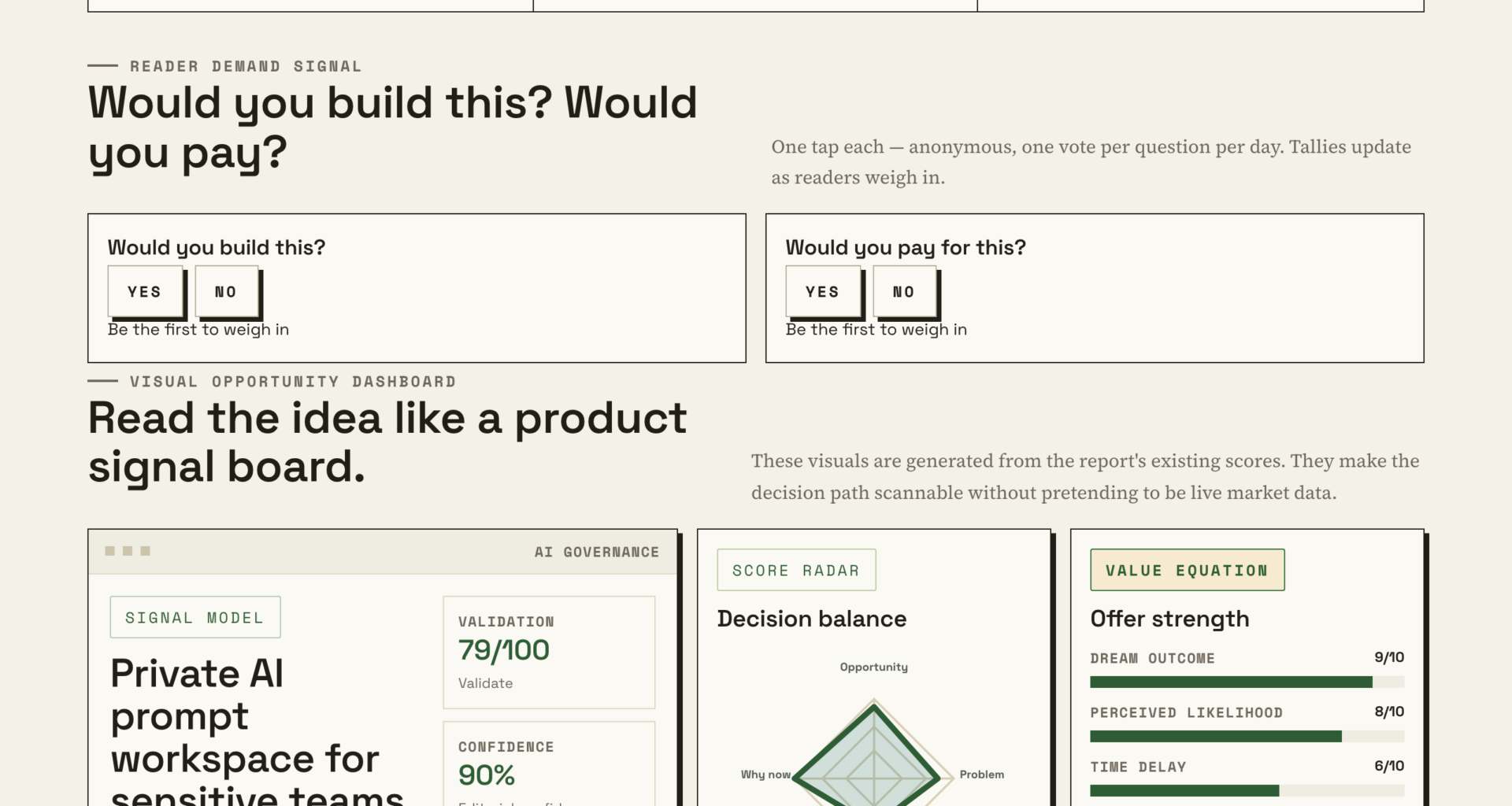

📊 Full opportunity report: Private AI Prompt Workspace For Sensitive Teams on IdeaNavigator AI — validation score, market gap, and execution plan.

Get the latest gadgets delivered free with Prime
- Fast, free delivery on millions of items
- Prime Video, Amazon Music and more included
- Member-only deals all year
TL;DR
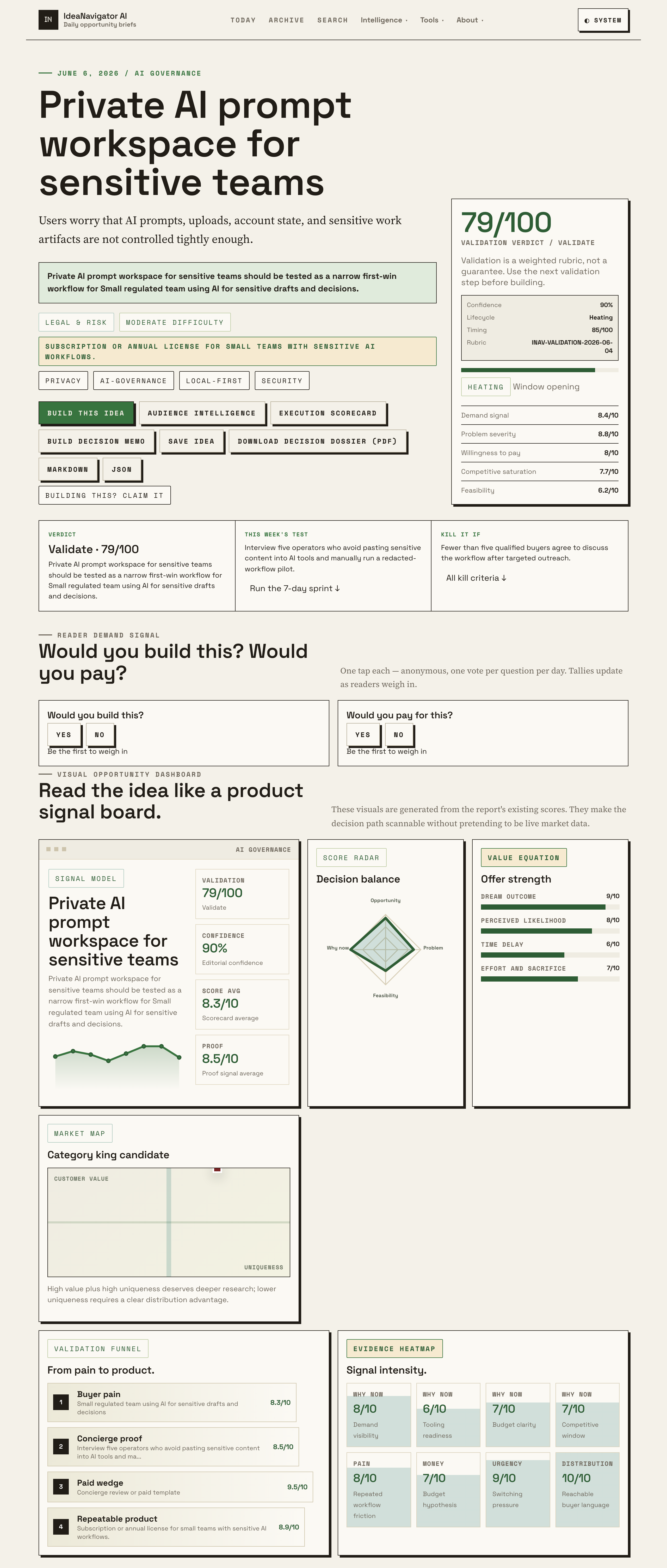
IdeaNavigator AI is testing a new private prompt workspace designed for small teams managing sensitive information. The tool aims to enhance data control and compliance in AI workflows. The development is in pilot testing with initial user interviews.
IdeaNavigator AI is testing a new private AI prompt workspace designed specifically for small, regulated teams handling sensitive information. This development aims to address concerns over data privacy, control, and compliance in AI workflows, marking a significant step toward more secure AI use for sensitive tasks.
The proposed workspace is a local-first platform that provides features such as redaction checklists, source notes, review status tracking, and exportable audit logs. It is intended for teams that need to keep sensitive drafts, prompts, and work artifacts under strict control.
According to IdeaNavigator AI, the initiative is a response to increasing demand from regulated teams who are moving sensitive workflows into AI tools but face challenges maintaining data privacy and control. The MVP (minimum viable product) is being validated through interviews with five operators who currently avoid pasting sensitive content into AI systems and prefer manual, redacted workflows.
The platform will operate via subscription or annual licensing, targeting small teams with specific governance needs. The initial testing phase involves pilot programs to evaluate usability, security, and compliance features before broader deployment.
Why Secure AI Workspaces Matter for Regulated Teams
This development is significant because it addresses a critical gap in AI governance for small, sensitive teams. As more organizations incorporate AI into confidential workflows, concerns over data leaks, compliance violations, and auditability grow. A dedicated, private workspace could enable teams to leverage AI while maintaining control over sensitive information, reducing legal and operational risks.
By focusing on local-first architecture and detailed audit logs, the platform aims to meet strict regulatory standards, potentially setting a new industry benchmark for secure AI collaboration tools. This could influence broader adoption of AI in regulated sectors such as legal, healthcare, and finance, where data privacy is paramount.
private AI prompt workspace software
As an affiliate, we earn on qualifying purchases.
As an affiliate, we earn on qualifying purchases.
Growing Need for Data Control in Sensitive AI Workflows
Recent trends show increasing adoption of AI tools by regulated teams seeking automation and efficiency. However, many such teams are hesitant to fully integrate AI due to concerns over data privacy, security, and compliance. Current solutions often involve manual redaction and workaround workflows, which are inefficient and error-prone.
In response, companies like IdeaNavigator AI are exploring specialized tools that prioritize local data processing, auditability, and user-controlled workflows. This initiative aligns with broader industry movements toward AI governance and responsible AI use, especially in sectors with strict regulatory oversight.
The pilot testing phase aims to validate whether a local-first prompt workspace can meet the needs of these teams, potentially influencing future product development and market standards.
“The new workspace could significantly improve how small regulated teams handle sensitive AI workflows, providing much-needed control and compliance features.”
— an anonymous researcher
data privacy AI collaboration tools
As an affiliate, we earn on qualifying purchases.
As an affiliate, we earn on qualifying purchases.
Uncertainties Around Pilot Outcomes and Adoption
It remains unclear how widely the platform will be adopted after initial testing, or whether it will fully meet the complex compliance requirements of different regulated sectors. The effectiveness of features like audit logs and redaction tools in real-world scenarios is still being evaluated, and user feedback from the pilot phase will shape future development.
Additionally, it is not yet confirmed how the platform will scale beyond small teams or how it will integrate with existing enterprise security frameworks.
As an affiliate, we earn on qualifying purchases.
Next Steps in Validating and Expanding the Platform
IdeaNavigator AI plans to complete pilot testing with the initial five operators within the coming months, gathering feedback to refine features and usability. Pending positive results, the company intends to roll out the platform more broadly to similar small teams across regulated industries.
Further development may include enhanced security integrations, expanded audit capabilities, and broader licensing options to accommodate different organizational needs. Monitoring the pilot outcomes will be crucial to understanding the platform’s potential impact and market readiness.
audit log software for AI workflows
As an affiliate, we earn on qualifying purchases.
As an affiliate, we earn on qualifying purchases.
Key Questions
What specific features does the private AI prompt workspace include?
The platform offers redaction checklists, source notes, review status tracking, and exportable audit logs to help teams control and review sensitive AI workflows.
Who is the target user for this platform?
Small, regulated teams that use AI for sensitive drafts and decision-making processes, needing strict data control and compliance features.
Is this platform available for general use now?
No, it is currently in pilot testing with initial user interviews. Broader availability depends on pilot results and further development.
How does this platform address data privacy concerns?
It is designed as a local-first system, keeping data on-premises or within controlled environments, with features like audit logs and redaction to enhance security and compliance.
What are the main benefits of using a private workspace for sensitive AI workflows?
Enhanced data control, improved compliance, better auditability, and reduced risk of data leaks or violations when handling confidential information.
Source: IdeaNavigator AI
Halloween Picks
halloween
As an affiliate, we earn on qualifying purchases.