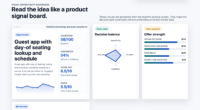
📊 Full opportunity report: The Quiet Audit: 55–75% of Your Week Is on Thin Ice. Here’s Which Part. on ThorstenMeyerAI.com — validation score, market gap, and execution plan.
Prime for Young Adults — start your free trial
Fast free delivery, streaming and member deals for eligible 18–24 year olds.
Try it freeAs an affiliate, we earn on qualifying purchases.
TL;DR
Recent findings indicate that over half of a typical workweek involves low-value tasks, including theatre and routine work. This shift is driven by AI automation and workplace practices, prompting a reevaluation of work priorities.
Recent research indicates that between 55% and 75% of knowledge workers’ weekly activities are on thin ice, involving low-impact tasks such as theatre work, routine processes, and judgment that could be automated or eliminated. This shift is driven by the increasing ability of AI to absorb routine and performative tasks, fundamentally changing how work is allocated and valued.
The analysis, based on a detailed two-week audit of work activities, categorizes tasks into four buckets: theatre (15-30%), routine commodity work (25-40%), on-the-line judgment (20-35%), and durable, value-adding work (10-25%). The most significant finding is that a large portion of what workers spend time on involves signaling effort rather than producing meaningful outcomes.
Experts warn that the traditional workplace fiction—that all calendar activities are directly contributing to impact—is increasingly inaccurate. As AI automates much of the theatre and routine work, employees and managers must recognize which activities truly move the needle and which are performative or redundant. The shift threatens to redefine productivity metrics and career advancement pathways.
The quiet audit.
55–75% of your week is on thin ice. Here’s which part.
If you’ve been working in knowledge work for more than five years, you have a quiet suspicion about your own job that you have not said out loud. Your manager is happy. The numbers look fine. And yet — looking at the last two weeks of your work, item by item — there is a feeling you cannot shake. Some part of what you did does not feel like it was pulling weight anymore. You suspect it is bigger than you are admitting.
15–30% of every senior role is theatre. Nobody says so.
Real work, in the sense that someone does it and someone is upset if it’s not done. Not real work, in the sense that it does not change a decision, ship a product, or move a number that matters. The polite fiction worked when there was no cost to maintaining it. AI absorbs theatre first — because nobody is reading the output substantively. The function is signalling effort, not transferring information.
Status meetings, FYI forwards, slide refresh — the work the system asked you to perform.
- Updating slides for a leadership review where the leadership has already decided
- The status meeting where the status was readable in the Jira board the day before
- Re-summarizing the conclusion in a follow-up email after the meeting that summarized it
- The thank-you email after the Slack message that already said thank you
- Performative responsiveness — being seen replying within 7 minutes
- The all-hands “open Q&A” where every question was pre-vetted
A typical week, after honest tagging.
Eighty hours over two weeks. Each cell is one hour, tagged T, C, L, or D. The numbers don’t need to argue the point — the colors do.
Three steps. Coffee optional.
Calendar, Slack, ticket system, and 90 minutes uninterrupted. Simple, not easy. The discipline is not the prompt — it is the inventory. The audit only works if the inventory is honest.
Every distinct item. No summaries.
40–90 items typical. If fewer than 30 you’re aggregating; go back and split. If more than 120, combine. Each item is a thing you spent 15+ minutes on.
One letter per item. T · C · L · D.
This is where most people lie to themselves. The first lie is over-tagging D. Watch for it. The second lie is calling something T when the prep doc was actually C — tag the meeting and the doc separately.
Add the time. Compute four percentages.
Not any single bucket — the shape of your week is the answer. Typical senior IC: ~25 T / ~30 C / ~25 L / ~20 D. If your D is below 10%, the audit has already given you its most important finding.
What becomes visible after you tag.
Question-holding beats question-answering.
Most of what gets paid in senior roles is question-answering — analyses, recommendations, code. Almost all of it is C or L. The reliably durable work is question-holding: keeping a question open against pressure to close it. Holding open “is this the right segment?” for three weeks is durable. Producing the analysis is not.
Compounding lives in the unloved adjacencies.
Your D-bucket items are usually not on your job description. They are the introduction you made between two people who are now collaborating. The doc everyone keeps citing. The pushback that turned out to be right. Career systems do not measure these. The audit forces you to.
The legibility paradox.
Theatre is the most legible work in your week — artifacts, deadlines, audiences, visible completion. Durable work is the least legible — conversational, accumulated, contextual, often invisible. This is why theatre is paid and durable work is what survives. Increasingly different things.
Identity is the obstacle, not skill.
The hardest part of the audit is admitting that 25% of your week is theatre — and that you have been performing it for years, telling yourself it was strategic communication, executive presence, organizational leadership. The audit makes you describe it without those words. The piece people refuse to do is usually the piece that would have helped most.
From audit to action.
Cut theatre this week.
Decline one recurring meeting. Stop the FYI forwards. Reply with the actual answer instead of the meeting invite. Most theatre is sustained by one person at the top. You probably are not that person — you can stop without anyone noticing.
Push commodity to commodity tools.
The 25–40% C-bucket is the most economically irrational time-allocation at current AI prices. The barrier is rarely tooling — it’s that you are good at the commodity work. The credit is going to evaporate. Move first.
Re-shape on-the-line work toward judgment.
L-bucket items have two parts: the judgment part (~30% of time) and the routine part (~70%). AI inverts this ratio. Do the judgment part well; let the routine part get automated underneath you. The role doesn’t change name — its internal composition does.
Make durable work legible.
The move most senior people skip and most regret. Write down your D-bucket items the day they happen. Most performance reviews run from your manager’s memory of the legible work. Your job is to surface the durable work into the record. If you don’t, nobody else will.
Negotiate the shape of the role.
Once you know your bucket mix, you can have a conversation you couldn’t have before. Not “promote me.” Specifically: “Here is the C I want to hand off, the L I want to reshape, the D I want more of, and the headcount or tooling implication.” A competent manager engages. One who refuses tells you something important by refusing.
Recognize when the honest answer is a different role.
Sometimes the audit produces a result no internal re-shape can fix: the role itself is 70% T+C, the D-bucket is structurally tiny, and there is no path to a higher-D mix. The move is not to fix the role. It is to leave it. Most people do this two years later than they should. The audit accelerates the timeline by exactly that.
Three habits. Five minutes a week.
Three lines. Every Friday. Before you close the laptop.
The week after the audit, you will revert. Theatre fills back in. C-bucket piles up because it’s on the inbox. The D-bucket items go unrecorded. The Friday log is the smallest possible habit that prevents this.
T ▸ One thing I did and shouldn’t have: [meeting I should have skipped, FYI I should have left unsent]
L ▸ One thing I reshaped: [where I did the judgment part and let the routine part get automated]
The polite fiction, when there was no cost to maintaining it, was that all of your week was the work. The cost has arrived. The audit is the conversation with yourself where the fiction ends.
Four assignments. By tier.
Contributors
Run the audit once.
Spend 90 minutes. The first time is uncomfortable; subsequent ones are routine. Most of the value is in the first one — and most of that value is in the items you wanted to skip tagging.
The Friday log. Five minutes weekly.
Highest-leverage habit you can adopt. Compounds across a career. The five minutes you spend each week become the body of evidence at every promotion conversation, every job change, every review you have for the next decade.
Run it on yourself first.
Then offer the framework to your team — but never run it on a direct report without their consent. The audit is private property. What you can offer is the language, the four buckets, and the quiet permission to look honestly.
Reduce the theatre your org creates.
Cancel the status meeting. Kill the report nobody reads. Reducing T-bucket work across an organization compounds in retention, focus, and morale faster than any productivity tooling. The most useful thing you can do for your team is the work only you have authority to do.
This finding matters because it exposes a hidden inefficiency in workplace activity that has persisted for decades at no apparent cost. With AI now capable of automating much of the theatre and routine tasks, organizations risk misallocating human effort and missing opportunities for higher-value work. For employees, this shift could mean a need to reassess roles, skills, and focus areas to remain relevant and impactful.
Furthermore, the recognition of this low-impact work share could influence organizational policies, performance evaluations, and the design of future work systems, emphasizing quality and judgment over performative tasks.
AI automation task management tools
As an affiliate, we earn on qualifying purchases.
As an affiliate, we earn on qualifying purchases.
Work Activity Breakdown and AI’s Role in Automation
The analysis builds on a framework that segments work into four categories: theatre (performative, often unnecessary tasks), commodity (routine, automatable work), on-the-line judgment (currently human, increasingly contested), and durable work (relationship-building, decision-making that AI augments). Historically, theatre work comprised about 15-30% of weekly hours, but AI’s rapid development threatens to eliminate much of it, revealing the actual productivity landscape.
Past workplace norms have supported the existence of performative activities as a cost of organizational culture, but recent technological advancements and cost reductions in AI are challenging this status quo, prompting a reevaluation of what constitutes valuable work.
“The 55-75% figure is the typical share of low-impact activities in a knowledge worker’s week, and it is shifting rapidly as AI takes over performative and routine tasks.”
— Thorsten Meyer
“Organizations must now distinguish between signaling effort and real impact, or risk misallocating their human capital.”
— Workplace productivity expert
productivity apps for knowledge workers
As an affiliate, we earn on qualifying purchases.
As an affiliate, we earn on qualifying purchases.
Unclear Impact of AI on Future Work Dynamics
While the analysis indicates a significant shift toward automation of low-impact tasks, it remains unclear how quickly organizations will fully adapt their workflows and performance metrics. The extent to which employees can or will shift toward higher-value, judgment-based work is still uncertain, as organizational inertia and cultural factors may slow this transition.
Additionally, the long-term effects on job security, skill requirements, and workplace culture are still emerging and require further study.
time tracking software for work audit
As an affiliate, we earn on qualifying purchases.
As an affiliate, we earn on qualifying purchases.
Next Steps for Workers and Organizations
Organizations are expected to accelerate the deployment of AI tools to automate theatre and routine tasks, which could lead to a reevaluation of roles and responsibilities. Employees should prepare to identify and focus on high-impact activities, developing judgment and relationship skills that AI cannot replicate.
Further research and workplace audits will likely emerge to monitor how work patterns evolve and how productivity metrics adapt to this new landscape.
As an affiliate, we earn on qualifying purchases.
Key Questions
How was the 55-75% figure determined?
The figure comes from a detailed two-week audit of work activities, categorizing tasks into four buckets and calculating the proportion of time spent on each.
What types of tasks are most affected by AI automation?
Theatre activities, routine processes, and signaling efforts are most susceptible to automation, reducing the time spent on performative work.
Will this shift lead to job losses?
The analysis suggests a reallocation of effort rather than outright job losses, but certain roles may diminish or transform as automation increases.
How can workers adapt to these changes?
Focusing on high-value judgment, relationship-building, and decision-making skills will be key to remaining relevant in the evolving workplace landscape.
Source: ThorstenMeyerAI.com
NFL season / tailgating Picks
team gear
As an affiliate, we earn on qualifying purchases.