📊 Full opportunity report: How A Daily AI Call Can Become Part Of Aging In Place on IdeaNavigator AI — validation score, market gap, and execution plan.

Get the latest gadgets delivered free with Prime
- Fast, free delivery on millions of items
- Prime Video, Amazon Music and more included
- Member-only deals all year
TL;DR
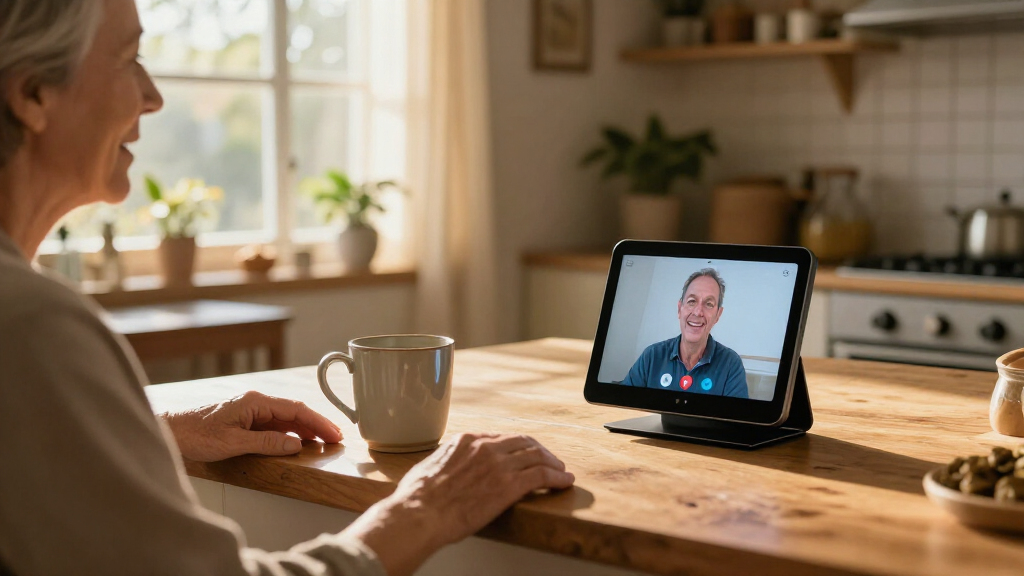
IdeaNavigator AI has outlined a proposed service that would call seniors living alone each day, ask brief wellness questions and alert an adult child if a call is missed or concerning. The proposal recommends testing the concept with 15 senior-and-family pairs for three weeks; no pilot results or evidence of effectiveness are provided.
IdeaNavigator AI has proposed testing daily AI phone calls that ask seniors living alone a few wellness questions and send an adult child an all-clear or an alert if the call is missed or raises concern. The idea is framed as a small pilot for families separated by distance, not as a deployed service, and no evidence of a completed test or measured outcomes is provided.
The proposed service would place a scheduled call to a landline or cell phone each day. During a short conversation, the AI would ask a few wellness questions. The adult child would then receive a basic status message: either that the check-in was completed without a flagged concern, or that the call was missed or needs attention. The proposal does not specify the questions, the thresholds for a concern, or how a family would follow up.
The intended customer is an adult child of an independent senior living alone in another city. The problem identified is that relatives may worry about a parent but cannot call every day; without a routine check, a fall or a difficult day may go unnoticed for hours or longer. The suggested business model is a monthly subscription billed to the adult child for each parent enrolled.
To assess interest, IdeaNavigator AI suggests setting up daily calls for 15 senior-and-adult-child pairs over three weeks. The proposed measures are the call answer rate and whether families consider the all-clear alerts worth paying for. Those are suggested validation steps, not reported findings: the proposal gives no participant results, pricing, or evidence that families have agreed to subscribe.
A Routine Check, Not Emergency Care
A regular call could give families a repeatable way to notice a missed check-in without requiring an adult child to make a manual call every day. For a senior who lives independently, a familiar phone-based routine may also be easier to access than an app-based system, particularly if calls can reach an existing landline. These are potential benefits of the proposed design, not outcomes established by a trial.
The limits matter as much as the promise. An automated call cannot, by itself, verify that someone is safe, diagnose a health problem, or guarantee help after a fall. A missed call might reflect a dead phone, a changed schedule or a decision not to answer; a completed call might not reveal a serious issue. Families would need to know what an alert means and who is responsible for checking on the senior. The proposal makes the service relevant as a possible layer of family communication, but does not establish it as a substitute for emergency response or in-person care.
Popular right now

TCL 85 Designer Series QD-Mini LED TV (Model 85A400U) with Google Smart TV

Philips 4400 Series Fully Automatic Espresso Machine with LatteGo Milk System

De'Longhi Stilosa Compact Manual Espresso Machine with Milk Frother
As an affiliate, we earn on qualifying purchases.
The Proposed Three-Week Test
The idea is presented as a narrow first use of voice AI in aging-in-place wellness: a short, scheduled telephone conversation followed by a simple message to a relative. Its stated rationale is that natural-sounding voice systems can now conduct brief calls over landlines or mobile phones, potentially making routine check-ins easier to provide at scale. That rationale is part of the proposal; no technical performance data or cost analysis is included.
The suggested pilot would involve 15 pairs for three weeks, with participation by both a senior and an adult child. The test is meant to answer two practical questions: whether seniors answer the calls, and whether relatives find the resulting all-clear alerts valuable enough to pay for. A small trial of this size could offer early feedback on usability and willingness to pay, but the proposal does not claim it would demonstrate health benefits or show how the service performs across a wider population.
Safety, Consent and Alert Handling
No service launch, pilot results or customer data are reported. It is not clear how the AI would respond if a senior disclosed a possible emergency, how quickly alerts would reach a relative, or what should happen if that person cannot be reached. The proposal also does not describe escalation procedures, coverage outside the adult child’s availability, or whether missed calls would trigger repeated attempts.
Other unanswered questions include how seniors would give and withdraw consent, what information the calls would collect, how recordings or call logs would be stored, and how the system would protect privacy. There is no stated subscription price, technical reliability data, or comparison with existing check-in services. The proposed three-week test could examine answer rates and perceived value, but those measures alone would not establish clinical safety or prove that the calls prevent harm.
Pilot Results Would Test Demand
The next step described is a three-week pilot with 15 family pairs. If conducted, it could show whether seniors pick up regularly and whether adult children value a simple status alert enough to consider a monthly subscription. The proposal does not announce a start date, a participating service provider, or a process for recruiting participants.
Any assessment of the idea would also need to address how the calls handle concerning answers and missed check-ins, who receives and acts on alerts, and how participant consent and personal information are managed. Until a test is reported, the concept remains a proposed workflow for family reassurance rather than a proven way to monitor health or respond to emergencies.
Source: IdeaNavigator AI
Key Questions
Has the AI check-in service launched?
No launch is reported. The material describes a service idea and suggests testing it; it does not identify an operating product.
How would the proposed calls work?
A system would place a scheduled daily phone call, ask a few wellness questions and text the adult child an all-clear or a flag for a missed or concerning call. Specific questions and alert rules are not provided.
Has a pilot shown that the calls help seniors?
No pilot findings are included. A three-week test with 15 senior-and-adult-child pairs is proposed, but no results or health outcomes are reported.
Would the calls replace emergency or in-person care?
The proposal does not establish that. A check-in call is described as a routine wellness contact, and no emergency-response capability or substitute for professional or in-person care is specified.
Who would pay for the service?
The suggested model is a monthly subscription paid by the adult child for each parent. No price or evidence of willingness to pay is reported.
Source: IdeaNavigator AI