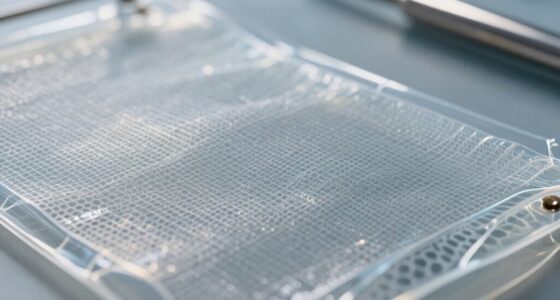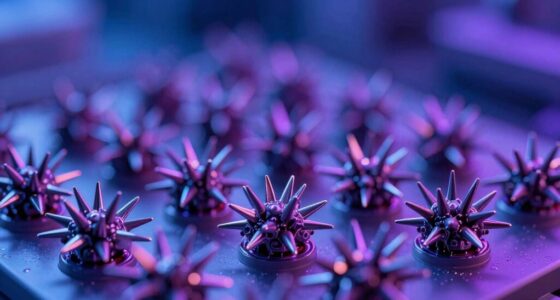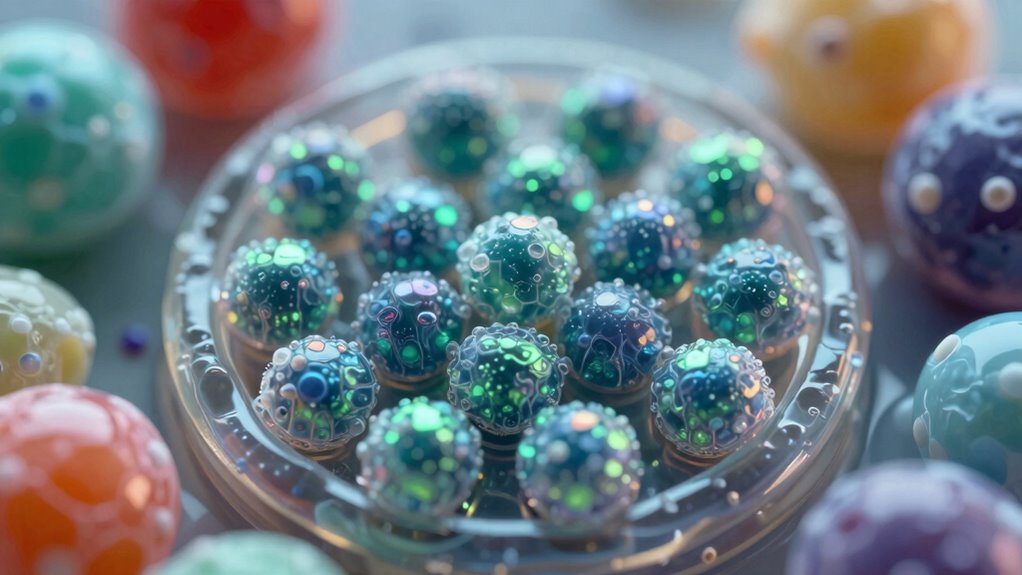

Nanoencapsulation is useful beyond medicine because it helps safeguard and stabilize active ingredients in food, agriculture, and environmental applications. It enables targeted delivery and controlled release of nutrients, pesticides, or catalysts, improving efficiency and reducing waste. This technology extends shelf life, enhances shelf safety, and guarantees ingredients work effectively under harsh conditions. If you keep exploring, you’ll discover how nanoencapsulation is revolutionizing multiple sectors and offering innovative solutions to global challenges.
Key Takeaways
- Enhances stability and controlled release of active ingredients in food, agriculture, and environmental applications.
- Protects sensitive compounds from degradation due to heat, light, or environmental conditions.
- Enables targeted delivery and reduces chemical waste in pollution remediation efforts.
- Extends shelf life and maintains quality of perishable food products.
- Improves bioavailability and effectiveness of nutrients and bioactives in functional foods.
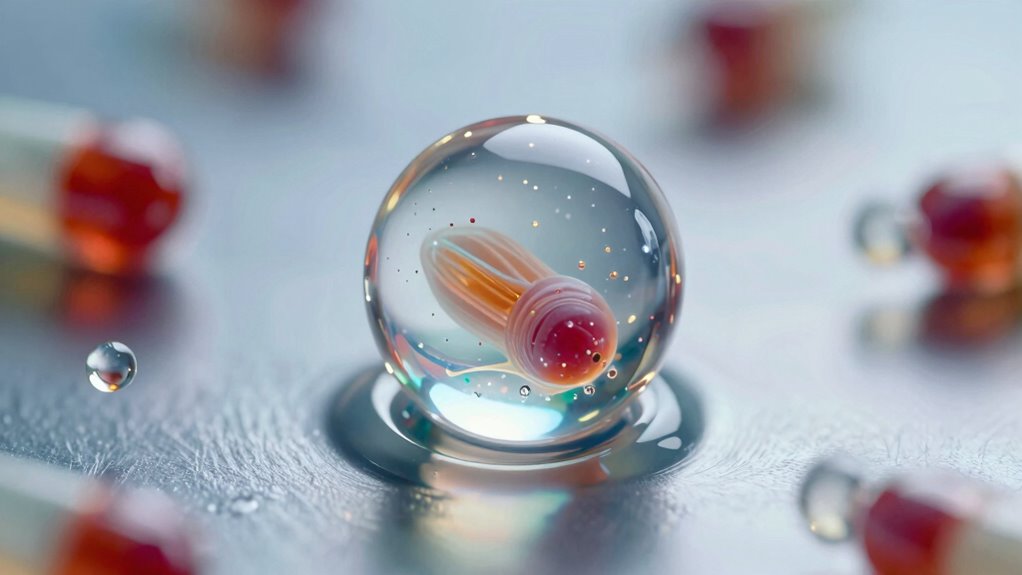
Have you ever wondered how tiny particles can improve the delivery of nutrients and medicines? Nanoencapsulation, which involves enclosing active ingredients within nanometer-sized carriers, is making waves not just in healthcare but also in other fields like environmental applications and food preservation. Its ability to protect sensitive compounds, enhance stability, and control release makes it a versatile technology beyond medicine.
In environmental applications, nanoencapsulation plays a key role in addressing pollution and sustainability challenges. You might not realize it, but nanocarriers can be used to deliver environmentally friendly agents directly to contaminated sites, making cleanup efforts more efficient. For example, nanoencapsulated catalysts or remediation agents can target pollutants with high precision, reducing the amount of chemicals needed and minimizing collateral damage. Additionally, these tiny carriers can encapsulate biodegradable pesticides or fertilizers, releasing them gradually to reduce runoff and environmental impact. This controlled release helps maintain ecological balance while supporting agricultural productivity, demonstrating how nanoencapsulation contributes to sustainable environmental management. Targeted delivery of remediation agents exemplifies how nanotechnology can improve environmental cleanup methods. Moreover, the protective properties of nanoencapsulation help safeguard active ingredients from premature degradation in harsh environmental conditions. Incorporating stability enhancement techniques ensures that encapsulated compounds remain effective during storage and application, further broadening their utility. Additionally, the environmental benefits of nanoencapsulation are driven by its ability to reduce chemical waste and improve resource efficiency.
When it comes to food preservation, nanoencapsulation offers innovative solutions to extend shelf life and maintain food quality. Imagine your favorite snack staying fresh longer because the active preservatives or antioxidants are encapsulated in nanocarriers. These nanostructures protect sensitive compounds from degradation caused by light, heat, or oxygen during storage. As a result, they ensure that flavors, nutrients, and texture remain intact over time. Furthermore, nanoencapsulation allows for targeted delivery of nutrients or bioactive compounds in functional foods, enhancing health benefits. For instance, vitamins or antioxidants can be encapsulated to prevent oxidation and improve bioavailability once consumed. This technology not only boosts food safety but also opens doors to creating smarter, longer-lasting food products that meet consumer demands for freshness and nutritional integrity. Additionally, the robust nature of some nanoencapsulation systems can help extend shelf life of perishable products by offering enhanced stability against environmental factors.
nanoencapsulation food preservation
As an affiliate, we earn on qualifying purchases.
As an affiliate, we earn on qualifying purchases.
Frequently Asked Questions
How Does Nanoencapsulation Improve Food Shelf Life?
Nanoencapsulation improves food shelf life by enhancing food preservation and increasing shelf stability. You benefit from better protection of nutrients and flavors, reducing spoilage caused by oxygen, moisture, and bacteria. This technology creates a barrier around ingredients, slowing degradation and extending freshness. By using nanoencapsulation, you can enjoy longer-lasting foods with maintained quality, which helps reduce waste and guarantees your products stay safe and tasty for a more extended period.
Can Nanoencapsulation Enhance Cosmetic Product Stability?
Imagine revealing a secret potion—nanoencapsulation can do that for your cosmetics. You’ll find it boosts formulation stability by protecting delicate ingredients from environmental stressors like light and air. This technology guarantees your products last longer and stay effective. With stability enhancement, your cosmetic formulations remain fresh, potent, and appealing, giving your customers confidence in their beauty routine. Nanoencapsulation truly elevates cosmetic product quality beyond expectations.
What Environmental Applications Benefit From Nanoencapsulation?
You can leverage nanoencapsulation for environmental remediation and water purification. It helps deliver reactive agents precisely where needed, breaking down pollutants more effectively. Nanoencapsulation protects sensitive materials from environmental degradation and enhances their stability. This technology allows for efficient removal of contaminants, making water safer and cleaner. Its targeted delivery and improved stability make nanoencapsulation a powerful tool for tackling environmental challenges beyond traditional methods.
Is Nanoencapsulation Cost-Effective for Industrial Use?
Yes, nanoencapsulation can be cost-effective for industrial use, but only if you carefully consider the cost analysis and scalability challenges. At first glance, it might seem expensive, yet advanced techniques and economies of scale can lower costs over time. The real question is whether your process can handle the scalability challenges. If you overcome these hurdles, nanoencapsulation could become a smart investment, revealing numerous industrial benefits.
How Does Nanoencapsulation Affect Nutrient Bioavailability?
Nanoencapsulation notably improves nutrient bioavailability by protecting nutrients from degradation and enhancing absorption. When you use nano-sized carriers, nutrient absorption becomes more efficient, allowing your body to utilize essential vitamins and minerals better. This bioavailability enhancement ensures you receive maximum benefits from nutrients, even at lower doses. Overall, nanoencapsulation optimizes nutrient delivery, making supplements and fortified foods more effective in supporting your health and well-being.
encapsulated vitamins supplements
As an affiliate, we earn on qualifying purchases.
As an affiliate, we earn on qualifying purchases.
Conclusion
Nanoencapsulation isn’t just for medicine—you can find it in food preservation, cosmetics, and agriculture, making products safer and more effective. Did you know that the global nanotechnology market is expected to reach $125 billion by 2025? This shows how widespread and valuable nanoencapsulation has become beyond healthcare. Embrace these innovations, because they’re shaping a smarter, more efficient future in everyday products you rely on.
As an affiliate, we earn on qualifying purchases.
targeted nutrient delivery capsules
As an affiliate, we earn on qualifying purchases.
As an affiliate, we earn on qualifying purchases.