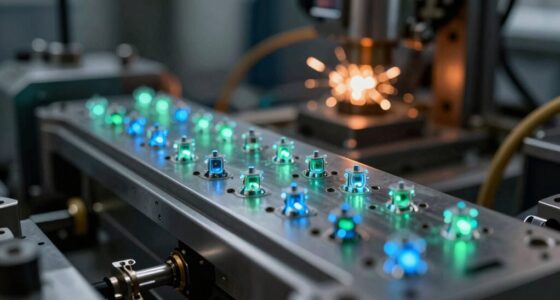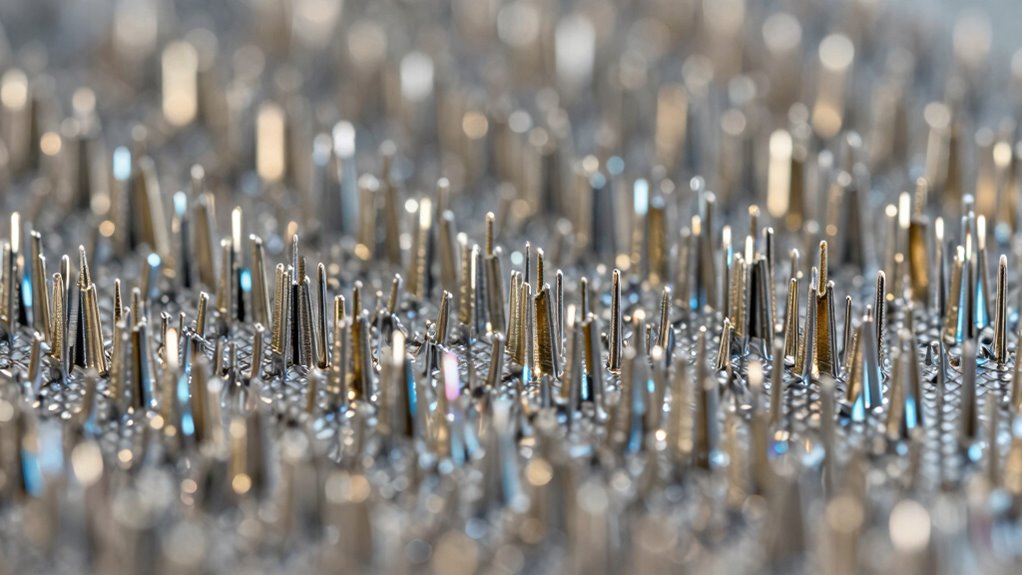

Nanostructured electrodes are gaining momentum because their tiny, high-surface-area structures boost energy storage efficiency and charge speeds. They offer improved performance, longer lifespan, and better durability by resisting degradation with surface modifications and protective coatings. These advancements allow for faster, more reliable devices in batteries and supercapacitors. If you want to understand how these innovations drive progress in energy technology, keep exploring the exciting developments shaping the future.
Key Takeaways
- Their tiny structures increase surface area, boosting electrochemical activity and energy storage capacity.
- Surface modifications enhance conductivity and stability, leading to faster charge/discharge rates.
- Protective coatings improve durability, ensuring longer device lifespan under mechanical stress.
- Surface engineering allows precise tuning of electrochemical properties for optimized performance.
- Ongoing research drives innovation, enabling nanostructured electrodes to meet diverse energy application needs.
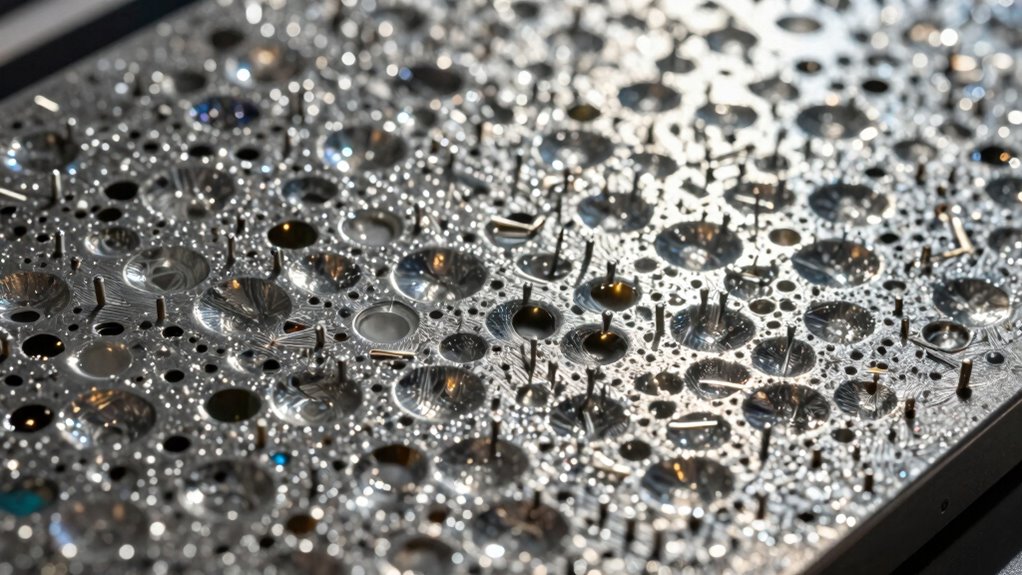
Have you noticed how nanostructured electrodes are rapidly transforming energy storage and conversion technologies? These tiny structures, often just a few nanometers in size, deliver remarkable improvements in efficiency and performance. Their increased surface area allows for more active sites, which means higher energy density and faster charge/discharge rates. But beyond these advantages, what really makes nanostructured electrodes stand out is how surface modification plays a vital role in enhancing their overall capabilities. By carefully adjusting the surface properties, you can improve electrical conductivity, reduce unwanted reactions, and increase compatibility with different electrolytes. These modifications help prevent degradation over time, ensuring your devices operate reliably and efficiently longer. Additionally, surface engineering techniques can help control the formation of solid-electrolyte interface layers, which are crucial for stability and performance. Material durability is another key factor driving the momentum behind nanostructured electrodes. Because these structures are so small, they can be more susceptible to degradation caused by volume changes during charging cycles. However, researchers have developed strategies to bolster their durability, such as coating the nanostructures with protective layers or engineering resilient composite materials. When you implement such surface modifications, you not only protect the electrode but also enhance its lifespan, making it more suitable for real-world applications. This increased resilience translates directly into better long-term performance for batteries and supercapacitors, which are critical for portable electronics, electric vehicles, and renewable energy systems.
Nanostructured electrodes boost energy storage with surface modifications that enhance performance and durability.
The ability to modify surfaces at the nanoscale opens up a multitude of possibilities. You can tailor the electrode’s surface chemistry to facilitate faster electron transfer, minimize resistance, or prevent the formation of harmful byproducts. These improvements lead to more stable cycling and less capacity fade over time. As a result, nanostructured electrodes become more practical and commercially viable, addressing common issues like material degradation and limited lifespan that have historically hampered energy storage solutions. Moreover, advancements in surface modification techniques, such as doping or functionalization, allow you to fine-tune the electrochemical properties, making these electrodes adaptable for various energy applications. Additionally, surface engineering techniques enable the precise control needed to optimize electrochemical performance at the nanoscale. Incorporating advanced surface modification methods can further enhance electrode stability and efficiency, opening new avenues for innovation in energy storage devices. Furthermore, ongoing research into material resilience helps develop strategies to mitigate the effects of mechanical stress and degradation in nanostructured electrodes.
In essence, nanostructured electrodes are gaining momentum because they embody a synergy between increased surface area, strategic surface modification, and enhanced material durability. These elements work together, pushing the boundaries of what energy storage and conversion devices can achieve. By focusing on surface engineering and durability improvements, you’re contributing to a future where energy systems are more efficient, longer-lasting, and better suited to meet the demands of modern technology. The ongoing research and development in this field promise even greater innovations, ensuring nanostructured electrodes will remain at the forefront of energy technology advancements.

Nanostructured Electrodes for High-Performance Supercapacitors and Batteries
As an affiliate, we earn on qualifying purchases.
As an affiliate, we earn on qualifying purchases.
Frequently Asked Questions
How Are Nanostructured Electrodes Manufactured at Scale?
You manufacture nanostructured electrodes at scale through advanced fabrication techniques like chemical vapor deposition, electrodeposition, and atomic layer deposition. Surface modification plays a key role, allowing you to tailor the nanostructures for specific applications. By optimizing these techniques, you guarantee consistent quality and high throughput, making large-scale production feasible. This approach helps meet growing demand while maintaining the precision and performance that nanostructured electrodes offer.
What Are the Environmental Impacts of Nanostructure Production?
You might find yourself steering a double-edged sword; nanostructure production can spark environmental toxicity and resource depletion. As tiny particles are crafted, they risk leaching into ecosystems, threatening health and biodiversity. Simultaneously, mining and processing raw materials drain finite resources, leaving a trail of ecological footprints. It’s essential to balance innovation with responsibility, ensuring that as you harness nanotech’s power, you also protect our planet’s fragile balance.
Can Nanostructured Electrodes Be Recycled Effectively?
You can recycle nanostructured electrodes, but recycling challenges exist due to their complex materials and structures. Material degradation during use makes recovery difficult, reducing efficiency and lifespan. Specialized methods are required to separate and reclaim materials without further degradation. Advances are ongoing, aiming to improve recycling processes, but currently, effective recycling remains a hurdle. Overcoming these challenges will be key to sustainable use of nanostructured electrodes.
How Do Nanostructured Electrodes Perform in Long-Term Applications?
You’ll find that nanostructured electrodes excel in long-term applications due to their superior electrode durability and performance stability. Their unique nanomaterial architecture helps resist degradation over time, maintaining efficiency and capacity. With proper design and material selection, these electrodes can withstand repeated charge-discharge cycles, ensuring consistent performance. As a result, they’re increasingly used in energy storage and conversion devices where longevity and stable operation are vital.
Are There Safety Concerns Related to Nanostructured Materials?
You might worry about health risks and regulatory challenges with nanostructured materials, but ongoing research helps address these concerns. While some safety issues exist, scientists are developing protocols to minimize exposure and guarantee safe handling. Regulators are also working to establish standards, making the technology safer for widespread use. So, with proper precautions and regulations, nanostructured electrodes can be integrated responsibly, reducing potential risks while revealing their benefits.
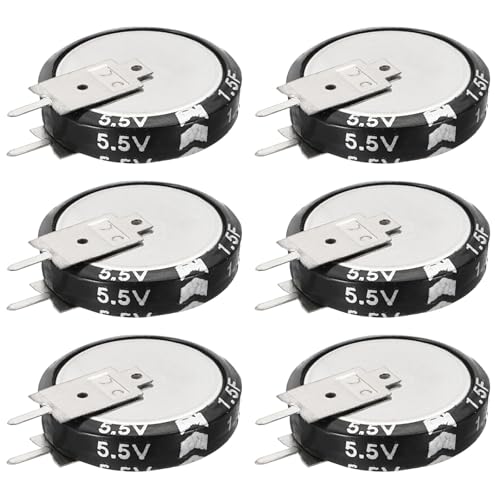
PATIKIL 6 Pcs 5.5V Super Capacitors, 1.5F V-Shaped Button Capacitor High Energy Low Resistance High Consistency for AC Motor Power Display Screen Computer
Specifications: Shell color: Black; Shell material: aluminum; Rated voltage: 5.5V; Capacitance: 1.5F; Capacity deviation: ±20%; Working Temperature: -20℃…
As an affiliate, we earn on qualifying purchases.
As an affiliate, we earn on qualifying purchases.
Conclusion
As you continue exploring nanostructured electrodes, you’ll find they’re quietly transforming the landscape of energy storage and conversion. Their subtle advantages promise a future where efficiency and sustainability harmonize, though the journey remains nuanced. Embrace the evolving potential they hold, understanding that, like all innovations, their full impact will unfold gradually. In this quiet revolution, the horizon beckons with possibilities, inviting you to look beyond the surface and appreciate the understated promise they bring to your endeavors.

Discount TENS Lower Lumbar Strip Electrodes. 2 Premium 13" x 1.5" Self-Adhesive Pads with 3.5mm Snap Connectors, Durable Replacement TENS Unit Electrodes, Compatible with Most TENS EMS
DISCOUNT TENS BRAND – A US Veteran-owned small business providing professional-quality replacement electrodes for TENS units.
As an affiliate, we earn on qualifying purchases.
As an affiliate, we earn on qualifying purchases.

Metal-Free Electrodes for Energy Storage
As an affiliate, we earn on qualifying purchases.
As an affiliate, we earn on qualifying purchases.