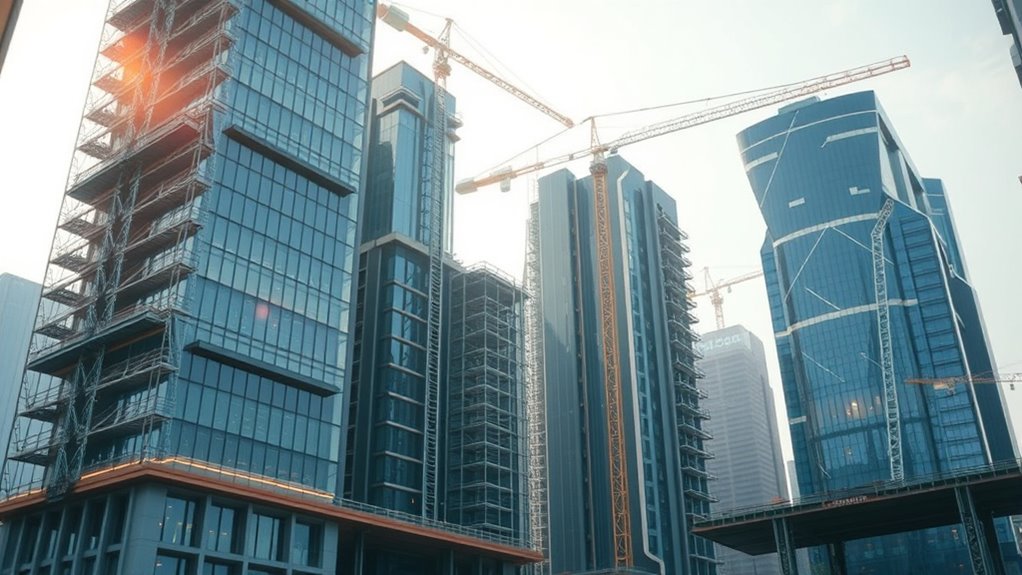

Nanotech plays a crucial role in climate-resilient construction by applying nano coatings that create microscopic armor on surfaces like concrete, metal, and glass. These coatings repel water, dirt, and pollutants, while increasing resistance to UV rays, chemicals, and extreme temperatures. This extends the lifespan of structures, reduces maintenance needs, and helps infrastructure withstand climate-induced stresses. If you keep exploring, you’ll discover how these innovative solutions are shaping smarter, more durable buildings for the future.

Get the latest gadgets delivered free — and shop member deals
- Fast, free delivery on millions of items
- Access to Prime Big Deal Days deals on October 6–7
- Prime Video, Amazon Music and more included
Key Takeaways
- Nano coatings create protective barriers that repel water, dirt, and pollutants, reducing degradation of construction materials in harsh climates.
- They enhance resistance to UV radiation, temperature extremes, and chemicals, improving durability against climate-induced environmental stressors.
- Nano-enhanced materials enable self-cleaning and anti-icing properties, maintaining infrastructure function during extreme weather events.
- Incorporating nanotech extends building lifespan, lowers maintenance costs, and contributes to sustainable, resource-efficient construction practices.
- Nano coatings support climate resilience by enabling structures to withstand unpredictable and intensified weather patterns effectively.
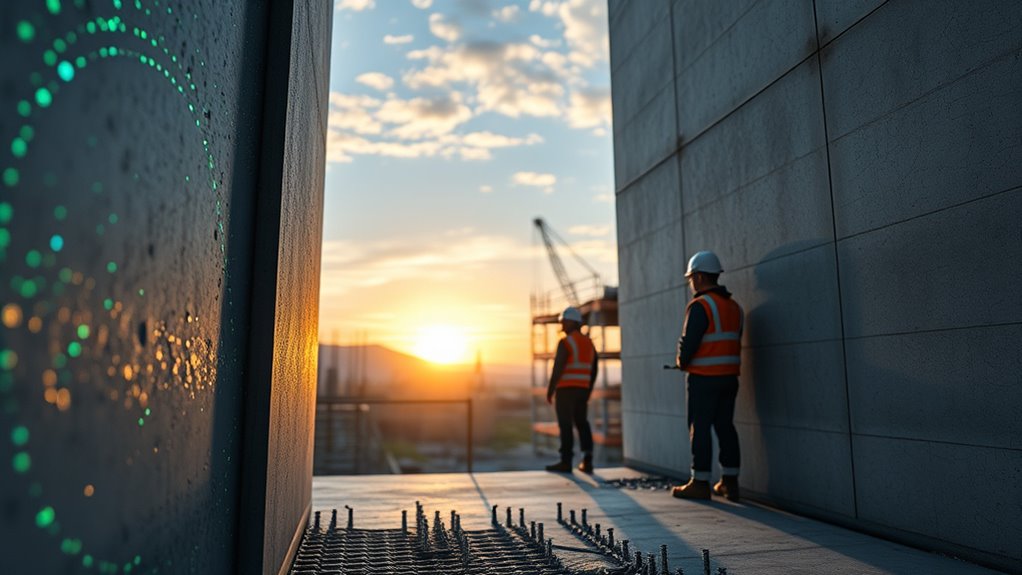
As climate change intensifies, building structures that can withstand extreme weather events becomes more critical than ever. One innovative approach gaining momentum is the use of nanotechnology, particularly nano coatings, to enhance material durability. These ultra-thin layers, often just a few nanometers thick, can dramatically improve how buildings resist environmental stressors like rain, wind, and temperature fluctuations. When you apply nano coatings to construction materials, you’re essentially giving them a microscopic armor that boosts their longevity and resilience. This is especially important as traditional materials tend to degrade faster under harsher climate conditions, leading to higher maintenance costs and safety concerns.
Nano coatings work by forming a protective barrier on the surface of materials such as concrete, metal, or glass. This barrier can repel water, dirt, and other pollutants, preventing them from penetrating the material and causing degradation. For example, a building coated with hydrophobic nano layers will resist water infiltration during heavy rains, reducing the risk of mold, corrosion, and structural weakening. This not only extends the lifespan of the building but also minimizes repairs and replacements over time. Furthermore, nanotech-enhanced materials often exhibit increased resistance to UV radiation, temperature extremes, and chemical exposure, all of which are becoming more common in a changing climate. High-performance materials are a key component in leveraging nanotechnology for resilient construction.
Nano coatings create a protective barrier that repels water, dirt, and pollutants, enhancing durability against climate-related damage.
Material durability is fundamentally about ensuring that construction withstands the test of time and environmental challenges. With nano coatings, you can notably improve this durability by making materials less susceptible to wear and tear. These coatings can be engineered to provide multifunctional benefits—such as self-cleaning surfaces that reduce maintenance, or anti-icing properties that prevent ice buildup in colder regions. Such features are essential as climate patterns become more unpredictable, leading to more frequent and intense weather events. When you invest in nano-enhanced materials, you’re not just building for today; you’re preparing for the uncertain weather of tomorrow.
Furthermore, integrating nanotech into construction practices aligns with sustainable development goals. Longer-lasting buildings mean fewer resources spent on repairs and replacement, reducing environmental impact. Nano coatings also typically require less material thickness while delivering superior protection, helping you cut down on material waste. As you adopt these advanced solutions, you’re contributing to building infrastructure that’s smarter, stronger, and more adaptable to climate challenges. The combination of nano coatings and durable materials provides a compelling path forward—one where resilience is built into the very fabric of your structures, ensuring they stand firm in the face of climate adversity.
As an affiliate, we earn on qualifying purchases.
Frequently Asked Questions
How Cost-Effective Is Nanotech Integration in Large-Scale Construction Projects?
Integrating nanotech in large-scale construction projects can be cost-effective if you conduct thorough cost analysis and assess economic feasibility. While initial investments may be higher, the long-term savings from increased durability, reduced maintenance, and energy efficiency often outweigh costs. You’ll find that nanotech’s benefits improve project sustainability and resilience, making it a smart financial choice, especially when considering the overall lifecycle and potential for future innovations.
What Are the Long-Term Environmental Impacts of Nanomaterials in Construction?
You might think nanomaterials are completely safe long-term, but studies suggest nanomaterial degradation could release particles into ecosystems, potentially harming wildlife and water quality. While nanotech offers benefits, its impact on ecosystems remains uncertain, prompting ongoing research. You should stay informed, as unintended environmental consequences may emerge over time, emphasizing the need for responsible use and proper disposal to protect our planet’s health.
Are There Any Safety Concerns for Workers Handling Nanomaterials During Construction?
Worker safety is a valid concern when handling nanomaterials during construction. You should always use proper protective gear and follow safety protocols to minimize exposure. Material handling of nanomaterials requires caution because inhalation or skin contact could pose health risks. Staying informed about best practices and using appropriate ventilation and containment measures help guarantee your safety and reduce potential hazards on site.
How Does Nanotech Improve the Energy Efficiency of Climate-Resilient Buildings?
Nanotech enhances your building’s energy efficiency through advanced nanotech insulation, which minimizes heat transfer and maintains consistent indoor temperatures. You benefit from energy-efficient coatings that reflect solar radiation and reduce cooling loads. These innovations lower your energy consumption, cut costs, and improve resilience against climate extremes. By integrating nanotech, you create a smarter, more sustainable building that adapts better to changing weather patterns, ensuring long-term comfort and efficiency.
What Regulatory Standards Govern the Use of Nanomaterials in Construction?
You should be aware that regulatory frameworks govern the use of nanomaterials in construction, ensuring safety and environmental protection. Standards compliance is essential, and agencies like OSHA, EPA, and ISO set guidelines on handling, testing, and labeling nanomaterials. Staying updated on evolving regulations helps you meet legal requirements, minimizes risks, and promotes responsible innovation in climate-resilient construction projects involving nanotech.
hydrophobic nano spray for glass
As an affiliate, we earn on qualifying purchases.
As an affiliate, we earn on qualifying purchases.
Conclusion
Imagine building a house that’s as tough as a diamond, withstands storms, and stays cool in the heat—that’s what nanotech can do for climate resilience. Just like a tiny seed grows into a mighty tree, these innovations transform everyday materials into super-strong, adaptive defenses against climate challenges. With nanotech, you’re not just constructing buildings; you’re creating a future where communities thrive despite nature’s toughest tests. It’s the small tech that makes a huge difference.
self-cleaning nano surface coating
As an affiliate, we earn on qualifying purchases.
As an affiliate, we earn on qualifying purchases.
anti-icing nano coating for buildings
As an affiliate, we earn on qualifying purchases.
As an affiliate, we earn on qualifying purchases.
Fall Picks
fall essentials
As an affiliate, we earn on qualifying purchases.