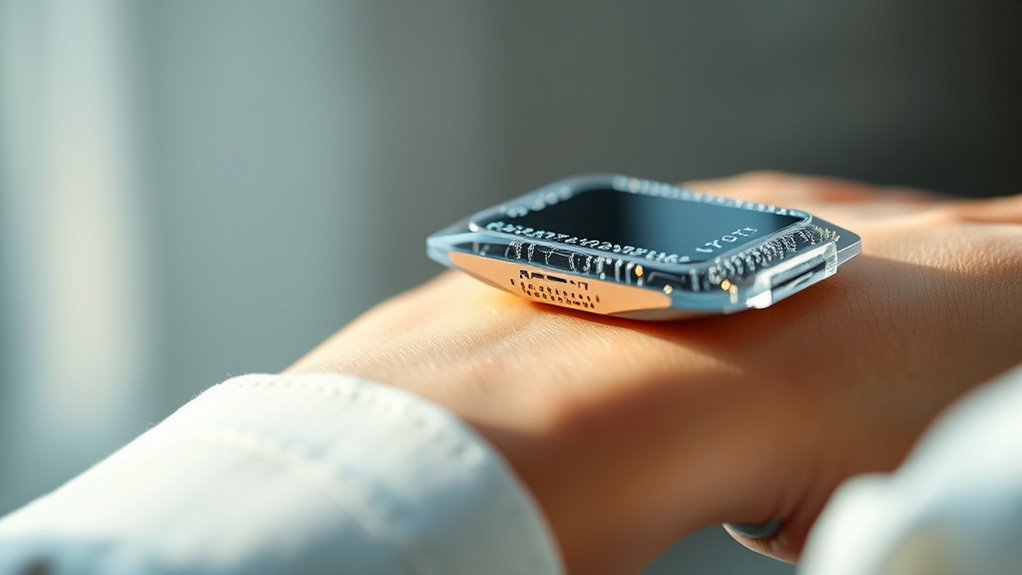

Nanotechnology enhances wearable air quality monitors by making them more sensitive, selective, and compact. Using nanomaterials like quantum dots, carbon nanotubes, and graphene filters, these devices can detect low pollutant levels in real time with improved accuracy. They’re designed for low power consumption and better durability, enabling continuous monitoring. If you’re curious about how these tiny innovations can protect your health and update community data, there’s more to discover ahead.
Key Takeaways
- Nanomaterials enhance sensor sensitivity, selectivity, and miniaturization for accurate, real-time air pollutant detection in wearables.
- Quantum dots and carbon nanotubes provide high surface area and conductivity, improving detection of specific airborne toxins.
- Graphene filters extend sensor lifespan and improve pollutant separation, increasing device durability and performance.
- Nanotechnology enables lightweight, flexible, and energy-efficient sensors suitable for discreet, wearable air quality monitoring.
- Advances focus on integrating self-cleaning, energy harvesting, and high-precision detection for next-generation wearable environmental sensors.
The Role of Nanomaterials in Enhancing Sensor Performance

Nanomaterials substantially improve sensor performance in wearable air quality monitors by offering unique properties at the nanoscale. Their nanomaterial properties, such as increased surface area and enhanced reactivity, directly boost sensor sensitivity. Because of their tiny size, nanomaterials provide more active sites for detecting pollutants, making sensors more responsive and accurate. This heightened sensitivity allows for real-time monitoring of even low pollutant concentrations, giving you precise data on air quality. Additionally, nanomaterials can be engineered to be highly selective, reducing false readings from other airborne substances. Their ability to operate efficiently at lower power levels also extends battery life, making wearable devices more practical. Moreover, the integration of nanomaterials can enable customized sensor designs tailored to specific pollutants, further improving detection capabilities. Overall, the integration of nanomaterials markedly enhances the capability of sensors to detect and quantify air pollutants effectively.
Types of Nanotechnologies Used in Air Quality Monitoring Devices

Various nanotechnologies are employed in air quality monitoring devices to enhance their sensitivity, selectivity, and efficiency. Quantum dots are used for their exceptional light-emitting properties and high surface area, allowing for precise detection of specific pollutants through fluorescence signals. Carbon nanotubes, on the other hand, provide outstanding electrical conductivity and a large surface-to-volume ratio, making them ideal for sensing gases and airborne toxins. These nanomaterials can be integrated into sensor arrays to create highly responsive detection systems. By leveraging quantum dots and carbon nanotubes, wearable air quality monitors can identify multiple pollutants simultaneously, deliver rapid results, and operate reliably even in complex environments. These nanotechnologies are central to advancing the capabilities of personal air quality monitoring devices. Diverse designs and materials further improve device performance and user experience.
Advantages of Nanosensors for Detecting Harmful Pollutants
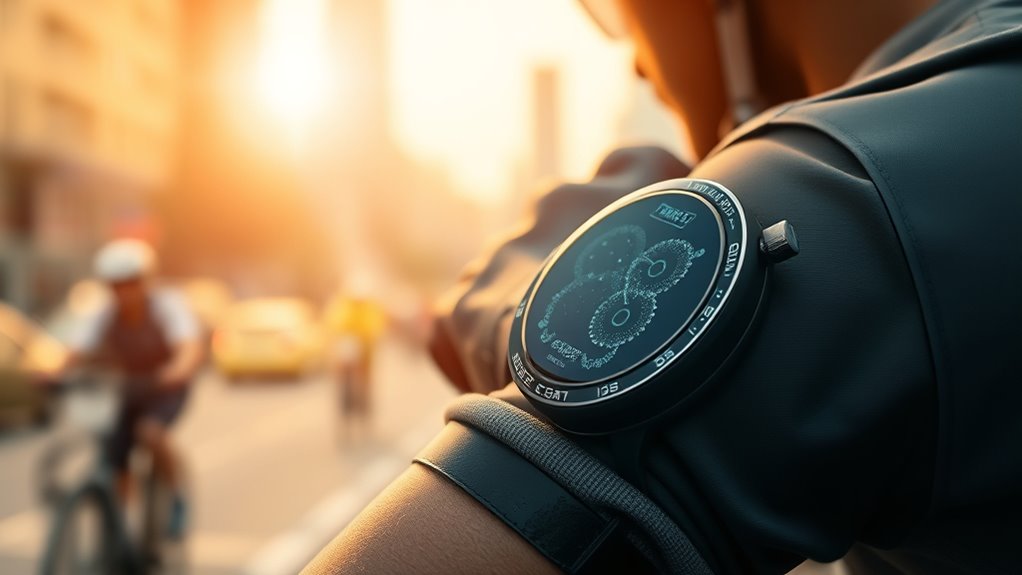
Nanosensors offer significant advantages in detecting harmful pollutants with remarkable speed and accuracy. Thanks to their high nanoparticle sensitivity, they can identify even trace amounts of pollutants quickly, providing real-time data that helps you respond promptly. The miniaturization benefits of nanosensors mean they can be embedded into compact wearable devices without adding bulk or weight, ensuring comfort and portability. Their small size allows for a larger surface area relative to volume, increasing interaction with airborne toxins and improving detection capabilities. This enhanced sensitivity and compactness enable you to monitor air quality continuously, making these sensors invaluable for early warning and health protection. Additionally, the use of high-precision detection techniques in nanosensor technology further enhances their ability to distinguish between different pollutants effectively. Overall, nanosensors deliver precise, rapid, and unobtrusive pollutant detection, transforming wearable air quality monitors into more effective tools.
Integration of Nanotech With Wearable Device Design
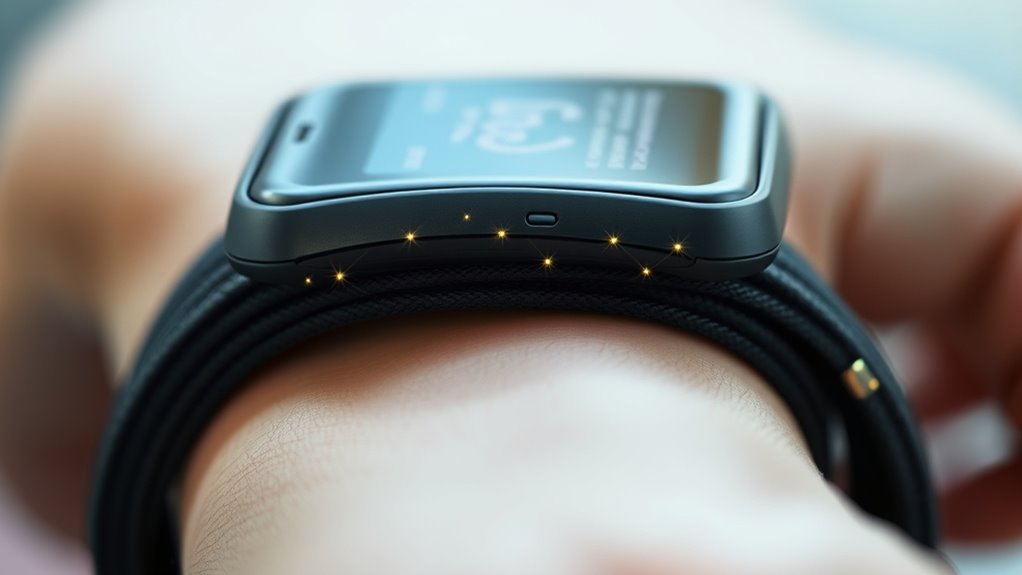
How can nanotechnology be seamlessly integrated into wearable air quality monitors? You can incorporate nanomaterials into compact, lightweight designs that enhance battery efficiency by reducing power consumption. These materials allow sensors to operate with minimal energy, extending device lifespan without bulk. Additionally, nanotech enables you to create sleek, aesthetically appealing devices that blend seamlessly with your style. By embedding nanostructures into flexible substrates, you can design monitors that conform comfortably to your body, maintaining both performance and visual appeal. This integration ensures your wearable remains discreet yet highly functional. Leveraging nanotechnology not only boosts performance but also helps you enjoy a stylish, efficient air quality monitor that fits effortlessly into your daily routine. Understanding security vulnerabilities allows for more resilient device design and protection against potential threats.
Challenges and Limitations of Nanotechnology in Wearables
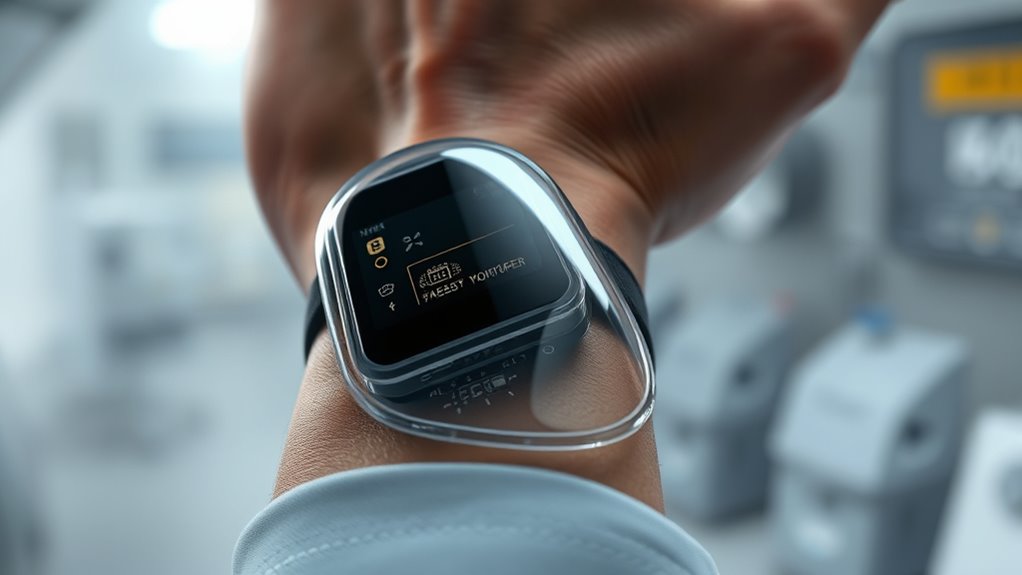
You’ll find that manufacturing nanoscale components can be complex and expensive, making large-scale production challenging. Material durability also poses a problem, as nanomaterials may wear out or degrade faster than expected. Additionally, sensor longevity is limited, requiring frequent replacements or recalibrations to guarantee accurate air quality readings. Staying informed about legislative changes related to nanotechnology can help address some of these limitations.
Manufacturing Complexity and Costs
Despite the promising capabilities of nanotechnology in wearable air quality monitors, manufacturing these devices presents significant challenges and high costs. Producing nanoscale components requires advanced techniques similar to those used in automobile manufacturing and aerospace engineering, which are costly and complex. Achieving consistent quality and precision at such small scales demands specialized equipment and cleanroom environments, driving up expenses. Additionally, integrating nanomaterials into wearable formats involves intricate assembly processes that are difficult to scale efficiently. These complexities increase production time and costs, making widespread adoption less feasible. As a result, the high manufacturing costs hinder the mass-market availability of nanotech-based wearables, limiting their accessibility despite their technological potential. Overcoming these hurdles is essential for future commercialization and broader use.
Material Durability Challenges
Nanotechnology offers exciting possibilities for enhancing the durability of wearable air quality monitors, but maintaining material stability remains a significant hurdle. Materials at the nanoscale often face issues like material fatigue, which leads to cracking or failure over time, and corrosion resistance, especially when exposed to moisture or pollutants. These challenges threaten long-term reliability and sensor accuracy. To address this, researchers examine material properties carefully, balancing flexibility with durability. The table below highlights key factors influencing nanomaterial performance:
| Factor | Impact on Durability |
|---|---|
| Material Fatigue | Causes cracks, reduces lifespan |
| Corrosion Resistance | Prevents material degradation in harsh environments |
| Mechanical Stress | Accelerates fatigue and failure |
| Environmental Exposure | Leads to corrosion and material weakening |
Overcoming these issues is vital for dependable, long-lasting wearable air quality monitors.
Limited Sensor Longevity
While advancements in nanomaterials have improved the durability of wearable air quality monitors, their long-term sensor performance still faces significant hurdles. Over time, sensor degradation can reduce accuracy, requiring frequent calibration or replacement. This limits the device’s reliability and increases maintenance efforts, which can be inconvenient for users. Nanomaterials may initially provide sensitive detection, but exposure to environmental factors like humidity, temperature fluctuations, and airborne contaminants accelerates sensor wear. As a result, you might find yourself performing regular device maintenance to guarantee consistent readings. These challenges highlight a key limitation in nanotechnology’s application for wearables: maintaining sensor longevity without compromising performance or user experience. Addressing sensor degradation is essential for developing truly durable, maintenance-friendly air quality monitors.
Future Prospects and Innovations in Nanotech-Enabled Air Monitors

Advancements in nanotechnology are poised to revolutionize the future of wearable air quality monitors, making them more accurate, compact, and energy-efficient. Quantum dots hold promise for highly sensitive detection of pollutants due to their tunable optical properties, enabling precise monitoring of specific airborne toxins. Meanwhile, graphene filters can serve as ultra-efficient, lightweight barriers that enhance sensor longevity and selectivity, reducing maintenance needs. These innovations will allow devices to deliver real-time data with greater reliability while maintaining small sizes suitable for continuous wear. As research progresses, expect these nanomaterials to disclose new functionalities, such as self-cleaning surfaces and integrated energy harvesting, further pushing the boundaries of what wearable air monitors can achieve. The future of nanotech-enabled air quality sensing looks incredibly promising. Additionally, ongoing developments in sound recording techniques and equipment are contributing to the design of more robust and reliable sensors, improving overall device performance.
Impact on Personal Health and Community Environmental Monitoring

As wearable air quality monitors become more advanced through nanotechnology, they directly impact your health and the well-being of your community. You can detect pollutants early, reducing health risks and promoting awareness. However, personal privacy concerns arise as data collection becomes more detailed, risking misuse or breaches. Social acceptance depends on transparent data handling and privacy safeguards, making users comfortable sharing their health information. Community monitoring benefits from aggregated data, helping identify pollution hotspots and inform policy. Yet, balancing individual privacy with collective health remains essential. The table below highlights key ideas:
| Personal Privacy | Social Acceptance |
|---|---|
| Data security concerns | Trust in data management |
| Consent and control | Public transparency |
| Risk of data misuse | Community engagement |
| Privacy regulations | Ethical standards |
| Personal health insights | Social responsibility |
Additionally, implementing robust data encryption measures can enhance user confidence in data security.
Frequently Asked Questions
How Long Do Nanotech-Based Sensors Typically Last Before Needing Replacement?
Nanotech-based sensors generally last between one to three years before needing replacement, depending on usage and environmental conditions. The sensor lifespan is influenced by nanotech durability, which can vary based on manufacturing quality and exposure to elements like humidity or pollutants. To maximize their lifespan, you should follow recommended maintenance practices, avoid harsh environments, and regularly calibrate your device. With proper care, your wearable air quality monitor can serve you reliably for years.
Are Nanotechnology-Enhanced Air Monitors Safe for Prolonged Skin Contact?
Think of nanotech-enhanced air monitors like gentle breezes on your skin—they’re generally safe for prolonged contact. Manufacturers carefully consider biocompatibility concerns to minimize skin irritation risks. However, some individuals with sensitive skin might experience discomfort over time. Always check for skin reactions and opt for monitors with proven biocompatible materials. If irritation occurs, remove the device and consult a healthcare professional to guarantee safety.
What Are the Costs Associated With Manufacturing Nanotech-Enabled Wearable Air Monitors?
The costs for manufacturing nanotech-enabled wearable air monitors vary based on factors like advanced materials, precision fabrication, and scale. Conducting a thorough cost analysis reveals that high-quality nanomaterials and complex manufacturing processes pose significant challenges, increasing production expenses. You’ll need to balance these challenges with potential benefits, such as improved sensitivity and durability, to guarantee the product remains affordable while maintaining high performance.
How Do Environmental Factors Affect the Accuracy of Nanosensors in Wearables?
Imagine a nanosensor shimmering like a tiny gem on your wrist, detecting air quality. Environmental interference, like humidity or temperature changes, can cloud its readings, causing inaccuracies. You can counter this with proper sensor calibration, adjusting the device to account for these factors. By understanding and mitigating environmental influences, you guarantee your wearable stays precise, giving you reliable data no matter where you go.
Can Nanomaterials in Wearables Be Recycled or Reused Safely?
You can recycle and reuse nanomaterials in wearables, but it depends on their design and type. Sustainable nanomaterials are developed to be more environmentally friendly, making recyclability easier and safer. Proper disposal and recycling protocols help prevent nanomaterials from causing harm. By choosing wearables with recyclable nanomaterials, you support environmental conservation and reduce waste. Always follow manufacturer guidelines for safe disposal and recycling to guarantee safety.
Conclusion
Imagine wearing a device that detects harmful pollutants before you even feel them—that’s the power of nanotech in air monitors. With nanosensors capable of detecting particles as small as 10 nanometers, you could catch dangerous pollutants 50% earlier than traditional sensors. As this technology advances, you’ll have real-time insights into your environment, helping you make healthier choices and protect your community. nanotech is truly shaping a safer, cleaner future for everyone.