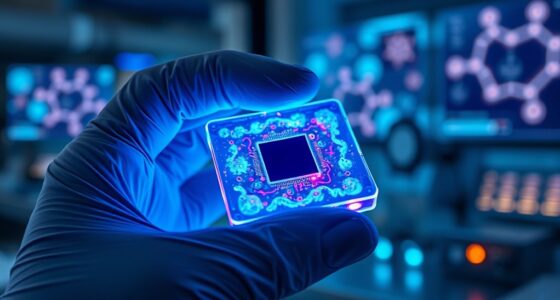
The future of nanotech diagnostics in oncology looks promising, offering highly sensitive and specific detection of cancer markers at very low concentrations. You’ll benefit from early screening methods that identify tumors before symptoms appear, guiding personalized treatments. Advanced nanosensors enable real-time monitoring of therapy responses and detect metastasis early. Improved imaging agents make tumor visualization clearer, aiding precise interventions. Keep exploring how these innovations could transform cancer care further as new breakthroughs emerge.

Get the latest gadgets delivered free — and shop member deals
- Fast, free delivery on millions of items
- Access to Prime Big Deal Days deals on October 6–7
- Prime Video, Amazon Music and more included
Key Takeaways
- Continued development of highly sensitive, multiplexed nanotech sensors for early, non-invasive cancer detection.
- Integration of diagnostic and therapeutic nanocarriers for personalized, targeted cancer treatments.
- Advances in real-time tumor monitoring enabling dynamic therapy adjustments.
- Enhanced imaging contrast agents improving tumor visualization and surgical precision.
- Use of nanotech for comprehensive tumor profiling to inform tailored treatment strategies.

Nanotechnology is transforming how we detect and diagnose cancer, offering the promise of earlier, more precise insights into tumor biology. With advancements in nanotech, you now have access to more accurate tools for cancer biomarker detection, which can identify molecular signatures unique to individual tumors. This means that instead of relying solely on traditional imaging or invasive biopsies, you can benefit from nanotech-enabled sensors that detect cancer markers at extremely low concentrations, often before symptoms appear. These highly sensitive devices can analyze blood, urine, or other bodily fluids, providing real-time data that helps catch cancer early and guides treatment decisions more effectively.
Nanotech drug delivery is another breakthrough that’s shaping the future of oncology diagnostics. By engineering nanoparticles that target cancer cells specifically, you can deliver drugs directly to tumors with minimal impact on surrounding healthy tissue. This targeted approach not only enhances treatment efficacy but also allows for better monitoring of how the tumor responds to therapy through integrated diagnostic capabilities. For example, some nanocarriers are designed to release their payload only when they encounter specific tumor biomarkers, providing both treatment and diagnostic information in a single platform. This dual-functionality accelerates personalized medicine, enabling you to adjust therapies based on real-time feedback from nanotech-based sensors.
Nanotech enables targeted drug delivery with real-time tumor response monitoring for personalized cancer treatment.
The integration of nanotech into diagnostic workflows also means that early detection becomes faster and more reliable. You can utilize nanoscale probes that identify cancer biomarkers with unprecedented specificity, reducing false positives and negatives that often challenge traditional methods. These nanoprobes can be engineered to recognize multiple markers simultaneously, giving a detailed picture of tumor biology. As a result, you’re empowered to make more informed decisions about screening and intervention, potentially improving survival rates through earlier treatment initiation. Additionally, understanding regional divorce statistics and local resources can be valuable for supporting patients through complex treatment decisions and emotional transitions.
Moreover, nanotechnology’s ability to enhance imaging techniques allows for even more precise tumor visualization. With nanoscale contrast agents, you can improve the resolution of MRI or ultrasound scans, helping you locate tumors that might otherwise go unnoticed. This combination of advanced imaging and sensitive biomarker detection transforms oncology diagnostics into a more exact science, enabling you to track tumor progression, detect metastasis early, and evaluate treatment efficacy more accurately.
nanotech cancer biomarker detection kit
As an affiliate, we earn on qualifying purchases.
As an affiliate, we earn on qualifying purchases.
Frequently Asked Questions
How Will Nanotech Diagnostics Impact Patient Quality of Life?
Nanotech diagnostics will notably improve your quality of life by enabling personalized treatment and early detection of cancer. You’ll experience more precise therapies tailored to your individual needs, reducing side effects and increasing effectiveness. Early detection means you can start treatment sooner, potentially preventing disease progression. Overall, these advancements will make cancer management less invasive and more effective, helping you maintain a better quality of life throughout your treatment journey.
What Are the Ethical Considerations of Nanotech in Cancer Detection?
Are you aware of the ethical concerns surrounding nanotech in cancer detection? You need to consider privacy concerns, as nanotech can gather detailed personal health data. Informed consent becomes vital because patients should fully understand how nanotech works and its risks. Do you prioritize transparency and autonomy? Addressing these ethical issues ensures responsible use, protects patient rights, and builds trust in this innovative technology.
How Cost-Effective Are Nanotech Diagnostic Tools Compared to Traditional Methods?
Nanotech diagnostic tools are generally more cost-effective than traditional methods because they enable precise, early detection, reducing treatment costs and improving outcomes. You’ll notice significant cost reductions through faster results and less invasive procedures. This leads to notable economic benefits for healthcare systems, as resources are allocated more efficiently. Overall, nanotech diagnostics can lower expenses while enhancing diagnostic accuracy, making them a smart investment for future cancer detection strategies.
What Regulatory Challenges Exist for Approving Nanotech-Based Diagnostics?
You might think regulatory hurdles are straightforward, but approval processes for nanotech diagnostics are complex. Agencies like the FDA require extensive safety and efficacy data, which can slow down innovation. The unique properties of nanomaterials often demand new testing protocols, creating additional challenges. Managing these approval processes takes time and resources, making it essential for developers to stay informed about evolving regulations to bring nanotech diagnostics to market efficiently.
Will Nanotech Diagnostics Be Accessible in Low-Resource Healthcare Settings?
Nanotech diagnostics might face challenges in low-resource healthcare settings due to cost barriers and infrastructure needs. You could find these advanced tools less accessible because of high expenses and limited technical support. To improve accessibility, efforts are needed to reduce costs, develop portable devices, and adapt technology to work with minimal infrastructure. This way, more people in underserved areas can benefit from cutting-edge nanotech diagnostic solutions.
nanoparticle tumor imaging contrast agent
As an affiliate, we earn on qualifying purchases.
As an affiliate, we earn on qualifying purchases.
Conclusion
Imagine catching a tiny, elusive cancer cell before it grows uncontrollable—like spotting a single spark before a wildfire spreads. That’s the promise of nanotech diagnostics in oncology. With breakthroughs expected to increase early detection rates by over 50%, you’ll soon have tools that act like microscopic detectives, working tirelessly inside your body. This tiny technology could become your best defense, turning the tide in cancer treatment and saving countless lives.
multiplexed nanosensors for early cancer detection
As an affiliate, we earn on qualifying purchases.
As an affiliate, we earn on qualifying purchases.
targeted nanocarriers for cancer therapy
As an affiliate, we earn on qualifying purchases.
As an affiliate, we earn on qualifying purchases.
Fall Picks
fall essentials
As an affiliate, we earn on qualifying purchases.