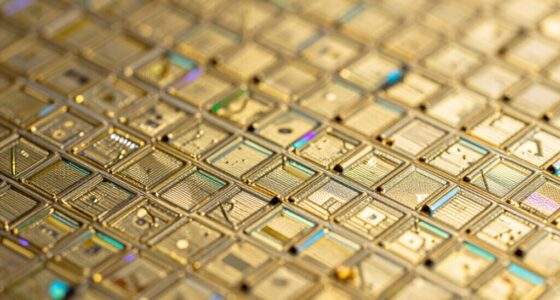
Preparing a metallographic specimen properly comes down to two separate problems: getting the sample flat and parallel, and getting its surface polished to a mirror finish. The four kits I cover here solve those problems to different degrees, and that distinction drives every recommendation in this roundup. For flattening work, the Microscope Sample Flattening Device stands out for its clamp-based versatility across materials and industries, while the iDili WYP-1 makes sense as a budget-friendly, single-purpose press for PCB slicing and routine metallography. If your lab needs to go beyond flattening into full grinding and polishing for microstructure analysis, the 200mm Grinder-Polisher is the only machine here that can produce a true mirror finish. The main tradeoff you will weigh is specialization versus completeness: the compact flatteners cost less and take up almost no bench space, but the polisher is the one piece of equipment that can carry a sample from prep to analysis-ready.

Get the latest gadgets delivered free with Prime
- Fast, free delivery on millions of items
- Prime Video, Amazon Music and more included
- Member-only deals all year
Complete the kit



Key Takeaways
- Three of the four products are flatteners with identical ≤0.5 mm accuracy, so your choice hinges on mounting method, build materials, and lab footprint — not precision.
- The 200mm Grinder-Polisher is the only option that completes the workflow after flattening, producing mirror finishes needed for microstructure analysis.
- The iDili WYP-1’s cast iron and stainless steel build makes it the most durable budget flattener, but it skips the universal clamps found on the top pick.
- The Metallographic Sample Press ships in two configurations (direct pressure vs. lever), so confirm which version you are ordering before purchase.
- The grinder-polisher weighs 35 kg and requires voltage specification at ordering — plan bench space and electrical supply before committing.
| Microscope Sample Flattening Device – Metallographic Specimen Press Machine for Slicing Analysis |  | Best Overall Flattener | Flattening Accuracy: ≤0.5 mm | Application: Metallographic sample preparation and slicing analysis | Compatible Equipment: Microscopes, hardness testers | VIEW ON AMAZON | See Our Full Breakdown |
| Metallographic Specimen Grinder-Polisher, 200mm Lab Polishing Machine, 1400rpm, 220V/380V |  | Best for Full Prep Workflows | Disc Diameter: 200 mm | Speed: 1400 rpm standard / 900 rpm custom | Power Supply: 220V/50Hz standard, 380V/50Hz custom | VIEW ON AMAZON | See Our Full Breakdown |
| iDili WYP-1 Metallographic Sample Flattener |  | Best Value | Model: WYP-1 | Body Material: Cast iron | Gland/Spindle Material: Stainless steel | VIEW ON AMAZON | See Our Full Breakdown |
| Metallographic Sample Press and Flattening Device |  | Best Configuration Options | Flattening Accuracy: ≤0.5 mm | Configurations: Direct pressure flatter; lever leveling device | Direct Pressure Body: Cast iron | VIEW ON AMAZON | See Our Full Breakdown |
| metallographic sample prep kit | Flattening Accuracy | Weight |
|---|---|---|
| Microscope Sample Flattening D | ≤0.5 mm | — |
| Metallographic Specimen Grinde | — | 35 kg |
| iDili WYP-1 Metallographic Sam | — | 1 kg |
| Metallographic Sample Press an | ≤0.5 mm | — |
More Details on Our Top Picks
Microscope Sample Flattening Device – Metallographic Specimen Press Machine for Slicing Analysis
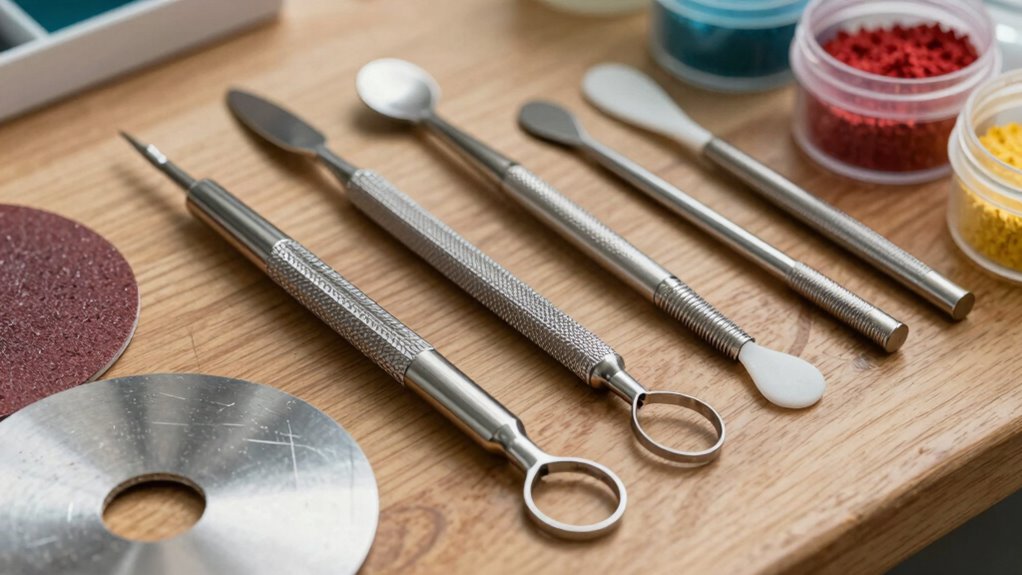
This option stands out for mounting flexibility more than raw precision — and that is what earns it the top spot among the flatteners. Where the iDili WYP-1 relies on a fixed pressing plate and the direct-pressure configuration of the Metallographic Sample Press uses fixed 50 mm and 95 mm glands, this device accepts samples secured with either plasticine or universal clamps, which means irregularly shaped specimens, small electronics components, and battery sections can all be held parallel without improvising fixtures. The ≤0.5 mm accuracy figure matches the other flatteners in this lineup, so the real differentiator is how many sample types you can actually put through it.
The operation model is deliberately simple: press the handle, align the reference plate, and the upper and lower planes come out parallel and perpendicular to the optical axis of your microscope or hardness tester. That perpendicularity is what improves measurement reliability downstream, and it is the reason this device spans electronics, battery, metallurgy, aerospace, and automotive work. Compared with the iDili WYP-1, you give up a little build refinement for a broader clamping system; compared with the Grinder-Polisher, you give up polishing entirely. The tradeoff to accept is that plasticine and clamps are consumables you will need to keep stocked, and this is a single-process tool — it flattens well but does nothing beyond that.
Pros:- Universal clamps and plasticine mounting handle irregular sample shapes better than fixed-gland presses
- ≤0.5 mm flattening accuracy produces planes perpendicular to microscope and hardness tester optical axes
- Simple handle-press operation with no training or setup burden
- Compact footprint fits crowded laboratory benches
Cons:- Plasticine and clamps are auxiliary items that need separate sourcing and restocking
- Strictly a flattening tool — no grinding or polishing capability
Best for: Labs handling varied sample shapes and materials — electronics, batteries, and small metallurgical sections — that need one flexible flattening station.
Not ideal for: Anyone who expects a complete prep workflow in one box, or labs that dislike managing auxiliary consumables like plasticine.
- Flattening Accuracy:≤0.5 mm
- Application:Metallographic sample preparation and slicing analysis
- Compatible Equipment:Microscopes, hardness testers
- Sample Securing Method:Plasticine or universal clamps
- Operation:Handle press with reference plate alignment
- Industries:Electronics, batteries, metallurgy, aerospace, automotive
- Design:Compact laboratory auxiliary device
Our verdict“This pick makes the most sense for labs that value clamping versatility across many sample types over build polish or multi-process capability.”
Metallographic Specimen Grinder-Polisher, 200mm Lab Polishing Machine, 1400rpm, 220V/380V
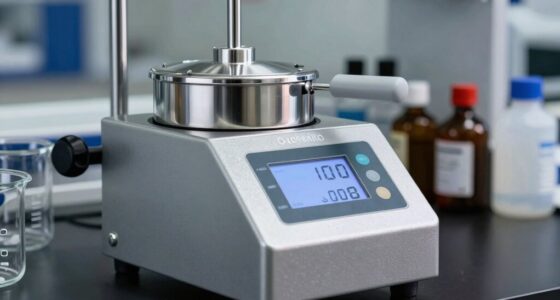
The other three products in this lineup stop at flattening; this machine is the only one that finishes the job. A 200 mm disc spinning at 1400 rpm turns a flattened blank into a specimen with a mirror-like finish, which is the surface condition required before any meaningful microstructure analysis under a microscope. If your workflow currently flattens samples with a press and then sends them out — or worse, skips polishing — this is the piece that closes the gap. The stable, low-noise transmission matters here more than it might seem: uneven disc speed produces uneven removal rates and ruins parallelism you worked to achieve earlier in the process.
The tradeoffs are the flip side of its capability. At 35 kg and 730 mm wide, it demands real bench space, whereas every flattener in this roundup fits on a shelf. It also requires voltage specification at ordering — standard units ship as 220V/50Hz, with 380V/50Hz available as a custom option, and a 900 rpm custom speed is offered for softer materials. This model is better suited to factories, research institutes, and universities with dedicated prep rooms; a single-bench electronics lab doing occasional PCB cross-sections should skip it and pair a flattener with a third-party polishing step instead. It pairs naturally with the B0HGWDL6SG flattener as the first station in a two-step line.
Pros:- Produces true mirror-like finishes required for accurate microstructure analysis
- Low-noise, stable transmission delivers uniform material removal across the disc
- Flexible 220V/380V and 1400/900 rpm configurations for different materials
- Robust, easy-to-maintain construction suited to daily lab throughput
Cons:- Voltage and speed options must be specified at ordering, adding friction to purchase
- 35 kg weight and 730 mm footprint make it the least portable option here by far
Best for: Universities, research institutes, and factory quality labs running regular microstructure analysis and needing in-house mirror finishes.
Not ideal for: Small labs with limited bench space, or buyers who only need sample flattening for slicing analysis.
- Disc Diameter:200 mm
- Speed:1400 rpm standard / 900 rpm custom
- Power Supply:220V/50Hz standard, 380V/50Hz custom
- Dimensions:730 × 400 × 340 mm
- Weight:35 kg
- Output:Mirror-like polished specimen surface
- Transmission:Stable, low-noise drive
Our verdict“If your lab needs analysis-ready specimens rather than just flattened blanks, this is the only option in this lineup that completes the workflow.”
iDili WYP-1 Metallographic Sample Flattener
The WYP-1 does exactly one thing with materials chosen to last: a cast iron body for rigidity and vibration damping, and a stainless steel gland and spindle where corrosion and wear would otherwise degrade precision over time. At 1 kg, it shares the near-trivial footprint of the direct-pressure configuration of the Metallographic Sample Press but builds its pressure path from metals that resist the staining and galling you get from softer alloys in humid labs. For routine metallographic detection and PCB slicing analysis, that combination of simplicity and material quality is the whole pitch — and it is a good one.
Where it falls short against the B0HGWDL6SG top pick is mounting: there is no universal clamp system here, so odd-shaped samples depend on how you stage them on the gland. Compared with the direct-pressure version of the Metallographic Sample Press, the fixed gland sizes (50 mm and 95 mm) on that model at least tell you exactly what fits; the WYP-1 keeps things simpler still, which cuts both ways. This pick makes the most sense for a buyer who knows their samples are small, regular, and repetitive — the classic PCB cross-section workflow — and wants a no-frills press that will not corrode on the bench.
Pros:- Cast iron body provides rigidity and long-term dimensional stability
- Stainless steel gland and spindle resist corrosion and wear
- ≤0.5 mm precision matches every dedicated flattener in this lineup
- Light 1 kg build is easy to store and relocate
Cons:- No universal clamping system limits irregular sample handling
- Specialized for metallographic and PCB prep only — no secondary function
Best for: Budget-conscious labs and technicians doing repetitive, regularly shaped samples — especially PCB slicing and routine metallographic detection.
Not ideal for: Labs working with irregular or varied sample geometries that need clamp-based mounting.
- Model:WYP-1
- Body Material:Cast iron
- Gland/Spindle Material:Stainless steel
- Flattening Precision:≤0.5 mm
- Weight:1 kg
- Applications:Metallographic detection, PCB slicing analysis
- Type:Direct press flattener
Our verdict“The most sensible low-cost entry point for routine, repetitive flattening where material quality matters more than mounting flexibility.”
Metallographic Sample Press and Flattening Device
This press is the only flattener in the lineup sold in two distinct configurations, and that choice is the entire buying decision. The direct pressure flatter is a 1 kg, 12 × 11 × 22 cm unit with a cast iron body and stainless steel and aluminum alloy pressure components, using a 50 mm upper gland and 95 mm lower gland — closest in spirit to the iDili WYP-1. The lever leveling device is a different animal: a 3 kg, 31 cm-tall carbon steel unit with matched 89 mm upper and lower glands, where the lever mechanism gives you more controlled, higher-leverage pressing for larger or more stubborn samples. If your specimens are large or your material resists flattening, the lever version earns its extra bulk.
The drawback is ambiguity. Because the two configurations differ in size, weight, materials, and gland dimensions, you must confirm exactly which version ships before ordering — a step you can skip with the WYP-1 or the B0HGWDL6SG device, which each come in one form. Neither configuration offers the universal clamping of the top pick, so like the WYP-1, this model suits regular sample geometries best. This option stands out for labs that want to match pressing mechanics to their sample mix rather than accept a one-size press, and its gland dimensions at least give you concrete sizing to plan around.
Pros:- Two configurations — direct pressure and lever — cover different sample sizes and forces
- Lever version’s matched 89 mm glands handle larger specimens
- Direct pressure version uses cast iron body with stainless steel and aluminum alloy components
- Both versions keep a compact laboratory footprint
Cons:- Specifications differ between configurations, so the exact model received must be verified
- Fixed gland sizes and no universal clamps limit irregular samples
Best for: Labs that want to choose between a compact direct-pressure press and a lever-driven leveling device based on sample size and material hardness.
Not ideal for: Buyers who want a single clearly defined product, since the two configurations differ substantially in size and mechanics.
- Flattening Accuracy:≤0.5 mm
- Configurations:Direct pressure flatter; lever leveling device
- Direct Pressure Body:Cast iron
- Lever Device Body:Carbon steel
- Direct Pressure Glands:50 mm upper / 95 mm lower
- Lever Device Glands:89 mm upper and lower
- Direct Pressure Size / Weight:12 × 11 × 22 cm, 1 kg
- Lever Device Size / Weight:12 × 15.3 × 31 cm, 3 kg
- Included:1 flattener
Our verdict“A solid middle choice for labs that know their sample sizes and want pressing mechanics matched to the work, provided they confirm the configuration before buying.”

How We Picked
Because all four products claim the same ≤0.5 mm flattening precision, I focused my comparison on the factors that actually separate them. First, I looked at workflow coverage: a flattener only solves half the prep problem, so a machine that also grinds and polishes earns a different role in a lab lineup. Second, I evaluated build materials and mounting flexibility — cast iron bodies, stainless steel glands, and universal clamps translate directly into durability and the range of sample shapes you can handle. Third, I weighed practical constraints like footprint, weight, voltage requirements, and whether auxiliary consumables such as plasticine are included or need separate sourcing. My aim was to build a lineup where each pick serves a distinct buyer, from the occasional PCB slicing task to full university lab throughput.
Factors to Consider When Choosing Metallographic Sample Prep Kits
Choosing between these four products comes down to where each one sits in your prep workflow and what your samples look like. Here is how I would break the decision down.Flattening Only or Full Prep?
Three of these products are flatteners; one is a grinder-polisher. A flattener gets your specimen’s upper and lower planes parallel and perpendicular to your microscope’s optical axis — the prerequisite for accurate imaging and hardness testing. But a flattened sample is not an analysis-ready sample: microstructure work requires a polished, mirror-like surface. If your lab only does slicing analysis and cross-sectioning, a flattener alone is enough. If you need to inspect grain structure, inclusions, or weld zones, plan for a grinder-polisher either in this purchase or a future one.
Mounting Method Matches Sample Shape
Fixed glands — like the 50/95 mm pair on the direct-pressure press or the 89 mm pair on the lever device — work well when your samples are regular and repeatable. The universal clamp and plasticine mounting on the top pick is what you want for irregular geometries, small electronic components, or battery sections. This single factor separates the picks more than the accuracy spec, since all flatteners here deliver the same ≤0.5 mm figure.
Build Materials and Lab Environment
Cast iron bodies (the WYP-1 and the direct-pressure press) resist flex and damp vibration, keeping pressing consistency over years. Stainless steel glands and spindles matter in humid labs or where samples leave corrosive residue. Carbon steel, used in the lever configuration, is strong but less corrosion-resistant — worth weighing if your prep area is not climate-controlled.
Space, Power, and Ordering Details
The flatteners weigh 1–3 kg and fit anywhere; the grinder-polisher is 35 kg and 730 mm wide, so measure your bench first. Its 220V versus 380V supply must be specified at ordering, as must the 900 rpm custom speed option. For the two-configuration press, confirm which version you are actually purchasing. These ordering details are where most buyer friction with this equipment category happens.
Frequently Asked Questions
What does a metallographic sample flattener actually do, and why does it matter?
A flattener presses a mounted or raw specimen so that its upper and lower planes are parallel to each other and perpendicular to the optical axis of a microscope or hardness tester. Without that geometry, measurements come out skewed: hardness indentations land at incorrect angles, and microstructure images suffer from focus falloff across the field. All three flatteners in this roundup deliver ≤0.5 mm flattening accuracy, which is sufficient for standard slicing analysis and metallographic detection work. The device is the first station in a prep workflow, and its output quality determines how much correction later grinding stages must perform.
Do I need a flattener if I already have a grinder-polisher?
It depends on your sample starting condition. If your specimens arrive as irregular cut sections or small components that need to be squared up and oriented before grinding, a flattener saves considerable time and abrasive. If your samples are already sectioned flat and mounted, you can often go straight to grinding stages. In practice, most labs doing electronics or battery cross-sectioning benefit from having both, because the flattener also fixes the specimen’s orientation relative to the mount — something a rotating disc cannot do. Pairing the clamp-based flattener with the 200 mm grinder-polisher creates a complete two-station line.
Why do all the flatteners show the same ≤0.5 mm accuracy figure?
The ≤0.5 mm figure reflects the parallelism tolerance these manual presses can reliably achieve with a reference plate and consistent pressure, and it has become a standard specification across this category. Because accuracy is effectively equal, the meaningful differences between models lie elsewhere: mounting flexibility, build materials, gland sizes, and pressing mechanics. A lab choosing between the WYP-1 and the clamp-based flattener is not choosing on precision — both deliver the same number — but on whether their samples need universal clamping or fit standard fixed glands.
Can these flatteners handle PCB and electronics samples?
Yes, and PCB slicing analysis is one of the stated applications for both the WYP-1 and the top-pick flattening device. For PCB work, sample orientation is everything: the cross-section must be perpendicular to the board plane so copper layers, plating, and via structures measure correctly. The clamp or plasticine mounting on the top pick is particularly helpful for holding small boards and components steady, while the WYP-1’s fixed pressing path suits repetitive, uniformly sized samples. The direct pressure press works too, provided your board sections fit within its 50 mm upper gland diameter.
What should I check before ordering the grinder-polisher or the two-configuration press?
For the grinder-polisher, confirm your lab’s electrical supply before ordering: the standard unit runs on 220V/50Hz, while 380V/50Hz and the 900 rpm speed option are custom-specified builds, so a mismatch means the machine will not run as delivered. Also verify your bench can support 35 kg and accommodate a 730 mm-wide footprint with clearance for disc changes. For the two-configuration press, the direct-pressure and lever versions differ in body material, dimensions, weight, and gland sizes, so confirm exactly which configuration the listing ships — the two are not interchangeable once your samples and bench layout are fixed.
Conclusion
My recommendations break cleanly along buyer type. If you run a general-purpose lab handling electronics, batteries, and metallurgical sections of varying shapes, the Microscope Sample Flattening Device (B0HGWDL6SG) is my top pick for its universal clamping and plasticine mounting. If you are a technician or small lab doing repetitive PCB slicing on a budget, the iDili WYP-1 delivers the same precision with corrosion-resistant build at the lowest complexity. If you know your sample sizes precisely and want pressing mechanics matched to the work — compact direct pressure or higher-leverage lever pressing — the two-configuration Metallographic Sample Press gives you that choice, as long as you verify which version ships. And if you are equipping a university or industrial quality lab that needs mirror-finished specimens for microstructure analysis, the 200 mm Grinder-Polisher is the only option here that finishes the job — ideally paired with a flattener as station one.