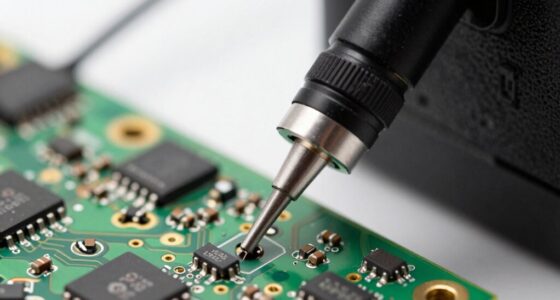

Trinocular microscopes split the optical path three ways, letting you look through the eyepieces while sending an image to a camera — which makes them the default choice for documentation, teaching, and live demonstration work. After comparing the leading models available this year, the Swift SW380T stands out as the best overall pick for its Siedentopf head, wide-field optics, and camera-ready trinocular port at a mid-range price. If your work is electronics or dissection rather than slides, the ZTEEERS boom-stand stereo model and the soldering-focused Kaisi TX offer the working distance and magnification range compound scopes can’t match. The main tradeoff you’ll face is compound versus stereo architecture, followed closely by camera quality and stand rigidity. Read on for the full breakdown of all ten models.

Get the latest gadgets delivered free with Prime
- Fast, free delivery on millions of items
- Prime Video, Amazon Music and more included
- Member-only deals all year
Complete the kit



Key Takeaways
- Compound versus stereo architecture is the single biggest decision in this roundup — seven models magnify slides up to 2000x–5000x, while three (Kaisi TX, ZTEEERS, DZQ) are low-magnification stereo scopes built for inspecting 3D objects like circuit boards and jewelry.
- The 5000x magnification claims on both Woehrsh models and the generic research-grade model rely on digital zoom stacking rather than true optical magnification, so the Swift SW350T’s optically honest 2500x ceiling delivers sharper recorded images.
- Siedentopf heads on the Swift SW380T and SW350T allow faster, more precise interpupillary adjustment than standard sliding heads, which matters most for shared labs and classrooms.
- Boom stands, like the ZTEEERS’s, unlock far more flexibility than pillar stands for large or awkward workpieces — but they demand bench space and a stable mounting surface.
- Bundle cameras varied more than any other component: the DZQ’s 4K camera is a genuine selling point, while several budget models ship with 2MP USB cameras that will need replacing for serious documentation.
| Woehrsh Trinocular Compound Microscope, 40X-5000X Magnification with Dual Mechanical Stage and HD USB Camera |  | Best Overall Kit | Magnification: 40X-5000X | Eyepieces: 2x WF10x, 2x WF25x, 2x 2x magnifiers, digital eyepiece | Objective Lens: 185 achromatic, infinity optical system | VIEW ON AMAZON | See Our Full Breakdown |
| Kaisi TX Trinocular Stereo Microscope for Soldering and Electronics Repair |  | Best for Electronics Repair | Magnification: 7x-50x | Zoom Objective: 0.7x-5x | Eyepieces: WF10x23 wide field | VIEW ON AMAZON | See Our Full Breakdown |
| Swift SW350T Trinocular Compound Microscope with 5 MP Camera |  | Best Digital Imaging | Magnification: 40x, 100x, 250x, 400x, 1000x, 2500x | Objectives: 4 DIN achromatic objectives | Eyepieces: 10x and 25x wide-field | VIEW ON AMAZON | See Our Full Breakdown |
| Trinocular Compound Microscope, 40X-5000X Magnification, Research Grade with USB Camera and Mechanical Stage |  | Best Value for Lab Work | Magnification: 40X-5000X | Objectives: 4x, 10x, 60x, 100x achromatic | Camera: 1.3MP digital camera, USB 2.0 | VIEW ON AMAZON | See Our Full Breakdown |
| ZTEEERS Trinocular Stereo Zoom Microscope, 3.5x–90x, with Boom Stand and LED Ring Light |  | Best for Large Workpieces | Magnification Range: 3.5x-90x | Zoom Objective: 0.7x-4.5x with 0.5x and 2x auxiliary lenses | Eyepieces: 10x super widefield | VIEW ON AMAZON | See Our Full Breakdown |
| SWIFT SW350T Trinocular Compound Microscope, 40X-2500X Magnification, Siedentopf Head, Research-Grade, Two-Layer Mechanical Stage, 2.0MP Camera |  | Best Complete Research Bundle | Magnification: 40X-2500X | Objectives: 4X, 10X, 40X, 100X (Oil) achromatic | Eyepieces: Wide-field 10X/25X | VIEW ON AMAZON | See Our Full Breakdown |
| PalliPartners 40x–2000x Trinocular Compound Microscope |  | Best Budget Entry Point | Magnification: 40x–2000x | Type: Compound trinocular | Illumination: Top and bottom LED | VIEW ON AMAZON | See Our Full Breakdown |
| Woehrsh Trinocular Compound Microscope, 40X-5000X Magnification, Laboratory Grade with Dual Mechanical Stage and HD USB Camera |  | Best Accessory Kit | Magnification: 40X-5000X | Eyepieces: WF10x and WF25x wide-angle pairs | Objectives: 195 achromatic, infinity optical system | VIEW ON AMAZON | See Our Full Breakdown |
| Swift SW380T 40X-2500X Trinocular Compound Lab Microscope with Siedentopf Head and Wide-Field Eyepieces | 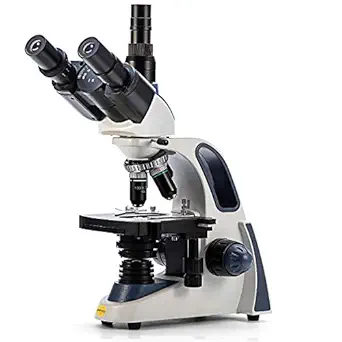 | Best Optical Core | Magnification: 40X-2500X, six levels | Head: Siedentopf trinocular, rotatable, 30-degree tilt | Eyepieces: Interchangeable wide-field 10X and 25X glass | VIEW ON AMAZON | See Our Full Breakdown |
| DZQ Jewelry Trinocular Microscope with 4K Camera, 7X-45X Magnification |  | Best for Inspection and Detail Work | Magnification: 7X-45X continuous zoom | Camera: 4K HD, HDMI and dual USB | Photo Eyepiece: 0.5x | VIEW ON AMAZON | See Our Full Breakdown |
| trinocular microscope | Magnification | Eyepieces | Stage | Camera |
|---|---|---|---|---|
| Woehrsh Trinocular Compound Mi | 40X-5000X | 2x WF10x, 2x WF25x, 2x 2x magnifiers, digital eyepiece | Dual-layer mechanical stage | — |
| Kaisi TX Trinocular Stereo Mic | 7x-50x | WF10x23 wide field | — | — |
| Swift SW350T Trinocular Compou | 40x, 100x, 250x, 400x, 1000x, 2500x | 10x and 25x wide-field | Double-layer mechanical stage | 5 MP |
| Trinocular Compound Microscope | 40X-5000X | — | Double-layer mechanical X-Y stage | 1.3MP digital camera, USB 2.0 |
| ZTEEERS Trinocular Stereo Zoom | — | 10x super widefield | — | — |
| SWIFT SW350T Trinocular Compou | 40X-2500X | Wide-field 10X/25X | Double-layer mechanical, coaxial X-Y travel, Abbe condenser | 2.0MP USB 2.0 with analysis software |
| PalliPartners 40x–2000x Trinoc | 40x–2000x | — | Double-layer stage | — |
| Woehrsh Trinocular Compound Mi | 40X-5000X | WF10x and WF25x wide-angle pairs | — | HD USB electronic eyepiece |
| Swift SW380T 40X-2500X Trinocu | 40X-2500X, six levels | Interchangeable wide-field 10X and 25X glass | Mechanical stage | Not included; trinocular port accepts attachments |
| DZQ Jewelry Trinocular Microsc | 7X-45X continuous zoom | — | — | 4K HD, HDMI and dual USB |
More Details on Our Top Picks
Woehrsh Trinocular Compound Microscope, 40X-5000X Magnification with Dual Mechanical Stage and HD USB Camera
This option stands out for bundle completeness: the Woehrsh arrives with WF10x and WF25x eyepieces, 2x magnifiers, a USB camera, prepared slides, cover slips, tools, and a phone mount — everything a lab or classroom needs on day one. Compared with the Kaisi TX, which is purpose-built for soldering at low magnification, the Woehrsh covers the full biological range from 40X to 5000X thanks to its 185 achromatic infinity optical system. The 306-degree rotating trinocular tube and adjustable interpupillary distance make shared use practical in teaching settings. The tradeoff is complexity: this is far more machine and accessory clutter than a hobbyist needs, and the bundled camera resolution lags behind the dedicated 5 MP unit on the Swift SW350T.
Pros:- Wide 40X-5000X magnification range with infinity-corrected achromatic optics
- Extensive bundled accessory kit including slides, tools, and phone mount
- 306-degree rotating trinocular tube and USB camera for image capture
- Adjustable interpupillary distance and diopter correction fit multiple users
Cons:- The large accessory kit can overwhelm first-time users
- Bundled camera quality trails dedicated higher-resolution options like the Swift SW350T’s 5 MP unit
Best for: Educators, veterinary clinics, and lab technicians who want a complete out-of-the-box biological microscope with digital capture
Not ideal for: Casual hobbyists and beginners who will be overwhelmed by the extensive accessory kit and high magnification range they may never use
- Magnification:40X-5000X
- Eyepieces:2x WF10x, 2x WF25x, 2x 2x magnifiers, digital eyepiece
- Objective Lens:185 achromatic, infinity optical system
- Illumination:LED
- Stage:Dual-layer mechanical stage
- Trinocular Tube Rotation:306 degrees
- Warranty:One year
Our verdict“Buy this if you run a teaching lab or clinic and want one purchase that covers optics, digital capture, and consumables in a single box.”
Kaisi TX Trinocular Stereo Microscope for Soldering and Electronics Repair
The Kaisi TX solves the problem most trinocular scopes ignore: it delivers simultaneous binocular and camera viewing without sacrificing the left eyepiece, so you can record an inspection while working with both eyes. Its WF10x23 wide-field eyepieces at 7x-50x reduce the neck strain that plagues long soldering sessions — something a compound scope like the Woehrsh, with its narrow field and high magnification, simply cannot do. The inclusion of a soldering exhaust fan, heat-resistant silicone mat, and parts trays turns this into a complete rework station rather than just a microscope. The main tradeoff is setup care: working distance shifts with lens configuration, so expect some fiddling before the geometry is right for your bench.
Pros:- Simultaneous trinocular viewing without losing the left eyepiece when a camera is attached
- WF10x23 wide-field eyepieces reduce eye and neck fatigue during long sessions
- Soldering exhaust fan removes fumes from the work area
- Heat-resistant silicone mat and parts trays protect and organize the bench
Cons:- Working distance varies by lens configuration and requires careful adjustment
- Limited to 7x-50x, ruling out any high-magnification biological work
Best for: Electronics repair technicians and hobbyist solderers who need both-eye viewing plus camera documentation at their bench
Not ideal for: Biology students or clinicians, since 7x-50x stereo magnification cannot resolve cells or bacteria the way compound scopes can
- Magnification:7x-50x
- Zoom Objective:0.7x-5x
- Eyepieces:WF10x23 wide field
- Work Floor Size:14.9″ x 10″
- Included Accessories:LED ring light, soldering exhaust fan, silicone mat, 3 parts trays
- Warranty:30-day return, parts replaced within 6 months
Our verdict“This is the bench-side pick for soldering and circuit inspection, where wide-field stereo viewing beats raw magnification every time.”
Swift SW350T Trinocular Compound Microscope with 5 MP Camera
Where the generic 40X-5000X research scope in this roundup settles for a 1.3 MP sensor, the SW350T pairs its six magnification levels with a 5 MP camera and cross-platform software — the strongest documentation package here for anyone publishing or archiving images. The rotatable Siedentopf trinocular head with 30-degree tilt is the ergonomic standout, fitting users of different heights without repositioning the whole scope, and the adjustable LED with Abbe condenser gives fine control over contrast at higher powers. Compared with the Woehrsh, the Swift gives up some top-end reach (2500x versus 5000x) but delivers cleaner, more usable digital output for the magnifications most work actually happens at. Note the dated software support list — Windows Vista-era compatibility suggests the imaging suite may feel clunky on modern machines.
Pros:- Six magnification levels from 40x to 2500x with four DIN achromatic objectives
- 5 MP camera with image-processing software for Windows and Mac
- Rotatable Siedentopf trinocular head fits multiple users comfortably
- Adjustable LED illumination with Abbe condenser and double-layer mechanical stage
Cons:- Software compatibility list dates back to Windows Vista and may not run smoothly on newer systems
- Tops out at 2500x, below the 5000x ceiling of the Woehrsh and generic research models
Best for: Researchers, clinicians, and educators who need publication-quality stills and live viewing on Mac or Windows
Not ideal for: Buyers who want maximum magnification headroom or a modern, polished software experience out of the box
- Magnification:40x, 100x, 250x, 400x, 1000x, 2500x
- Objectives:4 DIN achromatic objectives
- Eyepieces:10x and 25x wide-field
- Head:Rotatable Siedentopf trinocular head, 30-degree tilt
- Stage:Double-layer mechanical stage
- Camera:5 MP
- Software Compatibility:Mac OS X, Windows Vista/7/8/10 (32-bit and 64-bit)
- Included Slides:5 prepared and 5 blank
Our verdict“This model makes the most sense for anyone whose priority is high-quality digital documentation rather than extreme magnification numbers.”
Trinocular Compound Microscope, 40X-5000X Magnification, Research Grade with USB Camera and Mechanical Stage
This unbranded research-grade scope covers the same 40X-5000X range as the Woehrsh but trims the bundle down to the essentials: four achromatic objectives, an NA1.25 condenser with variable diaphragm, a double-layer X-Y stage, and a basic USB camera. For labs buying on a budget, that focus on core optics over accessories is the appeal — the condenser and mechanical stage are the parts that actually determine image quality at clinical magnifications, and both are here. The obvious sacrifice is the 1.3 MP camera, which is fine for live viewing and teaching demos but visibly softer than the Swift SW350T’s 5 MP output. Setup is also less guided than beginner-friendly kits, so plan on reading the manual.
Pros:- Full 40X-5000X magnification range with four achromatic objectives (4x-100x)
- USB camera supports viewing, recording, and live streaming to Mac, Windows, or projectors
- Stable double-layer mechanical X-Y stage for precise specimen positioning
- NA1.25 condenser with variable diaphragm for contrast control
Cons:- 1.3 MP camera limits captured image quality compared with the Swift SW350T
- Setup and operation may frustrate beginners without guided instructions
Best for: Budget-conscious clinics, breeding labs, and teaching institutions that need serious magnification and don’t need a big accessory bundle
Not ideal for: Anyone wanting crisp captured images for reports or presentations, or first-time users intimidated by manual setup
- Magnification:40X-5000X
- Objectives:4x, 10x, 60x, 100x achromatic
- Camera:1.3MP digital camera, USB 2.0
- OS Compatibility:Mac OS X, Windows
- Illumination:LED bright field
- Condenser:NA1.25 with variable diaphragm
- Stage:Double-layer mechanical X-Y stage
Our verdict“A sensible core-optics purchase for labs that would rather spend on magnification and stage precision than camera resolution and extras.”
ZTEEERS Trinocular Stereo Zoom Microscope, 3.5x–90x, with Boom Stand and LED Ring Light
The ZTEEERS takes the opposite approach from compound picks like the generic 40X-5000X research scope: instead of slides and high power, it gives you a single-arm boom stand that reaches over large objects — circuit boards, machined parts, dissections — with continuous 0.7x-4.5x zoom extendable to 3.5x-90x via the included 0.5x and 2x auxiliary lenses. The 18 lb steel base and ball-bearing boom arm mean the image stays put when you reposition, addressing the wobble that plagues lighter boom stands. Compared with the Kaisi TX, this is the more flexible and higher-magnification stereo option, but it lacks Kaisi’s soldering-specific extras like the exhaust fan and work mat. The weight itself is the tradeoff — this is not a scope you’ll shuttle between rooms.
Pros:- Wide 3.5x-90x magnification range using included 0.5x and 2x auxiliary lenses
- Adapters included for cameras and electronic eyepieces
- Dimmable 56-LED ring light delivers shadow-free illumination
- Heavy steel base and ball-bearing boom arm hold stable, repositionable viewing angles
Cons:- 18 lb base is cumbersome to move between workstations
- No soldering-specific accessories like the Kaisi TX’s exhaust fan and work mat
Best for: Workshops, inspection stations, and labs examining oversized or three-dimensional objects that need flexible overhead positioning
Not ideal for: Mobile users or small benches — the 18 lb base makes frequent relocation impractical, and it cannot match compound magnification for cellular work
- Magnification Range:3.5x-90x
- Zoom Objective:0.7x-4.5x with 0.5x and 2x auxiliary lenses
- Eyepieces:10x super widefield
- Interpupillary Adjustment:48-75 mm
- Diopter Adjustment:±6
- Stand:Single-arm boom stand, 18 lb steel base
- Illumination:Dimmable 56-LED ring light
- Head:45° inclination, 360° rotation
- Warranty:1 year
Our verdict“Choose this when your subject is too big or too three-dimensional for a stage-mounted compound scope and you need stable, adjustable overhead viewing.”
SWIFT SW350T Trinocular Compound Microscope, 40X-2500X Magnification, Siedentopf Head, Research-Grade, Two-Layer Mechanical Stage, 2.0MP Camera
The SW350T stands out as the most complete compound package in this lineup because it ships with the one thing most competitors leave out: a working camera and analysis software out of the box. Compared with the Swift SW380T, which requires you to purchase a camera separately, this model’s 2.0MP USB eyepiece with image stitching, EDF, and measurement tools makes it immediately ready for documentation-heavy work like veterinary labs or clinical teaching. The Siedentopf trinocular head with 30-degree tilt and 360-degree swivel is the same ergonomic design Swift uses across its research line, and the double-layer mechanical stage with coaxial X-Y travel keeps specimens steady at 1000X and above. The tradeoff is that the bundle stops at slides and cover slips — no stains or preparation kits — and the 100X oil immersion objective demands immersion oil you must source yourself.
Pros:- Truly complete imaging setup with included 2.0MP camera and Windows/Mac analysis software
- Research-grade achromatic optics across four objectives up to 2500X
- Ergonomic Siedentopf head reduces neck strain during long sessions
- 200-piece slide and coverslip bundle included
Cons:- No stains or slide preparation accessories included
- 100X oil immersion objective requires separately purchased immersion oil
Best for: Clinicians, veterinary professionals, and advanced students who need simultaneous eyepiece viewing and digital documentation from day one
Not ideal for: Hobbyists unwilling to buy immersion oil and slide prep supplies — the top magnification range will sit unused without them
- Magnification:40X-2500X
- Objectives:4X, 10X, 40X, 100X (Oil) achromatic
- Eyepieces:Wide-field 10X/25X
- Camera:2.0MP USB 2.0 with analysis software
- Head:Siedentopf trinocular, 30-degree tilt, 360-degree swivel
- Stage:Double-layer mechanical, coaxial X-Y travel, Abbe condenser
- Bundle:100 blank slides, 100 cover slips
Our verdict“If you want a trinocular compound scope that captures and measures images the day it arrives, this is the pick — just budget for oil and prep supplies.”
PalliPartners 40x–2000x Trinocular Compound Microscope
The PalliPartners occupies the value slot because it delivers the core trinocular formula — dual viewing plus a camera port — without the research-grade pricing of the Swift models. Where the SW350T bundles a camera and software, this one keeps costs down by leaving the trinocular port empty for you to add imaging later, which is a reasonable strategy if you’re still deciding whether digital capture matters to you. The top and bottom LED illumination is a genuine plus for a compound scope at this tier, handling both translucent slides and occasional opaque specimens. The honest tradeoff: the listing is thin on optical specifics — no objective or eyepiece details are given — so image quality expectations should stay modest compared with the fully specified optics on the Woehrsh or Swift units.
Pros:- Affordable entry into trinocular viewing with an open camera port
- Dual top and bottom LED illumination handles both slide and surface specimens
- Separate coarse and fine focus knobs aid precise focusing for beginners
Cons:- No published details on objectives, eyepieces, or optical quality
- Camera not included, and no accessory bundle is specified
Best for: Students, homeschool families, and first-time microscope buyers who want trinocular flexibility at a low commitment level
Not ideal for: Lab or clinical users who need documented optical specifications and consistent, publishable image quality
- Magnification:40x–2000x
- Type:Compound trinocular
- Illumination:Top and bottom LED
- Stage:Double-layer stage
- Focus:Coarse and fine adjustment
- Camera Connection:Trinocular head port
Our verdict“A sensible low-risk first trinocular scope for learning, as long as you accept unspecified optics and plan to add imaging later.”
Woehrsh Trinocular Compound Microscope, 40X-5000X Magnification, Laboratory Grade with Dual Mechanical Stage and HD USB Camera
No other scope in this roundup arrives with as much in the box. Beyond the HD USB electronic eyepiece, the Woehrsh includes prepared slides, specimen sections, tweezers, Petri dishes, droppers, a phone holder, and even a dust cover — essentially a functioning lab station from the first unboxing, where the SW350T gives you slides only and the SW380T gives you nothing but glass. The infinity-corrected 195 achromatic optics are a legitimate step up in design philosophy from basic finite objectives, delivering flatter, more color-accurate fields at mid-range magnifications. Two caveats temper the appeal: the 5000X maximum is achieved through eyepiece multiplication, so expect usable detail to top out well below that figure, and the poorly translated documentation hints at patchy post-purchase support if something goes wrong.
Pros:- Extraordinary accessory kit: slides, specimens, tools, Petri dishes, phone holder, and more
- Infinity-corrected achromatic optics for clear, color-accurate mid-range imaging
- HD USB electronic eyepiece included for digital viewing and capture
- Dual coaxial coarse/fine focusing on a double-layer mechanical stage
Cons:- 5000X claim relies on eyepiece multiplication with diminishing practical clarity
- Poorly translated materials suggest possible quality control and support issues
Best for: Biology teachers and lab starters who want specimens, tools, and imaging included so students can work immediately
Not ideal for: Buyers who expect clean documentation and reliable support — the translation issues suggest potential friction there
- Magnification:40X-5000X
- Eyepieces:WF10x and WF25x wide-angle pairs
- Objectives:195 achromatic, infinity optical system
- Illumination:LED
- Focusing:Dual coaxial coarse and fine
- Head:360-degree swivel trinocular
- Camera:HD USB electronic eyepiece
- Accessories:20+ item lab kit including slides, tools, and phone holder
Our verdict“The best choice if a fully stocked lab-in-a-box matters more to you than documentation polish or honest magnification ceilings.”
Swift SW380T 40X-2500X Trinocular Compound Lab Microscope with Siedentopf Head and Wide-Field Eyepieces
The SW380T is the pick when optical quality matters more than box contents. Swift’s DIN achromatic objectives and interchangeable 10X/25X wide-field eyepieces produce the kind of consistent, distortion-controlled images that cheaper multi-accessory bundles like the Woehrsh can’t match, and the ultra-fine focusing system holds focus reliably at 1000X and above where lesser scopes drift. Like the SW350T, it gets the fully rotatable Siedentopf head with a 30-degree tilt — ideal for shared clinical or classroom setups where two people alternate constantly. The deliberate tradeoff against its sibling is stark: no camera is included, so you’re buying the optical platform first and adding a trinocular camera when budget allows. For serious users who already own or plan specific imaging gear, that’s a feature, not a flaw.
Pros:- Excellent DIN achromatic optics with six magnification levels up to 2500X
- Ultra-precise coarse and fine focusing holds steady at high magnification
- Fully rotatable Siedentopf head suits shared workstations
- Open trinocular port accepts any standard eyepiece or microscope camera
Cons:- No camera included, unlike the SW350T bundle
- Top magnification levels exceed what casual observers realistically need
Best for: Serious students, clinicians, and hobbyists who prioritize optical precision and want to choose their own camera later
Not ideal for: Anyone expecting to capture images immediately — the camera attachment is sold separately
- Magnification:40X-2500X, six levels
- Head:Siedentopf trinocular, rotatable, 30-degree tilt
- Eyepieces:Interchangeable wide-field 10X and 25X glass
- Objectives:4 DIN achromatic on revolving turret
- Focusing:Coarse and ultra-fine adjustment
- Stage:Mechanical stage
- Camera:Not included; trinocular port accepts attachments
Our verdict“The strongest pure optical platform here — buy it if image quality through the eyepieces comes first and imaging can wait.”
DZQ Jewelry Trinocular Microscope with 4K Camera, 7X-45X Magnification
Every other scope in this roundup is a compound microscope built for slides; the DZQ flips the script entirely as a stereo inspection rig for three-dimensional work. Its 7X-45X continuous zoom with 95-300mm of working distance leaves physical room for tweezers, soldering irons, and jeweler’s tools — something a slide-focused compound stage simply cannot offer. The 4K camera with HDMI output outclasses every USB eyepiece here, capturing photos, video, and measurements directly to a flash drive with mouse control, no computer required. The 60-LED dimmable ring light delivers shadow-free cold illumination ideal for gemstones and metalwork. Tradeoffs are real: you supply your own HDMI monitor, and 45X maximum means bacteria and cells are permanently off the menu — this is magnification for hands-on work, not microscopy.
Pros:- True 4K camera with standalone HDMI operation and direct-to-flash-drive capture
- 95-300mm working distance accommodates tools and hands under the lens
- Dimmable 60-LED ring light provides shadow-free illumination
- Ergonomic stand with spring bracket and headrest for long work sessions
Cons:- Requires a separate HDMI display for standalone use
- Caps at 45X magnification, far below the 2500X+ compound options
Best for: Jewelers, watchmakers, engravers, and electronics technicians who need to work on objects while viewing them live in 4K
Not ideal for: Biology students and lab users — 45X cannot resolve cells, bacteria, or slide specimens the compound scopes handle
- Magnification:7X-45X continuous zoom
- Camera:4K HD, HDMI and dual USB
- Photo Eyepiece:0.5x
- Working Distance:95-300mm
- Lighting:60-LED ring light, dimmable 0-100%
- Stand:Ergonomic with spring bracket and headrest
- Capture:Mouse-controlled photo, video, and measurement to flash drive
Our verdict“The clear choice for inspecting and working on objects rather than viewing slides — just pair it with an HDMI monitor.”

How We Picked
I evaluated each model against the factors that actually determine day-to-day satisfaction with a trinocular microscope: optical quality first (objective lens quality, true optical magnification range, and image clarity through the eyepieces), then camera performance, since the third port is the reason you’re buying a trinocular rather than a binocular scope. Stand and stage mechanics came next — a dual mechanical stage with smooth travel matters more than raw magnification for real lab work, and a wobbly stand ruins both viewing and photography.
I also weighed ease of use for the intended buyer: Siedentopf heads, LED lighting with adjustable intensity, and focus mechanisms that hold position without drift. Finally, I separated marketing claims from hardware reality — several models advertise 5000x magnification that is only achievable through digital enlargement, and I ranked accordingly. Models ranked highest are those where the optical core, the camera, and the mechanical stage all pull their weight for the price tier.
| trinocular microscope | Illumination | Stage |
|---|---|---|
| Woehrsh Trinocular Compound Mi | LED | Dual-layer mechanical stage |
| Kaisi TX Trinocular Stereo Mic | — | — |
| Swift SW350T Trinocular Compou | — | Double-layer mechanical stage |
| Trinocular Compound Microscope | LED bright field | Double-layer mechanical X-Y stage |
| ZTEEERS Trinocular Stereo Zoom | Dimmable 56-LED ring light | — |
| SWIFT SW350T Trinocular Compou | — | Double-layer mechanical, coaxial X-Y travel, Abbe condenser |
| PalliPartners 40x–2000x Trinoc | Top and bottom LED | Double-layer stage |
| Woehrsh Trinocular Compound Mi | LED | — |
| Swift SW380T 40X-2500X Trinocu | — | Mechanical stage |
| DZQ Jewelry Trinocular Microsc | — | — |
Factors to Consider When Choosing Trinocular Microscopes
Choosing between trinocular microscopes comes down to matching the instrument’s architecture to your actual work. These are the factors that separate a satisfying purchase from an expensive disappointment.Compound or Stereo: Match the Architecture to Your Work
This is the decision that overrides everything else, and it’s where most buyers go wrong. Compound microscopes transmit light through thin, transparent specimens — cells, tissue sections, liquid samples — and offer the high magnifications needed to resolve fine internal structure. Stereo microscopes reflect light off solid objects and trade magnification for working distance and depth of field, which is why soldering, entomology, gemology, and dissection all demand them. Buying a 2500x compound scope for circuit board inspection, or a 45x stereo scope for bacteria, wastes money either way. Decide what you’ll actually put under the lens before comparing any other spec.
True Optical Magnification vs. Digital Inflation
Headline numbers like 5000x deserve scrutiny. Legitimate optical magnification is the product of eyepiece power and objective power — a 25x eyepiece paired with a 100x objective gives a genuine 2500x. Anything beyond that is achieved by digitally enlarging the camera image, which adds pixels, not detail. A 5000x claim built on digital zoom will look softer and dimmer than an honest 2500x image from better glass. Judge a scope by its objective set and numerical aperture, not its biggest marketing number, and treat digital magnification as a convenience feature rather than a capability.
Camera Quality and the Third Port
The camera is often the weakest link in a bundled trinocular package. Resolution matters less than sensor quality and frame rate — a clean 2MP image with accurate color beats an interpolated 12MP image from a noisy sensor, though the jump to a genuine 4K camera, as on the DZQ jewelry scope, is visible immediately when recording video or showing live detail to others. Check whether the optical path splits or fully redirects: a 100/0 or 100/0/100 beam splitter lets you route all light to the camera for maximum brightness, while always-on splits can dim both outputs. Also confirm the camera outputs a standard UVC signal over USB so it works with any software, not just the vendor’s app.
Stand Rigidity and Stage Mechanics
Vibration is the enemy of both high-magnification viewing and photography, and it’s invisible in a spec sheet. Heavier bases and boom stands with rigid arms hold focus better at high power, while lightweight pillar stands flex when you touch the focus knob. For compound work, a mechanical stage with graduated x-y movement lets you scan a slide systematically and return to a coordinates-noted field of view — a plain stage with slide clips becomes frustrating fast. Boom stands add reach and flexibility around large objects but need a solid, deep bench to stay steady. If two models seem otherwise equal, the heavier one usually wins.
Illumination and Optical Comfort
LED illumination with adjustable intensity is now standard, but quality varies: some budget scopes have visible color casts or uneven field brightness that the camera faithfully records and your photos inherit. For compound scopes, check whether a condenser with iris diaphragm is included — it controls contrast and depth, and its absence caps image quality no matter how good the objectives are. On the comfort side, Siedentopf-style heads adjust interpupillary distance by rotating the eyepiece tubes rather than sliding them along a track, which is faster, holds alignment better, and accommodates multiple users without constant readjustment. Wide-field eyepieces reduce eye strain during long sessions, an underrated factor for anyone working hours at a time.
When to Pay More — and When Not To
Spending more buys better glass, sturdier mechanics, and a usable camera — but the returns are uneven across tiers. The jump from a budget generic scope to a mid-range branded model like the Swift line buys the biggest real-world improvement, mainly in objective quality and focus mechanism smoothness. The jump from mid-range to true research-grade optics is real but only pays off if your specimens and techniques can exploit it; a hobbyist will not see the difference. Skimp instead on the bundled camera if you already own a better one, since most trinocular ports accept standard C-mount cameras. What you should never skimp on is the stand and stage — those cannot be upgraded later.
Frequently Asked Questions
Can I use a trinocular microscope as a regular binocular scope without the camera attached?
Yes, and that’s the whole point of the design. The third port sits in line with the optical path, and a beam splitter or pull-rod lets you direct light either fully to the eyepieces, fully to the camera, or split between them. With the camera disconnected you lose nothing optically — the eyepieces perform identically to a binocular model. One thing to verify before buying is how the split behaves: on some budget models the eyepieces dim noticeably when the camera port is engaged, which matters if you plan to view and record simultaneously. Scopes with a true 100/0/100 splitter give you the most flexibility.
Is 5000x magnification actually usable on the models that advertise it?
Only partially. True optical magnification on these compound scopes tops out around 2500x using a 100x objective with 25x eyepieces, and even that requires immersion oil for a sharp image. The 5000x figures from Woehrsh and similar listings are achieved by digitally enlarging the camera output, which magnifies the pixels along with the specimen. In practice, most biological work lives between 40x and 1000x, and image quality above that depends far more on the objective’s numerical aperture and slide preparation than on the number on the box. Treat the higher figure as a bonus feature, not a buying reason.
Do I need a stereo or compound trinocular microscope for documenting my work?
It depends entirely on what you’re documenting. If your subjects are slides — cells, pond water, tissue sections, fibers — a compound model like the Swift SW350T or SW380T is the right tool, with the magnification and condenser lighting to resolve fine internal detail. If your subjects are solid objects you handle — circuit boards, gemstones, insects, machined parts — a stereo model like the Kaisi TX, ZTEEERS, or DZQ gives you the working distance and depth of field to see an actual surface in three dimensions. Neither type substitutes for the other at the extremes, so this choice should come before any comparison of cameras or stands.
Are the bundled USB cameras good enough, or should I buy the scope and camera separately?
Bundled cameras on mid-range and budget scopes are serviceable for documentation and teaching but are usually the weakest component — typically 2MP sensors with modest low-light performance and bundled software you may not want to depend on. If you need publication-quality stills or smooth video, buying a scope with a standard C-mount trinocular port and pairing it with a dedicated microscope camera from a specialist manufacturer is the better route. On the other hand, the DZQ’s genuine 4K camera is one of the few bundles where the included camera is a real selling point rather than a checkbox. If you already own a compatible camera, prioritize the optical and mechanical quality of the head and stand instead.
Is a boom stand worth the extra cost and bench space over a standard pillar stand?
For stereo work on anything larger than a small circuit board, usually yes. A boom stand like the ZTEEERS’s lets you position the microscope head over areas a fixed pillar stand simply cannot reach — large PCBs, engine parts, dissection trays — and gives you room to maneuver tools underneath the lens. The tradeoffs are real: boom stands need a deep, stable bench, they cost more than pillar versions of the same optics, and an overloaded arm can drift out of focus over long sessions. If your workpieces are small and always go under the same spot, a pillar stand is steadier and cheaper. Boom stands reward scale and flexibility; pillar stands reward stability and economy.
Conclusion
For most buyers, the Swift SW380T is the best overall choice — its Siedentopf head, wide-field eyepieces, and honest 2500x optical range make it the most capable all-around compound trinocular here. For best value, the PalliPartners 40x–2000x delivers the core compound experience — mechanical stage, camera, and usable optics — at the most accessible price point, and the Kaisi TX plays the same role for electronics repair. On the premium end, the ZTEEERS boom-stand stereo scope is the standout for professionals who need reach and flexibility, while the DZQ with its genuine 4K camera is the pick for jewelry work where recorded detail sells the work. Beginners should start with the SW380T or PalliPartners rather than being tempted by 5000x claims, and anyone needing to record crisp video should prioritize camera quality — the DZQ — over marginal magnification gains. Match the architecture to your specimens first, then spend your remaining budget on glass and the stand; everything else can be upgraded later.
Columbus Day / Indigenous Peoples' Day Picks
long weekend sales
As an affiliate, we earn on qualifying purchases.