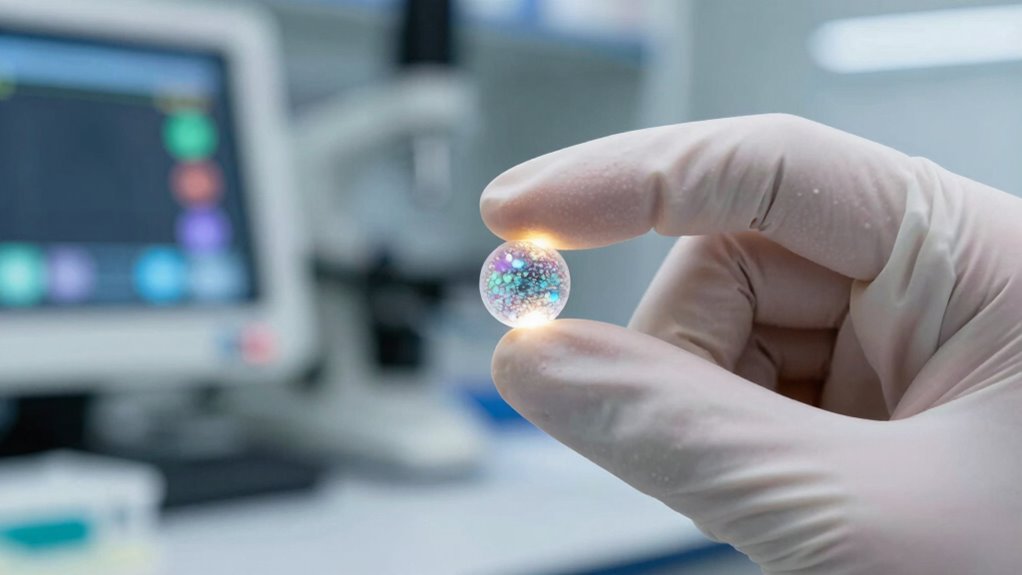
Nano delivery platforms could change future vaccines by making them more stable, targeted, and effective. They use nanoparticles to transport vaccine components directly to immune cells, boosting immune responses and reducing doses needed. These platforms also protect vaccines from environmental factors, making storage and distribution easier worldwide. Their ability to deliver multiple antigens at once can lead to broader protection. Keep exploring how this innovative tech could transform immunization approaches for global health.
Key Takeaways
- Nano delivery platforms improve vaccine targeting, enhancing immune recognition and response efficiency.
- They increase vaccine stability, protecting ingredients during transport and storage, especially in low-resource settings.
- These platforms enable multi-antigen delivery, supporting complex vaccines for broader protection.
- Incorporating adjuvants within nanoparticles boosts immune activation and reduces the number of doses needed.
- They pave the way for smarter, more accessible, and effective vaccines worldwide, revolutionizing global health.
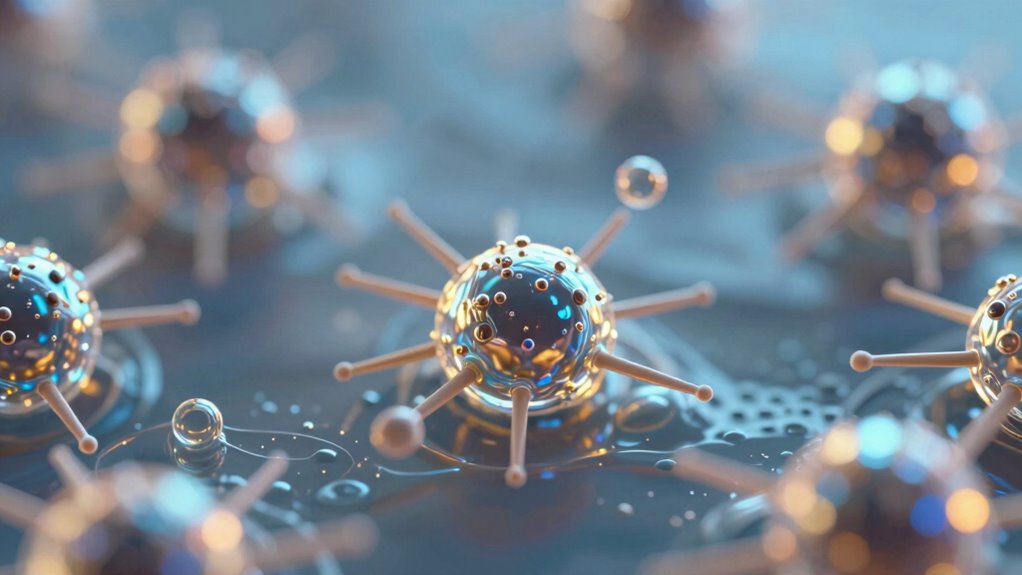
Have you ever wondered how tiny particles can revolutionize the way vaccines are delivered? It’s a fascinating concept that hinges on the power of nanotechnology. Nano delivery platforms utilize nanoparticles to carry vaccine components directly to your immune cells, making the process more efficient and targeted. One of the critical advantages of these platforms is their ability to maintain nanoparticle stability. When nanoparticles are stable, they don’t break down or clump together before reaching their destination, guaranteeing the vaccine’s effectiveness remains intact. This stability is essential because it ensures that your immune system receives the right dose of antigens at the right time, which is fundamental for building a strong and lasting immune response.
Moreover, nanoparticle stability plays an essential role in protecting sensitive vaccine ingredients from environmental factors like temperature, pH changes, and enzymatic degradation. This means that vaccines designed with nanotechnology could be stored and transported more easily, even in regions with limited cold chain infrastructure. Such stability is especially important for global health initiatives aiming to increase vaccine coverage in remote areas. This stability not only enhances the practicality of vaccine distribution but also reduces waste and increases accessibility worldwide.
Beyond stability, nano delivery platforms greatly amplify immune response enhancement. When vaccines are delivered via nanoparticles, they mimic the size and shape of pathogens, which helps your immune system recognize and respond to them more effectively. The nanoparticles can be engineered to include adjuvants—substances that boost immune activity—directly within the delivery system. This targeted approach ensures that your immune cells are activated more efficiently, leading to a quicker and more robust immune response. As a result, vaccines can achieve higher efficacy with potentially fewer doses, making immunizations quicker and more convenient.
Additionally, nano platforms allow for precise delivery of multiple antigens or therapeutic agents in a single shot. This versatility is especially valuable for developing vaccines against complex diseases like HIV, influenza, or even cancer, where a multi-faceted immune attack is often necessary. By enhancing immune response, nanoparticles can also promote longer-lasting immunity, reducing the need for frequent booster shots.
In essence, nano delivery platforms are positioned to transform vaccine technology by combining stability and targeted immune activation. They offer not only a more reliable way to deliver vaccines but also the potential to create more effective and accessible immunizations for people around the world. As research advances, these tiny particles could hold the key to a healthier future, with vaccines that are smarter, more stable, and capable of fighting diseases more efficiently than ever before. Understanding nanoparticle stability is crucial to appreciating how these innovations can revolutionize global health.

RNA Delivery Function for Anticancer Therapeutics (Nanotechnology for Drugs, Vaccines and Smart Delivery Systems)
As an affiliate, we earn on qualifying purchases.
As an affiliate, we earn on qualifying purchases.
Frequently Asked Questions
How Do Nano Delivery Platforms Compare in Safety to Traditional Vaccines?
You might find nano delivery platforms are generally safe, but nanoparticle toxicity is a concern that researchers continually assess. These platforms can enhance the immune response more effectively than traditional vaccines, potentially requiring lower doses. However, you should stay informed about ongoing studies, as safety profiles depend on the specific materials used and how they interact with your body. Overall, they show promise but need thorough testing for long-term safety.
What Are the Manufacturing Costs of Nano-Based Vaccine Platforms?
You’ll find that manufacturing costs of nano-based vaccine platforms are influenced by nanoparticle synthesis, which involves precise, often complex processes. These advanced techniques can increase initial expenses, but as production scales up, costs tend to decrease. Conducting thorough cost analysis helps identify opportunities for efficiency. Overall, while nano platforms may have higher upfront costs, their potential for improved efficacy and targeted delivery could justify investments, especially as technology matures and economies of scale develop.
Are Nano Delivery Systems Adaptable for All Types of Vaccines?
Nano delivery systems are highly adaptable for various vaccine types due to their nanoparticle targeting and delivery efficiency. You can engineer these systems to deliver vaccines against viruses, bacteria, or even cancer cells. Their flexibility allows customization of surface properties and payloads, ensuring best immune response. This versatility makes nano delivery platforms promising for developing a broad range of vaccines, potentially transforming how future immunizations are designed and administered.
How Long Do Nano Vaccine Formulations Remain Stable?
Nano vaccine formulations typically remain stable for several months to a few years, depending on their nanoparticle stability and storage conditions. You should store them as recommended—often refrigerated or frozen—to maximize their formulation shelf life. Proper handling minimizes degradation, ensuring the vaccine’s effectiveness over time. Factors like temperature, light, and pH can impact stability, so following manufacturer guidelines helps maintain nanoparticle stability and prolongs the vaccine’s potency.
What Regulatory Challenges Exist for Approving Nano-Based Vaccines?
Imagine steering a maze of shimmering glass walls—this is what regulatory pathways for nano-based vaccines can feel like. You face approval hurdles like unpredictable shadows, as agencies scrutinize safety, efficacy, and manufacturing consistency. Regulatory challenges include establishing standards for characterization, ensuring batch-to-batch uniformity, and proving long-term stability. Overcoming these obstacles requires close collaboration with regulators to develop clear guidelines, speeding your journey toward bringing innovative nano vaccines to the world.
nanoparticle vaccine storage
As an affiliate, we earn on qualifying purchases.
As an affiliate, we earn on qualifying purchases.
Conclusion
Nano delivery platforms are like tiny ships sailing through your body, guiding vaccines straight to their target with precision. They hold the promise of making future vaccines more effective, safer, and easier to administer. As these tiny vessels navigate the complex landscape inside you, they could revolutionize how we protect ourselves from diseases. With each breakthrough, you’re witnessing a new dawn in medicine — a future where science and innovation work hand in hand to keep you healthier than ever before.
multi-antigen vaccine platform
As an affiliate, we earn on qualifying purchases.
As an affiliate, we earn on qualifying purchases.

Synthetic Peptide Vaccine Models: Design, Synthesis, Purification and Characterization
As an affiliate, we earn on qualifying purchases.
As an affiliate, we earn on qualifying purchases.