
When nanoparticles enter biological environments, their surface properties can change rapidly due to interactions with proteins, lipids, and biomolecules, forming a protein corona that influences how they behave. These interactions may cause surface charge shifts, coating modifications, or loss of stability, affecting their targeting, circulation, and potential toxicity. Variations in pH, enzymes, and ionic strength further impact surface chemistry, making it essential to understand and control these changes. Keep exploring to discover how surface functionalization can help manage these complex behaviors.

Get the latest gadgets delivered free with Prime
- Fast, free delivery on millions of items
- Prime Video, Amazon Music and more included
- Member-only deals all year
Key Takeaways
- Nanoparticle surface properties are altered by adsorption of proteins, forming a dynamic protein corona that affects biological interactions.
- Surface charge and hydrophilicity influence protein binding, cellular uptake, and biodistribution in biological fluids.
- Exposure to enzymes and varying pH levels can modify surface chemistry and stability of nanoparticles.
- Biological environments can cause surface functionalization layers, like PEG, to degrade or detach, impacting circulation time.
- Surface properties tend to become less predictable due to complex interactions with biomolecules and environmental variability.
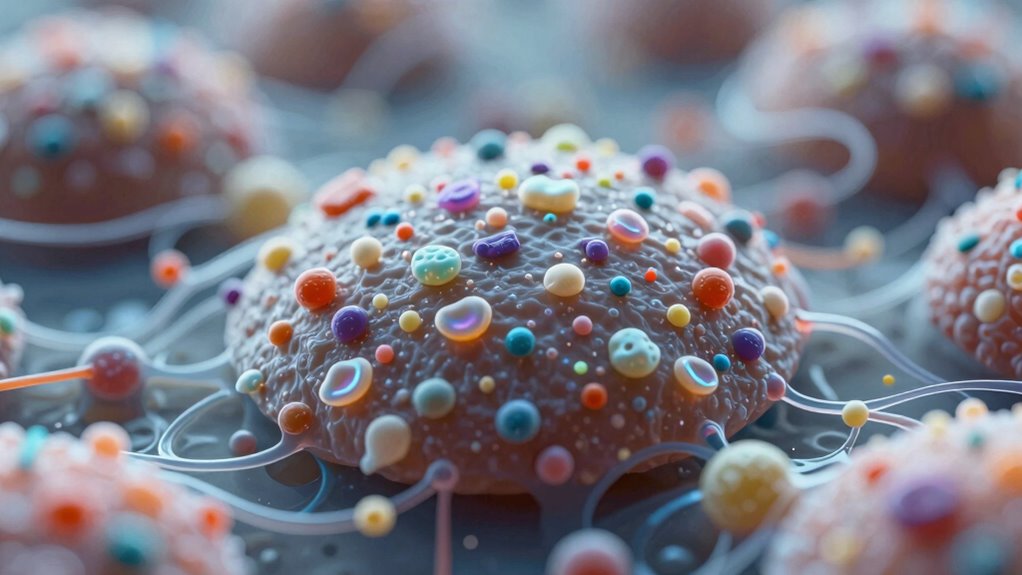
Understanding how nano surfaces behave in biological environments is essential for advancing nanomedicine and biomaterials. When nanoparticles enter a biological setting, their interactions with cells, proteins, and other biomolecules—collectively known as nano bio interactions—become complex and dynamic. These interactions largely depend on the surface properties of the nanoparticles, which can change dramatically once exposed to biological fluids. Your goal is to control and predict these behaviors, and that’s where surface functionalization plays a pivotal role. Surface functionalization involves modifying the nanoparticle surface with specific molecules to improve stability, targeting, and compatibility within biological systems.
Surface functionalization is key to controlling nanoparticle behavior and ensuring stability, targeting, and compatibility in biological environments.
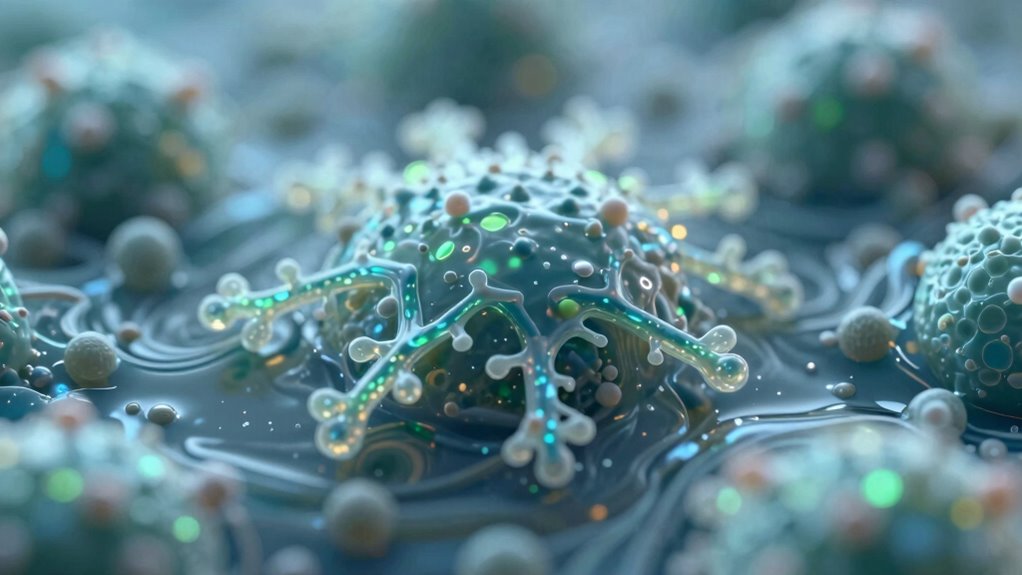
In biological environments, the nano surface doesn’t stay static; it quickly becomes coated with proteins, lipids, and other biomolecules, forming what’s called a “protein corona.” This corona substantially influences how the nanoparticle interacts with cells and tissues. If your nanoparticle’s surface isn’t properly functionalized, this corona can lead to unintended immune responses, rapid clearance from the bloodstream, or even toxicity. To avoid this, you can tailor the surface with hydrophilic coatings, such as polyethylene glycol (PEG), which reduce protein adsorption and help the particles evade immune detection. This process of surface functionalization fundamentally disguises the nanoparticle, allowing it to circulate longer and reach its target more effectively. Additionally, understanding nano bio interactions is crucial for predicting how nanoparticles will behave in different biological contexts.
The behavior of nano surfaces in biological settings also hinges on the surface charge. Negatively or positively charged surfaces tend to attract different types of proteins and cells, influencing biodistribution and cellular uptake. By carefully designing the surface charge through functionalization, you can steer the nanoparticles toward specific tissues or cell types, enhancing therapeutic efficacy. Additionally, surface modifications can introduce targeting ligands—antibodies, peptides, or small molecules—that recognize and bind to particular cell receptors. This targeted approach minimizes off-target effects and boosts treatment precision.
You need to recognize that the environment within the body is highly variable, with pH levels, ionic strength, and enzyme activity fluctuating across tissues. These factors can alter the surface chemistry of your nanoparticles, potentially affecting their stability and interactions. That’s why robust surface functionalization strategies are indispensable; they provide a protective layer that preserves the desired properties of the nanoparticles throughout their journey inside the body. Ultimately, understanding and controlling nano bio interactions through effective surface functionalization enable you to design smarter, safer, and more effective nanomedicines.
nanoparticle surface functionalization kit
As an affiliate, we earn on qualifying purchases.
As an affiliate, we earn on qualifying purchases.
Frequently Asked Questions
How Do Nano Surfaces Interact With Specific Cell Types?
You observe that nano surfaces influence cell interactions through cell adhesion, which depends on surface roughness. When the surface is rougher at the nanoscale, it provides more contact points, enhancing adhesion for specific cell types. Conversely, smoother surfaces may reduce adhesion. By tailoring surface roughness, you can direct cell attachment and behavior, making nano surfaces highly effective for biomedical applications like tissue engineering and targeted drug delivery.
Can Nano Surface Modifications Prevent Immune System Recognition?
You might think nano surface modifications can prevent immune system recognition through surface camouflage, but research shows it’s complex. While coating nanomaterials with specific molecules can promote immune evasion, immune responses vary widely. Some modifications may reduce detection temporarily, but complete immune evasion remains challenging. You should consider that adaptive immune mechanisms can still recognize altered surfaces, making it difficult to achieve long-term immune system invisibility solely through nano surface modifications.
What Are the Long-Term Stability Concerns of Nano Surfaces in Vivo?
You should be aware that long-term stability of nano surfaces in vivo faces challenges like surface degradation and chemical leaching. Over time, biological conditions can cause nano surfaces to break down or release harmful substances, potentially affecting biocompatibility and safety. You need to monitor these factors closely, as they can compromise the functionality of nano-enabled devices or therapies, emphasizing the importance of designing robust, stable nano surfaces for long-term applications.
How Does the Presence of Blood Proteins Alter Nano Surface Properties?
Ironically, blood proteins turn nano surfaces into unwanted sticky traps. When proteins adsorb onto the surface, they cause surface fouling, altering the original properties. This protein adsorption can mask or change the surface’s functionality, making it less effective or unpredictable. Instead of remaining inert, the nano surface becomes a biological playground, where its behavior is constantly reshaped by proteins, complicating its intended purpose.
Are There Environmental Factors That Influence Nano Surface Behavior?
Environmental factors like surface charge and pH profoundly influence nano surface behavior. You’ll notice that changes in pH alter the surface charge, which affects how nanoparticles interact with their surroundings. At different pH levels, nanoparticles may become more or less stable, impacting their aggregation and binding capabilities. By controlling these factors, you can tailor nano surfaces for specific applications, ensuring better performance and stability in biological environments.
As an affiliate, we earn on qualifying purchases.
Conclusion
As you explore nano surface behavior in biological environments, it becomes clear that surface interactions are complex and dynamic. While some theories suggest that surface modifications can predictably control biological responses, recent evidence indicates these interactions are more unpredictable due to protein corona formation and environmental variability. You should consider that the true behavior likely depends on multiple factors, making precise control challenging. Embracing this complexity will help you develop more effective nanomaterials for biomedical applications.
targeted nanoparticle drug delivery
As an affiliate, we earn on qualifying purchases.
As an affiliate, we earn on qualifying purchases.
As an affiliate, we earn on qualifying purchases.
Halloween Picks
halloween
As an affiliate, we earn on qualifying purchases.