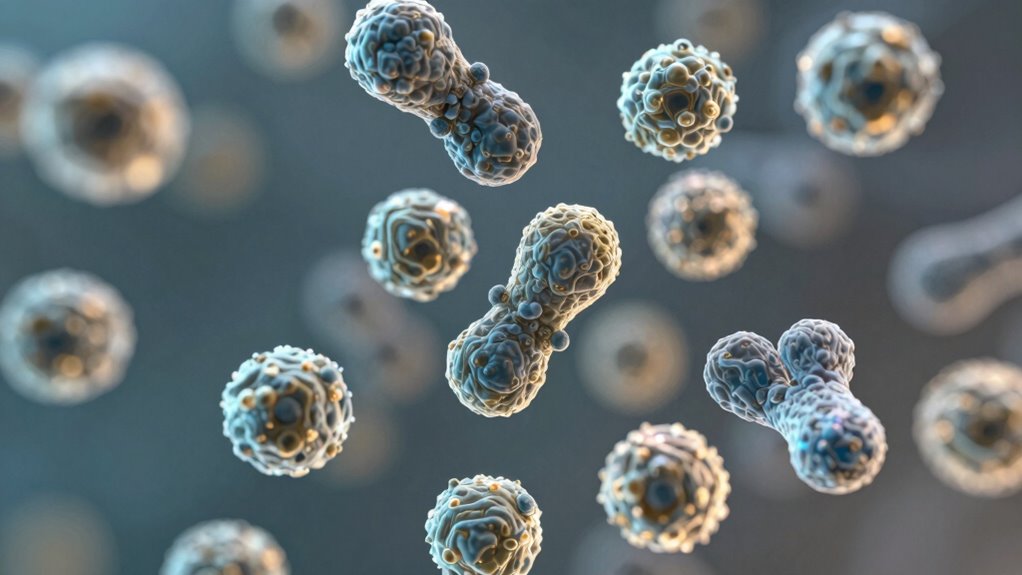

Your nanoparticle delivery depends on more than size because surface chemistry greatly influences how particles interact with proteins, cells, and tissues. It affects immune clearance, stability, and targeting ability. For example, surface modifications like PEGylation can hide particles from immune systems, while targeting ligands increase precision. Since these factors impact distribution and effectiveness, understanding the role of surface properties will help optimize your delivery system and improve outcomes. Keep exploring to discover how each element plays an essential role.

Get the latest gadgets delivered free with Prime
- Fast, free delivery on millions of items
- Prime Video, Amazon Music and more included
- Member-only deals all year
Key Takeaways
- Surface chemistry influences nanoparticle interactions with proteins, cells, and tissues, affecting biodistribution and targeting.
- Protein corona formation alters the nanoparticle’s biological identity, impacting efficacy and immune response.
- Surface modifications like PEGylation can reduce nonspecific binding and immune clearance, beyond size considerations.
- Cellular uptake and barrier crossing depend on surface properties, not just nanoparticle size.
- Balancing size and surface chemistry is essential for optimizing delivery, stability, and safety in biological environments.
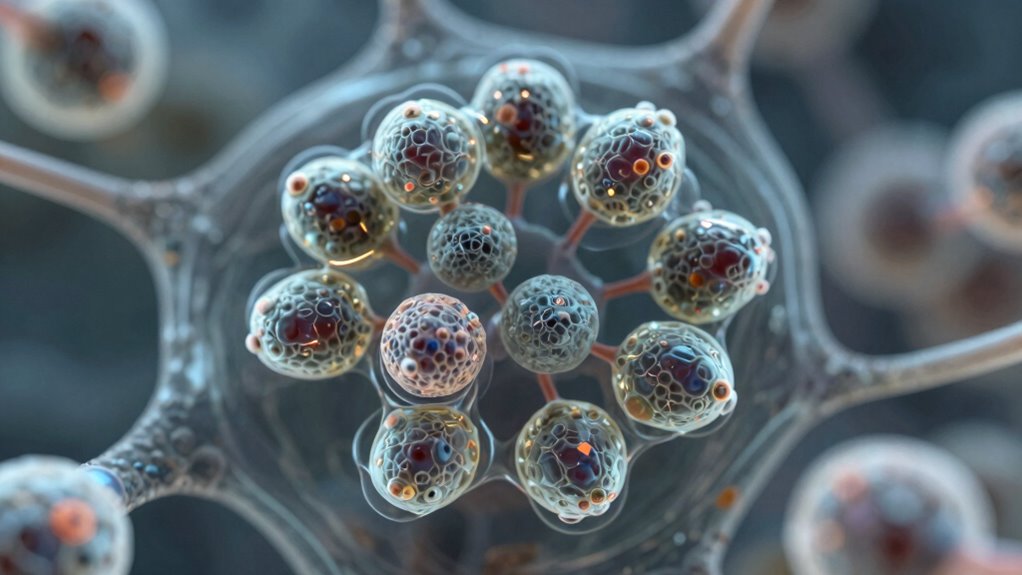
Biological interactions are complex and highly dependent on the nanoparticle’s surface properties. When you introduce a nanoparticle into the body, its surface chemistry determines how it interacts with proteins, cells, and tissues. These interactions can lead to the formation of a protein corona—a layer of biomolecules that adsorbs onto the nanoparticle surface—altering its identity and behavior. If the surface chemistry favors nonspecific protein binding, the nanoparticle might be quickly opsonized and cleared by immune cells, decreasing its availability at the target site. On the other hand, carefully engineered surface chemistry can minimize such interactions, ensuring the nanoparticle remains intact and functional until it reaches its destination.
Moreover, biological interactions influence cellular uptake and biodistribution. Surface modifications such as PEGylation (adding polyethylene glycol) can reduce nonspecific interactions, promoting a stealth effect that helps the nanoparticle circulate longer. Targeting ligands attached to the surface can enhance specific interactions with certain cell types, improving delivery precision. Size alone might determine whether a particle can pass through biological barriers, but surface chemistry dictates whether it will actually engage with or evade cellular components along the way. The interplay of these factors underscores why size alone cannot guarantee successful delivery.
In addition, the formation of a protein corona can significantly alter the nanoparticle’s biological identity, impacting its efficacy and safety. In essence, successful nanoparticle delivery hinges on a delicate balance between size, surface chemistry, and biological interactions. You need to contemplate all these elements to optimize each step—from circulation and immune evasion to tissue penetration and cellular entry. By understanding and controlling surface chemistry and biological interactions, you greatly improve your chances of delivering therapeutic agents precisely where they’re needed, making nanoparticle design a nuanced and multi-faceted process.
Popular right now

TCL 85 Designer Series QD-Mini LED TV (Model 85A400U) with Google Smart TV

Sony WH-1000XM6 Wireless Noise-Canceling Over-Ear Headphones, Blue, Bundle

KitchenAid Artisan 5-Quart Tilt-Head Stand Mixer, KSM150PS, Almond Cream
As an affiliate, we earn on qualifying purchases.
Frequently Asked Questions
How Does Surface Charge Influence Nanoparticle Delivery Efficiency?
Surface charge plays a vital role in your nanoparticle delivery efficiency. If your nanoparticles have a positive charge, they tend to interact more effectively with negatively charged cell membranes, enhancing uptake. Conversely, negatively charged particles may repel cell membranes, reducing delivery. A neutral or carefully balanced surface charge can minimize unwanted interactions and improve circulation time. By optimizing surface charge, you increase the likelihood of successful delivery to your target cells or tissues.
What Role Does Nanoparticle Shape Play in Targeting Specific Cells?
You find that nanoparticle shape plays a vital role in targeting specific cells through shape optimization, which influences cellular interaction. Spherical particles tend to have easier cellular uptake, while rod-shaped or disk-shaped particles can navigate biological barriers more effectively. By adjusting nanoparticle shapes, you enhance targeting precision, improve delivery efficiency, and reduce off-target effects. Ultimately, shape optimization helps you design nanoparticles that interact more selectively with your target cells.
How Do Environmental Conditions Affect Nanoparticle Stability?
Environmental conditions like pH sensitivity and chemical interactions markedly impact nanoparticle stability. You’ll find that changes in pH can alter surface charges, causing aggregation or disassembly, which affects delivery efficiency. Chemical interactions with ions or molecules in the environment can either stabilize or destabilize nanoparticles. As a result, understanding and controlling these conditions is essential to maintaining nanoparticle stability for targeted delivery, ensuring they reach their intended sites effectively.
Can Nanoparticle Composition Impact Immune System Recognition?
Yes, nanoparticle composition can profoundly impact immune system recognition. Your nanoparticles’ materials influence biomolecular interactions with immune cells, affecting immune evasion or activation. For example, certain compositions might hide from immune detection, while others trigger responses. By carefully choosing the right materials, you can minimize immune recognition, enhancing delivery efficiency. Understanding these interactions helps you design nanoparticles that better evade immune surveillance and deliver drugs more effectively.
What Are the Long-Term Effects of Nanoparticle Accumulation in Tissues?
You should be aware that long-term nanoparticle accumulation in tissues can lead to tissue toxicity, potentially damaging cells and impairing tissue function. Over time, this buildup may trigger chronic inflammation, causing persistent immune responses that can harm surrounding tissues. Monitoring nanoparticle persistence is essential, as ongoing exposure might result in adverse effects, emphasizing the need for designing biodegradable or easily cleared nanoparticles to minimize long-term tissue damage.
Conclusion
Remember, steering the world of nanoparticle delivery is like steering a ship through a complex sea — size is just one of many currents to contemplate. Your journey depends on understanding the intricate dance of surface chemistry, shape, and interactions with biological environments. When you master these elements, you open a treasure chest of targeted, efficient delivery. So, don’t just focus on size — embrace the full symphony that guides these tiny messengers to their destination.