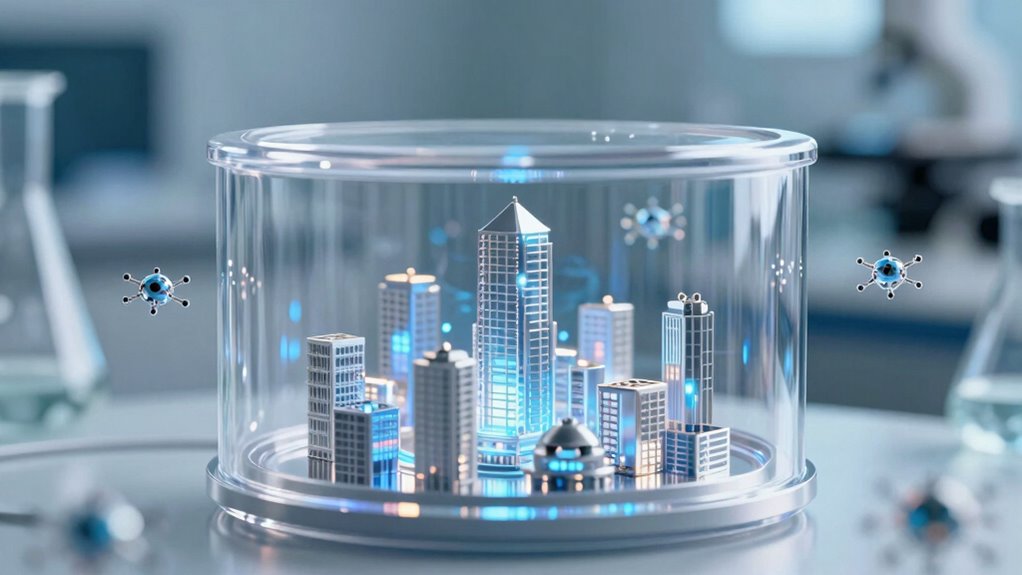

Nanotech supports better drug stability by encapsulating active ingredients in nanoparticles, which shield them from environmental factors like light, moisture, and pH changes. This helps prevent degradation and extends shelf life. Quantum dot imaging allows you to track drug distribution and spot stability issues early. By improving delivery precision and monitoring, nanotech makes medications more reliable and effective over time. Keep exploring to discover how these innovations are shaping safer, longer-lasting treatments.

Get the latest gadgets delivered free — and shop member deals
- Fast, free delivery on millions of items
- Access to Prime Big Deal Days deals on October 6–7
- Prime Video, Amazon Music and more included
Key Takeaways
- Encapsulation in nanoparticles shields drugs from environmental factors, reducing degradation and enhancing stability.
- Quantum dot imaging allows real-time monitoring of drug stability and distribution within biological systems.
- Nanoparticles improve drug bioavailability and protect active ingredients during storage and transport.
- Precise control over nanoparticle formulation enables targeted delivery, minimizing instability risks.
- Nanotech facilitates formulation adjustments based on detailed stability insights, leading to more durable pharmaceuticals.

Have you ever wondered how nanotechnology is transforming the stability of pharmaceuticals? It’s an exciting frontier where tiny innovations make a big difference. Nanoparticle delivery, for example, plays a vital role in protecting drugs from degradation. By encapsulating active ingredients within nanoparticles, you can shield them from environmental factors like light, moisture, and pH changes that typically cause instability. These nanoparticles are incredibly small, often less than 100 nanometers, allowing them to navigate biological environments with ease. This means the drugs they carry are less likely to break down before reaching their target, guaranteeing you get a more consistent and reliable dose. Plus, nanoparticle delivery can improve the solubility of poorly water-soluble drugs, which often face stability challenges in traditional formulations. This method not only extends shelf life but also enhances bioavailability, making treatments more effective over time.
On the diagnostic front, quantum dot imaging exemplifies how nanotech is advancing drug stability monitoring. These tiny semiconductor particles emit bright, stable light when excited, making them ideal for tracking drug distribution and stability within the body. When incorporated into drug formulations or delivery systems, quantum dots provide real-time, high-resolution images of how a drug disperses and degrades. This insight helps researchers identify potential stability issues early on, allowing for formulation adjustments that improve overall drug longevity. Quantum dot imaging also offers a powerful tool for personalized medicine, giving you a clearer picture of how a specific drug interacts with your unique biological makeup. This targeted approach reduces the chances of instability-related failures and supports the development of more stable, long-lasting pharmaceuticals.
Together, nanoparticle delivery and quantum dot imaging demonstrate how nanotech can revolutionize drug stability. They enable more precise control over drug formulation and delivery while providing detailed insights into how drugs behave within the body. This technology not only prolongs shelf life but also guarantees that medications remain effective until they reach you. As nanotech continues to evolve, you’ll likely see even more innovative ways to enhance drug stability, making treatments safer, more reliable, and better suited to your health needs. Essentially, by harnessing the power of nanotechnology, the pharmaceutical industry is making significant strides toward more stable, durable medications that can improve your health outcomes and quality of life.
drug nanoparticle delivery system
As an affiliate, we earn on qualifying purchases.
As an affiliate, we earn on qualifying purchases.
Frequently Asked Questions
How Does Nanotech Affect Drug Absorption Rates?
Nanotech improves drug absorption rates through nanoparticle delivery systems that enhance bioavailability. You benefit from surface modification of nanoparticles, which allows for targeted delivery and better interaction with cellular membranes. This means your medication can pass through barriers more efficiently, leading to faster and more effective absorption. By optimizing surface properties, nanotech guarantees your drug stays stable and is absorbed quickly, maximizing its therapeutic potential.
Are There Any Safety Concerns With Nanotech in Medicine?
You might worry about safety concerns with nanotech in medicine, like potential toxicity or unintended side effects. For example, a hypothetical nanoparticle-based drug could accidentally accumulate in organs, causing harm. Ethical implications and regulatory challenges arise, as scientists must guarantee these tiny particles don’t pose long-term risks. Ongoing research aims to address these concerns, but thorough testing and strict guidelines are essential for safe nanomedicine development.
Can Nanotech Extend the Shelf Life of All Drugs?
Nanotech can potentially extend the shelf life of many drugs through advanced nanotech storage and improved drug formulation. You might find that nanotech enhances stability by protecting active ingredients from degradation and controlling release rates. However, this isn’t universal; some drugs may not benefit due to their unique properties. Still, ongoing research aims to broaden nanotech’s applications, promising better stability and longer shelf lives for a variety of medicines.
What Types of Nanomaterials Are Used in Drug Stabilization?
You use various nanomaterials in drug stabilization, primarily through nanomaterial synthesis and surface modification. For instance, silica nanoparticles and liposomes are common, offering protective barriers that improve drug stability. Surface modification, like attaching polymers or targeting molecules, enhances compatibility and controlled release. These nanomaterials help prevent degradation, extend shelf life, and improve drug efficacy, making them essential tools in advancing pharmaceutical stability and delivery systems.
How Cost-Effective Is Nanotech for Pharmaceutical Companies?
Nanotech can be cost-effective for pharmaceutical companies by reducing drug production costs and boosting manufacturing efficiency. While initial investments might seem high, the long-term savings from improved stability, fewer recalls, and streamlined processes make it worthwhile. Imagine faster production lines and lower wastage—these benefits help you save money and stay competitive in a rapidly evolving market. So, nanotech isn’t just innovative; it’s a smart financial move.
quantum dot imaging for drug monitoring
As an affiliate, we earn on qualifying purchases.
As an affiliate, we earn on qualifying purchases.
Conclusion
By harnessing nanotechnology, you could markedly improve drug stability, ensuring medications last longer and work more effectively. Did you know that nanotech-based formulations can increase drug shelf life by up to 50%? This advancement not only reduces waste but also enhances patient safety by maintaining drug potency over extended periods. Embracing nanotech in pharmaceuticals could revolutionize how you store and use medicines, making treatments safer, more reliable, and accessible worldwide.
As an affiliate, we earn on qualifying purchases.
pharmaceutical encapsulation nanoparticles
As an affiliate, we earn on qualifying purchases.
As an affiliate, we earn on qualifying purchases.
Fall Picks
fall essentials
As an affiliate, we earn on qualifying purchases.