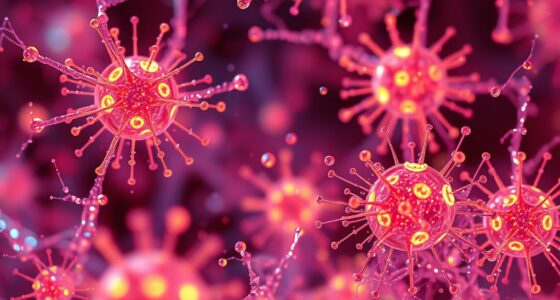
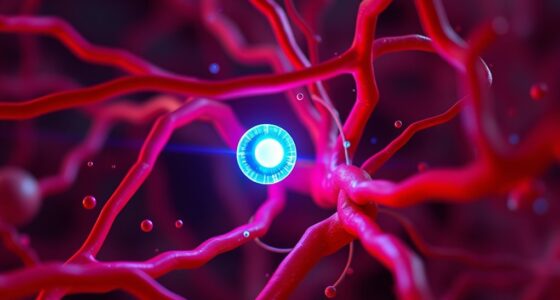
Nanotech for organ regeneration uses tiny materials to help your body rebuild damaged tissues. It allows precise control over cell growth and creates scaffolds that closely resemble natural structures, making transplant success more likely. Nanoscale drug delivery targets specific areas, boosting healing with minimal side effects. This combined approach supports faster, more effective organ regeneration. By exploring this innovative field further, you’ll discover how these advancements could transform future treatments and improve patient outcomes.
Key Takeaways
- Nanotechnology enables precise creation of biocompatible scaffolds that mimic natural tissue structures for organ regeneration.
- Nanoscale drug delivery systems target damaged tissues, enhancing regenerative efficiency with minimal side effects.
- Combining nanostructured scaffolds and targeted delivery supports the growth and integration of complex organs.
- Customizable nanomaterials facilitate tailored treatments for specific organs and patient needs.
- Advances in nanotech promote faster healing, reduced rejection, and improved outcomes in organ transplant and regeneration efforts.

Nanotechnology is revolutionizing the field of organ regeneration by enabling precise manipulation at the cellular and molecular levels. With this technology, you can design materials that mimic the body’s natural tissues, giving your cells the perfect environment to grow and repair. One of the key innovations is the development of biocompatible scaffolds, which serve as a framework for new tissue formation. These scaffolds are crafted at the nanoscale, allowing them to closely resemble the extracellular matrix — the natural support structure in your body. Because they’re biocompatible, they don’t provoke immune responses, reducing the risk of rejection and complications. This means your body can accept these scaffolds more readily, accelerating healing and tissue integration. Incorporating traditional healing principles into modern nanotech approaches can enhance the overall effectiveness of regenerative treatments.
Nanotechnology enables biocompatible nanoscale scaffolds to support tissue growth and reduce rejection risks.
Nanoscale drug delivery takes this precision even further by targeting specific cells or tissues with minimal side effects. Instead of relying on systemic treatments that affect the whole body, these tiny carriers deliver growth factors, stem cells, or other regenerative agents directly to the damaged area. The nanoscale size ensures that the drugs can penetrate deep into tissues and interact at the cellular level, boosting regeneration efficiency. This targeted approach not only enhances the effectiveness of the treatment but also reduces the amount of medication needed, lowering potential toxicity.
When you combine biocompatible scaffolds with nanoscale drug delivery, you create a powerful platform for organ regeneration. Imagine placing a scaffold at the site of injury or damage, which provides structural support for new tissue to grow. Simultaneously, nanoscale drug delivery systems release growth factors or stem cells precisely where they’re needed, stimulating cell proliferation and differentiation. This synergy accelerates tissue repair, improves functionality, and can even help regenerate complex organs like kidneys, livers, or hearts.
Furthermore, the ability to engineer these materials at the nanoscale means you can customize them for different organs and individual patient needs. You can modify the scaffold’s surface to promote specific cell attachment or adjust drug release rates for ideal regeneration. The versatility of nanotechnology allows for creating highly personalized treatments, which could revolutionize regenerative medicine. As research advances, you’ll see more innovative applications that harness these tiny tools to restore damaged organs, ultimately improving survival rates and quality of life for patients needing transplants or tissue repair.
biocompatible tissue scaffolds for organ regeneration
As an affiliate, we earn on qualifying purchases.
As an affiliate, we earn on qualifying purchases.
Frequently Asked Questions
How Do Nanotech Materials Interact With Human Immune Systems?
You might wonder how nanotech materials interact with your immune system. They are designed for high biocompatibility, meaning they usually don’t trigger a strong immune response. Scientists modify these nanomaterials to avoid immune detection, reducing inflammation and rejection risks. By carefully controlling size, surface properties, and composition, nanotech can seamlessly integrate with your tissues, promoting healing without provoking adverse immune reactions.
What Are the Long-Term Safety Concerns of Nanotech in Organ Regeneration?
You should be aware that long-term toxicity remains a concern, as nanomaterials might accumulate in the body and cause unknown health issues over time. Additionally, environmental impact is a significant factor, since improper disposal could introduce nanomaterials into ecosystems, affecting wildlife and water sources. Continuous research is essential to fully understand these risks, ensuring that nanotech applications in organ regeneration remain safe for both individuals and the environment.
How Affordable Will Nanotech-Based Organ Transplants Become?
You’ll be amazed by how affordable nanotech-based organ transplants become, transforming healthcare completely. As technology advances, cost reduction and accessibility improvements will make these procedures accessible to millions, not just the wealthy. While it’s hard to predict exact prices, expect a dramatic drop in costs, turning what once seemed like science fiction into everyday reality. Soon, organ transplants could be within everyone’s reach, saving countless lives.
Are There Ethical Debates Surrounding Nanotech in Organ Engineering?
Yes, there are ethical debates surrounding nanotech in organ engineering. You’ll find concerns about moral implications, such as altering human biology and potential unintended effects. Society’s acceptance varies, with some fearing misuse or inequality, while others see it as a breakthrough. You should consider these issues carefully, as they influence regulation, public trust, and the responsible development of nanotechnology to make sure it benefits everyone ethically and safely.
What Are the Current Regulatory Challenges for Clinical Nanotech Applications?
You should know that only about 10% of nanotech clinical trials get approved, highlighting tough regulatory challenges. Regulatory frameworks often lag behind innovation, complicating approval pathways for nanotech in medicine. You might find it frustrating that existing standards aren’t tailored for nanotech’s unique risks, delaying vital treatments. Managing this landscape requires careful compliance and advocacy to ensure safe, timely access to groundbreaking organ regeneration therapies.

Micro- and Nanoscale Technologies in Drug Delivery: A Contemporary Chemical Approach
As an affiliate, we earn on qualifying purchases.
As an affiliate, we earn on qualifying purchases.
Conclusion
Imagine wielding tiny architects that rebuild your organs like master sculptors carving masterpieces from within. Nanotech is your microscopic army, ready to mend and restore with precision and grace. As these nanobots weave through your body’s intricate tapestry, they breathe new life into damaged tissues, turning the future of medicine into a vibrant canvas. Embrace this revolutionary dance of atoms—your journey to renewal begins with these invisible heroes working tirelessly inside you.
organ regeneration nanotech products
As an affiliate, we earn on qualifying purchases.
As an affiliate, we earn on qualifying purchases.
nanotech tissue engineering kits
As an affiliate, we earn on qualifying purchases.
As an affiliate, we earn on qualifying purchases.