
Molecular machines turn tiny motions into useful work by converting stored energy into precise conformational changes. They harness energy from sources like chemical reactions, such as ATP hydrolysis, to create controlled movements like twists or shifts in structure. These movements can open channels, transport molecules, or assemble larger structures at the nanoscale. By understanding these processes, you’ll uncover how scientists mimic natural systems to develop advanced nanotechnologies and innovative solutions.
Key Takeaways
- Energy transfer induces conformational changes that generate controlled movements in molecular machines.
- Structural features in molecules direct energy input into specific, predictable motions.
- These tiny motions are harnessed to perform tasks like opening channels or assembling structures.
- Synthetic molecular machines mimic natural systems to convert motion into useful work.
- Controlled nanoscale movements enable applications in medicine, nanomanufacturing, and energy solutions.
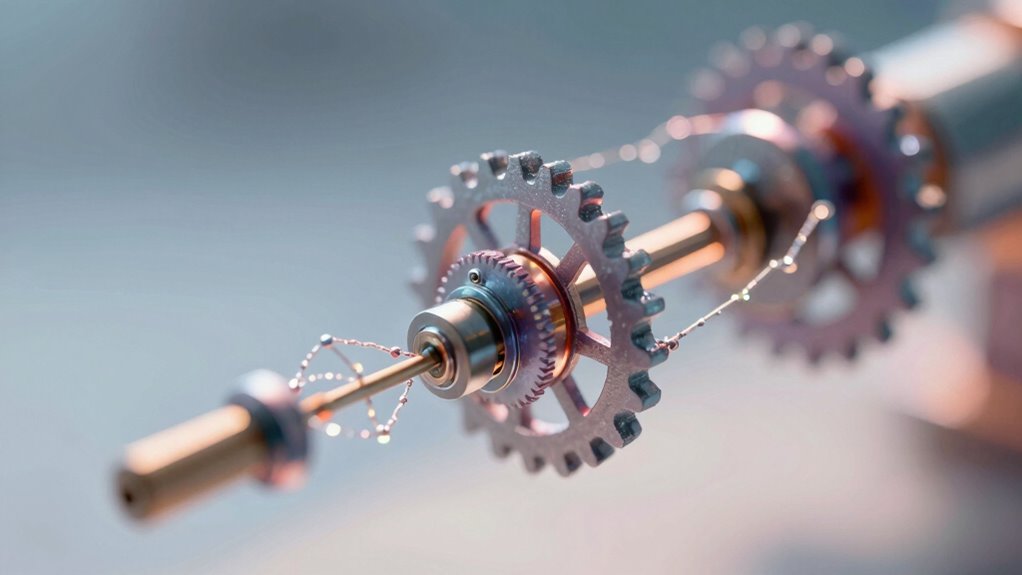
Have you ever wondered how nature manages complex tasks at a microscopic scale? The secret lies in incredibly sophisticated molecular machines that convert tiny, almost invisible motions into meaningful work. These tiny structures perform functions that keep cells alive, such as transporting nutrients or synthesizing essential molecules. Scientists have taken inspiration from these natural marvels to develop artificial systems through synthetic design, aiming to mimic their efficiency and precision. The goal is to engineer molecular machines capable of performing specific tasks, from targeted drug delivery to nanoscale manufacturing.
At the heart of these molecular machines is the principle of energy transfer. You might imagine it as a delicate dance where energy flows seamlessly from one part of the machine to another, driving motion with minimal waste. In natural systems, energy is often transferred through chemical reactions, like ATP hydrolysis, which powers motion and work at the molecular level. Synthetic design seeks to recreate these energy transfer processes using man-made molecules, such as rotaxanes or catenanes, which can undergo controlled movement when energized. By designing molecules with specific structural features, scientists guarantee that energy input results in predictable, directed motion. Understanding these processes is essential for advancing the field of molecular machinery.
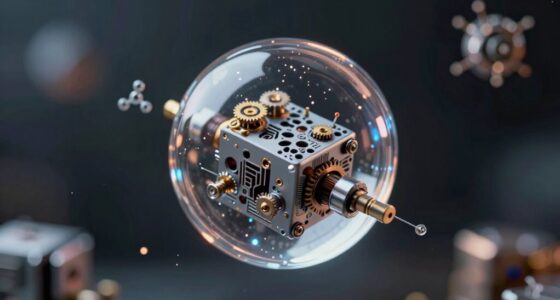
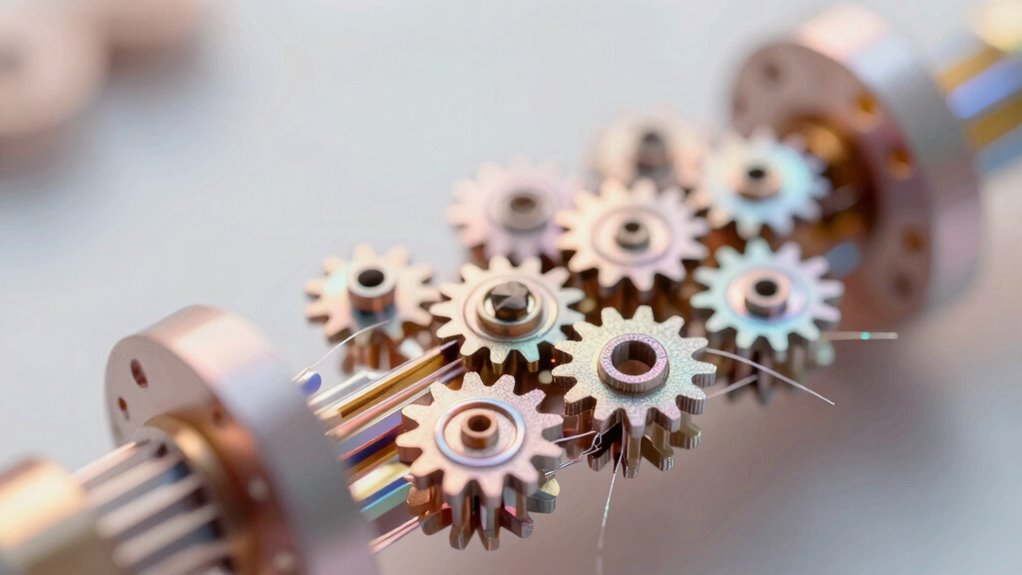
Once energy is transferred into these molecular structures, it triggers conformational changes—tiny twists, bends, or shifts—that produce movement. This is similar to how a gear system works in a macroscopic machine, but on a minuscule scale. These movements aren’t just random jiggling; they’re carefully orchestrated steps that result in the machine’s overall function. For example, a molecular motor might rotate or walk along a surface, carrying cargo or facilitating chemical reactions. You can think of this as turning tiny cogs inside a microscopic engine, where each step is powered by the energy transferred into the system.
The real magic happens when these movements translate into useful work. Instead of just oscillating or spinning aimlessly, molecular machines use their motion to accomplish specific tasks. This could be opening and closing channels in cell membranes or assembling larger structures from smaller components. By harnessing synthetic design and efficient energy transfer, researchers are creating systems that turn microscopic motion into practical, real-world applications. The ability to control and direct such tiny motions opens up a new frontier in nanotechnology, promising revolutionary advances in medicine, materials science, and energy. As you explore this fascinating world, it becomes clear that the tiniest motions, when properly managed, can lead to enormous possibilities.

AnchorChef Molecular Gastronomy Foam Generator, Foam Generating Kit, Professtional Chef Cooking Tool (silver)
Efficient Foaming Principle -Molecular gastronomy foam generators use advanced technology. Add lecithin to the liquid to be foamed…
As an affiliate, we earn on qualifying purchases.
As an affiliate, we earn on qualifying purchases.
Frequently Asked Questions
How Do Molecular Machines Compare to Macroscopic Machinery in Efficiency?
You’ll find that molecular machines excel in efficiency compared to macroscopic machinery because of their nanotech mechanics and energy conversion processes. They convert energy directly at a molecular level, minimizing losses common in larger systems. This precise control allows them to perform specific tasks with minimal waste, making them incredibly efficient. While macroscopic machines are powerful, molecular machines harness energy more effectively, enabling remarkable feats on a tiny scale.
What Are the Potential Medical Applications of Molecular Machines?
You can leverage molecular machines for revolutionary medical applications like targeted drug delivery, ensuring medicines reach specific cells without side effects. They also hold promise in disease detection by identifying biomarkers at a molecular level, enabling early diagnosis. By harnessing their tiny, precise movements, you could develop smart therapies and diagnostic tools that are more effective, less invasive, and tailored to individual patient needs, transforming healthcare outcomes markedly.
How Are Molecular Machines Designed and Synthesized in Labs?
You design and synthesize molecular machines using synthetic design and nanofabrication techniques. You start by creating detailed molecular models, then choose appropriate building blocks. You apply precise chemical reactions, employ self-assembly processes, and utilize advanced nanofabrication methods to assemble components at the nanoscale. This meticulous process guarantees your molecular machines are functional, efficient, and tailored for specific tasks, pushing the boundaries of nanotechnology and molecular engineering.
What Challenges Exist in Controlling Molecular Machine Operations?
Controlling molecular machine operations is challenging because you must achieve precise synthetic control over their movements. Thermal fluctuations constantly jostle these tiny machines, making reliable operation difficult. You need to develop strategies that stabilize and direct their motion despite these fluctuations. Balancing these factors requires innovative approaches, such as designing more robust molecular structures or external stimuli control, to guarantee consistent, predictable performance of these nanoscale devices.
Can Molecular Machines Repair or Replicate Themselves?
Yes, some molecular machines can repair or replicate themselves through self-repair mechanisms and replication processes. These tiny structures use specialized enzymes and energy sources to fix damages or make copies, functioning similarly to biological systems. You can think of them as tiny factories that maintain and reproduce themselves, ensuring continuous operation. Researchers are actively exploring how to enhance these capabilities, aiming for more autonomous and resilient nanomachines in the future.

LIQUI MOLY Molygen New Generation 5W-30 Motor Oil | 5 Liter | Fully synthetic engine oil | SKU: 20228
Ensures that the motor oil is of low viscosity with a high shear stability and reliably prevents the…
As an affiliate, we earn on qualifying purchases.
As an affiliate, we earn on qualifying purchases.
Conclusion
You now see how molecular machines gently guide tiny movements to perform essential tasks, almost like delicate dancers in a grand performance. These minuscule marvels quietly power the future of technology, turning subtle motions into remarkable work. As scientists continue to explore their secrets, you’ll find yourself inspired by nature’s own intricate craftsmanship. In this dance of molecules, the smallest steps hold the promise of big breakthroughs, quietly shaping the world of tomorrow.

Nanoscale Devices: Fabrication, Functionalization, and Accessibility from the Macroscopic World (NanoScience and Technology)
As an affiliate, we earn on qualifying purchases.
As an affiliate, we earn on qualifying purchases.
A Biologist’s Guide to Artificial Intelligence: Building the foundations of Artificial Intelligence and Machine Learning for Achieving Advancements in Life Sciences
As an affiliate, we earn on qualifying purchases.
As an affiliate, we earn on qualifying purchases.