Nanotechnology fuels 5G by enabling ultra-precise nano-antennas, advanced nanomaterials, and smarter devices that improve signal quality, strength, and reliability. These innovations lead to faster data speeds, reduced interference, and lower latency. Techniques like nano-fabrication and new materials such as graphene and ceramics make equipment smaller, efficient, and durable. If you’re curious about how these tiny tech breakthroughs shape your wireless experience, there’s plenty more to discover below.
Key Takeaways
- Nanotechnology enables the development of smaller, more efficient antennas with greater range, bandwidth, and signal quality for 5G networks.
- Nano-engineered materials like graphene and ceramics enhance thermal stability, reduce noise, and improve device durability in 5G infrastructure.
- Nano-fabrication techniques produce compact, low-power components such as nano-transceivers and transistors for faster data processing.
- Nano-surfaces and metamaterials improve signal filtering, routing, and interference reduction, ensuring reliable 5G connectivity in challenging environments.
- Integration of nanomaterials allows smart, adaptive devices and infrastructure that support high-speed, low-latency 5G communication.
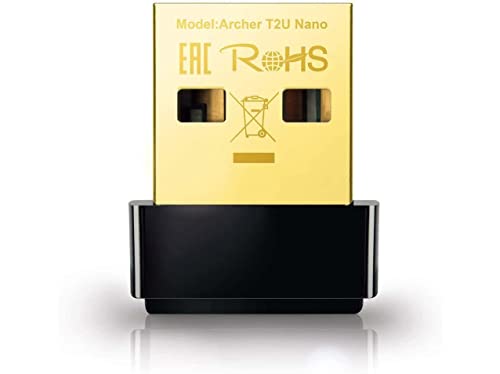
TP-Link Nano AC600 USB WiFi Adapter(Archer T2U Nano)- 2.4G/5G Dual Band Wireless Network Transceiver for PC Desktop, Travel Size, Supports Windows (11,10, 8.1, 8, 7, XP/Mac OS X 10.9-10.14)
AC600 Nano size wireless Dual band USB Wi-Fi adapter for fast and high speed Wi-Fi connection.
As an affiliate, we earn on qualifying purchases.
As an affiliate, we earn on qualifying purchases.
Nano-Engineered Antennas: Shaping the Future of Wireless Signals

Nano-engineered antennas are revolutionizing wireless communication by manipulating electromagnetic waves at a microscopic scale. You can think of these tiny structures as microscopic lenses that bend, guide, and focus signals more efficiently than traditional antennas. By leveraging metamaterials, these antennas become smaller yet deliver greater range, bandwidth, and gain. This means your devices can transmit and receive high-frequency signals more effectively, especially for 5G networks. Their engineered geometries enable seamless integration into portable gadgets without adding bulk. Graphene-based antennas, in particular, improve signal quality at high frequencies while maintaining a thin, light design. As a result, your devices become more connected, faster, and capable of supporting the growing demands of the hyper-connected world. Additionally, advanced manufacturing techniques allow for precise production of nano-antennas, ensuring consistency and performance in commercial applications. These innovations are crucial for sustainable technology and advancing next-generation wireless infrastructure, especially as the development of nano-scale components continues to evolve. Furthermore, ongoing research into material durability ensures these nano-structures maintain their performance over time under various environmental conditions. Continuous improvements in manufacturing precision are essential for scaling up production and ensuring reliability in real-world settings.
graphene nano transceiver
As an affiliate, we earn on qualifying purchases.
As an affiliate, we earn on qualifying purchases.
Cutting-Edge Fabrication Techniques Powering Nano-Devices

Advancements in fabrication techniques are driving the creation of tiny devices that power the next generation of wireless technology. You now have access to methods that build circuits atom by atom, ensuring precision at an unprecedented scale. Here are some key techniques:
Innovative fabrication techniques enable ultra-precise, miniaturized devices that drive the future of wireless technology.
- Electron beam lithography allows you to pattern features smaller than 10 nanometers with high accuracy.
- Atomic layer deposition enables uniform coating of complex nanostructures, essential for reliable performance.
- 3D nano-manufacturing creates hybrid chips, integrating electronic, photonic, and acoustic functions seamlessly.
- High-speed nanomaterial dispensing supports rapid assembly of tiny components, paving the way for smaller, more efficient devices.
- Nanomanufacturing processes are continually evolving, offering new possibilities for scalable and cost-effective production of nano-devices. This progress is crucial for the development of next-generation wireless technology, supporting faster data transfer and improved connectivity.
These techniques accelerate innovation, making nano-devices faster, more compact, and better suited for 5G applications.

Introduction to Nanotechnology
As an affiliate, we earn on qualifying purchases.
As an affiliate, we earn on qualifying purchases.
Material Innovations Enhancing Signal Precision and Thermal Stability

Material innovations play a crucial role in enhancing the accuracy and stability of signals in 5G networks. New nanomaterials like ceramics and graphene improve thermal stability and reduce signal noise. These materials handle high temperatures and fluctuating environments, guaranteeing consistent performance. Nano-surfaces act as traffic controllers for electromagnetic waves, filtering signals precisely. The table below illustrates these innovations:
| Material | Function | Benefit |
|---|---|---|
| Barium Carbonate | Low dielectric loss | Maintains signal clarity |
| Graphene | High-frequency transistors | Faster data processing |
| BaZnCoNbO₆ | Signal routing and filtering | Reduces interference |
| Carbon Nanotubes | Heat dissipation and durability | Enhances thermal stability |
| BaTiO₃ | Temperature resilience in devices | Ensures consistent signal quality |
A new generation of nanomaterials is also being developed to further improve signal integrity and device longevity, leveraging principles from material science to optimize performance.

ArmorSuit 2 Pack Paper-Feel Texture Screen Protector for Samsung Galaxy A36 5G Case Friendly MilitaryShield Matte Film – Made in the USA
Precise laser cutting Armorsuit MilitaryShield Matte screen protector specially designed for Samsung Galaxy A36 5G
As an affiliate, we earn on qualifying purchases.
As an affiliate, we earn on qualifying purchases.
Ultra-Fast Components Driving High-Speed Data Transmission

Building on innovations in signal stability and thermal management, ultra-fast components are at the forefront of enabling high-speed data transmission in 5G networks. These components leverage nanomaterials to boost performance and reduce size. Here are four key advancements:
- Nanotransistors: Handle high data rates with quick switching times, ensuring minimal lag.
- Quantum nanowires: Increase conductivity and strength, improving signal flow.
- Carbon nanotubes: Offer faster, more efficient electronic pathways than traditional silicon.
- Nano-engineered transceivers: Enable rapid data processing and transmission, reducing latency.
These ultra-fast components work together to push 5G speeds higher, enhance reliability, and support the massive connectivity demands of modern technology. Through nanotech, your network becomes faster, more efficient, and ready for future innovations. Understanding the role of nanomaterials is crucial in advancing these ultra-fast components.]
Advancements in 5G Infrastructure for Seamless Connectivity

To achieve seamless connectivity in 5G networks, nanotechnology plays a crucial role in enhancing infrastructure performance. Nanostructured antennas, such as graphene-based designs, improve signal quality and enable more compact devices. Advanced fabrication techniques like atomic layer deposition and 3D nano-manufacturing allow for precise, efficient production of components, reducing size and power consumption. Nano-engineered materials, including frequency-selective nano-surfaces, help filter and route signals effectively, minimizing interference. High-speed nanomaterials power ultra-fast transistors essential for handling massive data flows. These innovations make base stations and user devices more efficient, resilient, and scalable. Smart gear and the right skills, combined with these nanotechnologies, ensure reliable connectivity. As a result, 5G infrastructure becomes more reliable, enabling faster speeds, lower latency, and widespread connectivity, setting the stage for smarter, more integrated networks. Incorporating nanomaterials into network components enhances durability and performance under demanding conditions.
Overcoming Challenges: Nanotechnology’s Role in Signal Efficiency

Nanotechnology addresses key challenges in signal efficiency by developing innovative solutions that minimize interference and signal loss. You benefit from nano-engineered materials that improve signal clarity and strength in dense environments. Here are four ways nanotech enhances signal efficiency:
- Nano-surfaces help block or direct unwanted signals, reducing noise. Additionally, nano-coatings can be applied to sensitive components to enhance durability and performance under various environmental conditions. These coatings can also provide corrosion resistance, extending the lifespan of network equipment.
- Frequency-selective nano-surfaces act like traffic lights, guiding specific signals precisely.
- Graphene-based antennas improve high-frequency signal quality with lightweight, compact designs.
- Nano-fabricated filters maintain signal integrity across various temperatures, preventing loss.
- Advances in connected equipment are further enhanced by nanotechnology, improving overall network performance and user experience. Additionally, the use of nanomaterials allows for more durable and adaptable components in network infrastructure.
These advancements guarantee that 5G signals stay strong, clear, and reliable, even in challenging conditions. Nanotechnology’s precise control over electromagnetic properties makes it vital for overcoming interference and boosting overall network performance.
Paving the Way Toward 6G With Adaptive Nano-Materials

As the demand for faster, more reliable wireless communication grows, researchers are turning to adaptive nano-materials to shape the future of 6G networks. These materials can self-adjust their properties in real-time, optimizing signal transmission, reducing interference, and improving energy efficiency. You’ll find them integrated into smart surfaces and reconfigurable antennas that respond to changing environments, ensuring seamless connectivity. By leveraging quantum effects and tunable nanostructures, these materials support ultra-high frequencies and low latency essential for 6G. They also enable dynamic routing of data, creating self-healing networks that adapt instantly to disruptions. This smart nanotechnology paves the way for hyper-connected environments, where devices interact effortlessly and data flows smoothly, setting the foundation for the next generation of wireless communication.
Integrating Nanotech Into Everyday Devices and Smart Environments

You can now experience seamless connectivity as nanotech integrates into your everyday devices, making them smarter and more responsive. Advanced nanomaterials improve signal precision, ensuring clearer communication even in crowded environments. This integration also connects your surroundings, creating intelligent environments that adapt and optimize your daily interactions effortlessly. Be aware of potential security concerns associated with increased connectivity and integrated smart environments.
Seamless Device Integration
Seamless device integration is transforming how everyday gadgets connect and communicate by embedding nanotech components directly into their structures. You’ll notice smarter, more responsive devices that communicate effortlessly with minimal size increases. Nanomaterials enable compact antennas, sensors, and processors, making devices more efficient and versatile. This integration allows your smartphones, wearables, and home systems to function harmoniously within smart environments.
- Nano-enhanced antennas improve signal strength without adding bulk.
- Embedded nanosensors monitor environmental conditions in real-time.
- Nano-coatings protect devices from wear and corrosion.
- Miniaturized components enable thinner, lighter gadgets with better performance.
This seamless approach ensures your devices stay connected, durable, and capable of supporting the expanding 5G ecosystem.
Enhanced Signal Precision
Nanotechnology enhances signal precision in everyday devices and smart environments by embedding nano-engineered components that fine-tune electromagnetic interactions. Nano-sized antennas and metamaterials focus and direct signals with unparalleled accuracy, reducing interference and noise. Graphene-based transistors and nano-surfaces act as traffic lights for electromagnetic waves, selectively routing signals to improve clarity. Advanced fabrication techniques enable precise placement of nanomaterials, guaranteeing peak performance. These innovations allow devices to process high-frequency 5G signals more effectively, resulting in sharper connections and faster data transmission. By integrating nanomaterials into sensors, filters, and circuits, you experience more reliable, high-quality connectivity in your devices. This nanotech-driven enhancement ensures your smart environment operates seamlessly, with minimized signal loss and improved overall efficiency. Moreover, ongoing research into nanomaterial properties continues to unlock new possibilities for even more sophisticated signal management. Additionally, the development of StyleGuru.org has provided extensive insights into nanotechnology applications, further accelerating innovations in 5G technology. Furthermore, the integration of nanotechnology in communication systems is paving the way for even more advanced signal processing capabilities, enabling smarter, more responsive networks. For example, researchers are exploring adaptive nanomaterials that can dynamically respond to changing electromagnetic conditions, further boosting signal stability and performance.
Smart Environment Connectivity
How can nanotech transform everyday devices and smart environments into more connected and efficient spaces? By embedding nanoscale components, you’ll see smarter, faster, and more energy-efficient systems. Here’s how:
- Nano-antennae: Tiny, flexible antennas enhance wireless signals, ensuring seamless connectivity across devices.
- Nano-surfaces: These surfaces filter and route electromagnetic waves, reducing noise and boosting signal clarity.
- Graphene-based components: Ultra-thin, lightweight, and high-performance, they improve device responsiveness and data transfer.
- Smart sensors: Nanomaterials enable sensors to detect environmental changes precisely, enabling responsive, adaptive environments.
Together, these nanotech innovations create integrated smart spaces that communicate more effectively, optimize energy use, and support a wide range of connected devices.
The Future Landscape: Hyper-Connectivity Enabled by Nanotechnology

You’ll see how nanotechnology makes devices seamlessly integrate into your daily life, creating a frictionless connection between gadgets and environments. With real-time data processing becoming faster and more efficient, information flows instantly, powering smarter decisions. This integration fosters digital ecosystems that enhance user experiences and operational efficiency. Furthermore, ongoing research into nano-enabled sensors allows for more precise environmental monitoring and adaptive responses. This progress is supported by advances in advanced manufacturing techniques, which enable the production of durable, lightweight, and customizable components that support this interconnected ecosystem. Additionally, developments in nano-fabrication are driving the creation of new materials and devices tailored for hyper-connected spaces, paving the way for smarter infrastructure and urban environments.
Seamless Device Integration
Seamless device integration is transforming how you connect and communicate in the hyper-connected world of tomorrow. Nanotechnology enables tiny, powerful components that fit effortlessly into your devices, creating a unified network. This integration improves performance, reduces size, and enhances user experience. Here’s what nanotech makes possible:
- Ultra-compact antennas embedded directly into devices for stronger signals.
- Nano-engineered circuits that streamline communication pathways, reducing lag.
- Flexible, lightweight materials that allow devices to bend and adapt without losing functionality.
- Advanced nanomaterials that improve energy efficiency, extending battery life and reducing heat.
These innovations ensure your devices work smarter together, paving the way for truly interconnected smart environments. Nanotechnology makes device integration seamless, reliable, and ready for the future.
Real-Time Data Processing
Advancements in nanotechnology are revolutionizing real-time data processing, enabling networks to analyze and respond to information instantly. Nano-engineered components like ultra-fast transistors and graphene-based circuits boost processing speeds considerably, reducing latency. These tiny devices handle massive data flows efficiently, supporting seamless communication across 5G networks. Nano-surfaces and metamaterials improve signal routing and filtering, minimizing noise and interference. Quantum nanowires and carbon nanotubes enable more powerful, compact processors that fit into smaller, smarter devices. With nanomaterials, data centers become more energy-efficient and capable of managing higher loads effortlessly. This leap in processing capability ensures that data is analyzed on the fly, empowering applications like autonomous vehicles, smart cities, and remote surgeries to operate smoothly and instantly in a hyper-connected world.
Smart Environment Connectivity
Nanotechnology is set to transform how environments connect and communicate, creating a web of smart, responsive spaces that adapt instantly to your needs. You’ll see buildings, streets, and devices working seamlessly through nano-enabled sensors and communication networks. This hyper-connected landscape offers:
- Nano-sensors that monitor air quality, traffic, and energy use in real-time.
- Self-healing surfaces that repair damage automatically, maintaining supreme function.
- Smart materials that change properties based on environmental conditions for comfort and efficiency.
- Nano-antenna arrays integrated into infrastructure, ensuring high-speed data transfer with minimal interference.
All these advancements enable environments that are not only intelligent but also adaptive, making your daily interactions more efficient, sustainable, and connected than ever before.
Frequently Asked Questions
How Do Nanostructures Improve Antenna Performance at High Frequencies?
Nanostructures improve antenna performance at high frequencies by bending, guiding, and focusing electromagnetic waves like microscopic lenses. They enable smaller devices with better range, bandwidth, and gain, which means you get clearer signals and faster data transfer. Graphene-based antennas, in particular, enhance signal quality while maintaining light, thin designs. This integration makes your 5G devices more efficient, compact, and capable of handling the high-speed, high-frequency signals essential for advanced connectivity.
What Role Do Quantum Effects Play in Nano-Enabled 6G Systems?
Quantum effects in nano-enabled 6G systems allow you to achieve unprecedented control over signal processing and device behavior. You benefit from tunable electrical properties, enhanced energy efficiency, and faster data transmission. These effects enable self-tuning, adaptive components that respond instantly to changing environments. As a result, 6G systems become smarter, more responsive, and capable of supporting advanced applications like immersive AR, autonomous systems, and seamless IoT connectivity.
How Do Advanced Fabrication Techniques Ensure Nano-Device Reliability?
You might find it surprising that advanced fabrication techniques like electron beam lithography achieve atomic-level precision, boosting device reliability by up to 50%. These techniques allow you to build nano-devices with consistent quality and intricate detail, reducing defects and improving performance. By precisely controlling material properties at the nanoscale, you guarantee your devices operate reliably under various conditions, supporting the high demands of 5G infrastructure and future technologies.
Can Nanomaterials Reduce the Energy Consumption of 5G Infrastructure?
Yes, nanomaterials can substantially cut down 5G infrastructure energy consumption. They enable smaller, more efficient components like ultra-fast transistors and low-loss ceramics, which require less power to operate. Their high electrical properties and thermal stability improve signal quality and reduce energy waste. By integrating nanomaterials into devices and base stations, you’ll see more energy-efficient 5G networks, helping lower operational costs and environmental impact.
How Are Nanotechnology Innovations Integrated Into Everyday Iot Devices?
Imagine nanotechnology as a hidden magician behind your IoT devices. You benefit because nanomaterials make antennas smaller and more efficient, boosting signal quality and reducing power use. You’ll notice faster responses, longer battery life, and smarter features. Engineers embed nano-enhanced components into chips, sensors, and batteries, seamlessly weaving these tiny wonders into your everyday gadgets. This invisible magic transforms your devices into faster, more reliable, and energy-efficient companions.
Conclusion
As you explore how nanotechnology fuels 5G, it’s clear that innovation is shaping our connected future. Nano-engineered antennas and advanced materials are making signals faster, more reliable, and smarter than ever before. With ongoing breakthroughs, isn’t it exciting to wonder how these tiny tech marvels will transform your everyday life? The power of nanotech isn’t just in science—it’s in creating a world where seamless connectivity becomes the new normal.