

Choosing smart home security cameras is less about picking a universally better technology and more about deciding how much installation work you will accept for dependable coverage. Wired cameras connect to power, a recorder, or a network cable; wireless cameras typically send video over Wi-Fi and may run on batteries or plug-in power. The word “wireless” describes the data connection, not necessarily the power source.

Get the latest gadgets delivered free with Prime
- Fast, free delivery on millions of items
- Prime Video, Amazon Music and more included
- Member-only deals all year

Blink Outdoor 4 Security Camera and Wired Doorbell 2K+ Bundle, 5 Cameras, Sync Module Core, Black
- ✔ Outdoor camera resolution: 1080p HD
- ✔ Doorbell resolution: 2K (1920 × 1920)
- ✔ Outdoor camera field of view: 143° diagonal
Blink Outdoor 4 Security Cameras and Wired Doorbell 2K+ with Sync Module Core, 3 Cameras
- ✔ Outdoor camera resolution: 1080p HD
- ✔ Doorbell resolution: 2K (1920 × 1920)
- ✔ Outdoor camera field of view: 143° diagonal
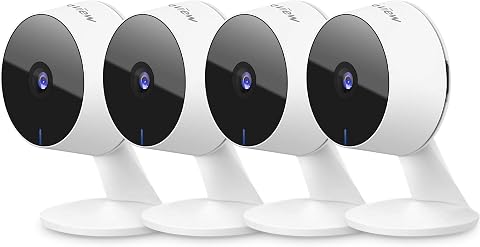
LaView 1080p Indoor Wi-Fi Security Cameras, 4-Pack
- ✔ Quantity and resolution: Four cameras; 1080p video
- ✔ Field of view: 84 degrees
- ✔ Night vision: Infrared, up to 33 feet
That distinction shapes the real tradeoff: wired setups are usually better for permanent, high-traffic coverage, while wireless cameras are easier to install, relocate, or use in a rental. This comparison focuses on those two approaches rather than particular brands, since video quality, smart alerts, storage rules, and subscription fees vary by model. Choose wired if reliability and continuous recording matter most; choose wireless if simple setup and flexible placement matter more.
At a Glance
| Criteria | Wired smart home security cameras | Wireless smart home security cameras | Winner |
|---|---|---|---|
| Installation and placement | More installation work; cable routes constrain camera locations | Typically simpler to install and reposition; wireless does not always mean battery-powered | B |
| Power and upkeep | Mains-powered models avoid charging; power-over-Ethernet can combine power and data | Battery models need charging or battery replacement; plug-in models need nearby power | A |
| Connection reliability | A direct network connection can reduce Wi-Fi dependence; reliability still depends on the rest of the system | Depends more on Wi-Fi quality; battery saving features can affect recording behavior | A |
| Recording and storage | Often pairs well with continuous recording to a local recorder; capability varies by system | Cloud clips are common; local storage and continuous recording depend on the model | A |
| Coverage and expansion | Well suited to planned, permanent coverage across a property | Easy to add or move cameras, subject to Wi-Fi range and power access | B |
| Privacy and security | Local recording can limit cloud exposure, but remote access and account security still matter | Cloud access adds a provider and account to the privacy equation; settings and policies vary | Depends |
| Total cost and value | Higher installation cost may be offset by fewer batteries and less reliance on subscriptions | Lower setup effort, but batteries, subscriptions, and replacement costs can add up | Depends |
Blink Outdoor 4 Security Camera and Wired Doorbell 2K+ Bundle, 5 Cameras, Sync Module Core, Black
For a household that wants to cover several sides of a property and keep an eye on the front door, this is the most complete system in our lineup. It combines five weather-resistant Outdoor 4 cameras with a wired 2K doorbell and Sync Module Core. That mix matters: the doorbell gives the entrance its own square 2K view, while the 1080p outdoor cameras can be placed around other approaches, yards, or outbuildings. Compared with the three-camera Blink bundle, we get two additional camera positions without giving up the same doorbell-led setup.The Outdoor 4 cameras are compact, support two-way audio and night vision, and are rated for use from -4°F to 113°F. Their stated battery life is up to two years, but that is not a guarantee: settings, activity, and environmental conditions affect how often batteries need replacement. The cameras use non-rechargeable AA lithium batteries, so buyers should account for periodic battery changes across five units. Installation avoids running power cables to each camera, but the doorbell still needs compatible existing wiring, and the system connects over 2.4 GHz Wi-Fi only.We rank it ahead of the smaller Blink bundle because it offers more flexibility for homes with multiple exterior zones. That advantage is less compelling for a compact property or anyone who would leave cameras unused. Blink also reserves person and vehicle detection and cloud storage for a separate subscription plan, so the included hardware does not mean every monitoring feature is included. Compared with LaView, this bundle is the clear choice for outdoor security and a video doorbell, while LaView makes more sense when we only need indoor cameras and want the option of local microSD recording.
Pros:
- Five weather-resistant 1080p outdoor cameras and a wired 2K doorbell are included.
- The doorbell provides a square 2K view, while outdoor cameras cover a wider range of exterior locations.
- Two-way audio, night vision, and Alexa compatibility support everyday monitoring.
- Cameras use included batteries and are rated across a broad outdoor temperature range.
Cons:
- Outdoor cameras use non-rechargeable batteries that must eventually be replaced.
- Person and vehicle detection and cloud storage require a separate Blink plan.
- The system supports 2.4 GHz Wi-Fi only, and the doorbell requires compatible wiring.
Best for: Households that need several outdoor camera positions plus a wired video doorbell in one coordinated Alexa-compatible system.
Not ideal for: Buyers who need indoor-only cameras, cannot use a wired doorbell, want rechargeable or wired outdoor cameras, or do not need more than a few camera locations.
Bottom line: We recommend this bundle for broad exterior coverage, provided we can use a wired doorbell and are comfortable managing battery changes and subscription-dependent features.
“We recommend this bundle for broad exterior coverage, provided we can use a wired doorbell and are comfortable managing battery changes and subscription-dependent features.”
Blink Outdoor 4 Security Cameras and Wired Doorbell 2K+ with Sync Module Core, 3 Cameras
This is the more restrained way to get Blink’s outdoor cameras and 2K doorbell together. It includes three Outdoor 4 cameras rather than five, alongside the same type of wired doorbell and Sync Module Core. For a home that mainly needs coverage at the front entrance, driveway, and one side path, three cameras may be enough without adding unused hardware. The five-camera version ranks higher for larger properties, but the core doorbell experience and key camera functions are shared here.Each Outdoor 4 records 1080p HD video, while the doorbell captures a 1:1 2K view. Both support live view, night vision, and two-way audio, and the weather-resistant outdoor cameras are rated for temperatures from -4°F to 113°F. Included lithium batteries keep the cameras from needing a nearby outlet, with stated life of up to two years under variable conditions. We should still remember that the batteries are not rechargeable, and frequent activity or chosen settings may shorten the interval between replacements.Compared with the five-camera bundle, the main compromise is straightforward: fewer exterior viewpoints and less room to expand coverage out of the box. Compared with LaView, this bundle is designed for outdoor areas and a front door rather than indoor room monitoring, but it does not offer the described microSD recording option. Both Blink bundles also depend on 2.4 GHz Wi-Fi and require a separate plan for person and vehicle detection or cloud storage. We would choose this model over the larger one when a three-camera layout covers the property and keeping the system simpler matters more than maximum reach.
Pros:
- Combines three 1080p outdoor cameras, a 2K wired doorbell, and Sync Module Core.
- Outdoor cameras include lithium batteries and avoid the need for a power outlet at each location.
- Live view, night vision, two-way audio, and Alexa compatibility support core monitoring tasks.
- Weather-resistant cameras are rated for operation from -4°F to 113°F.
Cons:
- Three cameras offer less exterior coverage than the five-camera Blink bundle.
- Outdoor cameras use non-rechargeable AA lithium batteries.
- Person and vehicle detection and cloud storage require a separate plan; Wi-Fi is 2.4 GHz only.
Best for: Households seeking a front door camera and three outdoor camera positions, especially where five exterior cameras would be unnecessary.
Not ideal for: Large properties needing more exterior viewpoints, buyers who want indoor cameras, or anyone seeking rechargeable outdoor power or subscription-free advanced detection.
Bottom line: We would pick this Blink bundle when three outdoor viewpoints and a wired 2K doorbell meet the need better than a larger camera count.
“We would pick this Blink bundle when three outdoor viewpoints and a wired 2K doorbell meet the need better than a larger camera count.”
LaView 1080p Indoor Wi-Fi Security Cameras, 4-Pack
LaView serves a different job from either Blink bundle: it is a four-camera indoor system for monitoring rooms, rather than an outdoor perimeter and doorbell package. Its cameras provide 1080p live video, infrared night vision up to 33 feet, motion alerts, and two-way audio with noise cancellation. That makes it a practical fit for checking several interior spaces, such as a living area, hallway, or room where pets spend time. We can view up to nine feeds at once and share access with up to 20 people, features that may help a larger household coordinate access.The biggest distinction is recording and installation. These cameras are wired for power, so they avoid the battery replacement routine of the Blink Outdoor 4 models but need an outlet and a suitable camera position for every unit. LaView supports microSD cards up to 128 GB, giving buyers a local storage route not specified for the Blink bundles, as well as a 30-day cloud storage trial. This can be appealing if we want to consider local recording, though buyers should confirm how they want to manage card capacity and recorded footage.There are meaningful limits. LaView is indoor-only, its 84-degree field of view is narrower than the 143-degree diagonal view listed for Blink’s Outdoor 4 cameras, and it supports 2.4 GHz Wi-Fi rather than 5 GHz. It also lacks a video doorbell and outdoor weather resistance. So it ranks third overall for a broad smart home security roundup, but that is not a judgment that it is the wrong pick for indoor use. Compared with Blink, we would choose LaView when outlet access, indoor coverage, and microSD recording take priority; we would skip it if the goal is to watch exterior entrances or cover a yard.
Pros:
- Four indoor cameras provide 1080p video and infrared night vision up to 33 feet.
- Supports microSD cards up to 128 GB as a local recording option.
- Two-way audio with noise cancellation supports communication through the app.
- Can display up to nine live feeds and share access with up to 20 people.
Cons:
- Indoor-only design is not suitable for exterior doors, yards, or exposed locations.
- Wired power limits placement to locations near suitable outlets.
- Supports 2.4 GHz Wi-Fi only and has a narrower listed field of view than the Blink outdoor cameras.
Best for: Households that want several indoor viewpoints, wired power, shared app access, and the option to record to microSD.
Not ideal for: Buyers seeking outdoor monitoring, a video doorbell, battery-powered placement, or 5 GHz Wi-Fi support.
Bottom line: We recommend LaView for multi-room indoor monitoring where wired power and microSD recording are more useful than outdoor coverage or a doorbell.
“We recommend LaView for multi-room indoor monitoring where wired power and microSD recording are more useful than outdoor coverage or a doorbell.”
As an Amazon Associate we earn from qualifying purchases.
Key Differences
The largest practical gap is the relationship between installation and reliability. Wired cameras take more planning and may require drilling, cable routing, a recorder, or professional installation. In return, a mains-powered or Ethernet-connected camera does not need battery charging, and a wired network connection can be less vulnerable to weak Wi-Fi. These benefits matter most at fixed points such as a driveway, garage, or main entry where missed footage would be costly.
Wireless cameras reverse the priority. They are easier to set up without running data cables and are much simpler to move when a layout changes. But battery models require upkeep, and Wi-Fi cameras can struggle at long range or through dense walls. Storage is not guaranteed by either category: many wireless models emphasize cloud clips, while wired systems often support local recording, but the exact options depend on the product. The buyer should compare recording schedules, outage behavior, subscription requirements, and retention limits before choosing.
Neither approach automatically wins on privacy or cost. Local recording may reduce cloud dependence, but remote viewing still creates account and network risks. Wireless can cost less to install, yet paid storage and replacement batteries may raise long-term expense. A wired system can cost more up front, particularly when installation is complex, but can be better value for a home that needs continuous, permanent coverage.
Detailed Comparison
Installation and placement (Wireless smart home security cameras wins — moderate)
Wireless wins by a moderate margin for ease and flexibility. Many models can be mounted and connected through an app without running a data cable, making them a practical choice for renters and quick installations. Wired systems need cable routes, suitable power, or a recorder; professional work can add cost. The tradeoff is that wireless placement still depends on Wi-Fi range and, for battery models, a manageable charging routine. Pick wired when a camera has a long-term, fixed position and cable work is acceptable.
Power and upkeep (Wired smart home security cameras wins — moderate)
Wired wins by a moderate margin for low-maintenance operation. A continuously powered camera avoids the cycle of checking battery levels, charging, or changing cells. Some wired systems use Ethernet for both power and data, although that still requires compatible equipment and cabling. Wireless battery cameras avoid a power cable at the camera but need periodic attention; plug-in wireless cameras avoid battery upkeep while still requiring an outlet. For hard-to-reach locations, ongoing battery care can be a serious inconvenience.
Connection reliability (Wired smart home security cameras wins — moderate)
Wired usually wins by a moderate margin, especially when the camera uses a direct network connection instead of Wi-Fi. This can make a difference at distant outbuildings or in homes with congested wireless networks. It does not make the entire system outage-proof: a power failure, damaged cable, router problem, or recorder failure can still interrupt service. Wireless performance can be perfectly adequate near a strong access point, but signal quality and interference deserve a real-world check before mounting cameras permanently.
Recording and storage (Wired smart home security cameras wins — moderate)
Wired has a moderate advantage for buyers who want continuous recording and local storage, because many wired systems are designed to connect to a dedicated recorder. Wireless cameras often focus on event-triggered clips and cloud storage, though some provide local options or continuous recording when plugged in. These are common patterns, not guarantees. Check whether recording continues without internet, how long footage is kept, what resolution or features require a subscription, and whether local storage is encrypted or protected from theft.
Coverage and expansion (Wireless smart home security cameras wins — minor)
Wireless wins by a minor margin when the priority is adding cameras without extensive cable work. A camera can be moved to a new room or mounting point with relatively little disruption. Its usable range is still limited by power access and Wi-Fi coverage, and a larger fleet may strain a weak network. Wired cameras take more effort to expand, but once installed they can provide stable coverage at planned locations. For a large property, the choice is often between investing in cabling once and managing a distributed wireless network.
Privacy and security (moderate difference)
There is no category-wide winner. A wired system with local recording can reduce the need to send footage to a cloud provider, which may appeal to privacy-focused households. But remote viewing, weak passwords, outdated firmware, or an exposed recorder can still create risks. Wireless systems commonly rely on cloud accounts, but their protections and local-storage options differ widely. Compare encryption, two-factor authentication, account controls, update support, and retention policies rather than assuming the cable type decides privacy.
Total cost and value (moderate difference)
The better value depends on installation and ownership duration. Wireless can be cheaper and faster to set up, especially when no cables need routing. Over time, paid cloud storage, battery replacements, or replacing devices can erode that advantage. Wired systems may have higher initial costs for cabling and installation, but can avoid routine battery upkeep and some subscription dependence. Paying more for wired is worthwhile when you need permanent, continuous coverage; it is hard to justify for a camera you may move or use only occasionally.
Wired smart home security cameras: Pros and Cons
Pros:
- Mains-powered models do not need battery charging.
- Direct network connections can be more dependable than Wi-Fi in difficult locations.
- Often a stronger fit for continuous recording and local storage.
- Permanent installations can reduce recurring battery and cloud-storage costs.
Cons:
- Cable routing and installation take more time and may require professional help.
- Camera locations are less flexible once cabling is in place.
- Upfront equipment and installation costs can be higher.
- A wired connection does not prevent power, router, recorder, or account failures.
Wireless smart home security cameras: Pros and Cons
Pros:
- Usually easier to install without running data cables.
- Simple to reposition or expand when household needs change.
- Battery models can work in locations without a nearby outlet.
- Lower installation effort can make a small system more affordable to start.
Cons:
- Battery-powered cameras need charging or replacement batteries.
- Wi-Fi range and interference can affect performance.
- Cloud storage or advanced features may require ongoing fees.
- Recording schedules and outage performance may be more limited on some models.
Who Should Choose What
Choose Wired smart home security cameras if:
- You want permanent coverage at key entrances, a driveway, or a large property.
- You value continuous recording or local storage and can handle cable installation.
- A camera will be difficult to reach for regular battery charging.
- You have weak Wi-Fi in the locations that need monitoring.
Choose Wireless smart home security cameras if:
- You rent, want to avoid drilling, or need a quick installation.
- You expect to move cameras as rooms or household needs change.
- You need coverage where running data cable is impractical and Wi-Fi is strong.
- You prefer a lower-effort starter system and accept battery or subscription upkeep.
Skip both if: If the camera locations have neither reliable Wi-Fi nor feasible power or cable access, first improve the network or plan a suitable power and connectivity route. A camera that cannot reliably connect or record will not provide useful coverage.
Value for Money
Wireless is often the better value for a small, easy-to-install setup, but judge the full cost rather than the purchase price. Add any monthly cloud plan, replacement batteries, and likely device replacements over the period you expect to use the system. If a model offers useful local recording without a fee, that can change the calculation.
Paying more for wired equipment and installation makes sense when you need dependable, always-powered coverage in fixed locations or want a recorder-based setup. It is a poor value when the camera is temporary, likely to be moved, or only needs to capture occasional activity. For many households, a mixed setup is also sensible: wired cameras at the most important fixed points, with wireless units for flexible or lower-priority areas.
Final Verdict
For most fixed, high-priority security coverage, choose wired cameras if the installation is practical. They are the stronger fit for continuous power, direct connectivity, and recorder-based storage, and the higher initial effort can pay off over years of use. Choose wireless cameras if avoiding cable work, keeping costs down at setup, or moving cameras easily matters more than uninterrupted operation and minimal upkeep.
The deciding factor is not the label “smart” or “wireless”; it is whether your camera locations can support reliable power, network access, and the recording method you want. Before buying, confirm what happens during an internet outage and whether cloud storage or key alerts require a subscription. If neither Wi-Fi nor cabling can reach the location reliably, fix connectivity first rather than buying a camera that will miss the events it is meant to capture.
Frequently Asked Questions
Are wireless security cameras completely wire-free?
No. Wireless usually means video travels over Wi-Fi rather than a data cable. A camera may still need an outlet, or it may run on a battery that needs charging or replacement.
Can wired cameras keep recording if the internet goes down?
Some systems can record to a local recorder during an internet outage, but this depends on the equipment and setup. Remote viewing and notifications may stop. Check the model’s offline recording behavior before buying.
Do wireless cameras always require a subscription?
No, but some features or longer video history may be locked behind a paid plan. Compare free storage limits, local recording support, clip retention, and alert features for each model.
Which type is better for renters?
Wireless is usually the more practical choice because installation and repositioning are simpler and may avoid permanent cabling. Check lease rules and mounting requirements, and confirm the camera can get a strong Wi-Fi signal where it will be placed.
Is a mixed wired and wireless setup a good idea?
Yes. Wired cameras can cover fixed, high-priority areas, while wireless cameras can fill in spots where cable installation is difficult or coverage needs may change. Check that the cameras can be managed through a system you are comfortable maintaining.