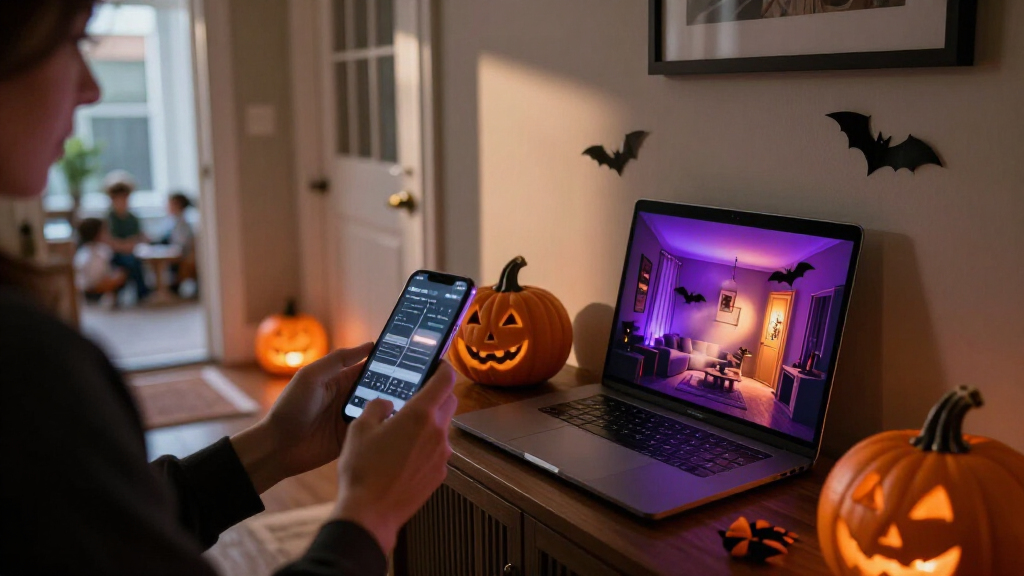

🔍 Read the full analysis: Can AI Make Halloween Decorating Easier? on ThorstenMeyerAI.com

Get the latest gadgets delivered free with Prime
- Fast, free delivery on millions of items
- Prime Video, Amazon Music and more included
- Member-only deals all year
TL;DR
AI tools can help create Halloween art, dialogue and effects that respond to visitors, but the label can also describe ordinary motion-triggered props. A simple, well-timed scene may be easier to run than a complex connected display. Product capabilities, privacy practices and offline behavior vary and should be checked before buying.
AI can help create custom Halloween visuals, voices and responsive character effects, but some decorations marketed as AI-powered only play a recording when a motion sensor detects someone. The distinction matters to decorators choosing how much to spend and how reliably a display will work during a busy evening.
Artificial intelligence can contribute to a display by generating art, audio or dialogue, recognizing spoken input, or helping a character vary its responses. A portrait with generated visuals and a voice that reacts to a guest’s question uses more capabilities than a skeleton that plays the same prerecorded shriek whenever someone walks by. That simpler prop can still be effective, but its trigger alone is ordinary automation.
Each approach brings different setup demands. Generated content may need editing and review; speech recognition can struggle with background noise; and image analysis may involve camera data. Connected lights, speakers and props can coordinate a scene, but some features depend on internet service. A local recording or fallback light cue can keep the display working if a connection drops.
The guide recommends planning around one clear visitor moment, then choosing only the tools needed to create it. A motion detector and recording may be enough for a jump scare; a short porch conversation could call for speech tools. Generated voices and images should be reviewed for tone and quality, and their licenses may limit how content can be used or shared.
A motion-triggered recording is automation; AI usually means a system generates or interprets content.
Use generated art, voices, or dialogue to personalize a scene, then review the results and usage terms.
Plan one clear visitor moment before choosing sensors, lights, speakers, or controllers.
Test offline behavior, sensor timing, audio, cable placement, and outdoor protection before Halloween night.
Tell visitors when a display processes faces or voices, limit collection, and provide a way to pass without interacting.
Choosing Effects That Work
For households and community displays, the practical question is whether an effect improves the visitor experience enough to justify its cost and setup. A single, well-timed cue can be easier to notice and maintain than a yard full of competing lights and sounds. More devices also mean more triggers to coordinate and more chances for delays or troubleshooting.
Privacy and reliability are part of that decision. Buyers should check whether features run locally or send data to an online service, including what information may leave the home. Local playback generally offers less variation but can be more dependable; online services may support more adaptive features while relying on connectivity.
Popular right now

Bose QuietComfort Wireless Noise-Cancelling Headphones, Cypress Green

Ninja AF101 4-Quart Air Fryer, 4-in-1, Grey

Hisense 40-Inch QD4SR Series Hi-QLED FHD Roku Smart TV
As an affiliate, we earn on qualifying purchases.
From Sensors to Responsive Props
Halloween decorations have long used motion sensors to trigger a fixed sound or movement. AI changes the possibilities when it generates content or interprets input, such as letting a character respond differently to spoken phrases. The term “AI-powered” therefore covers a range of capabilities rather than one standard feature set.
A connected scene might pair a generated haunted portrait with a speaker and smart bulb that changes color as a guest approaches. The effect can feel coordinated, but an internet-dependent bulb or service can interrupt the timing if the connection fails. A simpler local trigger can serve as a fallback. Availability, pricing, features and privacy settings vary by product and should be checked against current product information.
Features and Data Practices Vary
Specific products’ capabilities, prices and availability are not established here and may change. Marketing descriptions may not make clear whether a device generates or adapts content, or simply plays a fixed recording after a sensor trigger.
It is also not clear for any particular product whether its AI features run on the device or through an online service, what data may be collected, or how well speech recognition will work amid crowd noise. Those details require checking the product’s current specifications and privacy settings.
Check Setup Before Halloween
Before buying, identify the scene you want to create and verify the device’s actual features, connectivity requirements, privacy settings and offline behavior. Test the trigger and effects from the visitor’s position, including any fallback if Wi-Fi or an online service is unavailable. Review generated content and check the applicable license if you plan to share or use it commercially.
Key Questions
Does every AI Halloween decoration use artificial intelligence?
No. Some products described as AI-powered may use only a motion sensor to trigger a fixed recording. Check whether the device generates content, recognizes input or adapts its response.
What can AI add to a Halloween display?
AI tools can help create custom art, audio or dialogue, and some systems can use speech input to vary a character’s reply. The available features depend on the product or tools used.
Will an AI decoration work without internet?
It depends on the product. Local playback can work without an online connection, while some connected or generative features rely on internet service. Check the specifications and test any fallback.
What should I check before buying?
Confirm what the product actually does, whether it runs locally, what data it may send online, and its current price and availability. Also review any limits on sharing or commercial use of generated content.
Source: ThorstenMeyerAI.com