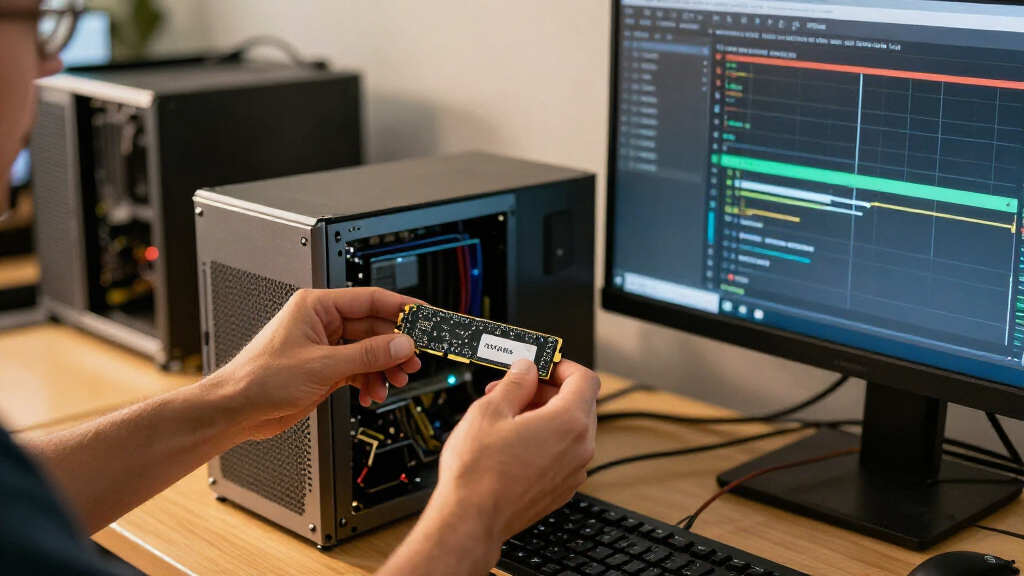

🔍 Read the full analysis: How To Compare 10 NVMe SSDs For High-Performance Computing on ThorstenMeyerAI.com

Get the latest gadgets delivered free with Prime
- Fast, free delivery on millions of items
- Prime Video, Amazon Music and more included
- Member-only deals all year
TL;DR
A buyer’s guide from ThorstenMeyerAI.com compares 10 NVMe SSDs by sustained throughput, random performance, thermal behavior, endurance and value. It names the Samsung 990 PRO 2TB as its overall pick and the Kingston NV3 1TB as a budget option, but does not provide benchmark data or a full list of ten models in the supplied material.
ThorstenMeyerAI.com has published a buyer’s guide to comparing 10 NVMe SSDs for demanding computing, recommending the Samsung 990 PRO 2TB as its overall choice and the Kingston NV3 1TB as a lower-cost option. The guide’s central point is that peak sequential speeds do not tell the whole story: sustained writes, cooling, capacity and workload can change how a drive performs in practice.
The guide says it assessed drives using sustained sequential read and write performance, random input/output operations per second, thermal throttling, endurance ratings and warranty terms. It argues that sustained behavior is especially relevant for large transfers such as video files or game installations, while random performance can affect the responsiveness of operating systems and applications under multitasking.
Among the named drives, the guide describes the Samsung 990 PRO 2TB as a balance of high sequential speeds and power efficiency. It presents the Kingston NV3 1TB as a budget-oriented PCIe 4.0 choice, while warning that entry-level models can slow after their SLC cache fills. It also names the Samsung 9100 PRO as a higher-cost option it considers suitable for laptops, and the SanDisk Optimus 5100 as a DRAM-less drive for general use.
The material supplied identifies only four of the stated 10 models by name, plus the Bestoss 1TB as an example of a drive with an integrated heatsink. It does not include the full ranking, product-specific benchmark results, test conditions, prices or exact endurance and warranty figures. The recommendations should therefore be read as the source’s assessments, not as independently verified test findings.
The 10 picks
- 1
 Samsung 990 PRO 4TB PCIe 4.0 NVMe M.2 2280 SSDView on Amazon →
- 2
 Gigastone Game Turbo 4TB M.2 NVMe PCIe 4.0 Internal SSDView on Amazon →
- 3
 Gigastone 1TB Game Turbo PCIe Gen4x4 M.2 NVMe SSD (2-Pack)View on Amazon →
- 4
 Samsung 9100 PRO 2TB Internal SSDView on Amazon →
- 5
 Samsung 990 PRO 2TB PCIe 4.0 M.2 2280 NVMe SSDView on Amazon →
- 6
 Bestoss 1TB PCIe 4.0 NVMe M.2 2280 SSD with HeatsinkView on Amazon →
- 7
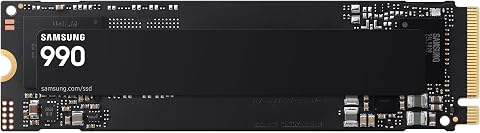 Samsung 990 1TB PCIe 4.0 NVMe Internal SSDView on Amazon →
- 8
 SanDisk Optimus 5100 1TB NVMe SSD, PCIe 4.0, M.2 2280View on Amazon →
- 9
 Kingston NV3 1TB M.2 2280 PCIe 4.0 NVMe SSDView on Amazon →
- 10
 SanDisk Optimus 5100 500GB NVMe SSD, PCIe 4.0, M.2 2280View on Amazon →
Why Sustained SSD Speed Matters
For high-performance computing workloads, storage speed can affect more than a headline benchmark. Large datasets, video projects, virtual machines and repeated file writes can expose differences that short burst tests miss. A drive that slows once its cache is exhausted may take longer to complete extended transfers than its peak rating suggests.
Cooling and capacity also shape practical value. The guide says compact systems and laptops face tighter thermal constraints, while larger-capacity versions may maintain performance more consistently during heavy transfers. These are useful selection factors, but the source provides no controlled measurements showing how much faster or cooler any listed model is in a particular system.
Popular right now

Dyson V8 Cyclone Cordless Vacuum

Roborock Q7 M5+ Robot Vacuum and Mop

Ninja CREAMi 7-in-1 Ice Cream Maker, NC301
As an affiliate, we earn on qualifying purchases.
The Guide’s Comparison Criteria
The guide frames SSD selection as a balance among interface generation, cache design and cooling, rather than a simple search for the highest advertised speed. It notes that a drive’s interface is limited by the slot it is installed in: a newer-generation SSD can operate in an older compatible slot, but its available throughput may be constrained by that system.
It also distinguishes DRAM-equipped drives from DRAM-less models. According to the guide, DRAM stores mapping information locally, while some less expensive drives use Host Memory Buffer technology to draw on system memory. It characterizes DRAM-less drives as potentially suitable for lighter use, while warning that heavy multitasking may expose latency differences. These are general explanations in the source, not results from a disclosed test protocol.
“The primary tradeoff in this category often lies between raw peak performance and sustained write consistency.”
— ThorstenMeyerAI.com guide
Missing Test Results and Model Details
The supplied source does not name all 10 drives promised by the comparison, show the complete ranking, or disclose benchmark data and test conditions. It also gives no publication date, current street prices, product capacities for most models, or precise TBW and warranty figures. Claims about relative speed, efficiency, longevity and value therefore cannot be checked against the material provided.
The guide refers to PCIe 5.0 drives and places PCIe 4.0 in a broad mainstream role, but its timing and market context are not established here. Buyers should verify current specifications and compatibility with manufacturers and their system documentation; the source does not establish that its recommendations apply equally to every HPC workload.
Verify Models Against Your Workload
Before choosing a drive, readers should compare the complete product specifications with their system’s M.2 slot, PCIe support and cooling. For sustained workloads, seek independent tests that report long-duration writes, temperatures and performance after cache exhaustion, rather than relying only on peak transfer figures.
The source provides no announced follow-up or testing milestone. A fuller comparison would need to publish all 10 model names, capacities, test setup, results, endurance ratings and prices so readers can assess the recommendations against their own workloads.
Key Questions
Which SSD does the guide recommend overall?
The guide names the Samsung 990 PRO 2TB as its overall choice, citing its combination of sequential speed and power efficiency. The supplied material does not include benchmark figures supporting that assessment.
What is the budget pick?
The guide presents the Kingston NV3 1TB as a lower-cost route to PCIe 4.0 storage. It cautions that sustained write performance may fall after the drive’s SLC cache fills.
Why look beyond advertised peak speeds?
Peak figures may reflect short bursts. Long transfers can continue after a drive’s cache is exhausted, and heat can cause performance to drop, so sustained tests are more informative for some workloads.
Does the source provide all 10 SSD picks and test results?
No. The supplied material names only some models and does not include a complete 10-drive list, detailed test results, or the methodology needed to reproduce the comparison.
Source: ThorstenMeyerAI.com