TL;DR

Get the latest gadgets delivered free with Prime
- Fast, free delivery on millions of items
- Prime Video, Amazon Music and more included
- Member-only deals all year
TIME named Qunnect’s Qu-MEM to its 2026 Best Inventions list in the Experimental category. The room-temperature quantum memory grew out of research at Stony Brook University and is being deployed on quantum networking testbeds in New York and Europe.
TIME has named Qunnect’s Qu-MEM, a room-temperature quantum memory developed from research patented at Stony Brook University, to its Best Inventions of 2026 list in the Experimental category. The recognition draws attention to a device designed to store and retrieve quantum information over fiber-optic networks, as systems are being deployed on testbeds in New York and Europe.
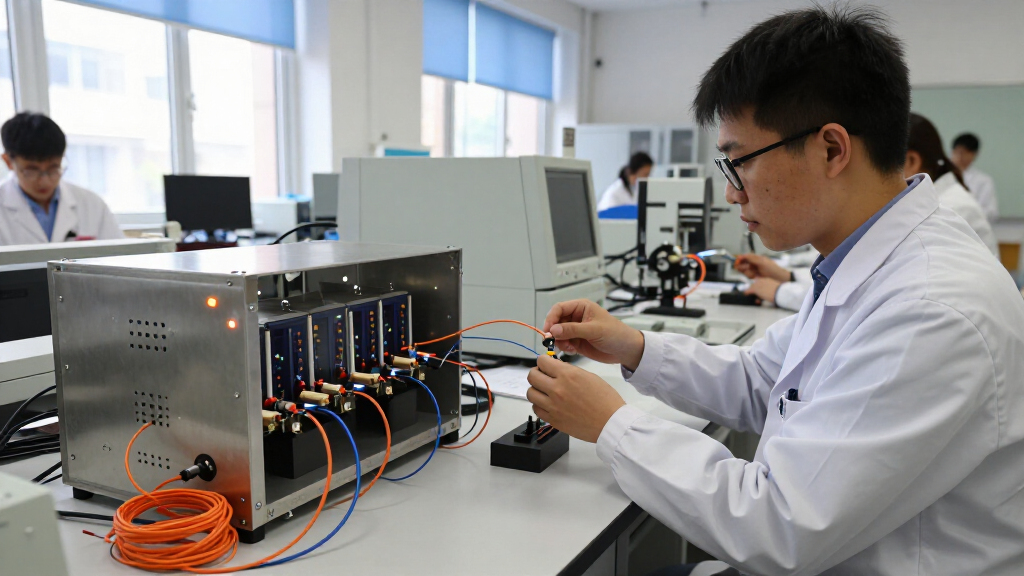
Qu-MEM is described by Stony Brook and Qunnect as an on-demand, warm-vapor, neutral-atom quantum memory built to fit in a standard server rack. Its design is intended to work with existing fiber-optic infrastructure, a feature that could help connect quantum devices across network links. The source material does not provide performance measurements, such as storage time, retrieval efficiency or operating range.
The technology developed from research led by Stony Brook physicist Eden Figueroa and graduate students Mehdi Namazi and Mael Flament. Figueroa, Namazi and Flament co-founded Qunnect; Namazi is the company’s chief science officer and Flament its chief technology officer. Stony Brook patented the underlying technology and licensed it to Qunnect for commercialization.
According to the report, Qu-MEM systems are being deployed on networking testbeds across New York City, Long Island and Europe. The technology is also integrated with the New York State Quantum Internet Testbed, which includes Brookhaven National Laboratory, SUNY colleges and private universities. The supplied material does not specify how many devices are installed or provide deployment dates for each location.
A Memory Device for Quantum Networks
Quantum networks rely on quantum properties such as photon entanglement to connect devices and transmit information. A memory that can store and retrieve quantum information could help network nodes coordinate signals and extend links across fiber. That makes quantum memory a potential building block for larger networks, though the TIME selection itself does not establish that Qu-MEM has met any particular scale, speed or reliability target.
Qu-MEM’s room-temperature design and compatibility with existing fiber are presented by the university and company as practical advantages. If those features perform as intended in operating networks, they could reduce the need for specialized infrastructure or cooling at memory nodes. The source material gives no comparative cost or energy data, so the size of any such advantage remains unknown.
The recognition also highlights a route from university research to commercial development: Stony Brook patented the research, licensed it to Qunnect, and the company is now deploying systems on testbeds. That path matters to researchers and institutions seeking to move laboratory results into products. It does not, by itself, show that the technology is commercially mature or in broad customer use.
As an affiliate, we earn on qualifying purchases.
From Stony Brook Research to Qunnect
The technology originated in research at Stony Brook led by Figueroa and his former graduate students. The university’s account says the work began in a basement laboratory in its physics building. Figueroa later co-founded Qunnect with Namazi and Flament, linking the research team to the company developing the device.
Stony Brook says the licensed patent forms the basis of Qu-MEM. The university also describes the device as part of its SCY-QNET effort and says it plans to expand the network beyond its current reach. Separately, the New York State Quantum Internet Testbed connects several research institutions. The supplied report calls SCY-QNET America’s largest quantum internet and the university network the world’s largest metropolitan-area quantum network; these are institutional descriptions, and the material does not include independent comparisons or supporting measurements.
TIME placed Qu-MEM in the Experimental category, which the source describes as covering concept inventions and prototypes with future potential. The selection recognizes the invention; it is not evidence that a finished quantum internet is available to the public.
““Quantum memory is what turns theoretical concepts like ‘spooky action at a distance’ into practical, long-distance technology.””
— Eden Figueroa, Stony Brook professor and Qunnect co-founder
fiber-optic quantum network components
As an affiliate, we earn on qualifying purchases.
As an affiliate, we earn on qualifying purchases.
Performance Data Still Missing
The supplied material does not give independent performance results for Qu-MEM, including how long it stores quantum information, how reliably information can be retrieved, or how it performs across different fiber links. It also does not state how many systems are operating, which organizations are using them, or whether deployments are research trials, paid installations or another arrangement.
Claims that the device is the world’s first commercial room-temperature quantum memory and that the associated network is the largest of its kind come from the university and company source material. No independent comparison or detailed methodology is provided here. TIME’s recognition identifies the invention as a selection in its Experimental category; the source does not include TIME’s evaluation criteria or a technical assessment of the device.
Potential applications in sectors such as healthcare, finance and national defense are described by university leadership as future possibilities. The material does not document present use in those sectors or establish that the technology currently protects sensitive data.
As an affiliate, we earn on qualifying purchases.
Testbed Deployments and Network Growth
Qunnect’s systems are continuing to be deployed on quantum networking testbeds in New York and Europe, according to the source report. Those deployments can provide settings for researchers and network operators to evaluate how the memory works alongside fiber and other network components. No specific next test, publication, expansion date or commercial release schedule is provided.
Stony Brook says it intends to expand its quantum network first to upstate New York and then more broadly across the country. That is a stated plan, rather than a completed expansion. Further details about locations, funding, timing and technical milestones have not been included in the supplied material.
The next useful evidence for readers will be measured results from deployments: the device’s storage and retrieval performance, its reliability in network operation and the scale of systems in use. Until those details are published, the TIME selection and ongoing testbed deployments mark progress, while the technology’s practical reach remains under evaluation.
quantum networking testbed equipment
As an affiliate, we earn on qualifying purchases.
As an affiliate, we earn on qualifying purchases.
Key Questions
What is Qu-MEM?
Qu-MEM is a quantum memory device developed by Qunnect from Stony Brook-patented research. It is designed to store and retrieve quantum information at room temperature and work with fiber-optic infrastructure.
What did TIME recognize?
TIME named Qu-MEM to its Best Inventions of 2026 list in the Experimental category. The supplied report describes that category as covering concept inventions and prototypes with future potential.
Who developed the technology?
The technology grew from research led by Stony Brook physicist Eden Figueroa and graduate students Mehdi Namazi and Mael Flament. The three later co-founded Qunnect, which commercialized the patented technology.
Where is Qu-MEM being used?
The source says Qu-MEM systems are being deployed on quantum networking testbeds in New York City, Long Island and Europe. It does not identify the number of systems or provide detailed performance results.
Is Qu-MEM already protecting healthcare or financial data?
The supplied material describes those sectors as possible future beneficiaries of quantum networking. It does not report current use of Qu-MEM to protect healthcare, financial or national-defense data.
Source: rss
Fall Picks
fall essentials
As an affiliate, we earn on qualifying purchases.