
🔍 Read the full analysis: “After Action” Explores AI Through An Unusual Credits Exhibition on ThorstenMeyerAI.com

Get the latest gadgets delivered free — and shop member deals
- Fast, free delivery on millions of items
- Access to Prime Big Deal Days deals on October 6–7
- Prime Video, Amazon Music and more included
TL;DR
After Action is a live, AI-built exhibition that presents 24 fictional web experiences as the closing credits of an imagined Wing V theater. Its animated roll, miniature scenes and controls turn browsing into a film-like experience, while a linked text register and reduced-motion options provide alternatives. The source describes a creative web project, not a real company or account of military activity.
After Action, a live, AI-built web exhibition, presents 24 fictional web experiences as the closing credits of an imagined Wing V theater. Rather than arranging the works in a gallery grid, the site moves visitors through a continuous credit roll interrupted by small, code-built sand-table scenes, as described in the original analysis; its premise is an artistic framing device, not a real company or report of military activity.
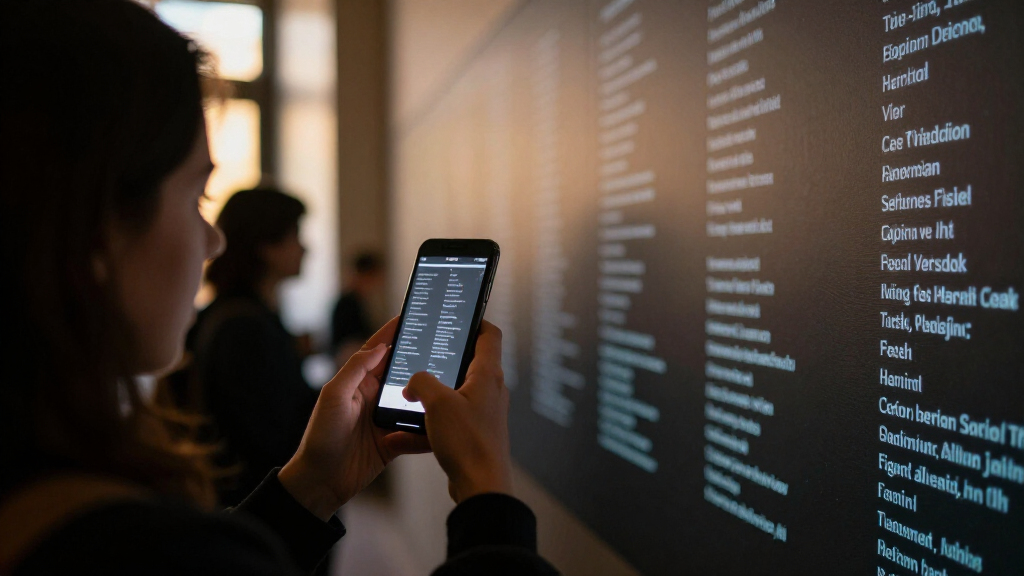
The exhibition’s central feature is a single navigable roll of credits that treats each of the 24 Wing V web projects as a production. Chapter markers coordinate the playback time, section label, locator and jump controls, allowing visitors to pause or move between sections instead of trying to select names as they pass. The projects are also available through a stationary linked register after the theater sequence.
After every eight productions, the roll gives way to a miniature scene. The source describes CSS-built dioramas suggesting a shield formation, a catapult’s arc and two keys moving toward a shared lock. The terrain and markers are generated through layered styling and perspective effects rather than a separate image for every vignette. The design uses a cinema palette of black, projected white, amber and gold, with film-like lettering and visual effects.
The source says JavaScript moves the credit track with a transform and that the animation pauses when the page is hidden. Reduced-motion visitors receive a manual-scroll alternative, and the moving names are removed from keyboard focus in favor of the linked register. The described build also uses a local still image for its hero: the intended ambient video was unavailable. Synthetic projector audio is optional and starts off, according to the project description.
A Credit Roll Becomes the Interface
After Action makes the presentation format itself the main idea: a list of web projects becomes a paced, cinematic sequence rather than a set of thumbnails. That choice changes how visitors encounter the collection, using chapter stops, motion and interludes to create a sense of progression while retaining direct links for people who want to browse at their own pace.
The project also offers a practical example of how an AI-built creative website can use interaction design and code-generated visuals to establish a setting without commissioning an image for each scene. Its stated accessibility alternatives matter because the continuous animation could otherwise make the content harder to navigate. The site’s own description identifies the work as fictional; its military language and miniature scenes should not be mistaken for evidence of real operations.
As an affiliate, we earn on qualifying purchases.
Twenty-Four Rooms in One Finale
After Action is identified in the source as room 125 of 175 and described as a finale for a collection of Wing V web experiences. The proposed credits name projects such as Ghost Division, Flightdeck, Vipers and Silent Running, and link each production to a site path. The room’s framing borrows from a debrief theater and a film’s end credits, but the source explicitly characterizes the theater and its premise as fictional.
The production brief calls for a single-page site using HTML, CSS and JavaScript, without frameworks, build tools, CDNs or external requests. It also sets design and engineering goals around mobile layouts, keyboard focus, contrast and reduced motion. Those are requirements in the brief; the supplied material does not include independent testing results or screenshots that would verify every target. It says the dioramas and atmospheric effects are code-generated, while the hero uses a locally stored still image.
“the credits treating websites as films.”
— The production brief reproduced by After Action
As an affiliate, we earn on qualifying purchases.
Build Claims Need Verification
The source describes the site’s implementation and intended behavior, but it does not provide independent performance, accessibility or browser-testing results. In particular, its design brief calls for particular viewport checks and performance goals; the available material does not establish that those targets were tested or achieved. The publication and launch dates are also not given.
The source says the planned ambient video was unavailable in the described build and that a local still image was used instead. It does not explain whether video might be added later, or identify the image’s origin. While the page is described as live, the supplied account does not establish how the experience behaves across devices or whether all 24 linked projects remain available.
As an affiliate, we earn on qualifying purchases.
Check the Live Theater
Readers can visit the After Action site to see how the roll, chapter controls, dioramas and closing card work in the browser. The source does not announce a future release, update schedule or planned addition, so it is not clear whether the project will change. Any later assessment of the stated accessibility and performance targets would require testing the live experience rather than relying on the creative brief alone.
As an affiliate, we earn on qualifying purchases.
Key Questions
What is After Action?
It is an AI-built web exhibition that presents 24 fictional Wing V web projects as the closing credits of an imagined theater.
Is it an account of real military activity?
No. The source describes the theater and its military framing as fictional, not as a real company or account of military activity.
How does the credit roll work?
The site moves one continuous credit track and offers chapter stops, a time display, jump controls and a stationary linked register for browsing the same projects.
What happens for visitors who prefer less motion?
The project description says reduced-motion visitors receive a manual-scroll alternative; it also says the animation pauses when the page is hidden.
Are the miniature scenes images?
The sand-table scenes are described as CSS-built dioramas. The source distinguishes those generated effects from the hero, which uses a locally stored still image.
Source: ThorstenMeyerAI.com
Fall Picks
fall essentials
As an affiliate, we earn on qualifying purchases.