
📊 Full opportunity report: DDR5 Now, DDR6 Soon: A Buyer’s Field Guide on ThorstenMeyerAI.com — validation score, market gap, and execution plan.
TL;DR
In 2026, DDR5 remains the best choice for most buyers, with prices unlikely to drop soon. DDR6 is still in development and not suitable for mainstream purchases yet.
DDR5 memory remains the recommended choice for most PC builders and upgraders in 2026. Despite rumors and hype about DDR6, it is not yet available for mainstream consumers and will not be for several years. This guidance comes as memory prices remain high, and forecasts suggest no significant relief until 2028.
Manufacturers have not yet released DDR6 modules for the consumer market, and the technology is expected to appear first in enterprise and AI server applications around 2026–27. Mainstream desktops and laptops will see DDR6 only around 2027, with prices initially 2–3 times higher per gigabyte than DDR5.
Meanwhile, DDR5-6000 with CL30 timings is still the optimal balance of performance and price for most users, with higher speeds offering minimal real-world gains. Capacity planning should focus on current workloads: 32GB for gaming and general use, 64GB for content creation, and only larger capacities if genuinely needed for large AI models.
Buying into DDR4 now is discouraged, as DDR4 production is winding down and costs are comparable to DDR5, with no future upgrade path. DDR4 on new builds will soon be a dead-end, making DDR5 the sensible choice.
DDR5 now, DDR6 soon
A buyer’s field guide. The 20-year instinct — wait for prices to drop, or wait for the next generation — is broken this cycle. Buy the DDR5 you actually need now; don’t wait for DDR6. Here’s the reasoning.
Driven to end-of-life, production slashed. Same money, dead-end socket. Leave a working DDR4 box alone — but never start a new build on DDR4 to “save.”
A framework, not a gamble. Buy the DDR5 you need now, at the sweet spot, in the capacity you’ll actually use — don’t buy DDR4, don’t wait for DDR6. The two costliest mistakes in this market are the ones that feel prudent: waiting for a price drop that isn’t coming, and waiting for a next-gen part that launches dearer than what’s on the shelf. Next: The SSD Squeeze.
Why Buying DDR5 Now Is the Smarter Move
This guidance matters because most consumers and builders will face high prices and limited options in 2026. Waiting for DDR6 could mean missing out on platform improvements and paying a premium for a technology that won’t be mainstream for several years. Investing in DDR5 ensures compatibility, performance, and future-proofing for the next few years, avoiding unnecessary delays and costs.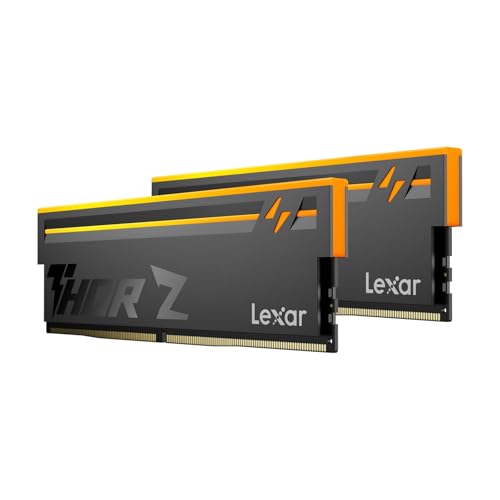
Lexar Thor Z RGB DDR5 RAM 32GB Kit (2x16GB) 6000MHz CL38 DRAM 288-Pin UDIMM
- High-Speed Performance: 6000MHz DDR5 with low CL38 latency
- Durable Thermal Design: Sandblasted aluminum heatsink for cooling
- Vibrant RGB Lighting: Customizable, bright RGB lighting effects
As an affiliate, we earn on qualifying purchases.
As an affiliate, we earn on qualifying purchases.
The 2026 Memory Market and Past Trends
Historically, new memory generations have taken several years to become mainstream, with DDR4 following a slow adoption curve from 2014 to 2018. Currently, DDR5 is the standard for new systems, but prices remain elevated due to supply constraints and high demand. DDR6, announced as a future standard, is still in development, with initial deployment limited to enterprise servers and high-end workstations.
Manufacturers have indicated DDR6 modules will feature higher speeds (up to 17,600 MT/s) and a new form factor (CAMM2), but these come with a steep price premium and incompatibility with current platforms. The transition to DDR6 will be staged, with broad adoption not expected before 2030, mirroring DDR4’s timeline.
“DDR6 will bring significant performance improvements, but only for specialized workloads and high-end enterprise systems initially.”
— Memory industry representative
As an affiliate, we earn on qualifying purchases.
Unclear Aspects of DDR6 Adoption and Pricing
While DDR6 standards are finalized, actual modules, pricing, and platform support are still in development. It is not yet confirmed when DDR6 will be widely available for consumers or how much it will cost initially. Early adopters may face stability issues, limited capacities, and higher prices, making it unsuitable for most users in 2026.

Lexar OC DDR5 RAM 1x8GB 6000MHz CL38 288-Pin UDIMM Desktop Memory
- Compatibility: Works with Intel 14th Gen and AMD platforms
- Speed and Latency: 6000MT/s speed with CL38 latency
- Heatsink Design: Minimalist aluminum armor heatsink
As an affiliate, we earn on qualifying purchases.
As an affiliate, we earn on qualifying purchases.
Next Steps for Buyers and Builders in 2026
Consumers should focus on purchasing DDR5-6000 CL30 memory for current builds, aligning with platform recommendations. Watch for announcements of DDR6 modules and platform support, but avoid early adoption until the technology matures and prices stabilize. Manufacturers and standard bodies are expected to release more details throughout 2026, with broader adoption likely in 2027 and beyond.

Crucial 32GB DDR5 RAM Kit (2x16GB), 5600MHz (or 5200MHz or 4800MHz) Laptop Memory 262-Pin SODIMM, Compatible with Intel Core and AMD Ryzen 7000, Black – CT2K16G56C46S5
- Memory Capacity: 32GB DDR5 RAM kit (2x16GB)
- Memory Speed: 5600MHz, 5200MHz, or 4800MHz options
- Performance Boost: Enhances multitasking and responsiveness
As an affiliate, we earn on qualifying purchases.
As an affiliate, we earn on qualifying purchases.
Key Questions
Should I buy DDR4 now to save money?
No. DDR4 is being phased out, and its costs are now comparable to DDR5. Building on DDR4 now limits future upgrade options and platform compatibility.
When will DDR6 become mainstream?
DDR6 is expected to be available in enterprise and high-end systems in 2026–27, with mainstream desktop support around 2027. Full adoption may not occur until 2030.
Is DDR6 worth waiting for?
For most users, no. DDR6 offers performance benefits only for specific workloads and comes with a significant price premium. Most should invest in DDR5 now.
Will DDR5 prices drop soon?
Forecasts suggest that meaningful price reductions are unlikely before 2028, so waiting for lower prices may cost more in the long run.
Source: ThorstenMeyerAI.com