
TL;DR

Get the latest gadgets delivered free with Prime
- Fast, free delivery on millions of items
- Prime Video, Amazon Music and more included
- Member-only deals all year
Fermilab, CERN and the Sanford Underground Research Facility have started installing steel structures for the two cryostats that will house DUNE’s far detectors nearly a mile underground in South Dakota. The project schedule calls for the underground facility to be completed by 2029, detector installation in 2030 and the long-distance neutrino beam to begin operating by 2031.
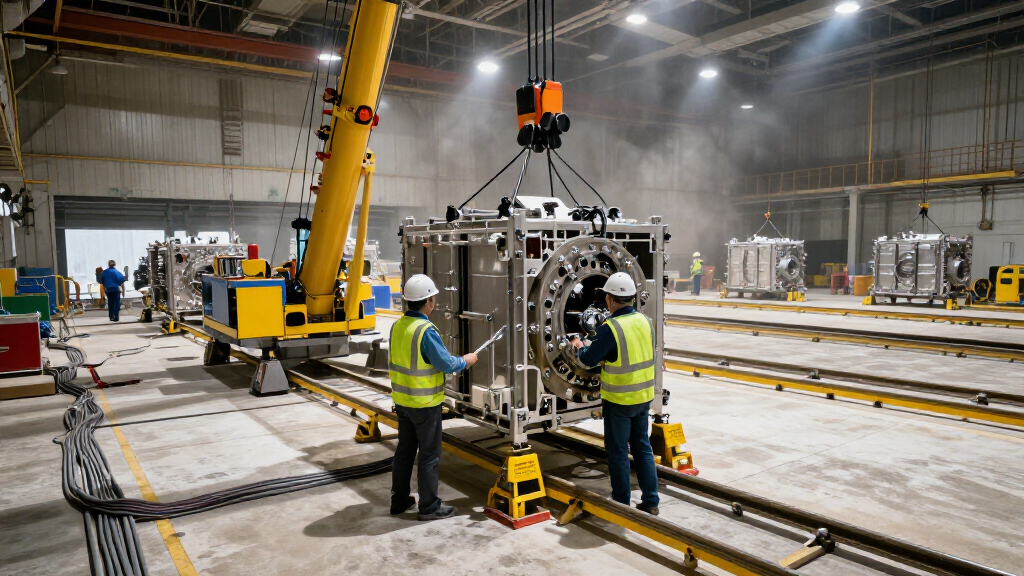
Fermilab, CERN and the Sanford Underground Research Facility have begun installing steel structures for the two massive cryostats that will house the far detectors of the Deep Underground Neutrino Experiment (DUNE). The work is taking place nearly a mile underground in Lead, South Dakota, and marks a major construction step toward an experiment designed to study neutrinos sent 1,300 kilometers from Fermilab.
Crews are assembling the cryostat frames in the South Cavern at SURF, where 2,600 red steel beams will form the structures for both detector modules. The beams have been transported from the surface individually. SURF also has begun lowering steel components for the second cryostat into the North Cavern; assembly there is expected to begin next year, according to the project announcement.
Each cryostat is planned to measure 65.8 meters long, 18.9 meters wide and 18.3 meters high. It will hold about 17,000 tons of liquid argon kept at approximately minus 300 degrees Fahrenheit. The more than 6,200 tons of steel used for the cryostat modules are a contribution from CERN, which is leading their design, construction planning, logistics and installation in partnership with a Minnesota-based structural steel contractor.
The planned DUNE system includes a detector near Fermilab to measure neutrinos before they travel and far detectors at SURF to study them after their journey through Earth. The source report says the underground facility is expected to be completed by 2029, detector installation is scheduled for 2030, and the long-distance beam is expected to begin operating by 2031. These are project targets, not confirmation that the milestones have been completed.
Building DUNE’s Far Detectors
The steel installation moves DUNE from underground excavation and logistics toward building the equipment that will contain its far detectors. The project depends on assembling unusually large, insulated vessels in caverns deep below ground, then installing detector systems and preparing them to operate with liquid argon. Beginning the frames is a visible construction milestone, but it is only one stage in that sequence.
When operational, DUNE is intended to compare neutrinos measured near Fermilab with those detected after traveling about 1,300 kilometers through Earth. Researchers will use those observations to investigate neutrino properties and fundamental questions about the universe. The project is also a significant international undertaking: Fermilab hosts a collaboration of more than 1,500 researchers, while CERN supplies major engineering and material contributions and SURF supports the underground work.
The schedule matters because detector installation and beam operations remain years away. Progress on the cryostats is a step toward those dates, but it does not by itself establish that the overall timeline will be met or specify when scientific results will become available.
Popular right now

Vitamix VX1 Professional-Grade Blender, 64 oz, Black

KitchenAid Classic Series 4.5-Quart Tilt-Head Stand Mixer, Onyx Black

Breville Barista Touch Impress Espresso Machine, Noir (BES881NRE)
As an affiliate, we earn on qualifying purchases.
From Prototype to Cavern Assembly
DUNE is hosted by Fermilab and is being built across two principal locations: the neutrino source and a near detector at Fermilab in Illinois, and the far-detector site at SURF in South Dakota. The experiment is part of the Long-Baseline Neutrino Facility. Its far detectors are planned to use liquid argon as the medium for observing neutrino interactions.
CERN’s involvement extends beyond supplying steel. The organization developed and built the ProtoDUNE detector at its Neutrino Platform facility, a prototype for the detector technologies planned for the far-detector modules. The source report describes DUNE as the first experiment outside Europe to receive such a significant CERN contribution. The current work follows earlier project steps, including delivery of steel to Rapid City and the lowering of steel underground, as described by project officials.
SURF is located about 1,478 meters, or 4,850 feet, below ground at the DUNE work site. Its role includes shaft operations and moving steel and other equipment safely to the caverns. The project’s construction therefore involves coordination across laboratories, contractors and an underground research facility, rather than assembly by one institution alone.
“DUNE is Fermilab’s top priority.”
— Norbert Holtkamp, Fermilab director
Milestones Still Ahead
The announcement describes the beginning of steel-frame installation, not completed cryostats or operating detectors. It does not provide a detailed installation timetable for each module, confirm when the cryostats will be sealed and filled, or report that detector equipment has been installed. The stated dates—facility completion by 2029, detector installation in 2030 and beam operations by 2031—are expectations in the source report.
The report also does not specify a precise date for the start of this installation work beyond its November 2026 publication, nor does it give a revised schedule, cost update or assessment of potential delays. The experiment’s scientific findings cannot be described yet: the long-distance neutrino beam and far detectors are not reported as operational.
Assembly in Both Caverns
Crews will continue assembling the first cryostat structure in the South Cavern while SURF logistics teams move components for the second module into the North Cavern. Assembly of that second structure is expected to begin next year, according to the source report. Further project milestones include completing the underground facility, installing the detector systems and preparing the beamline and detectors for operation.
The published schedule targets facility completion by 2029, detector installation in 2030 and the start of long-distance beam operations by 2031. The next measure of progress will be whether the cavern assembly work advances toward those milestones; no later completion dates or operating results are confirmed in the supplied report.
Key Questions
What has begun at the DUNE site?
Crews from Fermilab and CERN, working with SURF, have begun installing steel structures for the two cryostats that will house DUNE’s far detectors.
Where is the installation taking place?
The work is underway in underground caverns at the Sanford Underground Research Facility in Lead, South Dakota, nearly a mile below ground.
What will the cryostats contain?
Each is planned to hold about 17,000 tons of liquid argon, maintained at approximately minus 300 degrees Fahrenheit.
When is DUNE expected to begin operating?
The source report gives a project target of 2031 for the long-distance neutrino beam to begin operating. It does not confirm that operations have started or that the target date is guaranteed.
Source: thequantuminsider.com