📊 Full opportunity report: The Role Of OCR In Small Business Document Digitization on IdeaNavigator AI — validation score, market gap, and execution plan.
TL;DR
IdeaNavigator AI has proposed testing an OCR-based auto-filing tool for paper-heavy small offices, using a one-week pilot at five organizations. The proposal describes a workflow and validation plan, not a launched product or proven business; its accuracy, privacy safeguards and customer demand have not been established.
IdeaNavigator AI has proposed a one-week pilot to test whether OCR software can classify, name and file paper documents for small offices, addressing a common administrative problem: scanned records can remain difficult to search when they are saved as unsorted images. The proposal is a product concept and validation plan, not evidence that a service has launched or that its accuracy and commercial demand have been demonstrated.
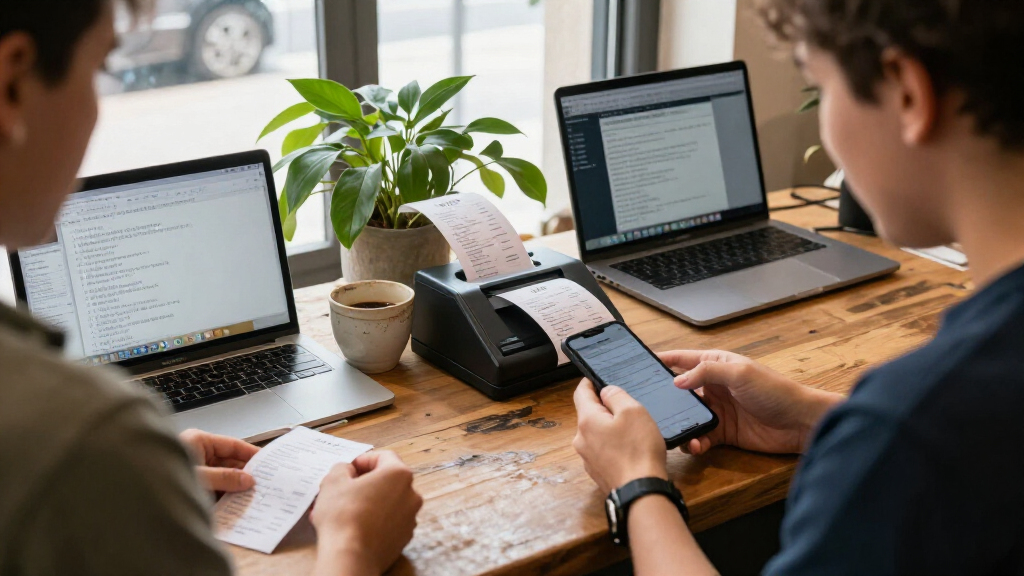
The proposed tool is aimed at office managers at small nonprofits, clinics and law offices, where intake forms, invoices and other records may arrive on paper and build up in filing cabinets. The concept is to photograph a stack of documents with a phone, use OCR to read the pages, suggest a document category and filename, then save searchable PDFs to a shared folder. An invoice might be labeled with its type, date and vendor. These details are described in IdeaNavigator AI’s proposal.
IdeaNavigator AI describes generic scanner apps as a poor fit for this task because they can leave users with unsorted images instead of searchable, organized records. The proposal says on-device and API-based OCR, along with models that interpret page layout, are now inexpensive and accurate enough to support automated naming, classification and field extraction without a dedicated IT team. That is the proposal’s rationale; it does not supply benchmark results or test data to verify the claim for the intended users.
The suggested business model is a per-seat monthly subscription with a page-volume limit and charges for extra usage. To test the idea, the plan calls for giving five small offices a one-week pilot and asking each to scan a real backlog of 200 documents. The proposed measures are the share of documents classified correctly and participants’ willingness to pay per seat. These pilot design and business-model details come from IdeaNavigator AI; the proposal includes no pilot outcomes, pricing figures or customer commitments.
Making Small-Office Records Searchable
If the workflow performs reliably, automatic classification and searchable PDFs could reduce the manual effort required to put paper records into a usable digital filing system. That could matter particularly to small organizations that manage sensitive or time-relevant documents but lack dedicated IT staff. The proposal does not establish how much time or money the tool would save, or whether users would trust its suggestions enough to rely on them.
The pilot’s practical value would be in testing the full task rather than OCR alone. Reading text from a page is only one step: the system must also identify what kind of document it is, extract details correctly, assign a useful name and place the file where staff can retrieve it. Misclassification or incorrect extracted fields could make records harder to find and may require staff review. The proposed accuracy measure is therefore central, but the plan does not specify how errors would be checked or what threshold would count as acceptable.
For small offices, the business question is also distinct from technical feasibility. A tool might process documents successfully yet fail to attract paying customers if setup, review or correction takes too much staff time. Measuring willingness to pay per seat alongside classification accuracy would provide an initial signal, though a five-office, one-week trial would not by itself establish demand across the broader market. These are implications of the proposed test, not findings reported by IdeaNavigator AI.
As an affiliate, we earn on qualifying purchases.
From Scanning to Automated Filing
Traditional scanning converts paper pages into digital files, but a scan may be only an image. OCR, or optical character recognition, attempts to turn the visible text into machine-readable content, allowing a user to search within a document. The concept described by IdeaNavigator AI adds steps beyond text recognition: it proposes identifying document type, extracting selected details and generating a filename before saving the PDF.
The proposed workflow is aimed at organizations with existing paper backlogs, not just new documents arriving at the office. Its test would use 200 documents per office across five organizations, for a planned total of 1,000 documents if all participants complete the exercise. That is a proposed test volume, not a reported result. The plan does not specify the mix of document types, image quality, languages or handwriting that would be included, all of which could affect performance.
The proposal points to both local processing on a device and OCR delivered through an API as possible technology routes. It does not identify a particular model or vendor, describe a finished application, or provide technical or security documentation. The suggested shared-folder output also leaves open how the tool would connect with each office’s existing storage and records practices.
searchable PDF creator for small office
As an affiliate, we earn on qualifying purchases.
As an affiliate, we earn on qualifying purchases.
Accuracy, Privacy and Demand Untested
No pilot has been reported, so the actual classification rate, quality of extracted fields and time required for staff review are unknown. The proposal also does not state how accuracy would be measured, whether a person would approve suggested filenames before files are saved, or how the system would handle documents it cannot confidently identify.
Privacy and security arrangements are also unspecified. Small nonprofits, clinics and law offices may handle sensitive personal, medical or legal information. The concept does not say whether documents would be processed on-device or sent to an external API in a particular implementation, how long files or extracted text would be retained, or what access controls and protections would apply. These details would need to be established before offices could judge whether the workflow fits their obligations and policies.
Commercial viability remains untested as well. There is no stated subscription price, page cap, overage rate or evidence that office managers would pay. A short trial with five organizations could provide early feedback, but the proposed group and timeframe would not settle how the product performs across different office types or at larger volumes.
automatic document classification software
As an affiliate, we earn on qualifying purchases.
As an affiliate, we earn on qualifying purchases.
Pilot Results Would Test the Case
The next step described in IdeaNavigator AI’s proposal is a one-week trial at five small offices, with each office scanning a backlog of 200 documents. The plan calls for tracking correct auto-classification and willingness to pay per seat. The proposal provides no start date, names no participating offices and does not say that the trial is underway.
To make the results useful, a future report would need to explain how documents were selected, what counted as a correct classification, how often staff corrected the system and whether the tool saved time after review. It would also need to clarify processing and retention practices for sensitive records and provide proposed subscription terms. Until those details and results are available, the concept remains an early test proposal rather than a demonstrated digitization solution.
Source: IdeaNavigator AI proposal. The proposed workflow, pilot design and business model in this article are based on that proposal, which reports no pilot results.
mobile OCR scanner for small business
As an affiliate, we earn on qualifying purchases.
As an affiliate, we earn on qualifying purchases.
Key Questions
Has an OCR auto-filing product for small offices launched?
The material describes a product concept and proposed pilot. It does not report a launch or identify a finished product.
How would the proposed tool work?
A user would photograph documents with a phone. OCR would read the pages, suggest a document type and filename, and save searchable PDFs to a shared folder.
What would the pilot measure?
The proposed one-week trial would involve five small offices scanning 200 documents each. It would measure correct auto-classification and willingness to pay per seat; no results are available.
Are the tool’s accuracy and privacy safeguards known?
No. The proposal gives no test results or detailed security practices, including whether documents would be processed locally or through an API in a finished implementation.
How might the service charge customers?
The suggested model is a monthly subscription priced per seat, with a page-volume cap and charges for usage above that limit. No prices are specified.
Source: IdeaNavigator AI