

Shopping for smart home security cameras in 2027 means choosing between a few big tradeoffs: battery versus solar versus wired power, subscription-free local storage versus cloud plans, and single-camera flexibility versus whole-property kits. The Arlo Pro 6th Gen 4-Camera Kit earns my best overall pick for its 2K HDR video, wire-free install, and mature smart platform, while the Wyze Cam v4 delivers the best per-camera value for anyone starting small. If covering a whole yard without ever climbing a ladder to swap batteries sounds appealing, the aosu D1 Classic solar kit solves that problem outright. Read on for the full breakdown, including which kits are worth skipping and which fit specific home setups.

Get the latest gadgets delivered free with Prime
- Fast, free delivery on millions of items
- Prime Video, Amazon Music and more included
- Member-only deals all year
Complete the kit



Key Takeaways
- Solar power was the biggest differentiator in this roundup: the aosu D1 Classic and Tapo SolarCam C402 eliminate battery swaps entirely, while every Blink kit still requires periodic recharging.
- The Blink family dominates on breadth of kit sizes (2, 3, and 5 cameras), but the 2K+ five-camera version is the only one that matches the resolution of cheaper rivals like the GMK 2K four-pack.
- Arlo‘s sixth-generation Pro kit justifies its premium through 2K HDR and smarter detection, but ongoing subscription costs are the hidden price of admission.
- The Anona 4K pan-tilt and Wyze Cam v4 prove indoor monitoring doesn’t need a multi-camera kit — auto-tracking and 360-degree coverage can replace two or three fixed cameras.
- Kit pricing scales unevenly: jumping from Blink‘s 3-camera to 5-camera bundle is a modest step, while Arlo’s 4-camera kit costs closer to two full budget systems.
| Blink Outdoor 4 Wireless Security Camera System, 2 Cameras |  | Best Starter Kit | Camera count: 2 | Video resolution: 1080p HD | Night vision: Infrared | VIEW LATEST PRICE | See Our Full Breakdown |
| Blink Outdoor 4 Wireless Security Camera System, 3 Cameras with Sync Module Core | | Best for Full Perimeter Coverage on a Budget | Camera count: 3 | Video resolution: 1080p HD | Night vision: Infrared | VIEW LATEST PRICE | See Our Full Breakdown |
| TP-Link Tapo SolarCam C402 KIT 1080p Outdoor Security Camera with Solar Panel |  | Best Set-and-Forget Single Camera | Resolution: 1080p | Power: Solar panel and built-in battery | Battery life: Up to 180 days | VIEW LATEST PRICE | See Our Full Breakdown |
| Blink Outdoor 4 Wireless Security Camera System, 5 Cameras | | Best for Large Properties | Camera count: 5 | Video resolution: 1080p HD | Field of view: 143° diagonal | VIEW LATEST PRICE | See Our Full Breakdown |
| aosu D1 Classic 4-Camera Solar-Powered Outdoor Security Camera Kit | 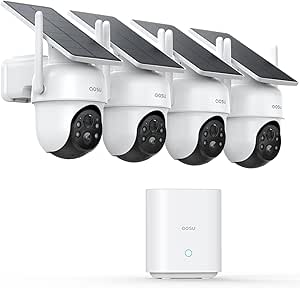 | Best Subscription-Free System | Camera count: 4 | Video resolution: 2K / 3MP | Field of view: 360° pan, 105° viewing angle | VIEW LATEST PRICE | See Our Full Breakdown |
| Blink Outdoor 2K+ Wireless Security Camera System, 5 Cameras with Sync Module Core |  | Best Whole-Property Coverage | Camera resolution: 2K (2560 × 1440) | Field of view: 115° × 62° × 135° | Weather resistance: IP65 | VIEW LATEST PRICE | See Our Full Breakdown |
| GMK 4-Pack Wireless Outdoor Security Camera System, 2K | 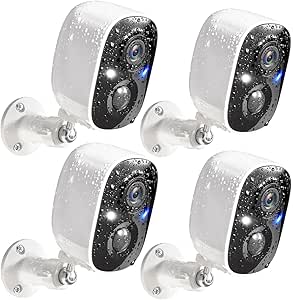 | Best Starter Outdoor Kit | Camera count: 4 | Video resolution: 2K, 3MP | Night vision: Color and infrared | VIEW LATEST PRICE | See Our Full Breakdown |
| Anona 4K UHD Indoor Security Camera (2 Pack), 360° Pan-Tilt, Auto-Tracking |  | Best Indoor Monitoring | Resolution: 4K (8 MP), 8x digital zoom | Pan/Tilt: 355° pan / 110° tilt with auto-tracking | Connectivity: Dual-band Wi-Fi 6 (2.4/5 GHz) | VIEW LATEST PRICE | See Our Full Breakdown |
| Arlo Pro Wireless Security Camera 2K HDR (6th Gen) – 4-Camera Kit |  | Best Premium Pick | Resolution: 2K HDR | Field of view: 160° panoramic | Night vision: Color night vision with integrated spotlight | VIEW LATEST PRICE | See Our Full Breakdown |
| Wyze Cam v4 – 2.5K AI Indoor/Outdoor Security Camera with Color Night Vision |  | Best Value Single Camera | Resolution: 2560×1440 (2.5K QHD) | Field of view: 120° | Night vision: Color (Starlight Sensor + 72-lumen spotlight) | VIEW LATEST PRICE | See Our Full Breakdown |
| smart home security camera | Night vision | Camera count | Video resolution | Audio |
|---|---|---|---|---|
| Blink Outdoor 4 Wireless Secur | Infrared | 2 | 1080p HD | Two-way |
| Blink Outdoor 4 Wireless Secur | Infrared | 3 | 1080p HD | — |
| TP-Link Tapo SolarCam C402 KIT | Full-color, up to 30 ft | — | — | Two-way |
| Blink Outdoor 4 Wireless Secur | — | 5 | 1080p HD | Two-way |
| aosu D1 Classic 4-Camera Solar | Color | 4 | 2K / 3MP | Two-way |
| Blink Outdoor 2K+ Wireless Sec | — | — | — | Two-way talk with noise cancellation |
| GMK 4-Pack Wireless Outdoor Se | Color and infrared | 4 | 2K, 3MP | — |
| Anona 4K UHD Indoor Security C | Infrared | — | — | — |
| Arlo Pro Wireless Security Cam | Color night vision with integrated spotlight | — | — | — |
| Wyze Cam v4 | Color (Starlight Sensor + 72-lumen spotlight) | — | — | — |
More Details on Our Top Picks
Blink Outdoor 4 Wireless Security Camera System, 2 Cameras
If you’re setting up your first smart home security camera system, this two-camera bundle is the easiest entry point in the Blink lineup. You get the same 1080p HD video, infrared night vision, two-way audio, and up-to-two-year battery life as the larger three- and five-camera bundles — just at a smaller scale. Compared with the Blink Outdoor 4 five-camera system, this kit makes more sense for apartments or small homes where two entry points cover the essentials. The tradeoff is the same across the Blink family: the Sync Module Core doesn’t include local storage, so recorded clips and person detection sit behind a subscription. The TP-Link Tapo SolarCam C402, by contrast, writes to a microSD card with no monthly fee. If you want battery convenience and Alexa integration without committing to a big system, this is the sensible starting point.
Pros:- Up to two-year battery life on included Energizer lithium batteries
- 1080p HD live view with infrared night vision and two-way audio
- True wire-free installation with included mounting hardware
- Straightforward Alexa integration for live view and alerts
Cons:- Sync Module Core has no local storage — recordings require a subscription
- Person detection is locked behind a paid plan
- Infrared night vision is black-and-white only, unlike color-night-vision rivals
Best for: Renters and first-time buyers who want a low-commitment two-camera setup with Alexa
Not ideal for: Anyone who refuses subscription fees — without a plan you lose cloud recording and person detection
- Camera count:2
- Video resolution:1080p HD
- Night vision:Infrared
- Audio:Two-way
- Battery life:Up to 2 years
- Included module:Sync Module Core
- Storage:Cloud via subscription; no local storage included
- Compatibility:Alexa
Our verdict“A low-risk way into wireless home security, provided you accept that meaningful recording features cost extra monthly.”
Blink Outdoor 4 Wireless Security Camera System, 3 Cameras with Sync Module Core
This three-camera configuration hits a middle ground that many homeowners will find just right: front door, back door, and a driveway or side yard, all covered by one Sync Module. It shares identical hardware with the two-camera Blink Outdoor 4 kit, so the decision is purely about scale — and the per-camera value improves as you add units. The dual-zone enhanced motion detection helps cut false alerts from passing cars when zones are tuned properly. Where it falls behind the aosu D1 Classic kit is resolution and storage: you’re getting 1080p rather than 2K, and there’s no local storage option in the box, while aosu includes 32 GB on its base station with no fees. Still, for Alexa households that value battery life above all — up to two years per camera — this bundle covers a typical single-story home without wiring anything.
Pros:- Three-camera coverage of a full perimeter from a single Sync Module
- Up to two-year battery life keeps maintenance to near zero
- Dual-zone motion detection reduces irrelevant alerts
- Two-way audio and Alexa support in every camera
Cons:- No local storage with the included Sync Module Core
- Cloud recording and person detection require a subscription
- 1080p resolution trails the 2K aosu D1 Classic and Blink Outdoor 2K+ systems
Best for: Suburban homeowners who need three vantage points and prefer battery power over wiring or solar
Not ideal for: Buyers who want 2K detail or fee-free local recording — this kit offers neither
- Camera count:3
- Video resolution:1080p HD
- Night vision:Infrared
- Battery life:Up to 2 years
- Motion detection:Dual-zone enhanced
- Included module:Sync Module Core
- Smart home compatibility:Alexa
- Included accessories:3 mounting kits, USB-C cable, power adapter
Our verdict“The right pick if you want set-and-forget battery cameras blanketing three sides of a house, and don’t mind paying for cloud storage.”
TP-Link Tapo SolarCam C402 KIT 1080p Outdoor Security Camera with Solar Panel
For anyone who wants one camera and zero ongoing costs, this Tapo kit solves the two complaints that plague the Blink bundles: power and storage. The included solar panel keeps the built-in battery topped up — about 45 minutes of direct sun covers a full day of use — and a microSD card slot supports up to 512 GB of local recording with no monthly fee. The Blink Outdoor 4 kits can’t touch that storage story. The Tapo also delivers color night vision out to 30 feet, where Blink’s infrared footage is monochrome. Its limitations are real, though: solar charging stops working below freezing, so cold-climate buyers will be recharging manually in winter, and cloud backup still requires a Tapo Care subscription. As a single-camera solution for a driveway, gate, or backyard shed, this option makes the most sense for hands-off coverage without a recurring bill.
Pros:- Solar panel plus 180-day battery for genuinely wire-free operation
- microSD local storage up to 512 GB with no subscription required
- Full-color night vision up to 30 feet beats infrared-only rivals
- Person detection and customizable activity zones included
Cons:- Solar charging doesn’t work below freezing
- Single camera only — larger properties need a multi-camera kit
- Cloud backup requires a Tapo Care subscription
Best for: Owners of a single vulnerable spot — driveway, gate, or shed — who want solar power and free local storage
Not ideal for: Cold-climate buyers, since solar charging requires temperatures above 32°F, and anyone needing multi-camera coverage
- Resolution:1080p
- Power:Solar panel and built-in battery
- Battery life:Up to 180 days
- Night vision:Full-color, up to 30 ft
- Local storage:microSD card up to 512GB
- Weather resistance:IP65
- Audio:Two-way
- Included cable:13 ft
Our verdict“The smartest one-camera buy here if your winters are mild and you refuse to pay monthly fees.”
Blink Outdoor 4 Wireless Security Camera System, 5 Cameras
Five cameras is whole-property territory, and this bundle covers it with the same two-year battery life and Alexa integration as its smaller siblings — the two- and three-camera Blink Outdoor 4 kits — just scaled up with ten lithium batteries and five mounting kits included. The 143° diagonal field of view per camera means fewer units are needed to blanket wide facades compared with narrower rivals. Against the aosu D1 Classic four-camera kit, the tradeoffs sharpen: aosu gives you 2K resolution, 360° pan-and-tilt, and 32 GB of free local storage, while this Blink system offers neither local recording nor sharper video without a subscription. What Blink does deliver is simplicity — cameras you hang once and basically forget for two years. For a two-story home or a property with multiple outbuildings, this is the most complete battery-powered perimeter in the batch, as long as the subscription math doesn’t bother you.
Pros:- Five cameras with 143° diagonal coverage for full-property monitoring
- Up to two years of battery life per camera
- Works up to 30 fps with two-way audio and enhanced motion detection
- All mounting hardware, batteries, and Sync Module included
Cons:- No local storage with the Sync Module Core
- Cloud recording and person detection require an ongoing subscription
- 1080p resolution lags behind the 2K aosu and Blink Outdoor 2K+ alternatives
Best for: Owners of large or multi-building properties who want maximum battery-powered coverage with minimal maintenance
Not ideal for: Budget-conscious buyers — five cameras recording to the cloud makes the subscription cost add up fast
- Camera count:5
- Video resolution:1080p HD
- Field of view:143° diagonal
- Battery life:Up to 2 years
- Audio:Two-way
- Wi-Fi:2.4 GHz 802.11b/g/n
- Operating temperature:-4 to 113°F
- Warranty:1-year limited
Our verdict“The most expansive battery-powered option in this lineup, best for big properties where a subscription is an accepted cost of doing business.”
aosu D1 Classic 4-Camera Solar-Powered Outdoor Security Camera Kit
This is the pick for buyers whose first question is “what’s the monthly fee?” — the answer here is nothing. The included aosuBase provides 32 GB of encrypted local storage, so recordings stay on your hardware with no subscription required, a sharp contrast to every Blink Outdoor 4 bundle in this roundup. The cameras also punch above the Blink kits on image quality with 2K/3MP video, and the 360° pan-and-tilt with automatic motion tracking means one camera can follow a subject across a yard instead of losing them at the frame edge — something fixed Blink cameras simply can’t do. The catch: that 32 GB ceiling is shared across four cameras, so heavy motion areas will overwrite footage quickly unless you manage it. Solar charging also demands genuinely sunny mounting spots. Compared with the Tapo SolarCam C402, you get a full four-camera ecosystem here, not a lone sentry, with broader voice-assistant support including Google Assistant and SmartThings.
Pros:- No subscription required, with encrypted 32 GB local storage on the base station
- 2K/3MP resolution outresolves the 1080p Blink Outdoor 4 kits
- 360° pan-and-tilt with automatic motion tracking for wide-area coverage
- Works with Alexa, Google Assistant, and SmartThings, and supports four simultaneous streams
Cons:- 32 GB of shared local storage limits how long footage is retained across four cameras
- Solar performance depends heavily on mounting location and sun exposure
- No expandable storage option beyond the built-in base capacity
Best for: Privacy-minded homeowners who want a four-camera 2K system with zero recurring costs
Not ideal for: Shaded properties — solar charging depends on sufficient sunlight — and anyone needing long video-history retention, since 32 GB fills fast with four cameras
- Camera count:4
- Video resolution:2K / 3MP
- Field of view:360° pan, 105° viewing angle
- Storage:32 GB local on aosuBase
- Power:Solar powered
- Weather resistance:IP65
- Night vision:Color
- Audio:Two-way
- Compatibility:Alexa, Google Assistant, SmartThings
Our verdict“The strongest fee-free choice here for sun-exposed homes that want sharp, trackable coverage across four cameras without ever entering a credit card.”
Blink Outdoor 2K+ Wireless Security Camera System, 5 Cameras with Sync Module Core
Covering a full property on a budget is where this kit earns its place. Five weather-resistant cameras and a Sync Module Core arrive ready to deploy, and the AA lithium batteries mean no wiring, no charging schedule, and no solar placement headaches — a contrast to the GMK 4-Pack, whose rechargeable batteries need a 6–8 hour recharge every one to six months. Compared with the Blink Outdoor 4 systems elsewhere in this roundup, the 2K+ upgrade adds sharper detail and low-light color vision, which matters when identifying faces at the end of a driveway.
The tradeoff is the familiar Blink subscription wall: person and vehicle detection is locked behind a paid plan, so buyers who want smart alerts without recurring fees should compare against the Wyze Cam v4, which handles AI detection locally with a microSD card.
Pros:- Five-camera coverage plus hub in a single kit with batteries and mounts included
- Up to two years of battery life per camera with replaceable AA lithium cells
- 2K resolution with color low-light vision outclasses the standard Blink Outdoor 4 line
- Two-way audio with noise cancellation works well for gate or doorstep conversations
Cons:- Person and vehicle detection requires an optional subscription plan
- Reported battery life drops considerably with heavy motion or recording settings
- 115° field of view is narrower than the Arlo Pro’s 160° panoramic coverage
Best for: Homeowners wrapping an entire house, garage, and yard in one purchase without wiring or maintenance visits
Not ideal for: Buyers opposed to subscriptions — the smartest detection features require a recurring plan
- Camera resolution:2K (2560 × 1440)
- Field of view:115° × 62° × 135°
- Weather resistance:IP65
- Battery life:Up to 2 years (2 AA lithium per camera)
- Cameras included:5, plus Sync Module Core
- Wi-Fi:2.4 GHz 802.11b/g/n
- Audio:Two-way talk with noise cancellation
- Warranty:1-year limited
Our verdict“The most sensible pick for blanketing a large property in one box, provided you accept a subscription for smart alerts.”
GMK 4-Pack Wireless Outdoor Security Camera System, 2K
For a first foray into home security, this four-camera set keeps things simple and affordable. Every camera in the box delivers 2K video, color and infrared night vision, two-way talk, and a built-in siren — a deterrent the Blink Outdoor 2K+ kit doesn’t offer — and PIR motion detection pushes alerts straight to a phone. Storage flexibility is another point in its favor: unlike subscription-first rivals, this system writes clips to a local memory card so basic recording works without monthly fees.
Realism is required, though. The rechargeable batteries last only one to six months on standby and take 6–8 hours to charge, a maintenance burden the Blink’s two-year lithium cells avoid. And unlike the Anona 4K or Arlo Pro, it connects over 2.4 GHz Wi-Fi only, which can limit placement in larger homes.
Pros:- Four cameras with 2K video and dual color/infrared night vision in one package
- Local microSD storage means recordings work without a cloud subscription
- Siren, two-way talk, and phone alerts provide active deterrence out of the box
- IP65 housing suits year-round outdoor mounting
Cons:- Battery standby of 1–6 months means frequent recharging cycles
- 2.4 GHz-only Wi-Fi limits flexibility on modern dual-band routers
- Advanced AI cloud analysis requires a subscription after the free trial
Best for: First-time buyers or renters who want multi-camera outdoor coverage without wiring or a big upfront spend
Not ideal for: Owners of large properties or mesh networks relying on 5 GHz — the 2.4 GHz-only limitation may cause connectivity drops
- Camera count:4
- Video resolution:2K, 3MP
- Night vision:Color and infrared
- Battery standby:1–6 months (6–8 hour recharge)
- Weather resistance:IP65
- Storage:Local memory card or optional cloud
- Wi-Fi:2.4 GHz only
Our verdict“A practical entry-level four-camera setup for casual outdoor monitoring, as long as you don’t mind topping up batteries a few times a year.”
Anona 4K UHD Indoor Security Camera (2 Pack), 360° Pan-Tilt, Auto-Tracking
Indoor security is a different problem than outdoor perimeter coverage, and this two-pack solves it well. The headline is 4K UHD resolution with 8x zoom — noticeably sharper than the 2K class of the Blink or GMK kits — so details like a pet’s collar tag or a child’s facial expression survive the zoom. Motorized 355° pan and 110° tilt with auto-tracking let one camera follow a toddler or dog across a room, something fixed outdoor cameras simply can’t do, and AI detection covers persons, pets, and even baby crying.
Dual-band Wi-Fi 6 is a genuine advantage over the 2.4 GHz-only GMK and Wyze options, improving streaming on busy networks. The compromise: a 15 fps frame rate makes motion look choppy, and being corded and indoor-only rules it out for exterior duty. The microSD card isn’t included either, so budget for storage.
Pros:- 4K resolution with 8x zoom captures detail the 2K competition misses
- 360° pan-tilt with auto-tracking covers an entire room from one position
- AI detection distinguishes people, pets, and crying with instant notifications
- Dual-band Wi-Fi 6 and privacy mode suit modern connected homes
Cons:- 15 fps frame rate makes fast motion appear choppy on playback
- microSD card not included and cloud storage may require a subscription
- Corded power limits placement compared with battery outdoor rivals
Best for: Parents, pet owners, and caregivers who want whole-room indoor monitoring with maximum detail
Not ideal for: Anyone needing outdoor coverage — these are corded, indoor-only dome cameras with no weather sealing
- Resolution:4K (8 MP), 8x digital zoom
- Pan/Tilt:355° pan / 110° tilt with auto-tracking
- Connectivity:Dual-band Wi-Fi 6 (2.4/5 GHz)
- Storage:AES-128 encrypted cloud or microSD up to 512 GB (card not included)
- Power:Corded electric, 5V/10W
- Frame rate:15 fps
- Night vision:Infrared
Our verdict“The pick for indoor family and pet monitoring where resolution and room coverage matter more than weather resistance.”
Arlo Pro Wireless Security Camera 2K HDR (6th Gen) – 4-Camera Kit
This is the most polished package in the lineup, and its advantages are easy to see next to the others. A 160° panoramic field of view is wider than nearly everything here — the Blink 2K+ sees about 115° — meaning fewer blind spots and fewer cameras needed per wall. 2K HDR handles backlit doorways and harsh sun better than standard 2K, and the 12x zoom doubles the Wyze Cam v4’s reach. The feature depth extends to a spotlight, siren, color night vision, and swappable rechargeable batteries, which solve the recharge-downtime problem the GMK kit suffers from: keep a spare charged and the camera never goes dark.
No rival integrates with more platforms — Alexa, Apple Home, Google Home, and SmartThings all work. But the catch is real: AI detection, event summaries, and 60-day video history all sit behind a paid Arlo Secure plan after the one-month trial, making the true cost higher than the box suggests.
Pros:- 160° panoramic field of view covers more per camera than any rival in this lineup
- 2K HDR with 12x zoom performs better in tricky lighting than standard 2K options
- Swappable rechargeable batteries eliminate camera downtime during recharges
- Works with Alexa, Apple Home, Google Home, SmartThings, and IFTTT
Cons:- Core premium features require a paid subscription after the 1-month trial
- Higher overall cost of ownership than subscription-free picks like the Wyze Cam v4
- Some functionality limited or unavailable outside the U.S.
Best for: Smart-home enthusiasts and homeowners who want the widest coverage, best image handling, and deep ecosystem integration
Not ideal for: Subscription-averse buyers — the premium AI and video-history features effectively require an ongoing Arlo Secure plan
- Resolution:2K HDR
- Field of view:160° panoramic
- Night vision:Color night vision with integrated spotlight
- Battery:Rechargeable, swappable (up to 15% more life than previous gen)
- Connectivity:Dual-band Wi-Fi (2.4/5 GHz), Bluetooth setup
- Smart home:Alexa, Apple Home, Google Home, SmartThings, IFTTT
- Cameras included:4
- Zoom:12x
Our verdict“The premium choice for buyers who want top-tier coverage and integrations and are comfortable paying monthly to unlock them.”
Wyze Cam v4 – 2.5K AI Indoor/Outdoor Security Camera with Color Night Vision
Not everyone needs five cameras and a hub — sometimes one well-specced unit is enough, and this is the one to buy. The Wyze Cam v4 punches above its station with 2.5K resolution that out-details the 2K Blink and GMK systems, plus Starlight-sensor color night vision and a 72-lumen spotlight that keeps footage usable after dark without the graininess of infrared-only rivals. The standout trait is economic: AI alerts for people, packages, pets, and vehicles work locally with a microSD card up to 512 GB — no subscription required, a sharp contrast to the Arlo Pro kit, where those same smarts live behind a paywall.
Its indoor/outdoor flexibility with IP65 sealing and a magnetic five-minute setup beats the indoor-only Anona for versatility. Just know the limits: it needs 2.4 GHz Wi-Fi, the microSD card is sold separately, and it’s a single camera — large properties should look at the multi-camera kits above.
Pros:- 2.5K resolution captures faces and license plates better than 2K rivals
- No subscription required — AI detection and local microSD storage up to 512 GB work free
- Works both indoors and outdoors with IP65 weatherproofing
- Five-minute magnetic setup with no drilling or hardwiring
Cons:- microSD card sold separately
- 2.4 GHz Wi-Fi only, like the GMK and Blink systems
- Cloud backup and richer features require the optional Cam Plus plan
Best for: Budget-minded buyers, apartment dwellers, or anyone wanting one versatile camera with no monthly fees
Not ideal for: Owners of large properties needing multi-camera coverage — this is a single-camera solution
- Resolution:2560×1440 (2.5K QHD)
- Field of view:120°
- Night vision:Color (Starlight Sensor + 72-lumen spotlight)
- Weather resistance:IP65, indoor/outdoor
- Local storage:microSD up to 512 GB (sold separately)
- Siren:100 dB
- Connectivity:2.4 GHz Wi-Fi, Bluetooth pairing
- Smart home:Alexa, Google Assistant, IFTTT
Our verdict“The best single-camera value for buyers who refuse to pay monthly fees and need one flexible indoor/outdoor unit.”

How We Picked
I ranked these smart home security cameras on five buyer-relevant criteria: video clarity (1080p versus 2K/4K and how much detail that actually adds for identifying faces or plates), power and maintenance (battery life, solar charging, wired reliability), smart features (AI person detection, motion zones, tracking quality), storage flexibility (local versus mandatory cloud), and total cost of ownership including subscriptions. A camera that looks cheap upfront but locks recordings behind a monthly plan ranks lower than a slightly pricier option with free local storage.
Ranking also reflected fit for real homes rather than spec sheets alone. Whole-property kits were judged on coverage per dollar and how well cameras coordinate through one hub or app; single cameras were judged on versatility and expansion potential. The top picks separated themselves by solving the category’s most common pain points — battery swaps, false alerts, and blurry night footage — rather than by adding gimmick features.
| smart home security camera | Night vision | Audio | Battery life | Weather resistance |
|---|---|---|---|---|
| Blink Outdoor 4 Wireless Secur | Infrared | Two-way | Up to 2 years | — |
| Blink Outdoor 4 Wireless Secur | Infrared | — | Up to 2 years | — |
| TP-Link Tapo SolarCam C402 KIT | Full-color, up to 30 ft | Two-way | Up to 180 days | IP65 |
| Blink Outdoor 4 Wireless Secur | — | Two-way | Up to 2 years | — |
| aosu D1 Classic 4-Camera Solar | Color | Two-way | — | IP65 |
| Blink Outdoor 2K+ Wireless Sec | — | Two-way talk with noise cancellation | Up to 2 years (2 AA lithium per camera) | IP65 |
| GMK 4-Pack Wireless Outdoor Se | Color and infrared | — | — | IP65 |
| Anona 4K UHD Indoor Security C | Infrared | — | — | — |
| Arlo Pro Wireless Security Cam | Color night vision with integrated spotlight | — | — | — |
| Wyze Cam v4 | Color (Starlight Sensor + 72-lumen spotlight) | — | — | IP65, indoor/outdoor |
Factors to Consider When Choosing Smart Home Security Cameras
Before locking in a specific kit, it helps to understand the structural decisions that shape every camera purchase. These are the choices that determine whether you’ll be happy with your system two years from now.Power Source: The Decision Most Buyers Get Wrong
Power is the single biggest determinant of long-term satisfaction. Battery-only cameras like the Blink Outdoor 4 offer the easiest install, but you’ll be recharging every few months, and cold weather shortens battery life further. Solar-equipped models such as the aosu D1 Classic and Tapo C402 largely eliminate this chore, provided mounting spots get direct sun for a few hours daily — a north-facing eave in a shaded yard can starve a solar panel. Wired cameras avoid maintenance entirely but demand drilling and proximity to an outlet. A common mistake is buying a five-camera battery kit without thinking through what five recharges every season actually involves. If you can’t comfortably reach a ladder, weight solar or wired options heavily.
Storage: Subscription Math Adds Up Fast
Every camera in this category records footage somewhere, and where it lives determines your real cost. Cloud subscription plans typically run per-camera, which means a four-camera kit can quietly cost more per year than the hardware itself. Local storage — via microSD cards or a sync module with USB storage — costs nothing ongoing and keeps footage accessible even if your internet drops. The catch: local storage can be stolen or damaged with the camera itself, so a hybrid approach works best for high-value properties. Check whether a camera supports local storage at all before buying, because some budget brands are cloud-only. Read the fine print on clip retention too; some free tiers delete footage after a week or two.
Resolution and Night Vision: When 2K Actually Matters
The gap between 1080p and 2K matters more in security footage than in streaming video, because you’re often zooming into a small region of the frame to identify a person or read a license plate. At 1080p, a face at the end of a driveway frequently becomes a blur; at 2K it often stays recognizable. 4K cameras like the Anona push this further, though only if the sensor and compression keep pace — a poorly compressed 4K stream can look worse than a clean 2K one. Night performance depends less on resolution and more on sensor size and whether the camera uses color night vision with a spotlight versus basic infrared. The Wyze Cam v4’s color night vision, for example, captures details infrared simply can’t, like clothing color.
Smart Detection Quality Over Feature Count
Every camera here advertises motion detection; the difference is how well it filters noise. Basic motion alerts will ping you for every passing car, swaying branch, and cat, which trains owners to ignore notifications — the exact opposite of what a security camera should do. AI person, package, and vehicle detection cuts false alerts dramatically, and premium platforms like Arlo’s are noticeably better at distinguishing a delivery from a loiterer. Auto-tracking on pan-tilt models like the Anona adds real value indoors, following a subject across a room instead of losing them at the frame edge. Before buying, check whether advanced detection is free or subscription-gated, because that distinction changes the value equation across a multi-camera kit.
Kit Size: Buy Coverage, Not Cameras
Multi-camera kits look like a bargain per unit, but extra cameras only help if you have places that genuinely need monitoring. Most homes are well covered by three to four exterior cameras: front entry, driveway, backyard, and one side approach. Buying a five-camera kit when three suffice leaves you with hardware, extra app clutter, and more batteries to maintain. Conversely, buying a two-camera kit and expanding later can cost more than the larger bundle would have. Map your property’s blind spots on paper first — literally sketch entry points and walkways — then match kit size to that plan. Single versatile cameras like the Wyze Cam v4 make excellent gap-fillers for spots a fixed kit camera can’t reach.
Ecosystem Compatibility and App Experience
A security camera lives inside its app, and you’ll open that app hundreds of times a year. Look for clean notification handling, quick live-view loading, and sensible activity timelines before committing to a brand across multiple cameras. Smart home compatibility matters if you already run Alexa, Google Home, or Apple Home — a camera that triggers your porch lights or shows on a smart display via voice command behaves very differently from an isolated one. Mixing brands across a property means juggling multiple apps and subscriptions, which is the most common regret I hear about from multi-camera owners. Choosing one ecosystem up front, even a budget one, usually beats assembling a patchwork of deals.
Frequently Asked Questions
Should I buy a multi-camera kit or start with one camera and expand?
It depends on how much of your property actually needs coverage. If you have a driveway, backyard, and front entry that all need watching, a kit like the Blink 3-camera bundle or aosu D1 Classic costs less per camera and installs in one effort. If you only need to monitor a single point — a porch, a nursery, or a back gate — a standalone camera like the Wyze Cam v4 or Anona 4K delivers better features per dollar than any kit camera. The mistake to avoid is buying kit size based on the deal rather than your property layout. Sketch your blind spots first, then match the purchase to that map. And if you might expand later, confirm the brand sells individual add-on cameras that pair with the same hub.
Are solar-powered security cameras reliable in cloudy or shaded areas?
Solar cameras work in imperfect light, but output drops sharply with heavy shade or long stretches of overcast weather. Panels like those on the Tapo SolarCam C402 and aosu D1 Classic need roughly a few hours of direct sun daily to keep a battery topped off indefinitely; less than that and they degrade into ordinary battery cameras needing occasional recharges. If your mounting spots face north or sit under tree cover, position the panel on a roofline or fence with southern exposure using an extension cable if the brand offers one. Users in cloudy climates often report solar works fine nine months a year with a top-up charge in winter. That’s still far less maintenance than a pure battery camera across a five-camera kit.
Can I avoid monthly subscription fees entirely?
Yes, but you need to choose hardware that supports local storage from the start. Cameras with microSD slots — the Wyze Cam v4, GMK kit, and Tapo models — record clips to the card with no recurring cost, and Blink systems can save footage to USB storage attached to a sync module. The tradeoff is that local footage can be lost if the camera is stolen or damaged, whereas cloud copies survive tampering. Arlo’s platform offers local storage through its hub but gates its smartest AI features behind a plan, so you’re choosing between convenience and cost there. For most homeowners, the practical answer is local storage on cameras covering low-risk areas, and a subscription only on the one or two cameras guarding main entries.
Is 2K or 4K resolution worth paying extra for over 1080p?
For identification purposes, yes — the jump from 1080p to 2K is the most valuable upgrade in this category, because it’s the difference between a grainy shape and a recognizable face at typical driveway distances. The Blink 2K+ over the standard Outdoor 4, or the GMK 2K kit over 1080p rivals, are examples where the resolution bump meaningfully improves usable evidence. The step from 2K to 4K, as on the Anona indoor cameras, matters most when you plan to zoom into wide-angle footage of large rooms. That said, resolution means little without good night performance — a sharp daytime image is worthless if nighttime recordings are noisy. Prioritize resolution first for outdoor cameras covering approach paths, and treat 4K as a nice-to-have rather than a requirement.
Do I need a hub or sync module, or are standalone cameras better?
Hubs like Blink’s Sync Module Core or Arlo’s base station serve two purposes: they bridge cameras to your network more efficiently and they provide a local storage point. Systems built around a hub tend to extend battery life and handle multiple cameras more smoothly, which is why whole-property kits lean that way. Standalone Wi-Fi cameras like the Wyze Cam v4 set up in minutes and work anywhere your network reaches, but each one loads your router independently, and a dozen of them can strain a weak Wi-Fi setup. The deciding factor is scale — one to three cameras work fine standalone, while four or more benefit from hub-based architecture. If your router sits far from camera locations, a hub with better placement options can also solve connection dropouts that standalone cameras suffer.
Conclusion
Matching the right system to your situation beats chasing specs. For best overall, the Arlo Pro 6th Gen 4-camera kit delivers the strongest combination of 2K HDR video, smart detection, and wire-free flexibility for a full property. The best value pick is the GMK 2K four-pack, which covers an entire home at a fraction of premium-kit cost, while the Wyze Cam v4 is the smartest buy for beginners or anyone who just needs one excellent camera. For premium seekers wanting top-tier indoor monitoring, the Anona 4K pan-tilt pair with auto-tracking replaces multiple fixed cameras. Specific needs round out the list: choose the aosu D1 Classic if you never want to recharge a battery again, the Blink 2K+ five-camera system for maximum resolution across a large property on one platform, the Tapo SolarCam C402 for a single set-and-forget outdoor camera, and the Blink 3-camera kit for the best balance of coverage and simplicity for first-time owners.