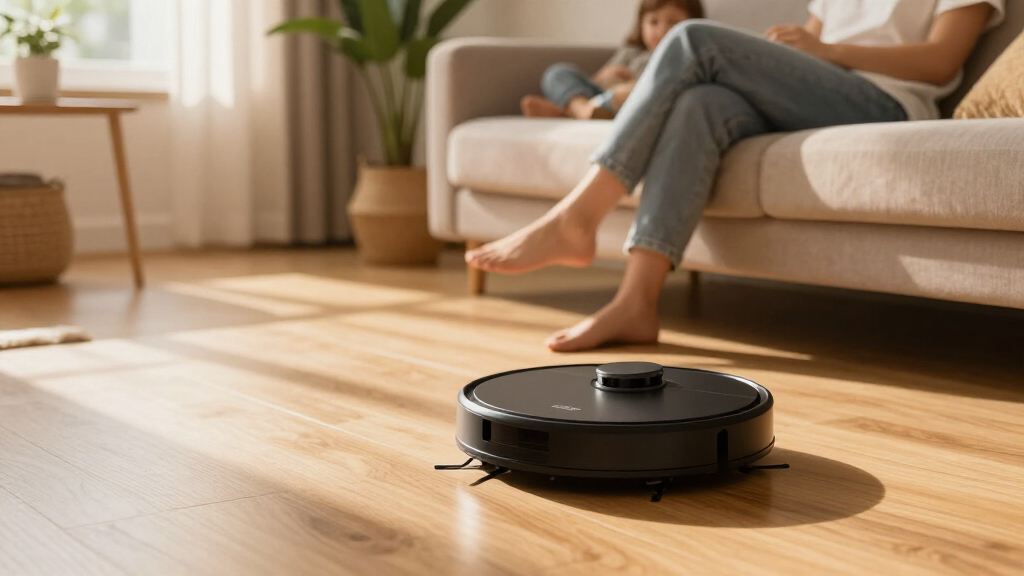

For most homes, I’d start with the Roborock Qrevo S Pro, which stands out as a capable vacuum-and-mop choice with a hands-off dock. The Roborock Q10 S5+ is a strong alternative for buyers who want automated dust disposal, while the eufy 11S Max suits people who prefer a simpler, low-profile vacuum without a mop system. The main tradeoffs are between navigation and cleaning automation, dock size and maintenance, and the extra complexity of mopping versus a straightforward vacuum-only routine. Carpet, pet hair, thresholds, and the amount of floor clutter in your home can change which tradeoff matters most. Continue reading for the full breakdown of all 15 robot vacuum cleaners and guidance on choosing the right type for your space.

Get the latest gadgets delivered free with Prime
- Fast, free delivery on millions of items
- Prime Video, Amazon Music and more included
- Member-only deals all year
Complete the kit


Key Takeaways
- Roborock’s Qrevo models lead this lineup for buyers seeking an automated vacuum-and-mop routine; dock functions and added convenience distinguish them from simpler combinations.
- Self-emptying docks are not all alike: the Shark models offer different stated collection intervals, while dock size, bag handling, and the rest of the cleaning system also affect day-to-day convenience.
- Vacuum-only models still have a clear role. The eufy 11S Max and ILIFE V2 avoid mop-system complexity and make more sense for buyers focused on basic floor pickup.
- Roborock’s Q7 L5 pairs a stated 8,000 Pa suction figure with LiDAR navigation and mopping. That makes it a spec-forward combination, but suction numbers alone cannot predict pickup across every floor type.
- The lineup’s biggest choice is not simply brand or suction: it is whether to prioritize mapping, automated dust handling, mopping, or a simpler machine with fewer systems to maintain.
| Roborock Qrevo S Pro Robot Vacuum and Mop |  | Best for Hands-Off Vacuuming and Mopping | Suction power: 18,500 Pa | Navigation: LiDAR | Dust bag capacity: 2.7 L | VIEW LATEST PRICE | See Our Full Breakdown |
| Shark AI Ultra Robot Vacuum with 60-Day Self-Emptying Base, Black (AV2511AE) |  | Best for Pet Hair and Bagless Self-Emptying | Navigation: 360° LiDAR mapping with object detection | Self-emptying capacity: Up to 60 days of dirt and debris | Dustbin capacity: 0.27 gallons | VIEW LATEST PRICE | See Our Full Breakdown |
| iRobot Roomba 105 Vac Robot Vacuum |  | Best Beginner-Friendly Mapped Vacuum | Navigation: ClearView LiDAR | Recommended surfaces: Carpet and hard floor | Suction claim: Up to 70× more power-lifting suction across carpet and hard floors | VIEW LATEST PRICE | See Our Full Breakdown |
| Tikom Robot Vacuum and Mop with Self-Emptying Base |  | Best for Long Runtime and Multi-Floor Mapping | Maximum suction: 6,000 Pa | Navigation: 360° LiDAR with multi-floor mapping | Battery life: 150 minutes | VIEW LATEST PRICE | See Our Full Breakdown |
| ILIFE V2 Robot Vacuum Cleaner |  | Best Slim, Wi-Fi-Free Option | Runtime: Up to 120 minutes | Dimensions: 12.2 × 12.2 × 2.99 in | Dust capacity: 300 ml | VIEW LATEST PRICE | See Our Full Breakdown |
| Roborock Q10 S5+ Robot Vacuum and Mop |  | Best for Long Hands-Free Runs | Suction power: 10,000 Pa | Self-emptying capacity: Up to 70 days | Dust bin capacity: 2.7 L | VIEW LATEST PRICE | See Our Full Breakdown |
| Shark Navigator Robot Vacuum with 30-Day Self-Emptying Base, White (AV2110S) |  | Best for Straightforward Mapped Cleaning | Navigation: LiDAR SmartPath | Self-emptying base: Up to 30 days | Dust capacity: 0.21 quarts | VIEW LATEST PRICE | See Our Full Breakdown |
| Shark AV2501S AI Ultra Robot Vacuum |  | Best for Pet Homes Wanting HEPA Filtration | Navigation: 360° LiDAR mapping | Self-emptying: Yes; base rated for up to 30 days | Listed capacity: 0.09 L | VIEW LATEST PRICE | See Our Full Breakdown |
| ROPVACNIC Robot Vacuum and Mop Combo, 5200 Pa |  | Best for Basic Vacuum-and-Mop Coverage | Suction power: 5,200 Pa | Battery life: 120 minutes | Surfaces: Hardwood floors and low-pile carpets | VIEW LATEST PRICE | See Our Full Breakdown |
| Shark Matrix Plus 2-in-1 Robot Vacuum and Mop, AV2610WA |  | Best for Combined Cleaning with a Long-Run Dock | Model: AV2610WA | Type: 2-in-1 robot vacuum and mop | Mopping rate: Up to 100 scrubs per minute | VIEW LATEST PRICE | See Our Full Breakdown |
| iRobot Roomba Plus 415X Robot Vacuum and Mop Combo |  | Best for Automated Vacuuming and Mopping | Suction power: 20,000 Pa | Navigation: LiDAR mapping and obstacle recognition | Cleaning modes: Vacuum-only, mop-only, vacuum and mop, vacuum then mop | VIEW LATEST PRICE | See Our Full Breakdown |
| eufy 11S Max Robot Vacuum Cleaner | 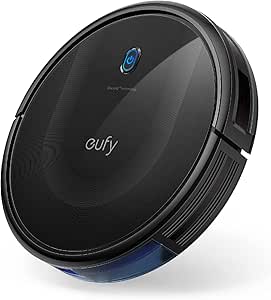 | Best for Simple, Quiet Cleaning | Profile height: 2.85 in | Battery life: Up to 100 minutes on hardwood floors | Cleaning path width: 12.8 in | VIEW LATEST PRICE | See Our Full Breakdown |
| Roborock Qrevo 2 Pro Robot Vacuum and Mop |  | Best Premium Dock Automation | Suction: 20,000 Pa | Battery life: 253 minutes | Navigation: LiDAR | VIEW LATEST PRICE | See Our Full Breakdown |
| Roborock Q7 L5 Robot Vacuum and Mop Combo, 8,000 Pa Suction |  | Best Value for Mapped Vacuum-and-Mop Cleaning | Suction power: 8,000 Pa | Water tank capacity: 270 ml | Battery life: 150 minutes | VIEW LATEST PRICE | See Our Full Breakdown |
| Roborock Robot Vacuum and Mop with LiDAR Navigation and Self-Empty Dock |  | Best for Longer Intervals Between Dustbin Emptying | Suction power: 10,000 Pa | Dust bag capacity: 2.7 L | Battery life: 150 minutes | VIEW LATEST PRICE | See Our Full Breakdown |
| robot vacuum cleaner | Navigation | Battery life |
|---|---|---|
| Roborock Qrevo S Pro Robot Vac | LiDAR | 180 minutes |
| Shark AI Ultra Robot Vacuum wi | 360° LiDAR mapping with object detection | — |
| iRobot Roomba 105 Vac Robot Va | ClearView LiDAR | — |
| Tikom Robot Vacuum and Mop wit | 360° LiDAR with multi-floor mapping | 150 minutes |
| ILIFE V2 Robot Vacuum Cleaner | — | — |
| Roborock Q10 S5+ Robot Vacuum | LiDAR with multi-level mapping | 150 minutes |
| Shark Navigator Robot Vacuum w | LiDAR SmartPath | 120 minutes |
| Shark AV2501S AI Ultra Robot V | 360° LiDAR mapping | 120 minutes |
| ROPVACNIC Robot Vacuum and Mop | — | 120 minutes |
| Shark Matrix Plus 2-in-1 Robot | 360° LiDAR mapping with obstacle avoidance | — |
| iRobot Roomba Plus 415X Robot | LiDAR mapping and obstacle recognition | — |
| eufy 11S Max Robot Vacuum Clea | — | Up to 100 minutes on hardwood floors |
| Roborock Qrevo 2 Pro Robot Vac | LiDAR | 253 minutes |
| Roborock Q7 L5 Robot Vacuum an | LiDAR | 150 minutes |
| Roborock Robot Vacuum and Mop | PreciSense LiDAR | 150 minutes |
More Details on Our Top Picks
Roborock Qrevo S Pro Robot Vacuum and Mop
The Qrevo S Pro earns its place for households that want the dock to handle much of the upkeep, not just empty the bin. It empties dust, washes and dries the spinning mops, and refills the robot, while 18,500 Pa suction and carpet settings cover mixed flooring. Its mops lift 10 mm over carpet, offering more flexibility than the ILIFE V2, which is a vacuum-only, low-pile option. LiDAR, obstacle avoidance, and anti-tangle brushes add useful support for routine cleaning around furniture and hair. The tradeoff is a more elaborate setup and a dock-dependent design; buyers seeking a simpler vacuum may prefer the Roomba 105. Wi-Fi is limited to 2.4 GHz, and the supplied information gives conflicting noise figures, so I would not choose it based on a precise sound expectation.
Pros:- Dock empties dust, washes and dries the mops, and supports self-refilling.
- High listed suction and carpet settings suit homes with mixed floor types.
- Liftable spinning mops provide a hard-floor cleaning option while reducing carpet contact.
- Anti-tangle brushes and obstacle avoidance address common hair and furniture obstacles.
Cons:- Connects to 2.4 GHz Wi-Fi only.
- Noise level is listed inconsistently as 55 dB and 60 dB.
- The multifunction dock is more involved than the charging setup of a vacuum-only option such as the Roomba 105.
Best for: Households with a mix of hard floors and carpet that want automated mop care, dust disposal, and hair-management features.
Not ideal for: Buyers who need 5 GHz Wi-Fi, want a straightforward vacuum-only robot, or need a confirmed noise specification.
- Suction power:18,500 Pa
- Navigation:LiDAR
- Dust bag capacity:2.7 L
- Battery life:180 minutes
- Mop lifting height:10 mm
- Connectivity:2.4 GHz Wi-Fi only
- Controls:App, button, and voice
- Recommended surfaces:Carpet, marble, wood, and tile
Our verdict“Choose the Qrevo S Pro if you want a highly automated vacuum-and-mop routine and can accommodate its dock and 2.4 GHz Wi-Fi requirement.”
Shark AI Ultra Robot Vacuum with 60-Day Self-Emptying Base, Black (AV2511AE)
The Shark AI Ultra is a practical pick for pet owners who want mapped vacuuming and a base that holds debris without a disposable bag. Its self-emptying base is listed for up to 60 days of dirt, and Matrix Clean navigation is designed to cover areas in deliberate passes rather than relying only on casual movement. That makes it a different proposition from the Qrevo S Pro: Shark focuses on vacuuming and debris handling, while Roborock adds automated mop washing and drying. LiDAR mapping, scheduling, voice control, and recharge-and-resume support regular cleaning with limited intervention. There are two data caveats: runtime is given as both 90 and 120 minutes, and the description mentions mopping even though the included items list no mop attachment. I would treat this as a vacuum, not a confirmed combo.
Pros:- Bagless self-emptying base is listed to hold up to 60 days of debris.
- Self-cleaning brushroll is designed to handle pet hair.
- LiDAR mapping and Matrix Clean support systematic floor coverage.
- App scheduling and Alexa or Google Assistant voice control are supported.
Cons:- Runtime is inconsistent across the supplied product information: 90 minutes in one place and 120 in another.
- Mopping is mentioned in the description, but no mop attachment appears in the included-items list.
- Unlike the Qrevo S Pro, it does not have a clearly specified mop-washing and drying dock.
Best for: Pet households that want mapped cleaning, a bagless debris base, and app or voice scheduling across carpets and hard floors.
Not ideal for: Buyers seeking a verified vacuum-and-mop package, a confirmed runtime, or a dock that uses a dust bag.
- Navigation:360° LiDAR mapping with object detection
- Self-emptying capacity:Up to 60 days of dirt and debris
- Dustbin capacity:0.27 gallons
- Runtime:Listed as 90 minutes in the description and 120 minutes in the specifications
- Battery type:Lithium-ion
- Surface recommendation:Carpets and hard floors
- Controls:App and voice control
- Compatible voice assistants:Amazon Alexa and Google Assistant
Our verdict“Pick the Shark AI Ultra for mapped, bagless vacuuming in a pet home, but skip it if you need a clearly documented mop setup or runtime.”
iRobot Roomba 105 Vac Robot Vacuum
The Roomba 105 is the approachable choice for buyers who want mapped cleaning without adding a mop system or a self-emptying base. ClearView LiDAR helps it map carpet and hard floors, while app schedules, onboard buttons, and voice control give owners more than one way to start a job. Its recharge-and-resume feature is useful when a cleaning session outlasts a charge, although no battery runtime is supplied, so I would be cautious about choosing it for a large home based on coverage expectations alone. Compared with the Shark AI Ultra, the Roomba lacks a listed debris-holding base; compared with the ILIFE V2, it offers LiDAR mapping rather than a simpler remote-controlled approach. The listed 70× suction boost is relative to older models, not a direct comparison with the other robots here.
Pros:- ClearView LiDAR supports mapped navigation across carpets and hard floors.
- App, onboard buttons, and voice control provide several ways to manage cleaning.
- Recharge-and-resume supports longer cleaning jobs that exceed one charge.
- Anti-fall and dirt-detection features are listed.
Cons:- No battery runtime or high-capacity battery figure is supplied.
- No self-emptying base or mopping capability is listed.
- The 70× suction claim is relative to older models and does not establish a direct advantage over the Shark AI Ultra or Roborock Qrevo S Pro.
Best for: First-time robot-vacuum buyers who want LiDAR mapping, scheduling, and voice control without a mop or self-emptying dock.
Not ideal for: Owners of large homes who need a stated long runtime or shoppers who want automatic debris disposal or mopping.
- Navigation:ClearView LiDAR
- Recommended surfaces:Carpet and hard floor
- Suction claim:Up to 70× more power-lifting suction across carpet and hard floors
- Controls:App, button, and voice control
- Voice assistants:Alexa, Siri, and Google Assistant
- Special features:Anti-fall, bagless, dirt detection sensor, and Eco Mode
- Charging behavior:Returns to dock to recharge and resume cleaning
Our verdict“Choose the Roomba 105 for straightforward mapped vacuuming and familiar controls, not for extended coverage or automated bin and mop care.”
Tikom Robot Vacuum and Mop with Self-Emptying Base
The Tikom L8000 Plus brings together vacuuming, mopping, and a large self-emptying base, with a particular advantage for homes where a robot needs time to cover multiple rooms. Its 150-minute runtime, LiDAR mapping, and multi-floor support give it a stronger case for larger layouts than the compact, remote-driven ILIFE V2. The 3 L base is listed for about 90 days of debris, reducing routine bin handling, while 6,000 Pa suction targets pet hair and embedded dirt. The tradeoff is that its mopping setup needs more attention around rugs: the mop holder must be removed or carpet no-go zones set to avoid wetting carpet. At 60 dB, it may also be noticeable during a run. Compared with the Qrevo S Pro, its listed suction is lower and its dock does not list mop washing or drying.
Pros:- 150-minute runtime supports longer cleaning sessions.
- LiDAR navigation includes multi-floor mapping.
- 3 L self-emptying capacity is listed for about 90 days of debris.
- 6,000 Pa suction and a HEPA filter are specified.
Cons:- The mop holder must be removed or carpet no-go zones set to avoid staining rugs.
- Listed noise level is 60 dB.
- The dock does not list the mop washing and drying functions specified for the Roborock Qrevo S Pro.
Best for: Owners of multi-room homes with hard floors who want long mapped cleaning sessions, mopping, and a high-capacity self-emptying base.
Not ideal for: Homes with many area rugs if owners do not want to remove the mop holder or set no-go zones, and buyers prioritizing a quieter robot.
- Maximum suction:6,000 Pa
- Navigation:360° LiDAR with multi-floor mapping
- Battery life:150 minutes
- Dustbin capacity:3 L
- Listed debris interval:About 90 days
- Filter:HEPA
- Noise level:60 dB
- Control method:App control
Our verdict“Choose the Tikom L8000 Plus for long mapped runs and reduced bin maintenance, provided you are willing to manage its mop around carpets.”
ILIFE V2 Robot Vacuum Cleaner
The ILIFE V2 keeps the setup simple: it uses a remote rather than requiring app or Wi-Fi control, and its 2.99-inch profile can reach under furniture that taller robots may miss. A tangle-free suction port is aimed at pet hair, and up to 120 minutes of runtime gives it a useful cleaning window for smaller or simpler layouts. Those choices also mark its limits. It is specified for hard floors and low-pile carpet, has just one power level, and offers no LiDAR mapping or self-emptying base. The Roomba 105 is a better fit for buyers who want mapped routes and app scheduling; the Shark AI Ultra is the more hands-off choice for pet hair thanks to its self-emptying base. I would choose the V2 for access and uncomplicated controls, not for high automation or thick carpet.
Pros:- Slim 2.99-inch profile can fit beneath low-clearance furniture.
- Remote control works without Wi-Fi.
- Tangle-free suction port is designed for pet hair.
- Up to 120 minutes of runtime with automatic return to the charging dock.
Cons:- Recommended for low-pile carpet rather than thicker carpet.
- One power level limits cleaning adjustment.
- No LiDAR mapping or self-emptying base, unlike the Roomba 105 and Shark AI Ultra.
Best for: Apartment dwellers or owners of furniture-heavy homes who want a slim, remote-controlled robot for hard floors and low-pile carpet.
Not ideal for: Buyers with thick carpet, large mapped floor plans, or a preference for app control and self-emptying.
- Runtime:Up to 120 minutes
- Dimensions:12.2 × 12.2 × 2.99 in
- Dust capacity:300 ml
- Controls:Remote control
- Cleaning modes:Auto, spot, and edge
- Recommended surfaces:Hard floors, pet hair, and carpet
- Noise level:69 dB
- Filter:Sponge
- Charging:Automatically returns to charging dock
Our verdict“Choose the ILIFE V2 if low clearance and remote-only simplicity matter more than mapping, adjustable power, or automated bin emptying.”
Roborock Q10 S5+ Robot Vacuum and Mop
The Roborock Q10 S5+ is the strongest fit here for buyers who want to stretch the time between routine dock maintenance. Its base is rated for up to 70 days of debris, longer than the Shark Navigator Robot Vacuum’s 30-day capacity, while 10,000 Pa suction and dual anti-tangle brushes target pet hair and embedded dirt. LiDAR mapping and multi-level support suit homes with more than one floor plan, and the mop lifts on carpet to reduce unwanted damp passes. The tradeoff is that its connectivity is limited to 2.4 GHz Wi-Fi; shoppers using only a 5 GHz network should look elsewhere. Compared with the ROPVACNIC, it offers stronger stated suction and more robust mapping, but costs you the flexibility of a simpler, low-pile-focused setup only if you need a basic machine.
Pros:- Self-emptying station is rated for up to 70 days of debris.
- 10,000 Pa suction and dual anti-tangle brushes are suited to pet hair and embedded dirt.
- LiDAR navigation supports precise coverage and multi-level maps.
- Mop lifts on carpet to help keep rugs dry during combined cleaning.
Cons:- Supports 2.4 GHz Wi-Fi only.
- A robot mop still needs human attention for pad care and floor-specific setup.
- The 70-day hands-free interval depends on household debris and cleaning frequency.
Best for: Pet owners in multi-level homes who want strong stated suction, mapping, and fewer trips to empty the dock.
Not ideal for: Households with only 5 GHz Wi-Fi or buyers seeking a simple, low-cost robot for occasional cleaning.
- Suction power:10,000 Pa
- Self-emptying capacity:Up to 70 days
- Dust bin capacity:2.7 L
- Battery life:150 minutes
- Cleaning path width:13.9 inches
- Noise level:65 dB
- Navigation:LiDAR with multi-level mapping
- Wi-Fi compatibility:2.4 GHz only
Our verdict“Choose the Q10 S5+ if long intervals between dock emptying and strong stated suction matter more than 5 GHz Wi-Fi support.”
Shark Navigator Robot Vacuum with 30-Day Self-Emptying Base, White (AV2110S)
The Shark Navigator AV2110S prioritizes orderly vacuuming over a long feature list: LiDAR SmartPath maps rooms and sends the robot through row-by-row passes, while recharge-and-resume helps it continue after a charging break. Its bagless base is rated for up to 30 days, half the stated interval of the Roborock Q10 S5+, so it suits buyers who value mapped coverage but do not need the longest emptying cycle. The anti-hair-wrap brushroll and app controls for schedules and no-go zones add useful everyday control. The data does not specify suction power, and its listed robot dust capacity is just 0.21 quarts, making cleaning performance harder to compare with the Shark Matrix Plus 2-in-1. It also vacuums only; choose the Matrix Plus if mopping is a priority.
Pros:- LiDAR SmartPath maps rooms for methodical row-by-row cleaning.
- Bagless self-emptying base is rated for up to 30 days of debris.
- Anti-hair-wrap brushroll is designed to reduce hair buildup.
- App offers scheduling, targeted cleaning, and no-go zones.
Cons:- No suction-power figure is provided in the product data.
- Listed dust capacity is 0.21 quarts.
- Does not include a mopping function.
Best for: Buyers who want room mapping, scheduled row-by-row cleaning, and a bagless self-empty base without adding a mop.
Not ideal for: Shoppers who need mopping, a stated suction figure for comparison, or a long interval between base emptying.
- Navigation:LiDAR SmartPath
- Self-emptying base:Up to 30 days
- Dust capacity:0.21 quarts
- Battery life:120 minutes
- Surfaces:Carpet and hard floors
- Brushroll:Self-cleaning anti-hair-wrap design
- Control:App control; Alexa and Google voice control
- Filter type:Pre-motor filter
Our verdict“Pick the Navigator if you want mapped, app-controlled vacuuming with a self-empty base and do not need a mop.”
Shark AV2501S AI Ultra Robot Vacuum
The Shark AV2501S AI Ultra makes the clearest case for buyers focused on pet hair and captured fine particles: its self-emptying base includes HEPA filtration, specified to capture 99.97% of dust and allergens down to 0.3 microns. Its 360° LiDAR mapping and app or voice controls put it in a more guided category than the ROPVACNIC, which offers a mop but no stated mapping system in its product data. The Shark also has a self-cleaning brushroll, useful when hair wrap is a recurring chore. Its base is rated for up to 30 days, shorter than the Roborock Q10 S5+’s stated 70 days, and the listing gives a capacity of just 0.09 liters. Buyers should also expect app or voice features to rely on a stable Wi-Fi connection; this is a vacuum-focused pick, not a vacuum-and-mop combo.
Pros:- HEPA filtration is specified to capture 99.97% of dust and allergens down to 0.3 microns.
- 360° LiDAR mapping supports planned navigation.
- Self-cleaning brushroll is designed to handle pet hair with less wrap.
- Works with app controls, Alexa, and Google Assistant.
Cons:- Self-emptying base is rated for up to 30 days, shorter than the Roborock Q10 S5+.
- Listed capacity is 0.09 liters, which may mean more frequent emptying in debris-heavy homes.
- Does not mop, and connected features depend on stable Wi-Fi.
Best for: Pet households that want mapped vacuuming, a self-cleaning brushroll, and specified HEPA filtration at the dock.
Not ideal for: Buyers who want mopping, a longer stated self-emptying interval, or minimal dependence on Wi-Fi and app controls.
- Navigation:360° LiDAR mapping
- Self-emptying:Yes; base rated for up to 30 days
- Listed capacity:0.09 L
- Filtration:HEPA; captures 99.97% of dust and allergens down to 0.3 microns
- Battery life:120 minutes
- Brushroll:Self-cleaning
- Surfaces:Carpets and hard floors
- Control:App, Alexa, and Google Assistant
Our verdict“Choose the AV2501S if pet hair and specified HEPA filtration matter more than mopping or a longer dock-emptying interval.”
ROPVACNIC Robot Vacuum and Mop Combo, 5200 Pa
The ROPVACNIC 5200 Pa is the most direct option here for buyers who want vacuuming and adjustable mopping without requiring a self-emptying dock. It supports app, remote, touchpad, and voice control, giving households more ways to start a clean than the app-centered Shark Navigator AV2110S. Its stated 5,200 Pa suction, automatic recharging, and brushless design with rotating side brushes cover everyday upkeep, while multiple power levels let owners adapt cleaning to the task. The limit is its recommended surface range: hardwood and low-pile carpets, not the broader carpet coverage claimed for the Shark Matrix Plus. Product data also does not list LiDAR mapping or a self-emptying base, so buyers should expect a more hands-on routine and should not assume it provides the same room-planning features as the Roborock Q10 S5+.
Pros:- Combines vacuuming with adjustable electric mopping.
- Offers app, remote, touchpad, and voice control.
- Automatic recharging supports routine scheduled use.
- Brushless design and rotating side brushes are intended to collect pet hair.
Cons:- Recommended for hardwood and low-pile carpets, limiting its fit for carpet-heavy homes.
- No self-emptying base is listed, so dustbin maintenance remains hands-on.
- Product data does not specify LiDAR mapping or obstacle-avoidance details.
Best for: Apartment dwellers with mostly hard floors who want one robot for routine vacuuming and light mopping, plus several control options.
Not ideal for: Homes with thick or high-pile carpet, buyers who need a self-emptying dock, or those seeking specified LiDAR mapping.
- Suction power:5,200 Pa
- Battery life:120 minutes
- Surfaces:Hardwood floors and low-pile carpets
- Cleaning functions:Vacuuming and adjustable electric mopping
- Power levels:3
- Control methods:App, remote, touchpad, and voice
- Voice compatibility:Amazon Echo and Google Home
- Battery type:Lithium-ion
Our verdict“Choose the ROPVACNIC for basic vacuum-and-mop upkeep on hard floors if you can accept hands-on emptying and limited carpet suitability.”
Shark Matrix Plus 2-in-1 Robot Vacuum and Mop, AV2610WA
The Shark Matrix Plus AV2610WA stands out among these five when buyers want both vacuuming and mopping alongside a comparatively long stated dock interval. Its base holds up to 60 days of debris, shorter than the Roborock Q10 S5+’s 70-day claim but double the Shark AV2501S AI Ultra’s 30-day figure. LiDAR mapping and a grid pattern support planned coverage, while sonic mopping at up to 100 scrubs per minute adds active floor contact rather than a simple passive wipe. HEPA filtration and a self-cleaning brushroll broaden its appeal to homes with pets or dust concerns. The compromise is that mopping is for hard floors only, and the 60-day capacity varies with use. Unlike the ROPVACNIC, it also specifies a large self-empty base, but buyers should expect a larger dock footprint.
Pros:- Vacuums and mops in one cleaning routine.
- Self-emptying bagless base is rated for up to 60 days of debris.
- LiDAR mapping and obstacle avoidance support planned navigation.
- HEPA filtration and a self-cleaning brushroll suit dust- and pet-hair-conscious homes.
Cons:- Mopping is limited to hard floors.
- The 60-day base interval depends on cleaning frequency and household debris.
- A self-emptying base takes more space than a robot-only charging dock.
Best for: Households with mixed flooring that want a mapped vacuum-and-mop robot, HEPA filtration, and fewer dock-emptying chores.
Not ideal for: Buyers who need a mop for carpeted rooms, have limited space for a self-empty base, or want a guaranteed 60-day emptying interval.
- Model:AV2610WA
- Type:2-in-1 robot vacuum and mop
- Mopping rate:Up to 100 scrubs per minute
- Self-emptying capacity:Up to 60 days
- Filtration:HEPA; captures 99.97% of dust and allergens down to 0.3 microns
- Navigation:360° LiDAR mapping with obstacle avoidance
- Brushroll:Self-cleaning, designed to reduce hair wrap
- Included accessories:XL HEPA self-empty base, 2 reusable microfiber pads, filter, side brush, and 12 oz starter cleaning solution
Our verdict“Pick the Matrix Plus if you want a mapped vacuum-and-mop system with HEPA filtration and can accommodate its dock.”
iRobot Roomba Plus 415X Robot Vacuum and Mop Combo
The Roomba Plus 415X is the strongest fit here for buyers who want the dock to handle more than dust: it empties debris, refills water, and washes and heat-dries mop pads. Its 20,000 Pa suction, tangle-free rubber brushes, and four cleaning modes cover different routines, while LiDAR navigation and obstacle recognition help it work around furniture. Automatic mop lifting gives it an advantage over the simpler Roborock Q7 L5 when a route includes rugs as well as hard floors. The tradeoff is a more involved dock that still needs water and cleaning supplies, and the supplied details do not state battery life or robot dimensions. I’d choose it for reduced mop upkeep, not for the leanest setup.
Pros:- Dock empties debris, refills water, and washes and heat-dries mop pads.
- Four cleaning modes allow vacuuming and mopping to be handled separately or together.
- Tangle-free rubber brushes are designed to reduce pet-hair wrap.
- Obstacle recognition and automatic mop lifting help it clean around furniture and rugs.
Cons:- The dock requires ongoing water and cleaning-supply maintenance.
- Battery life and robot dimensions are not provided, making runtime and fit harder to judge.
Best for: Pet households with a mix of rugs and hard floors that want automated mop washing and drying as well as vacuuming.
Not ideal for: Buyers seeking a basic, compact robot or who do not want to maintain a water-handling dock.
- Suction power:20,000 Pa
- Navigation:LiDAR mapping and obstacle recognition
- Cleaning modes:Vacuum-only, mop-only, vacuum and mop, vacuum then mop
- Mop lift height:10 mm
- Dock features:Auto-empties debris, refills water, washes and heat-dries mop pads
- Mop pad drying temperature:113°F
- Brushes:Tangle-free rubber brushes and extending edge brushes
- Dust emptying:Up to 90 days
Our verdict“Choose the Roomba Plus 415X if you want a highly automated vacuum-and-mop routine and can accommodate dock upkeep.”
eufy 11S Max Robot Vacuum Cleaner
The eufy 11S Max suits buyers who want a straightforward vacuum rather than an app-connected cleaning system. Its 2.85-inch profile can fit beneath some low furniture, and 55 dB operation is quieter than the listed Roborock Q7 L5 at 60 dB. On hardwood, the stated runtime of up to 100 minutes supports routine coverage; BoostIQ adjusts suction as the robot moves between surfaces. The simplicity is also the limitation: unlike the Roborock Q7 L5, it has no mapping, app scheduling, or mop function, and control is limited to a remote and onboard buttons. I’d pick it for uncomplicated vacuuming on hard floors and medium-pile carpet, but skip it if you want room-by-room control or a combined vacuum-and-mop routine.
Pros:- Slim 2.85-inch profile can reach under some low-clearance furniture.
- Listed 55 dB noise level is relatively quiet for routine cleaning.
- Up to 100 minutes of hardwood-floor runtime.
- Obstacle and drop sensors plus self-charging support basic automated runs.
Cons:- No Wi-Fi or app support, so scheduling and remote control are limited.
- No mapping or mopping function is listed.
- Remote control and onboard buttons are the only control methods.
Best for: People in smaller or furnished homes who want quiet, low-profile routine vacuuming without app setup.
Not ideal for: Buyers who need mapping, smartphone scheduling, voice control, or mopping.
- Profile height:2.85 in
- Battery life:Up to 100 minutes on hardwood floors
- Cleaning path width:12.8 in
- Dustbin capacity:600 ml
- Noise level:55 dB
- Surface recommendation:Hard floors, tile, and medium-pile carpet
- Control method:Remote control and onboard buttons
- Connectivity:No Wi-Fi or app support
Our verdict“Choose the eufy 11S Max for quiet, uncomplicated vacuuming, not for connected features or mopping.”
Roborock Qrevo 2 Pro Robot Vacuum and Mop
The Roborock Qrevo 2 Pro is the premium-leaning choice for mixed-floor homes where mop care and longer cleaning sessions matter. Its multifunction dock empties dust, refills water, and washes and dries the dual spinning mops; automatic mop removal and carpet care add flexibility as it moves between floor types. The listed 253-minute battery life also gives it more stated runtime than the 150-minute Roborock Q7 L5. Edge-focused mopping and corner cleaning target areas a basic robot can leave behind. The tradeoff is complexity: the dock and mop system need more attention than the Roborock Robot Vacuum and Mop with LiDAR Navigation and Self-Empty Dock, which focuses on self-emptying rather than full mop servicing. It also requires 2.4 GHz Wi-Fi.
Pros:- Multifunction dock empties dust, refills water, and washes and dries the mops.
- Listed 253-minute battery life supports longer cleaning sessions.
- Dual liftable spinning mops and automatic mop removal suit mixed flooring.
- Edge mopping and corner-cleaning features target hard-to-reach floor areas.
Cons:- The dock and mop system add maintenance compared with a basic self-empty model.
- Wi-Fi support is limited to 2.4 GHz.
- Multiple dock and mop functions make it a more involved setup than a vacuum-only robot.
Best for: Owners of larger mixed-floor homes who want extended runtime and a dock that handles dust, water, and mop maintenance.
Not ideal for: Buyers who prefer a simple self-empty vacuum or whose home network does not support 2.4 GHz Wi-Fi.
- Suction:20,000 Pa
- Battery life:253 minutes
- Navigation:LiDAR
- Obstacle avoidance:Reactive Tech
- Mop features:Dual liftable spinning mops; automatic mop removal
- Dock features:Automatic dust emptying, water refilling, mop washing and warm-air drying
- Mop wash temperature:149°F
- Connectivity:2.4 GHz Wi-Fi
Our verdict“Choose the Qrevo 2 Pro if you want long-running mixed-floor cleaning with extensive dock-based mop care.”
Roborock Q7 L5 Robot Vacuum and Mop Combo, 8,000 Pa Suction
The Roborock Q7 L5 offers the core features many buyers want from a combo robot without the full-service dock found on the Roborock Qrevo 2 Pro. LiDAR mapping supports multiple floors and no-go zones, while the 270 ml tank lets it vacuum and mop in one run. Its 8,000 Pa suction is below the 20,000 Pa listed for the Qrevo 2 Pro and Roomba Plus 415X, so buyers prioritizing maximum stated suction should look higher in this lineup. In return, the Q7 L5 keeps the setup simpler: it has app, voice, and button controls, but no dock-based mop washing or water refilling is listed. The combined water-tank and dustbin component may also make maintenance less flexible. It’s a practical pick for mapped routine cleaning, not hands-off mop care.
Pros:- LiDAR mapping supports multiple floors and no-go zones.
- Vacuums and mops simultaneously with a 270 ml water tank.
- App, voice, and button controls offer several ways to start and schedule cleaning.
- Anti-tangle brushes are designed to reduce hair wrap.
Cons:- Its 8,000 Pa suction is lower than the 20,000 Pa listed for the Qrevo 2 Pro and Roomba Plus 415X.
- The water tank and dustbin are an integrated combo part.
- No automatic dock-based emptying or mop washing is listed.
Best for: Households that want LiDAR maps, no-go zones, and simultaneous vacuuming and mopping without a complex washing dock.
Not ideal for: Buyers who need dock-based mop washing and refilling or want the highest listed suction in this group.
- Suction power:8,000 Pa
- Water tank capacity:270 ml
- Battery life:150 minutes
- Navigation:LiDAR
- Noise level:60 dB
- Control methods:App, voice, and buttons
- Voice compatibility:Amazon Echo, Google Home
- Wi-Fi:2.4 GHz
Our verdict“Choose the Q7 L5 for mapped vacuum-and-mop cleaning at a simpler feature level than the Qrevo 2 Pro.”
Roborock Robot Vacuum and Mop with LiDAR Navigation and Self-Empty Dock
This Roborock robot vacuum and mop takes a middle path: it adds a self-empty dock and LiDAR mapping without the extensive mop-washing system of the Roborock Qrevo 2 Pro. Its 2.7 L dust bag is rated for 7–9 weeks between emptying, which can cut down on routine dustbin handling, while 10,000 Pa suction and dual anti-tangle brushes suit homes with carpet and pet hair. The 150-minute battery life matches the listed runtime of the Q7 L5, and app and voice controls support scheduled cleaning. The compromise is less dock automation: no mop washing or water refilling is specified, and the water-tank capacity is not provided. At a listed 65 dB, it is also louder than the Q7 L5 and Qrevo 2 Pro.
Pros:- The 2.7 L dust bag is rated for up to 7–9 weeks between emptying.
- LiDAR mapping helps plan routes across multiple rooms.
- 10,000 Pa suction and dual anti-tangle brushes are suited to carpet and pet hair.
- App and voice controls support connected cleaning routines.
Cons:- Water-tank capacity is not specified.
- No automatic mop washing or water refilling is listed, unlike the Qrevo 2 Pro.
- The listed 65 dB noise level is higher than the Q7 L5 and Qrevo 2 Pro.
Best for: Pet owners who want mapped vacuum-and-mop cleaning with a self-empty dock and fewer dustbag changes.
Not ideal for: Buyers seeking automatic mop washing, a stated water-tank capacity, or quieter operation.
- Suction power:10,000 Pa
- Dust bag capacity:2.7 L
- Battery life:150 minutes
- Navigation:PreciSense LiDAR
- Cleaning path width:12.8 in
- Connectivity:2.4 GHz Wi-Fi
- Noise level:65 dB
- Surfaces:Wood, tile, marble, carpet
Our verdict“Choose this Roborock if a long interval between dustbin emptying matters more than automatic mop servicing.”

How We Picked
I compared the 15 listed robot vacuum cleaners across the factors that shape everyday use: navigation and mapping, vacuum pickup potential, mop design, dock automation, usability, maintenance, and fit for different floor plans. I also separated vacuum-only models from vacuum-and-mop combinations rather than treating extra features as automatic advantages. A mop system can broaden a robot’s job, but it can add setup and upkeep that are unnecessary for homes with mostly carpet.
The ranking favors models that bring a useful balance of cleaning coverage, automation, and practical features for more households, with more specialized options placed according to their best-fit audience. A self-emptying dock can improve convenience, but it does not outweigh a mismatch with the home’s flooring or layout. I considered stated features as buying signals, not proof of equivalent real-world performance, and avoided ranking products on suction figures alone. Because the specific needs of a home vary, the list also gives simpler, vacuum-only machines a place for buyers who value less complexity over broader capability.
Factors to Consider When Choosing Robot Vacuum Cleaners
Before choosing among robot vacuum cleaners, I’d match the machine to the work you actually want it to do. A mop, mapping system, or self-emptying dock can help—but each adds its own setup, space, or maintenance demands. These are the broader tradeoffs I’d weigh before deciding.
1. Choose Vacuum-Only or Vacuum-and-Mop Based on Your Floors
A mop attachment is most useful on hard floors where light, frequent maintenance can reduce the need for manual touch-ups. It is not a replacement for scrubbing stuck-on spills, and buyers should check how the model handles rugs while mopping. If most rooms are carpeted, a vacuum-only robot may be the more sensible fit because it avoids a water tank, mop pads, and another part to clean or store. Mixed-floor homes can benefit from a combination model, but only if its mop setup is easy to manage around rugs and room boundaries. Do not assume that a robot labeled as a mop will wash floors with the same force or control as a dedicated floor cleaner. Match the feature to your floor area rather than paying for a function that will stay unused.
2. Prioritize Navigation for Your Layout, Not Just Smart-Sounding Features
Mapping and navigation matter most when a home has several rooms, furniture obstacles, or areas you want cleaned on a schedule. A simpler robot can be adequate for an open, uncluttered space, while a mapped model gives more control over where cleaning happens. Before choosing, think about narrow passages, cords, dark flooring, and thresholds, since these can affect how reliably a robot moves through a real home. Keep floors reasonably clear even with obstacle-avoidance features; no navigation system makes loose cables or small objects irrelevant. Also check whether the app supports the controls you expect, such as room selection or scheduling, rather than assuming every connected model offers the same options. Paying for advanced navigation makes most sense when the layout can use it every week.
3. Decide Whether a Self-Empty Dock Earns Its Space
A self-emptying dock reduces how often you handle the robot’s dustbin, which can be useful for homes with pets, larger floor areas, or frequent cleaning schedules. It does not remove all maintenance: dust bags or containers still need attention, and filters and brushes still collect debris. Check the dock’s footprint before buying, especially if the robot will live in a hallway, utility room, or under a cabinet. A dock’s advertised collection interval is a guide, not a guarantee, because debris volume and cleaning frequency vary between households. A basic charging base may be a better fit for a small home or a buyer who does not mind emptying the robot after runs. Compare the whole maintenance routine, not just the number of days advertised between emptying.
4. Treat Suction Figures as One Clue, Not a Cleaning Verdict
Published suction figures can help distinguish models on paper, but they do not tell the whole story of pickup. Brush design, airflow, floor contact, navigation coverage, and how well the robot reaches edges all contribute to the result. Carpet owners should pay attention to brush maintenance and whether the machine is designed for repeated carpet cleaning, while hard-floor owners may value debris control and edge coverage more. Pet hair can wrap around brushes, so removable parts and easy cleaning may matter as much as a high suction claim. A larger number should not be the only reason to choose one model over another. Look at the full cleaning system and the type of debris your floors collect.
5. Plan for Maintenance Before Adding Mopping or Automation
Robot vacuum cleaners need regular care even when their docks handle some routine work. Brushes can collect hair, filters need cleaning or replacement, and sensors may need wiping to keep navigation reliable. Combination models add mop pads and water handling, which means more steps after cleaning than a vacuum-only robot requires. Consider who will do that upkeep and how often it will fit into the household routine. If low effort is the priority, compare how much the dock automates and which tasks remain manual rather than counting features. A simpler robot that gets maintained consistently can suit a home better than a more capable one whose extra systems are neglected.
6. Check Physical Fit and Room-to-Room Access
Robot height can determine whether a cleaner reaches under beds, sofas, and cabinets, while dock dimensions affect where it can recharge. Measure low-clearance furniture and the available space near an outlet before choosing; a compact robot is not helpful if its dock cannot sit in a practical location. Thresholds and transitions between flooring types can also limit where the robot can travel without intervention. For a multi-level home, consider whether you are comfortable moving the robot between floors and whether the mapping system can support that routine. Buyers sometimes focus on the robot’s dimensions and overlook the larger dock beside it. A quick measurement of both can prevent an inconvenient placement after purchase.
Frequently Asked Questions
Is a self-emptying robot vacuum worth choosing if I have pets?
It can be a good fit if pet hair and tracked-in debris fill the robot’s bin quickly, since the dock reduces how often you empty that bin by hand. It does not eliminate brush cleaning, filter care, or occasional checks for tangled hair. Compare the dock’s capacity and consumables with how often you expect to run the robot, rather than relying only on an advertised collection interval. A model with accessible brushes may be easier to live with than one that offers a more elaborate dock but makes hair removal awkward. If your pet sheds heavily, plan for regular maintenance even with self-emptying.
Should I buy a robot vacuum that also mops if my home has both carpet and hard floors?
A combination model can suit mixed flooring if you want frequent light cleaning on hard floors as well as vacuuming across the home. The key is how easily you can manage the mop around carpets, including whether you need to remove pads or set boundaries in the app. If most of your space is carpet, a vacuum-only model may be simpler and leave less equipment to maintain. For homes with substantial hard flooring, mopping can add value when the routine is convenient enough that you will use it. Do not expect a robot mop to replace manual cleaning for dried or stubborn messes.
Does a higher suction number mean a robot vacuum will clean my carpet better?
Not by itself. Suction figures describe one part of a cleaning system, while brush design, floor contact, navigation coverage, and maintenance also affect how much debris the robot collects. A robot that misses areas or has a hair-clogged brush may perform less effectively than its published figure suggests. If carpet is your main concern, compare the overall vacuum design and check that the robot fits your carpet type and cleaning routine. For this lineup, the Roborock Q7 L5’s stated 8,000 Pa is a useful point of comparison, not a complete prediction of results.
When is a simpler vacuum-only robot a better choice than a mapped mop combo?
A simpler vacuum-only model can make more sense in a small, open home where basic pickup is the main task and there are few rooms to manage. It avoids mop pads, water handling, and some of the setup associated with a combination machine. This can also be a practical choice if you rarely clean hard floors or already mop them by hand. The tradeoff is less cleaning flexibility and, depending on the model, fewer navigation or dock features. Compare the work you need done every week with the extra upkeep that a more capable robot brings.
What should I measure before buying a robot vacuum cleaner?
Measure the clearance under furniture where you want the robot to clean and the space available for its charging or self-emptying dock. Check doorway widths and thresholds between rooms, as these can affect whether the robot reaches the areas you intend it to cover. If you are considering a combination model, account for a convenient place to handle its mop pads and water tank. Also check whether an outlet is nearby and whether the dock’s approach area can stay clear. Measuring both the robot and dock helps avoid choosing a machine that fits under furniture but has no practical home base.
Conclusion
For the broadest mix of vacuuming, mopping, and dock convenience, I’d choose the Roborock Qrevo S Pro as best overall. The Roborock Q7 L5 is my best value-style pick for feature-focused buyers who want LiDAR navigation, mopping, and a stated 8,000 Pa suction figure without starting with the most elaborate Qrevo options. For a more automated premium setup, compare the Roborock Qrevo 2 Pro with the Qrevo S Pro and choose based on the dock and functions you will actually use. Beginners who want a straightforward vacuum-only routine should look at the eufy 11S Max; buyers seeking a simple alternative can also consider the ILIFE V2. For pet-heavy homes, a Shark model with a self-emptying base is a practical shortlist option, while the Roborock Q10 S5+ suits buyers who want dust disposal alongside mopping. Choose the machine that fits your floors, layout, and willingness to maintain it—not the one with the longest feature list.